
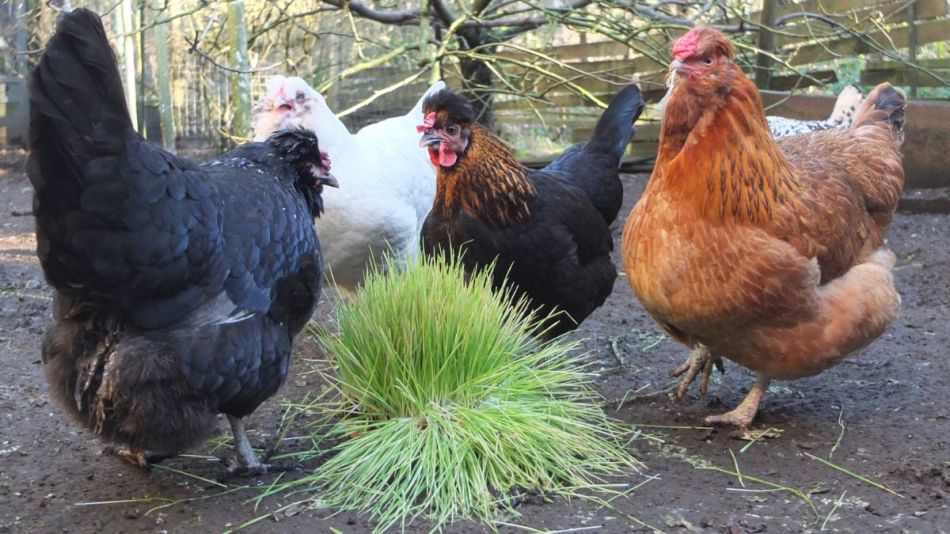
Several years ago I took an afternoon workshop on sprouting. I invested in some meshed screw lids for the mason jars I had and bought a few packages of seeds that were easy to sprout. It was pretty simple to have an ongoing supply of sprouts for salads or toppings. Despite my intentions, I got behind attending to them or, more commonly, didn’t always feel like eating them and had to offer that batch to my flock. I ended up moving my supplies along to someone more dedicated and vigilant than me.
If you’re unable to free range your birds you can supplement their manufactured feed by sprouting any number of grains. This can be done either inside your house or greenhouse or in small outdoor frames to supply your birds with a continuous supply of greens.
What Are Sprouts And Fodder?
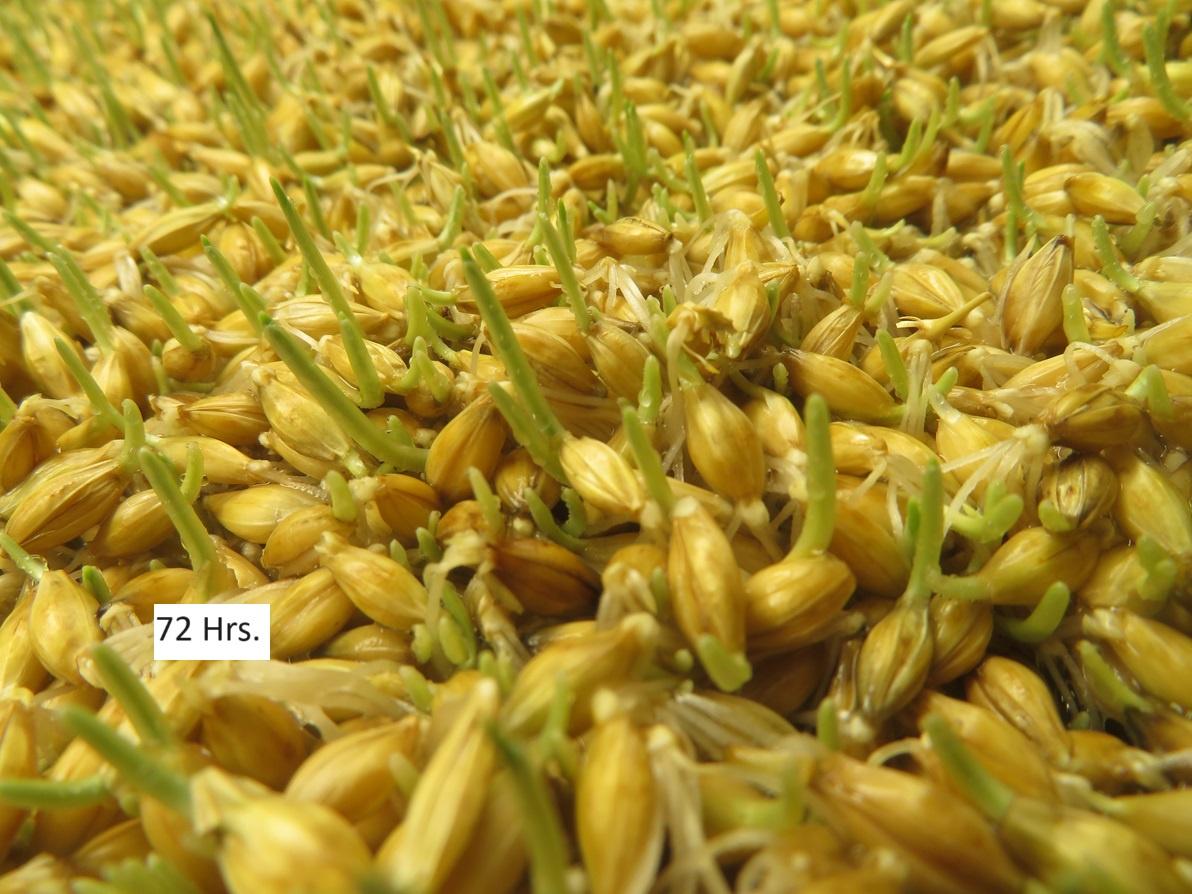
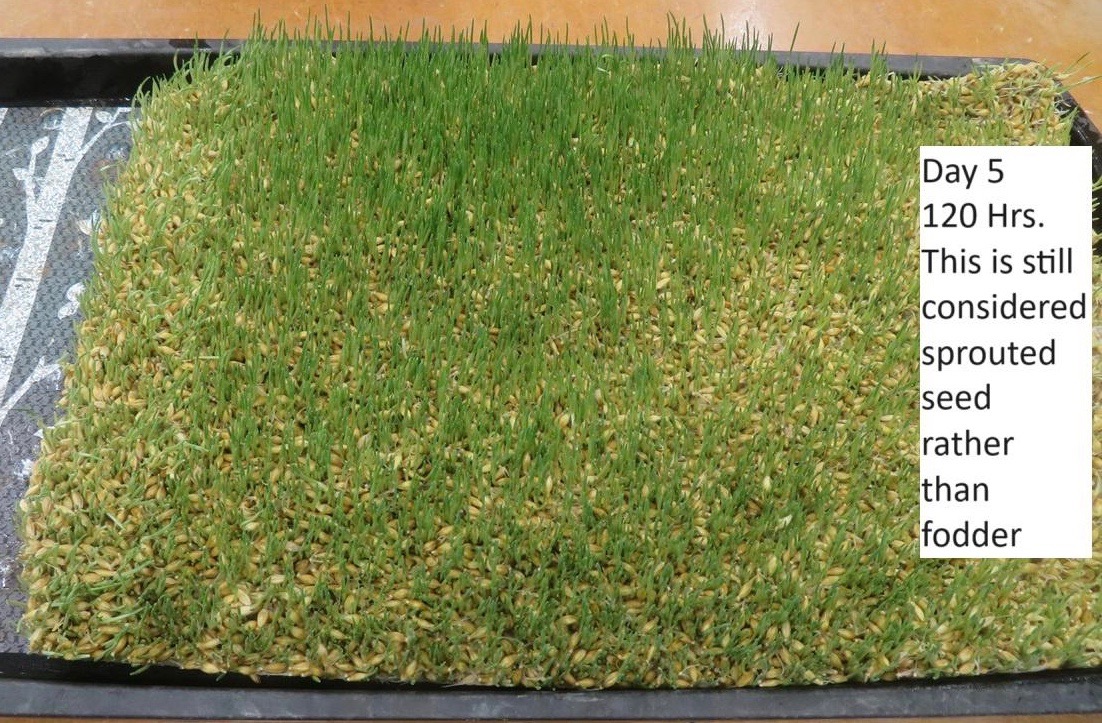
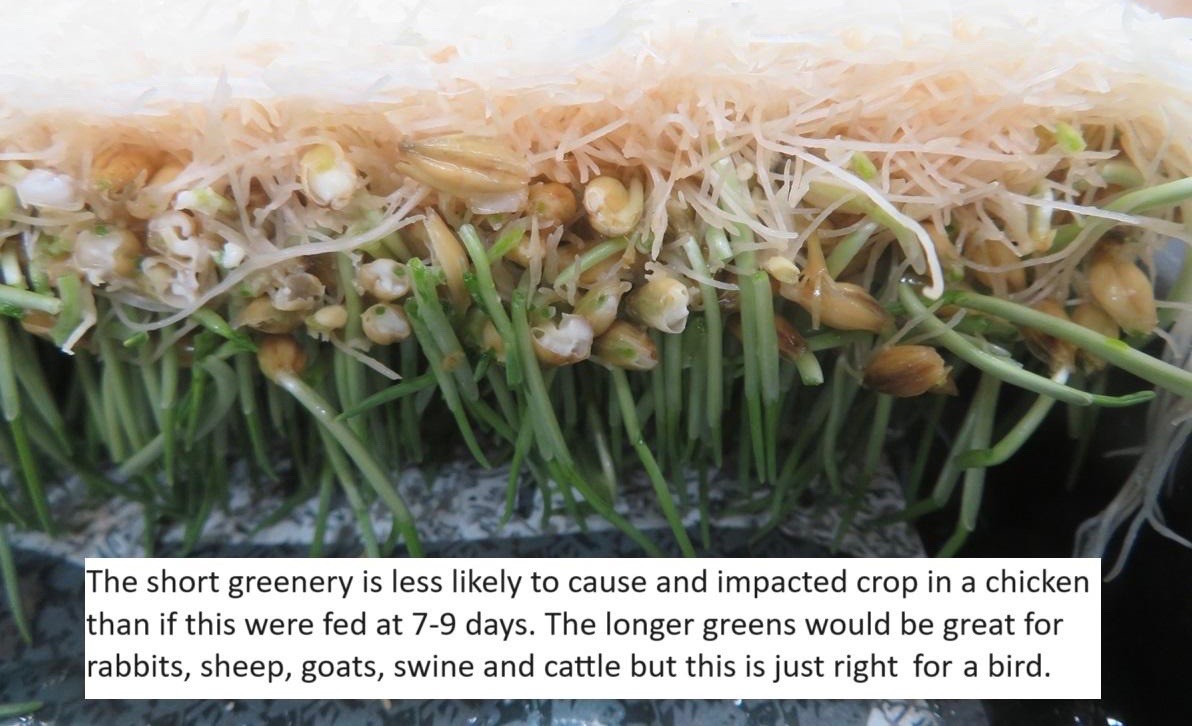
Simply put, both are hydroponically grown feed made from plants: grasses, legumes and grains. The difference is size: sprouts are harvested before they are 4″ tall, while fodder is anything greater than that.
I’m lucky to live in an area where we have very little snow or frost. Although my birds don’t free range (their pen is 1200 square feet) they get copious amounts of produce from the local food recovery program.
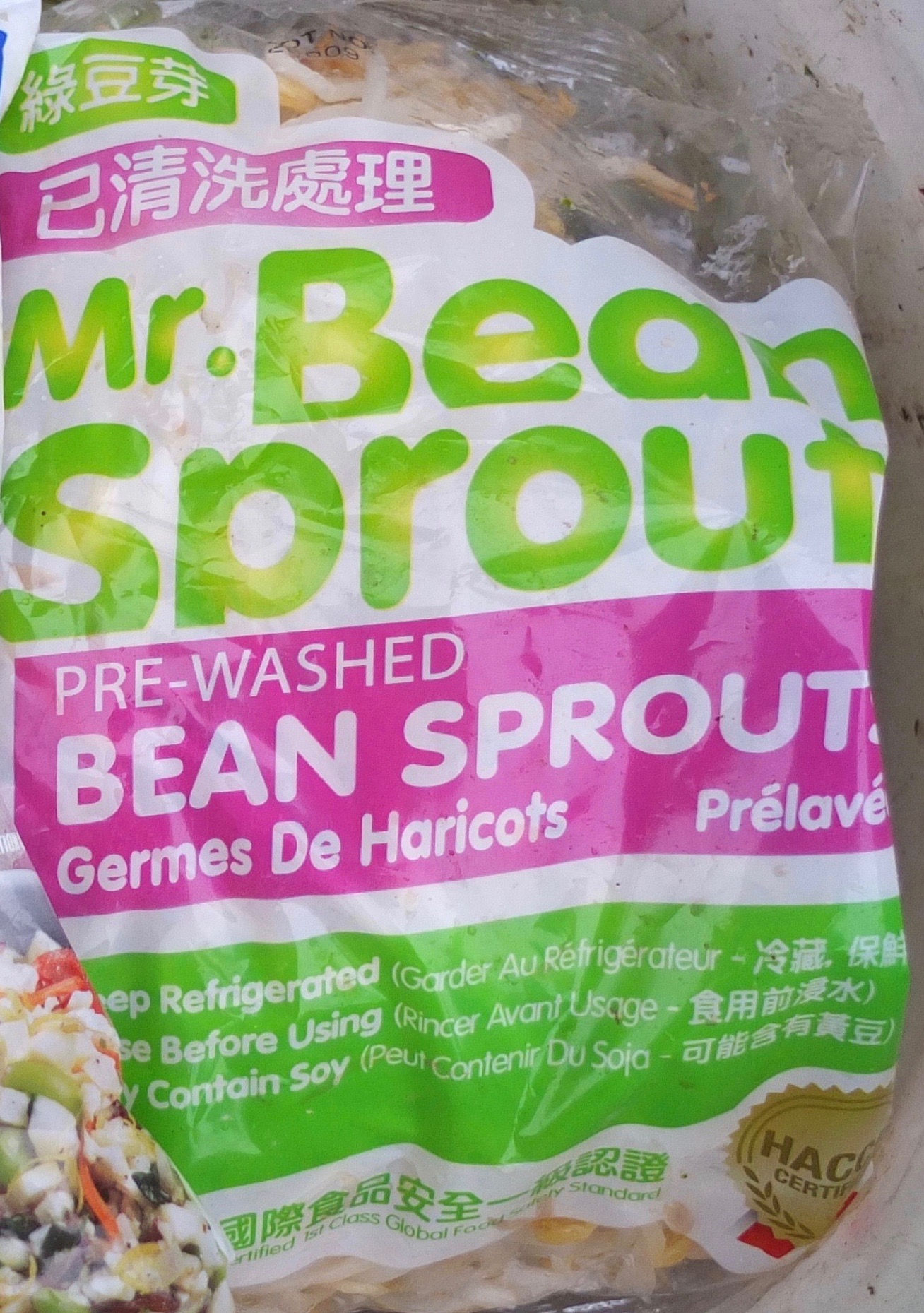
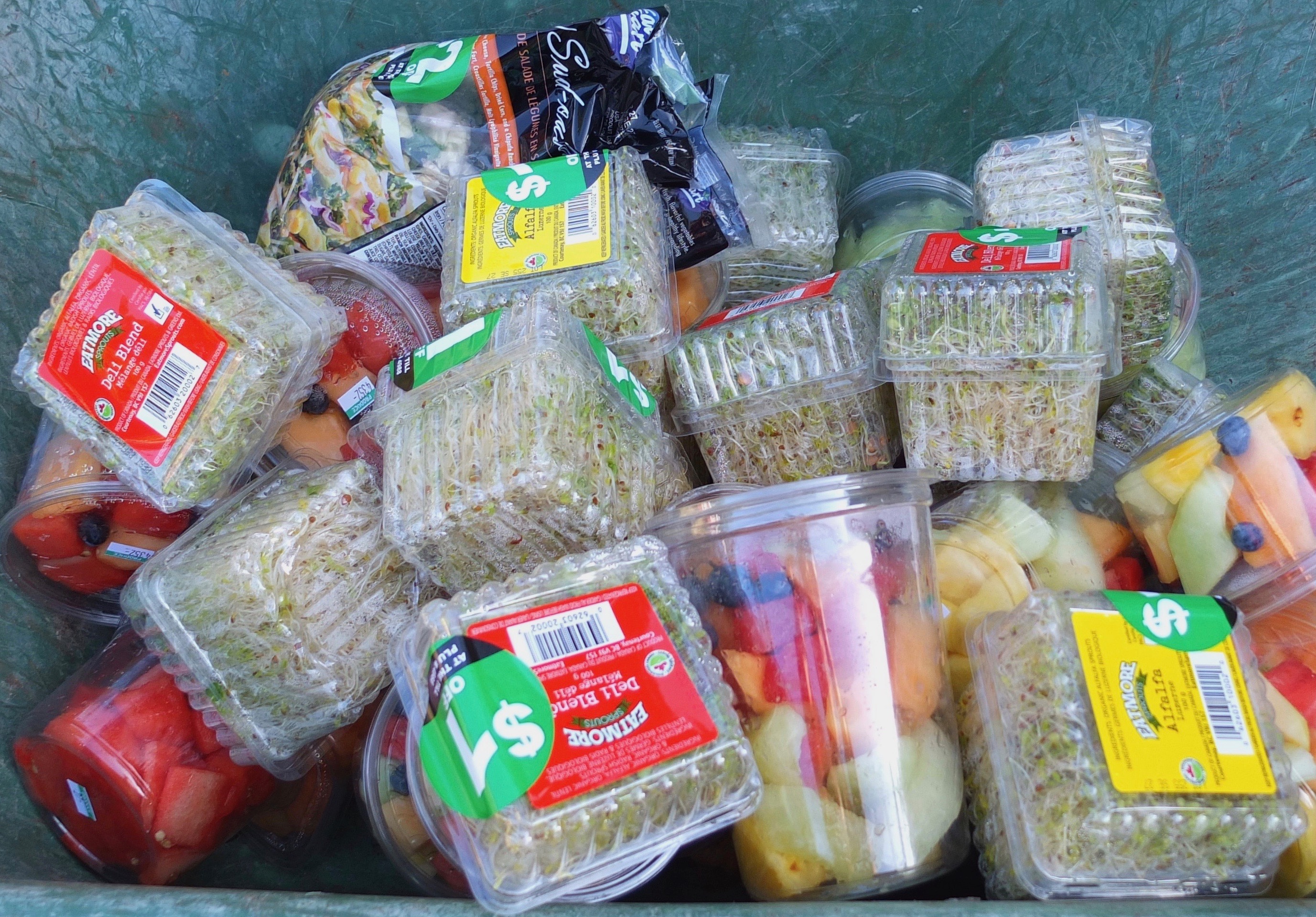
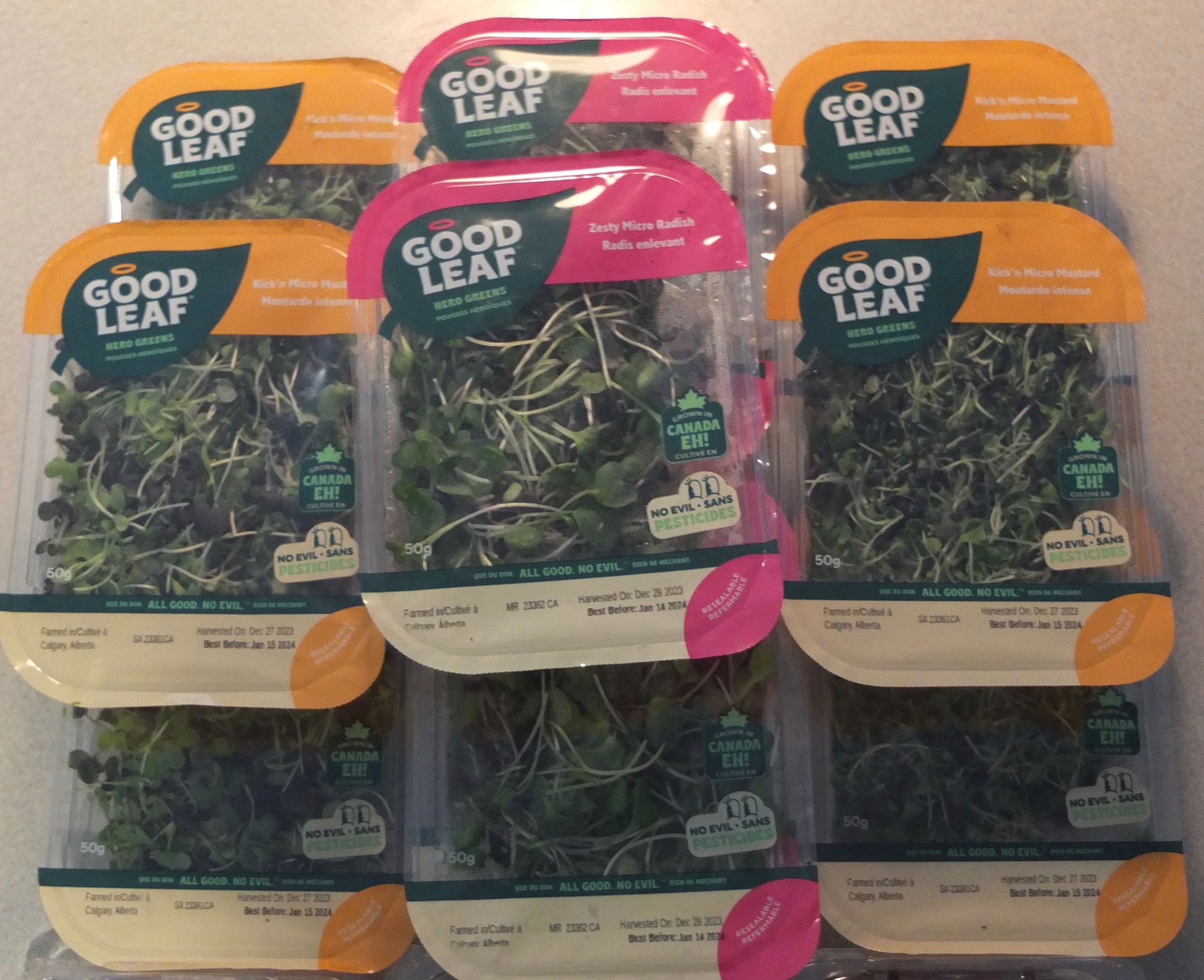
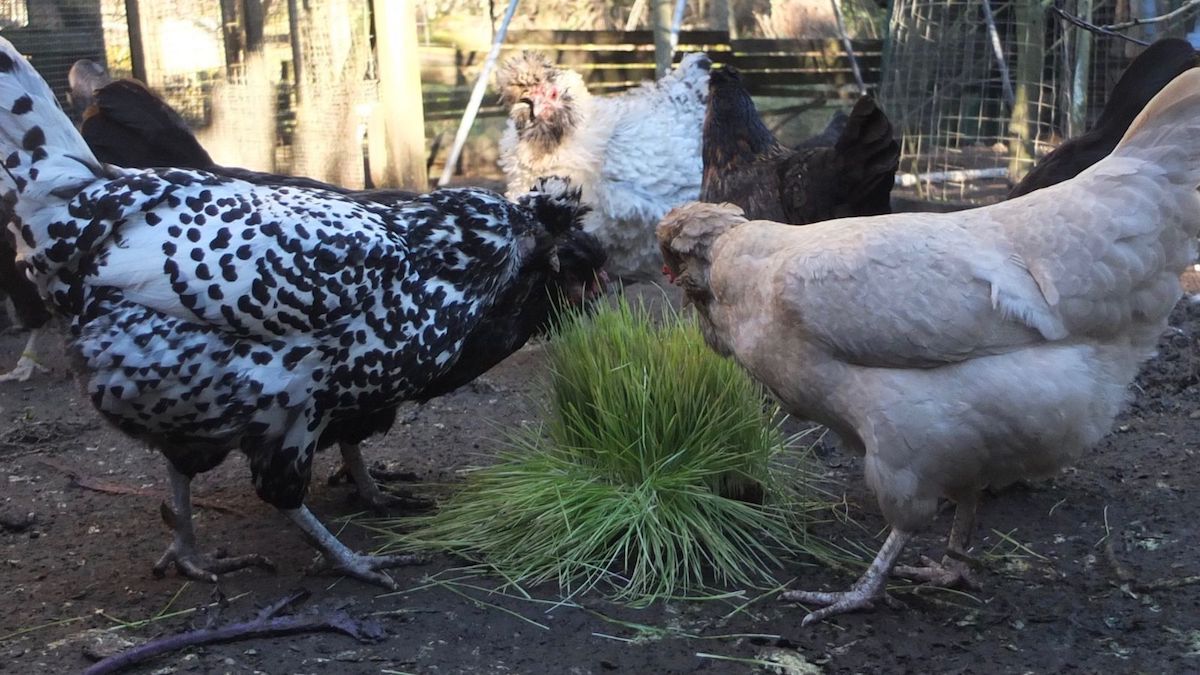
My flock with an assortment of donated sprouts and trays of wheatgrass
Lots of backyard chicken keepers don’t have large areas for their flock to explore, or live in regions that experience real winters. If that’s the case you can grow greens year-round, which provide high quality nutrition as well as act as a boredom buster.
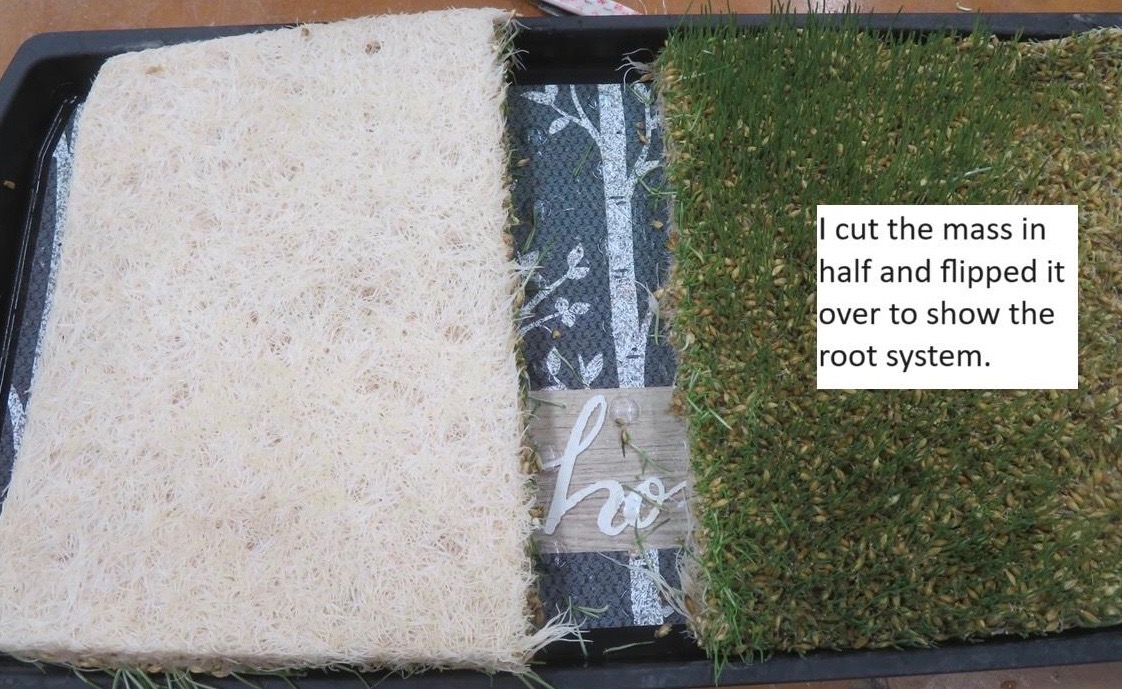
Whole grains are soaked and sprouted in trays without using soil, which helps with cost efficiency and makes it easier to grow indoors. Plants are harvested in less than a week when they reach 2-3″ high.
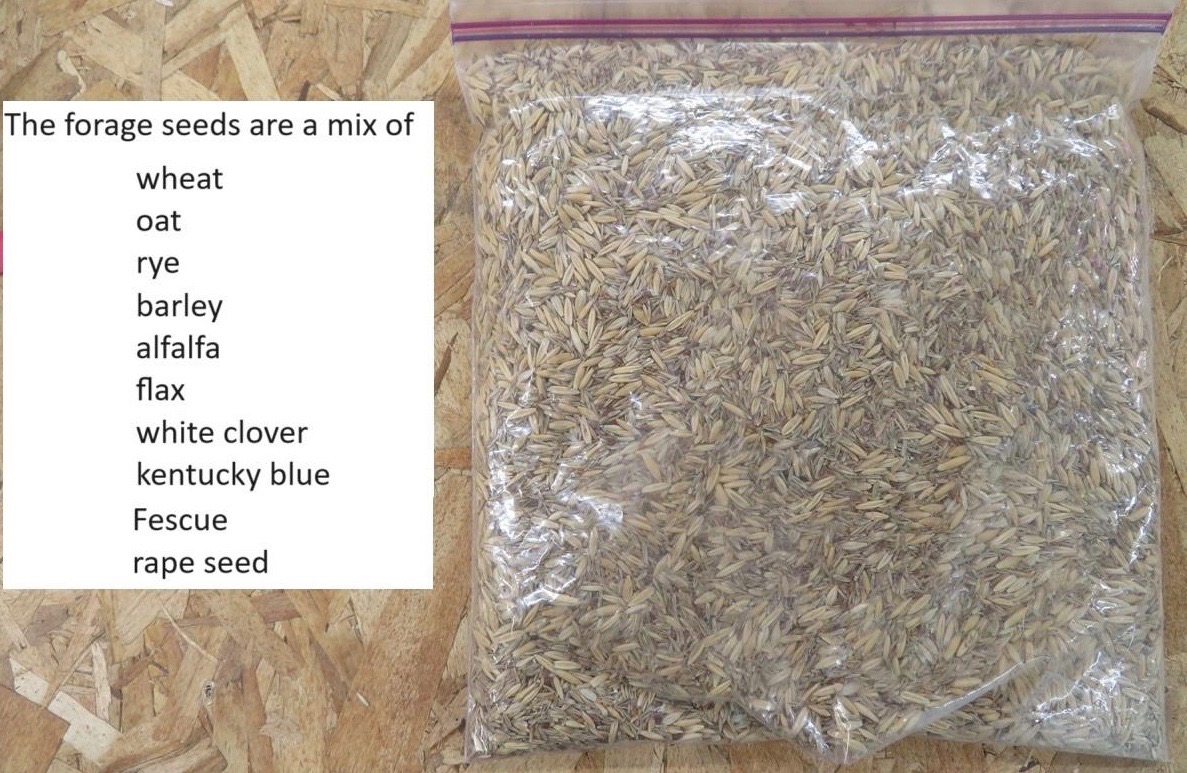
Benefits
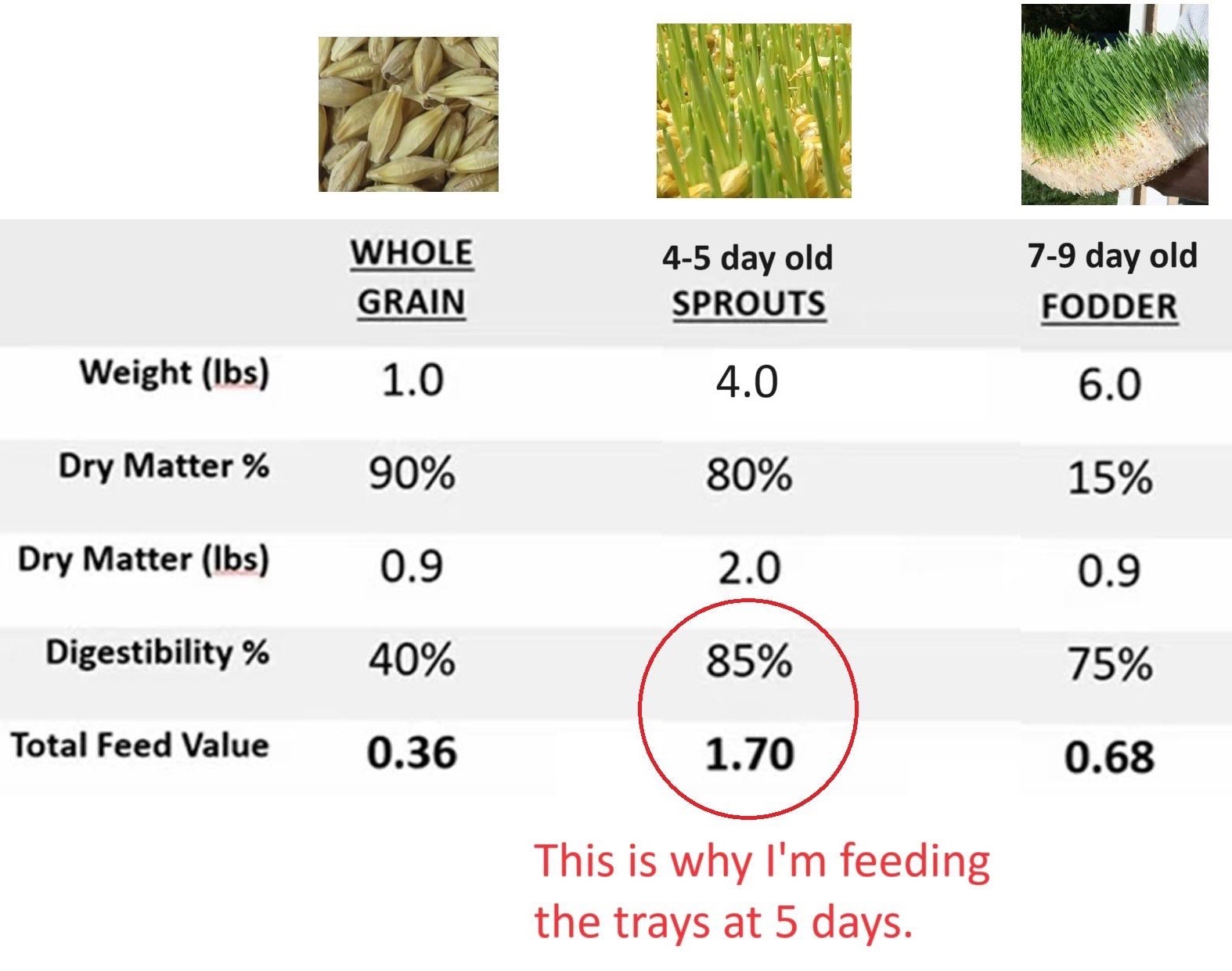
- Highly digestible
- Good source of vitamins, proteins and minerals
- More bio-available, sprouted feed has more nutrients than raw grains
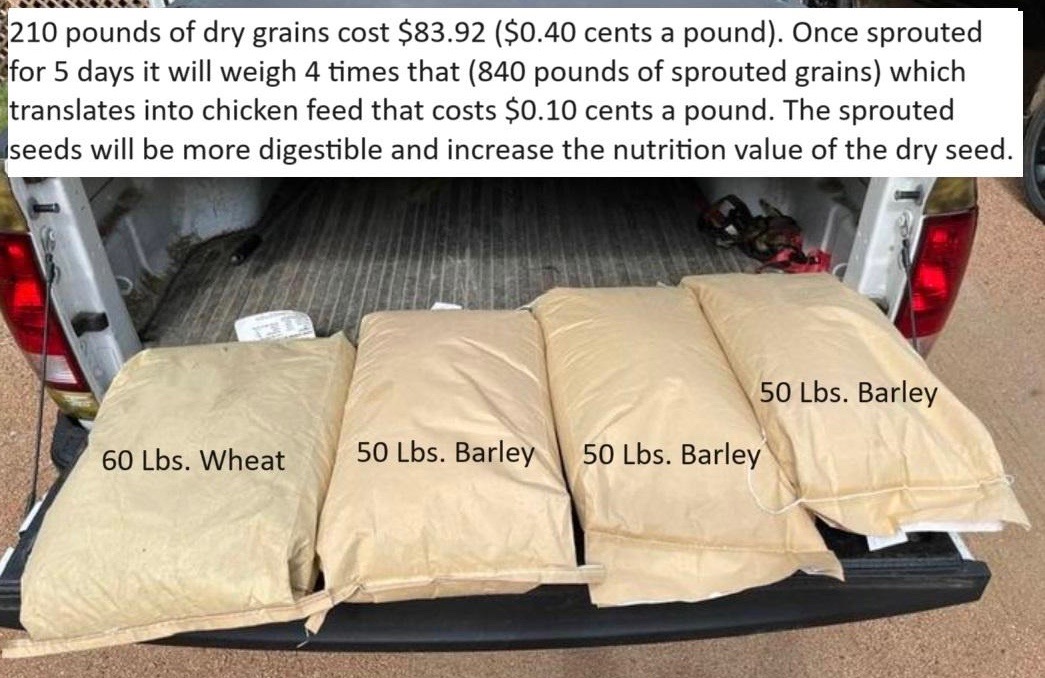
- One pound of grain can turn into four pounds of feed, depending on what you’re growing
- Cost-effective
- Contain carotenoids, which darken yolk colour
What To Grow
- Wheat
- Barley
- Oats
- Rye
- Millet
- Soybeans
- Buckwheat
- Alfalfa
- White Clover
- Field Peas
Supplies Required
- 2” deep trays
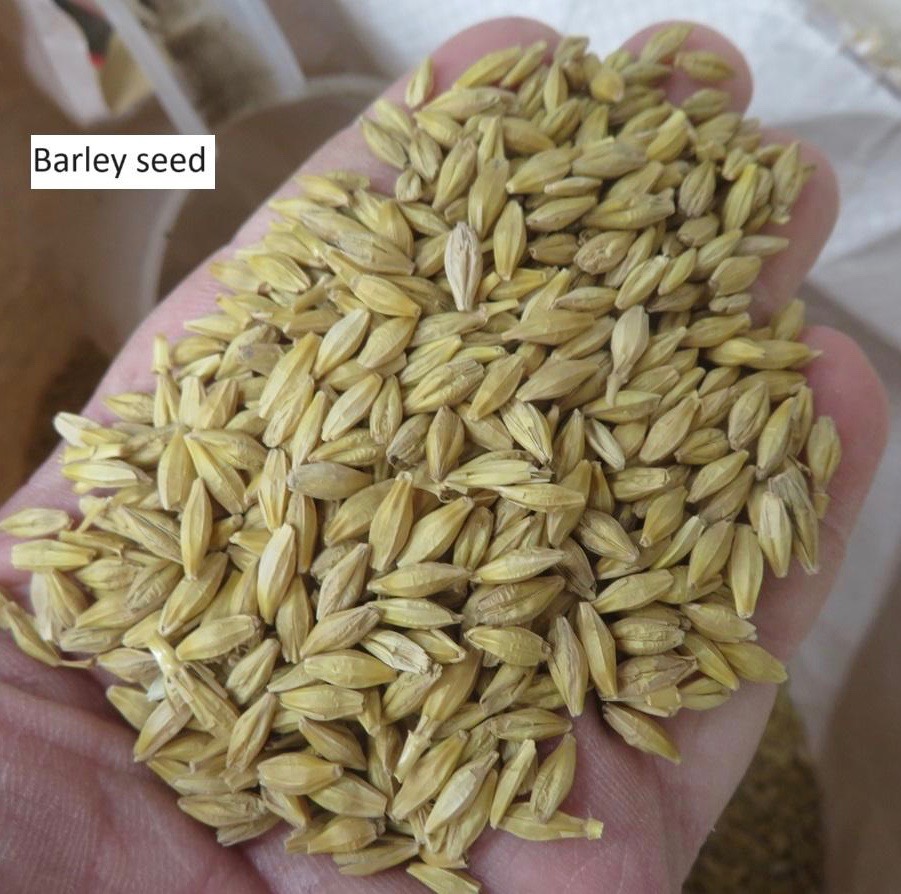
- Bulk untreated feed grade, whole grain seed
- Large plastic bucket
- Rack or shelf to store trays
- Spray bottle
- Housed in temperatures between 17-24C (63-75F)
- Grow lights are optional, but not required
My experience with sprouting is clearly quite limited so I turned to one of my guest contributors, Ron Kulas, for his advice. He lives in an area with plenty of cold and snow as well as numerous predators so is unable to free-range his flock.
Here’s Ron’s great photo tutorial that documents his foray into growing sprouts and fodder from start to finish.
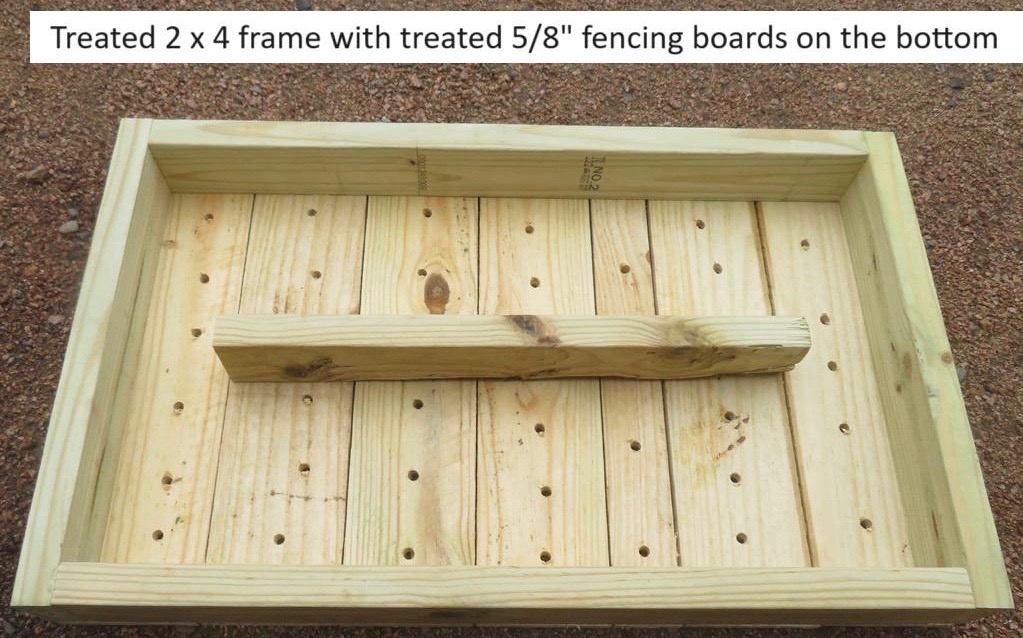
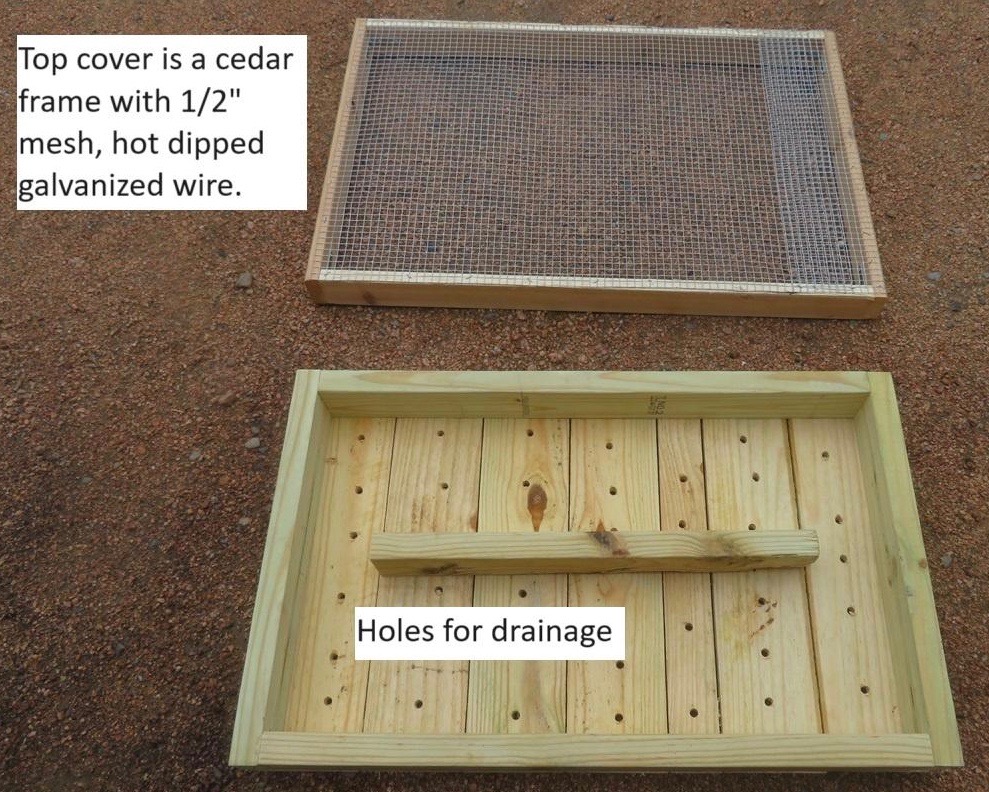
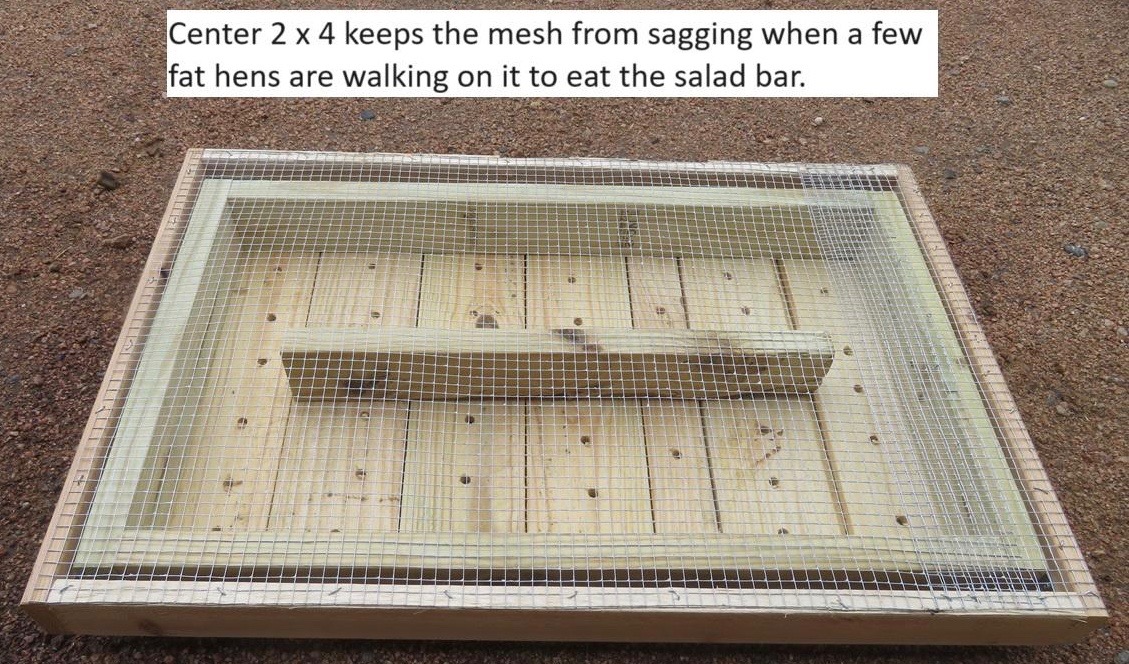
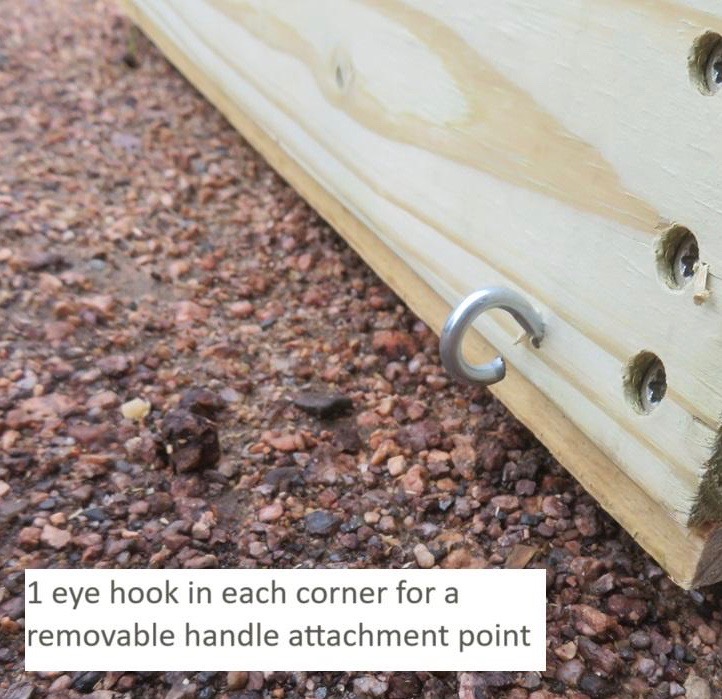
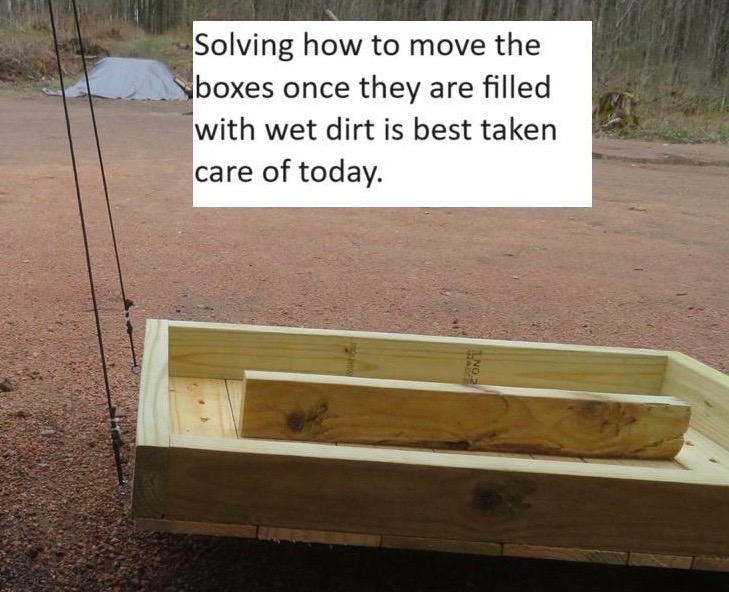
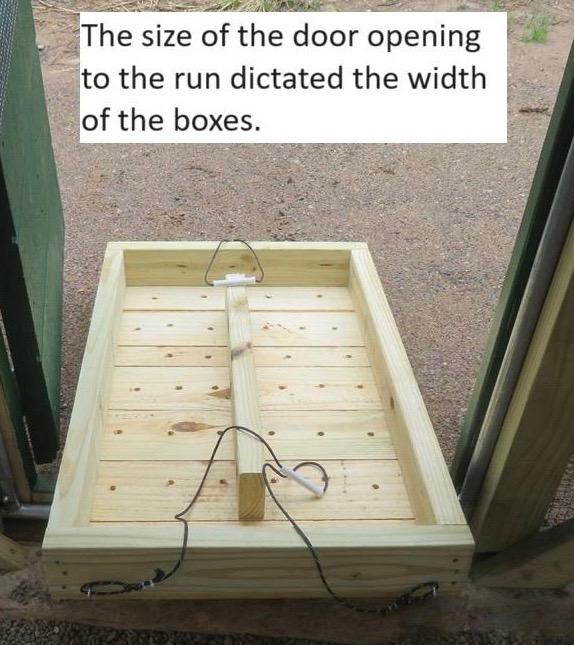
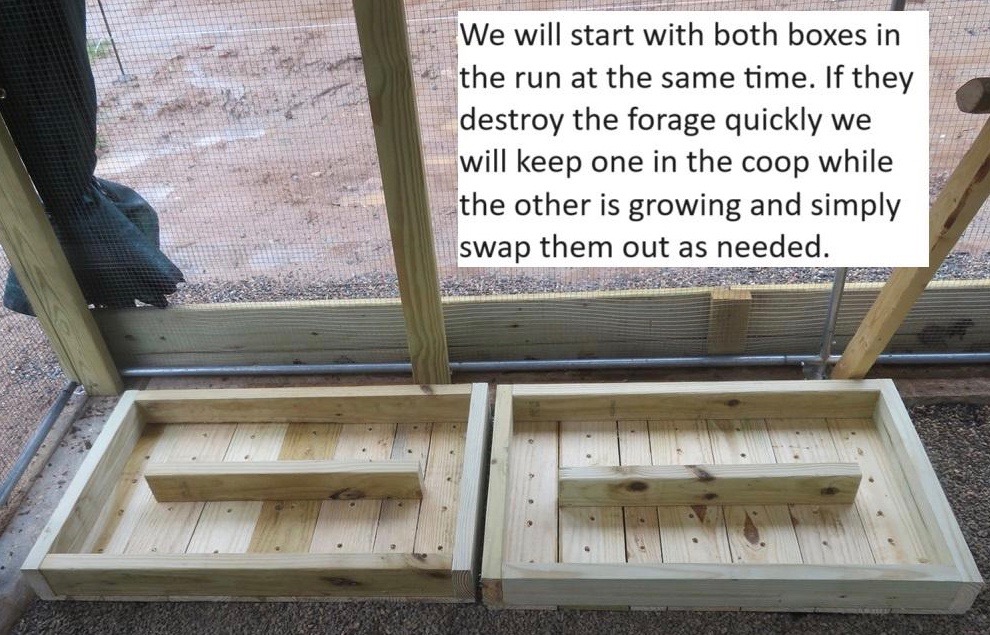
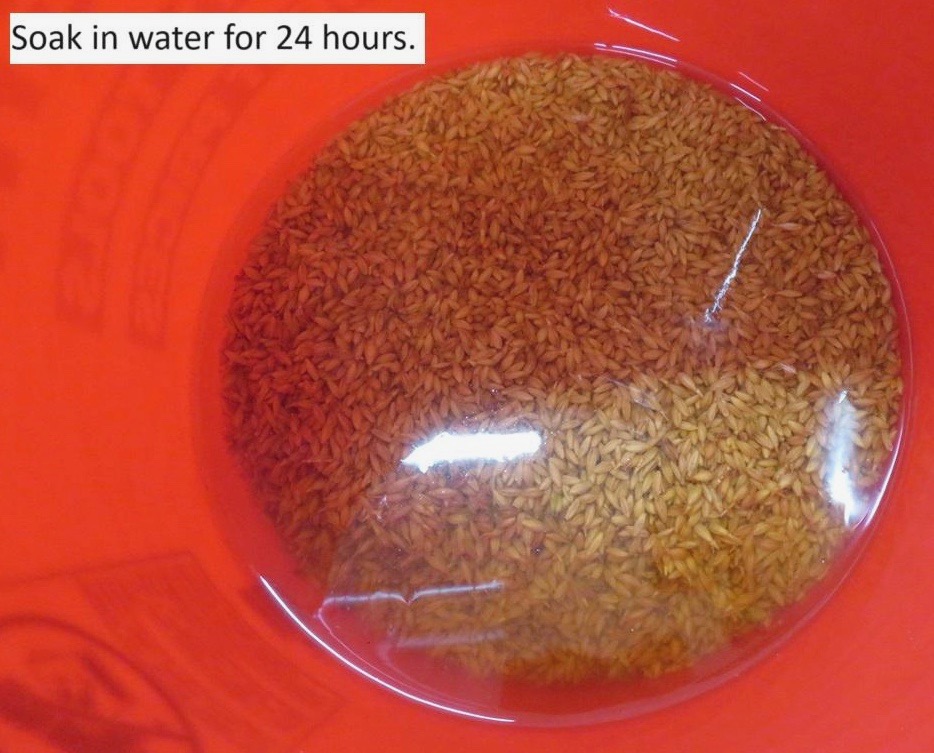
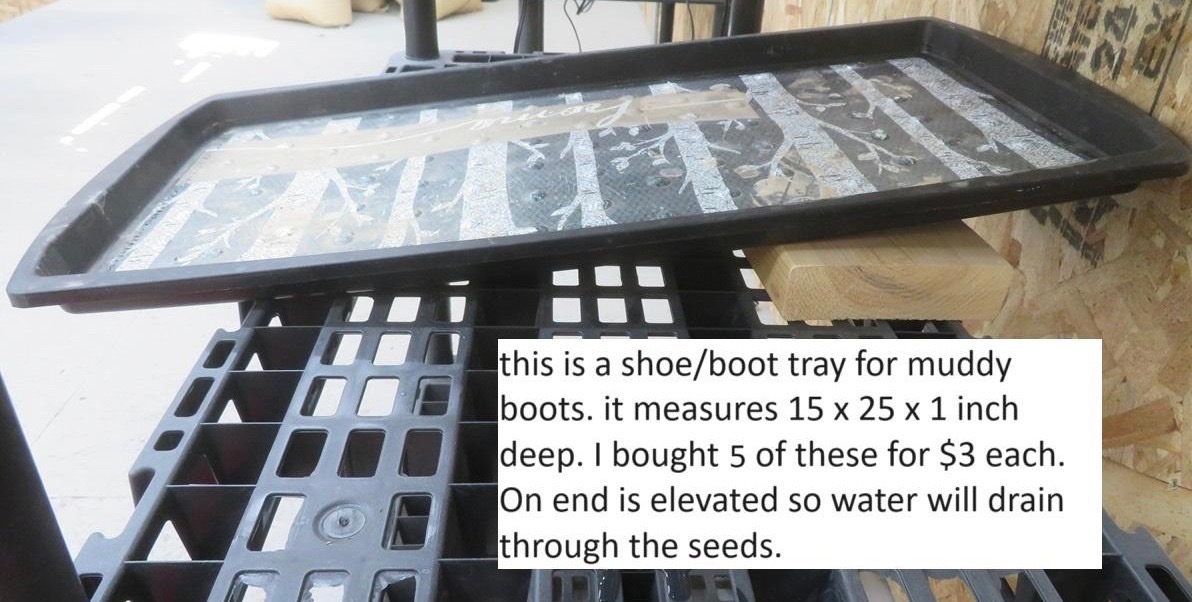
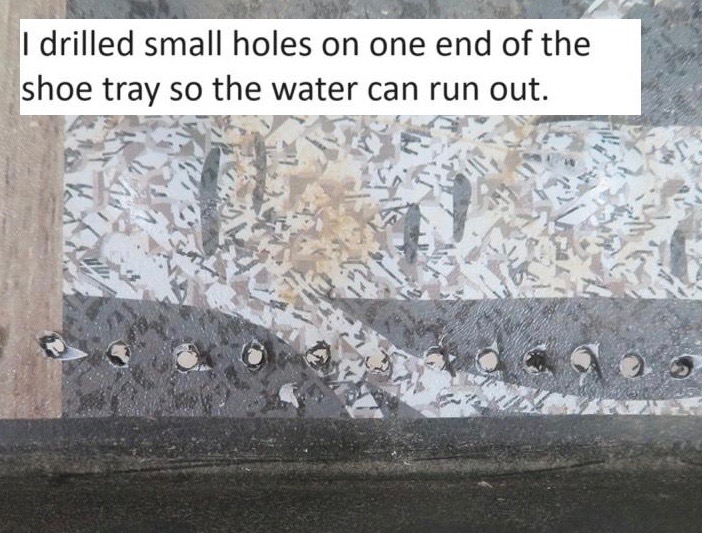
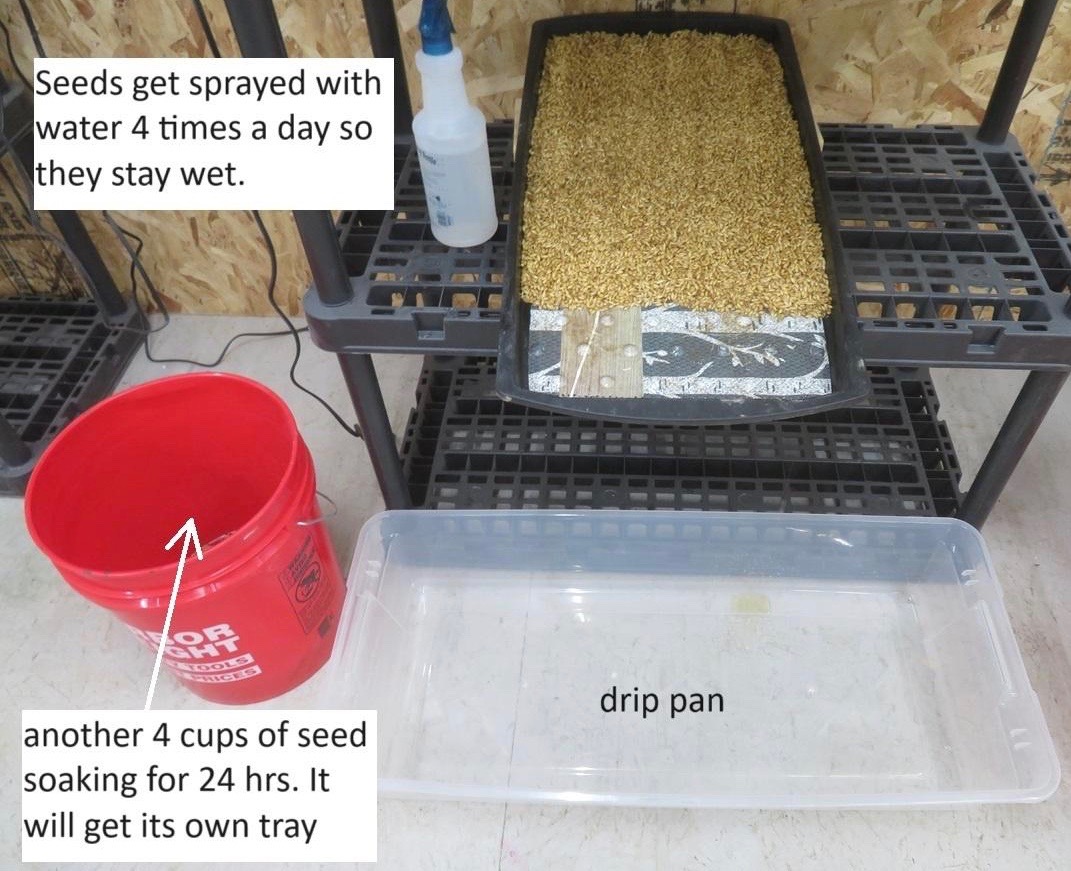
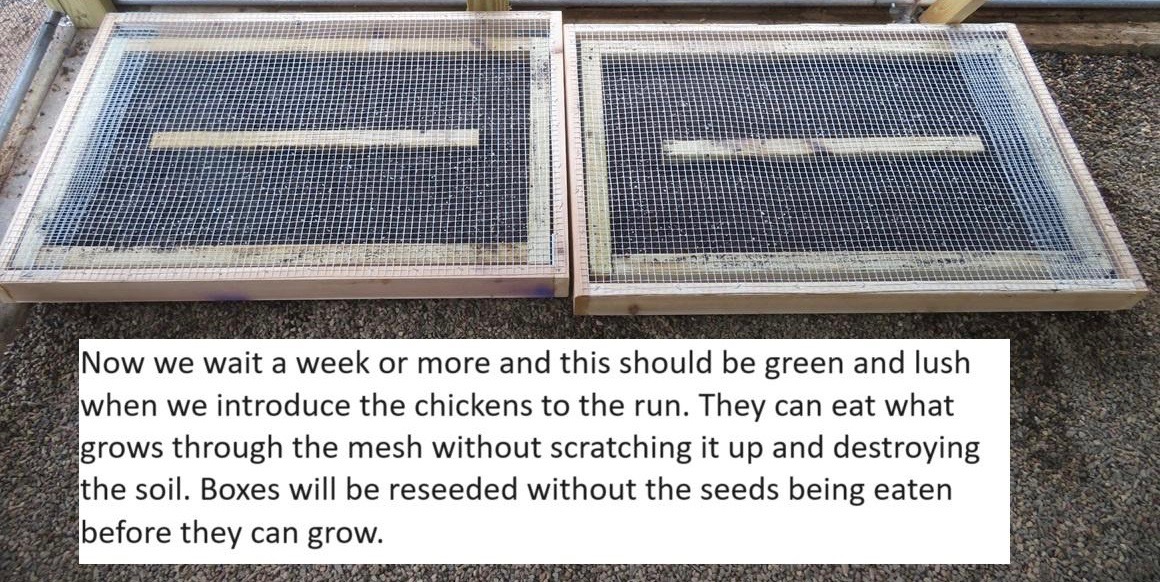
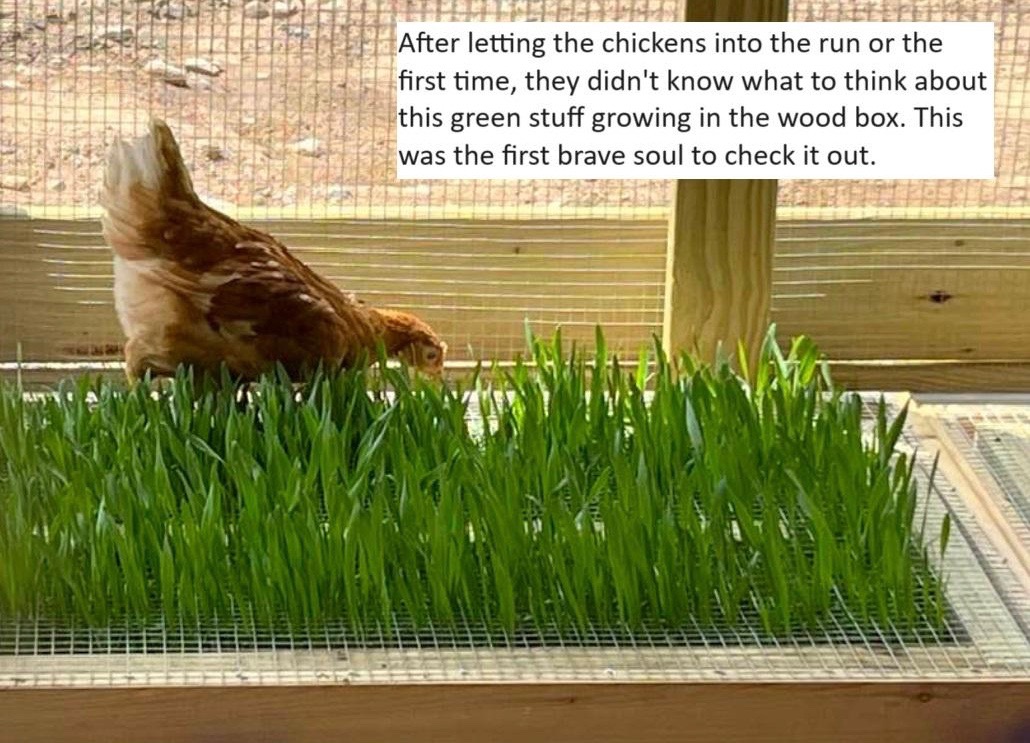
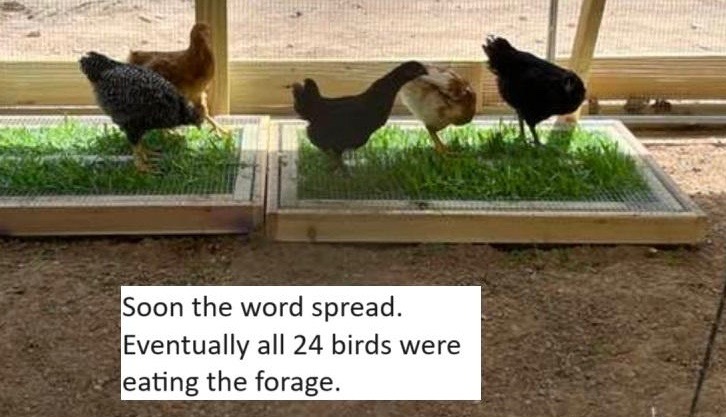
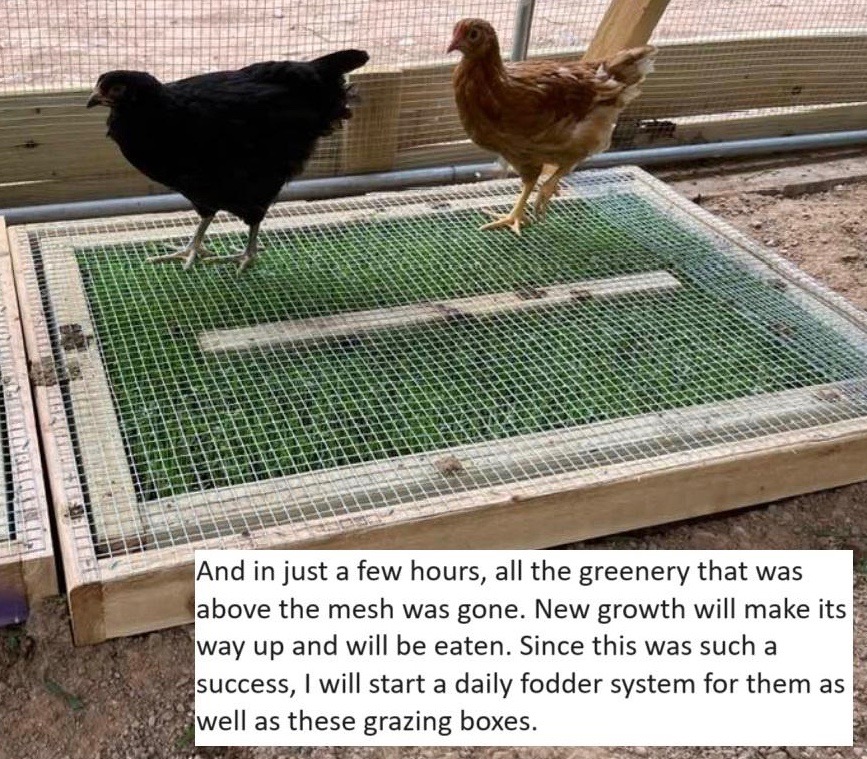
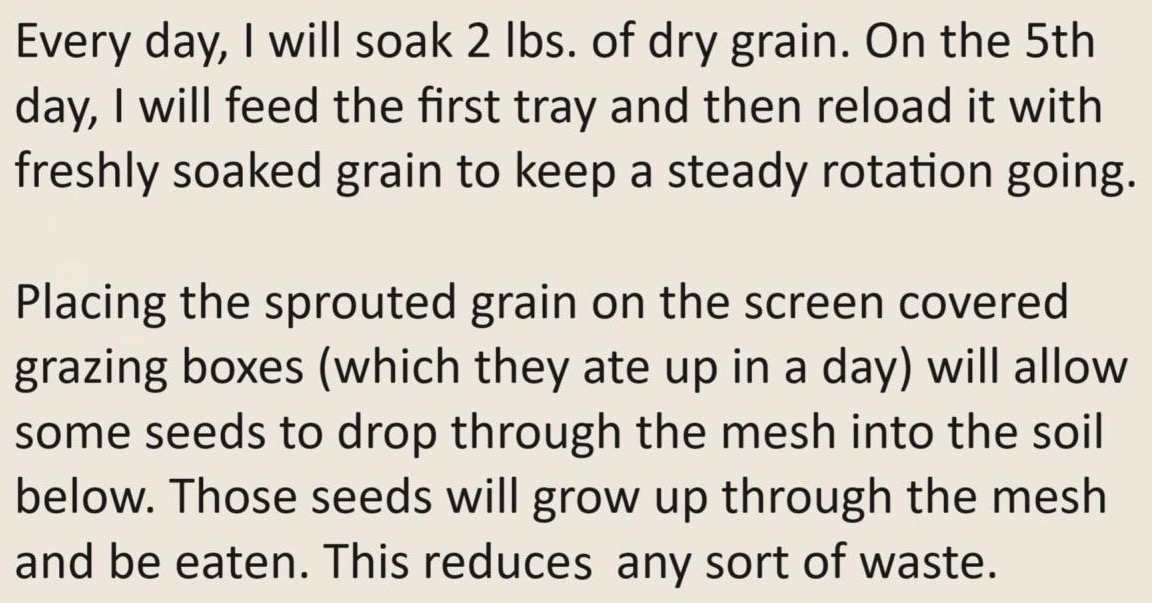
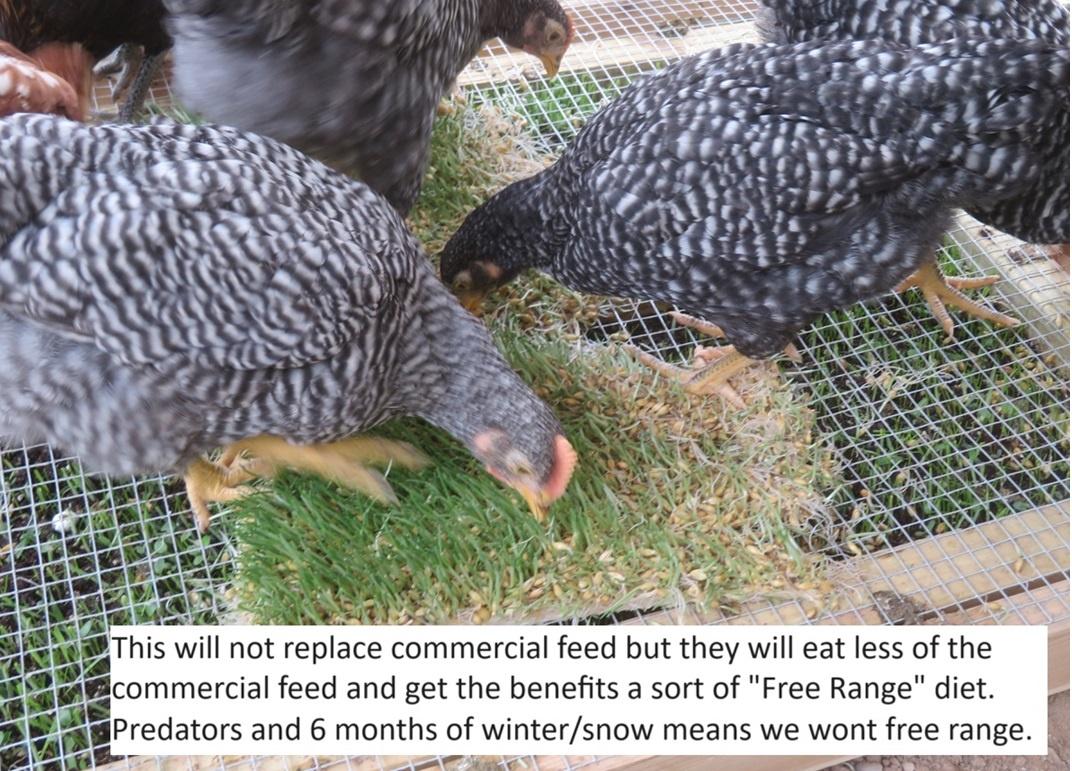
The two forage boxes (screen covered) are planted in soil and are moved in and out of the run. The fodder is grown in trays with no soil. They are fed to the chickens six days after soaking the seeds. Every three days over the summer they get a new tray, but that will increase to daily during the winter.
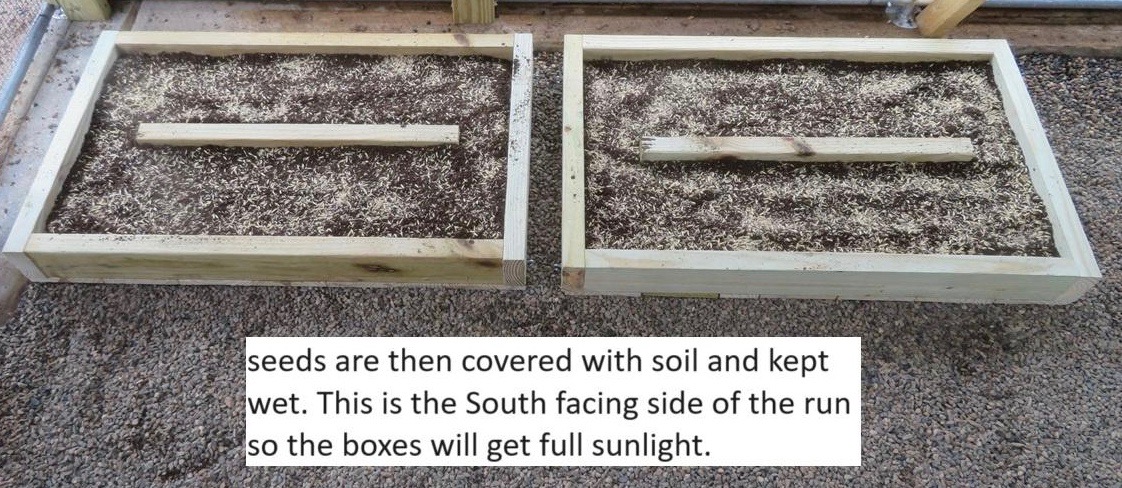
Many thanks to Ron Kulas for sharing his story and photos, used with permission. Featured photo: Bitchin’ Chickens
 Bitchin' Chickens
Great, informative article. Thanks.
LikeLiked by 1 person
Great info. I’ve got to try this! Love the middle board idea for those “fat hens.” 🙂
LikeLiked by 1 person