
After scrolling for many hours through online chicken groups I can attest that particular diagnoses suggested by members come up over and over: coccidiosis, internal and external parasites, vitamin deficiencies and egg binding – regardless of what the actual condition is. I have heard those words offered like a mantra without the full picture so often I felt compelled to write this post.
It’s essential to understand that many presentations – lethargy, isolating, decreased appetite, fluffed up feathers and upright stance – can be indicative of several, unrelated conditions. The analogy I offer is what happens if I post a photo of my black Poodle and ask, ‘What is her breed?’ Another group member has a black Lab. They jump to the answer that my dog is a Lab, strictly based on colour, disregarding every other clue that points in another direction.
Signs of illness and injury should be read in concert with the bird’s (and potentially the flock’s) history and other symptoms, particularly after the patient has been given a thorough health check.
Here are several cases that are typical of ones I see on a regular basis:
Remnants Of A Soft Shelled Egg
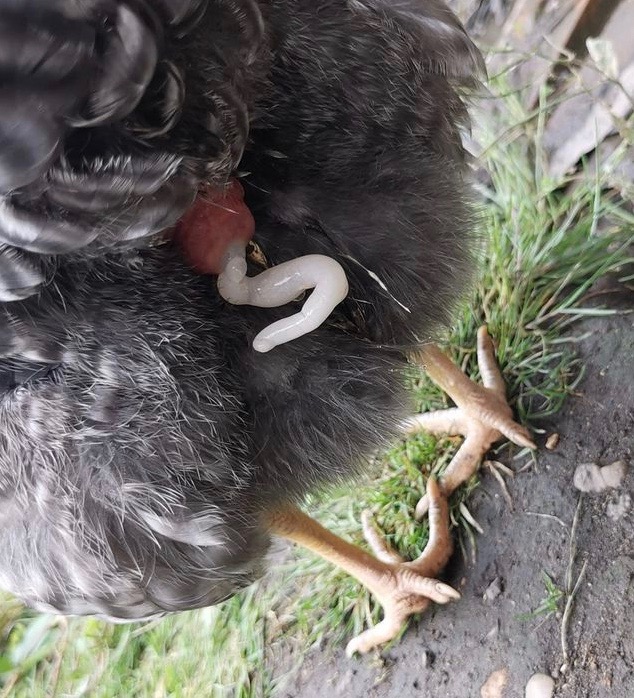
Photo Credit: Eddie Pruhoe
Despite the suggestions offered by group members in an online chicken group this is not a case of internal worms. What you see are the remnants of a soft-shelled egg that has broken either inside this hen or just at as it was being laid. You can gently pull it out. If it hasn’t come out in one piece you can insert your lubed, gloved up finger in the vent to ensure there is nothing left. Broken eggs can lead to egg yolk peritonitis when the yolk acts as medium for bacterial infections. However, it’s usually not a problem when they get broken this far down the reproductive tract. And in this case, the egg appears to be yolkless, so would not pose that problem.
FYI: In terms of treating worms you first need to figure out what type of worm and what is the most appropriate treatment. There are some products designed to treat single species (Piperazine for roundworms) while others (Ivermectin, Fenbendazole) are broad spectrum that can deal with many species. Tapeworms are usually remedied with Praziquantel.
Marek’s Disease Vs Vitamin Deficiency
The bird on the left, a 13-week old pullet, was my first bird with Marek’s Disease. The chicken on the right is not mine, but I would suspect Marek’s due to its age and stance.
The virus leads to tumours on the sciatic nerve causing limping or leg paralysis; wing paralysis; changes in the eye; or tumours on the internal organs.
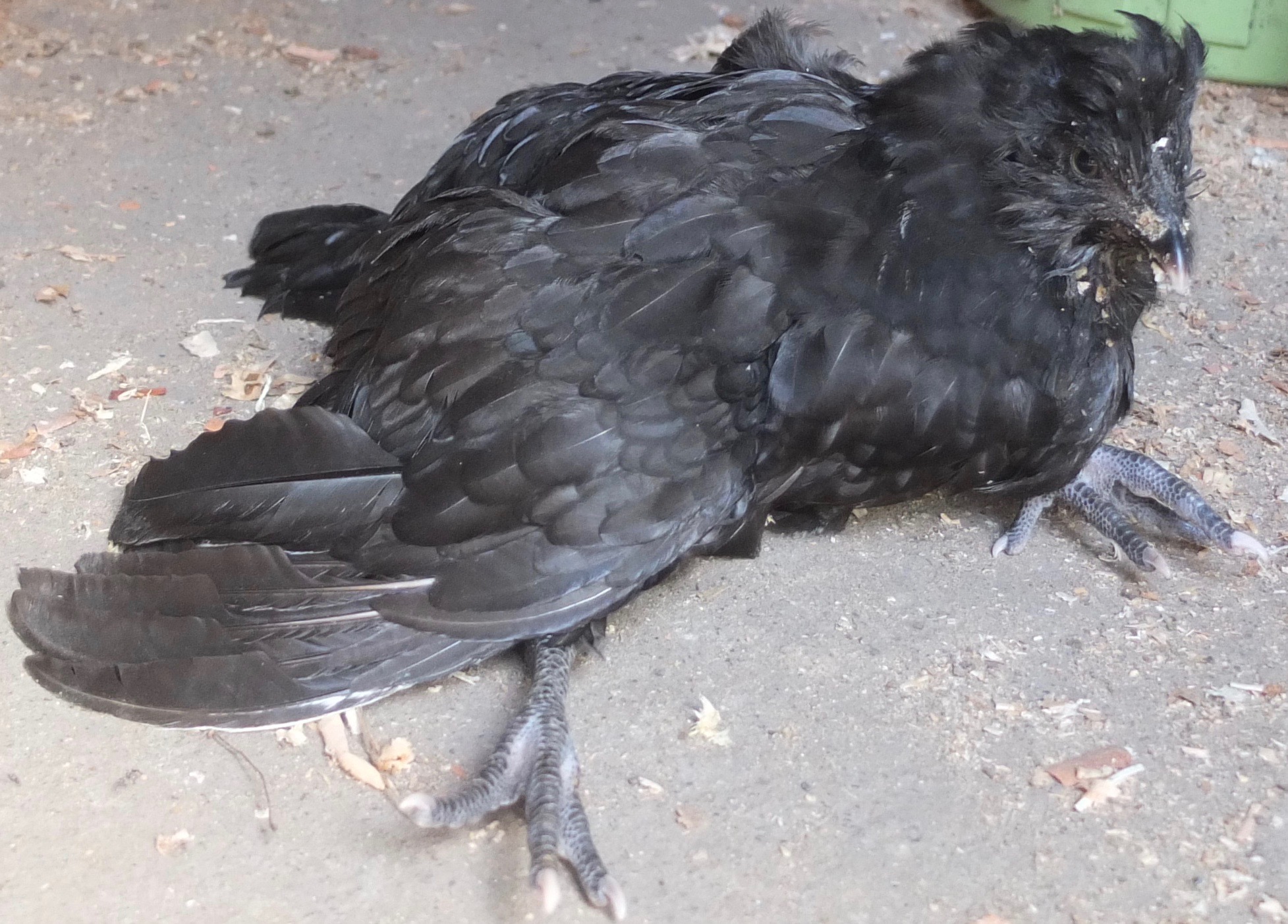
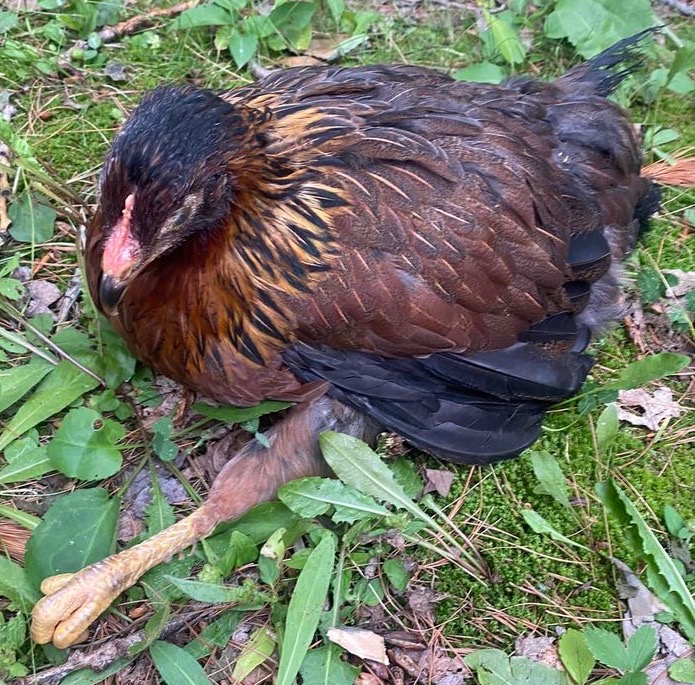
Photo Credit: Bitchin’ Chickens; MN Basic
Curled toes and leg paralysis are often diagnosed as a vitamin deficiency. While not all leg paralysis (and this stance, in particular) is Marek’s it is usually not a result of a vitamin deficiency. I’ve asked Dr Bowes (vet/avian pathologist) her opinion about the widespread belief that many health issues in chickens are due to vitamin deficiencies. Her response was: “If fed a balanced diet vitamin deficiencies, and particularly single vitamin deficiency, are uncommon”.
I posted that photo in an online chicken medical advice group asking if it was Marek’s. I got the resounding response from both members and moderators, ‘No’. I was advised to treat her in a number of ways, all of which resulted in no improvement. I felt like I had not only prolonged her suffering, but also exacerbated it by putting her through unnecessary and useless remedies. I euthanized her and withheld the truth from the group, saying only that she had died, because they are also adamantly opposed to euthanasia for any reason.
Egg Binding, Ascites And Internal Masses
If I had a dollar for every waddling or hen standing upright as being egg bound I could have retired by now. If you are concerned that your hen is actually egg bound, slip on a pair of latex gloves, lube your index finger and insert it in her vent. If you can’t feel an egg within the first 2”, she’s not egg bound. If she’s still pooping normally, she’s not egg bound.
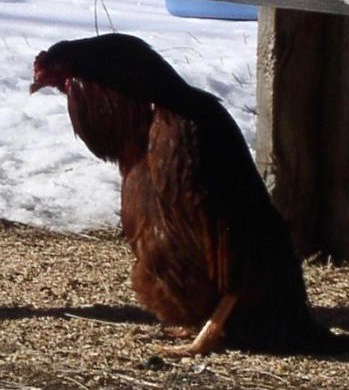
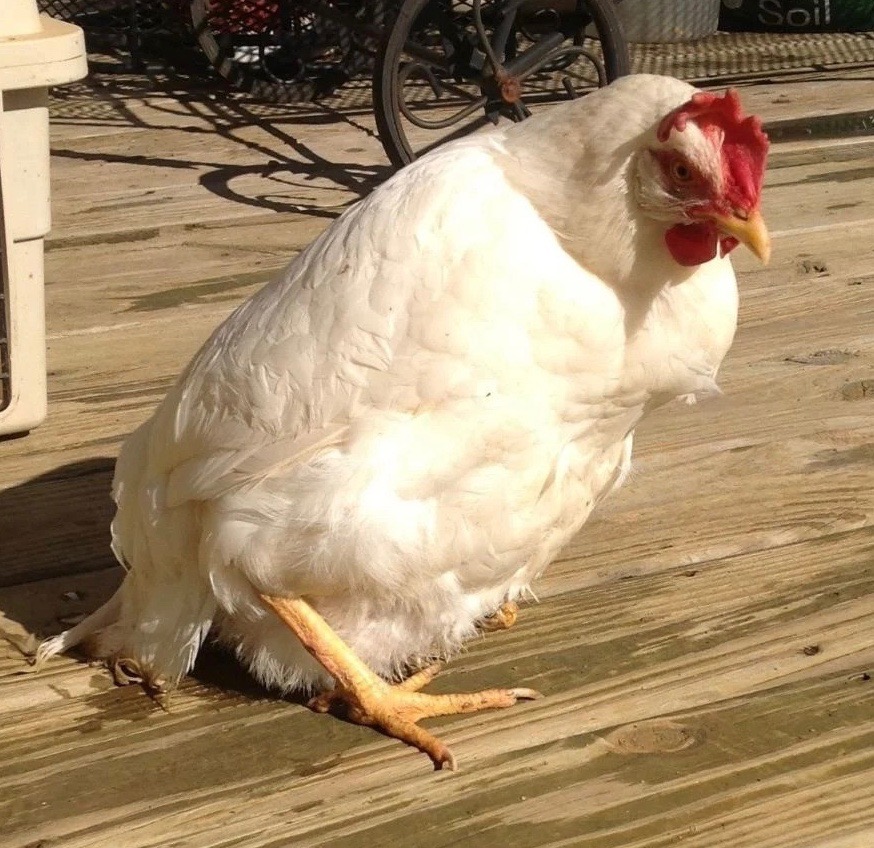
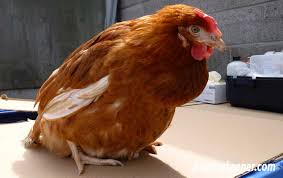
Photo Credit: BYC; BYC; Poultry Keeper
Most often, those behaviours are indicative of either accumulation of fluid (ascites) or a mass (salpingitis, egg yolk peritonitis, cancer) that is impinging on internal organs causing pain. To narrow the diagnosis feel your hen’s abdomen: is it soft and squishy or hard? The former points to ascites, while the latter is a sign of mass.
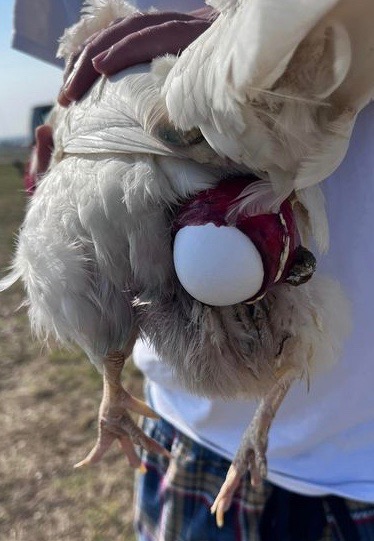
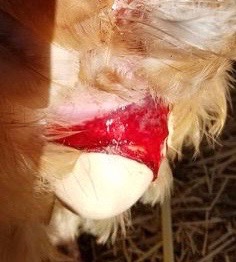
Photo Credit: Michelle Carey; Rachelle Clark
In true situations of egg binding you can feel and sometimes even see the egg. There are a number of treatments to coax the egg out (i.e. increasing calcium intake, hot Epsom salt baths, externally massaging the egg out of the vent or, in extreme cases, breaking the egg and carefully extracting the contents).
External Parasites As A Symptom Not THE Problem
Last year, as I was heading over to Dr Bowes’ place for another of our ‘Gorefest’ sessions I noticed one of my hens in the classic isolating stance of a sick bird. I popped her in the car to ask for Dr Bowes’ advice, which I assumed was to humanely euthanize her. She did so and then proceeded to do a necropsy to find out what was going on with her. One of the things that she saw were a couple of lice, which surprised me as I’ve only seen them on two of my birds in many years of keeping chickens.
The explanation is that healthy birds dust bathe on a regular basis, keeping external parasites like lice and mites in check, while sick birds are less likely to do so, making them vulnerable.
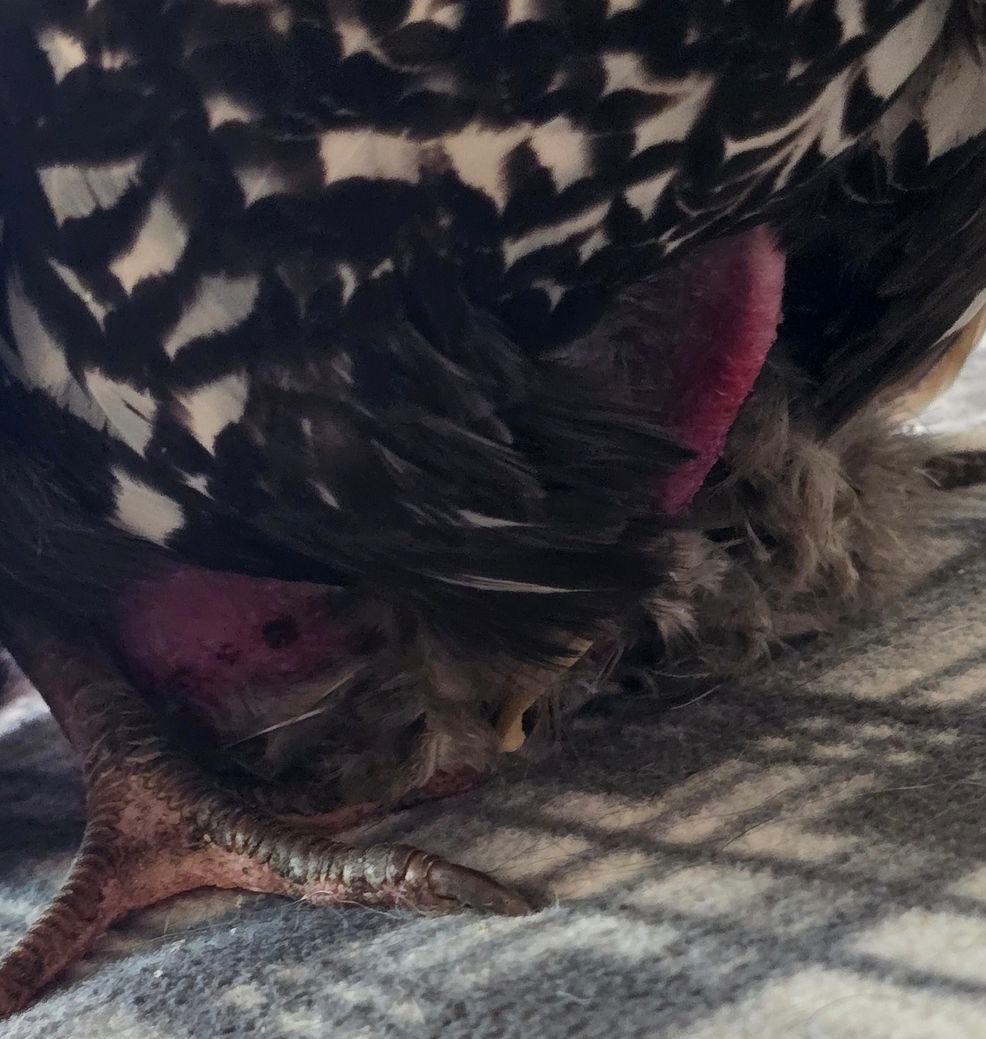
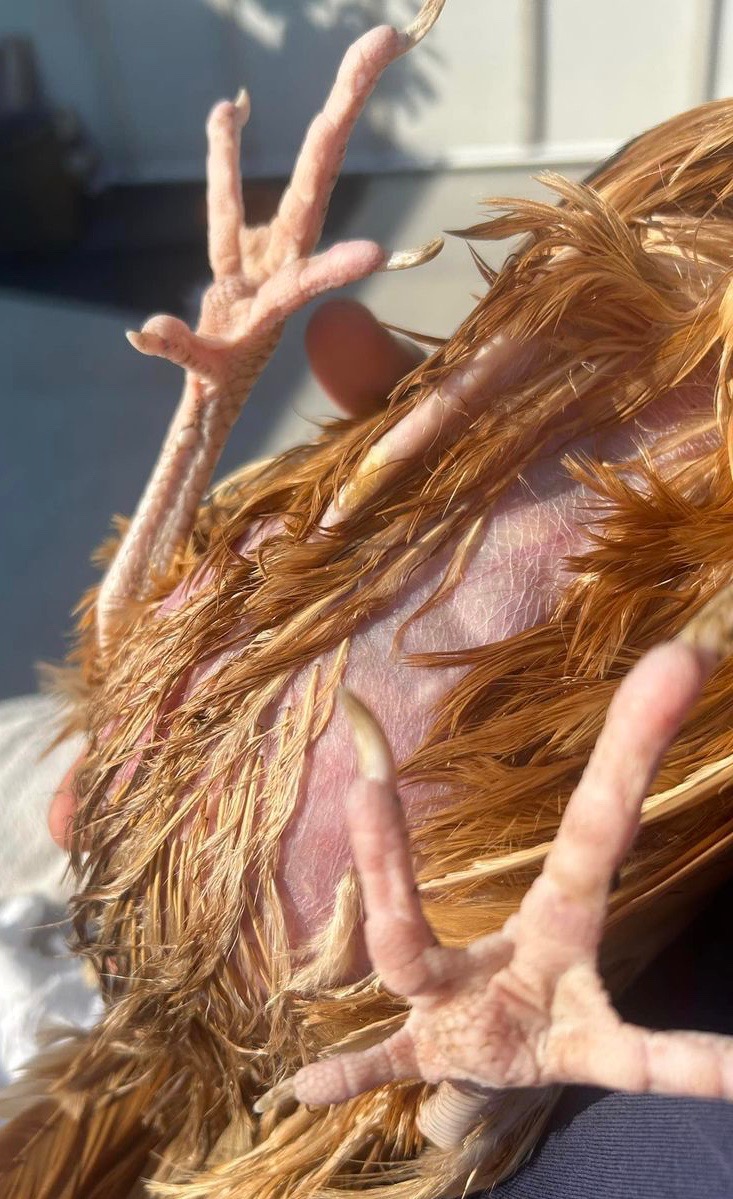
Photo Credit: Ally Westpfahl and Karly Caniwi
The hens above are typical of the many posts I see in which someone asks for advice saying that their bird is thin, lethargic, isolating and has external parasites and folks diagnose the parasites as the cause of all those symptoms. I would suggest that there is an underlying health issue at play and mites or lice are only taking advantage of a sick bird. Of course, it’s important to treat infestations but more importantly don’t get off track by focusing on something that is a secondary symptom. A bird that is this emaciated is close to death and, unfortunately, suffering from something more serious than just external parasites.
Coccidiosis, Bloody Poop Or Intestinal Shedding?
Coccidiosis is an intestinal disease caused by a microscopic parasitic protozoa, which attaches itself to the intestinal lining of a chicken. There are six different species, some harmless and others life threatening, each living in a specific area of the gut. They damage the tissue causing bleeding (hence the bloody poop) and prevent birds from absorbing nutrients.

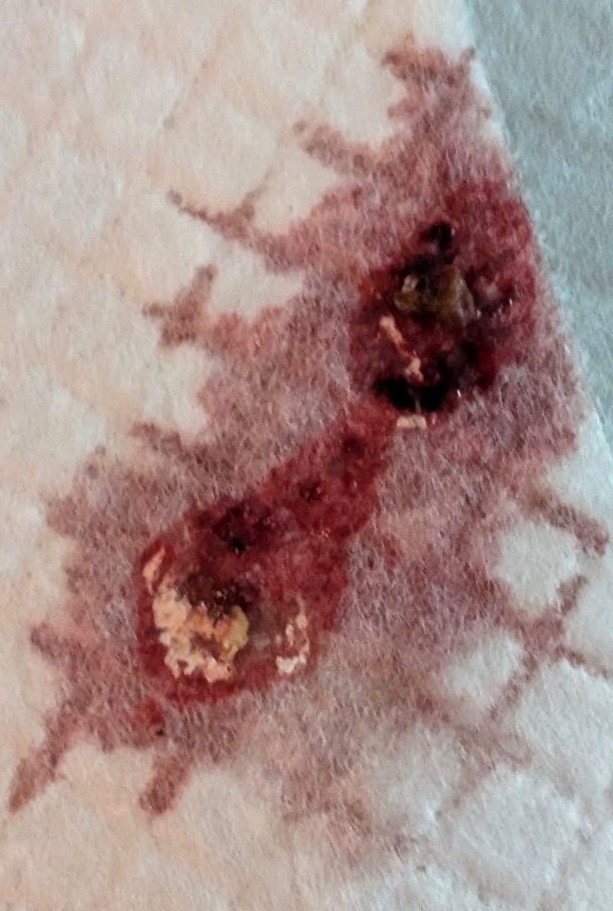
Photo Credit: Unknown; Drew Ventrella
I don’t have an incubator but I do have plenty of broody hens. The advantage of hen-raised chicks is that they are outside scratching in the soil which exposes them to small amounts of pathogens and builds their immune systems’ gradually. Most chickens carry the coccidia organism in their bowel but only some will develop the disease, which starts as an egg passed through chicken poop.
There are two kinds of bloody poop that come out of chickens: a blackish coloured one indicative of digested blood (i.e. an issue in the upper GI tract, like an ulcer or foreign body) or frank, red-coloured blood (i.e. from the lower GI tract which could be from an internal injury).
Intestinal shedding can appear red and slimy, and although it can be a bit scary looking, it’s normal.
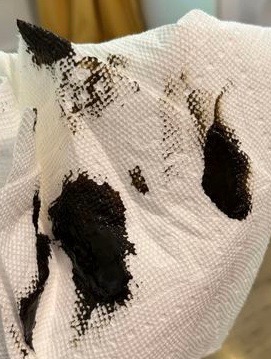
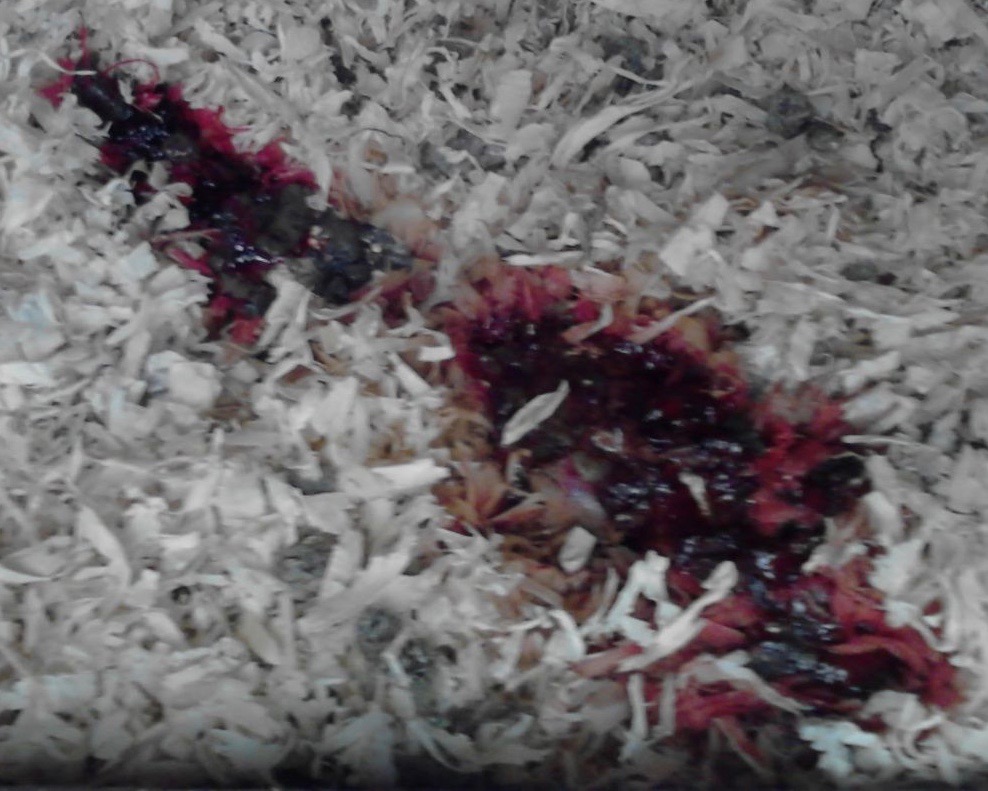
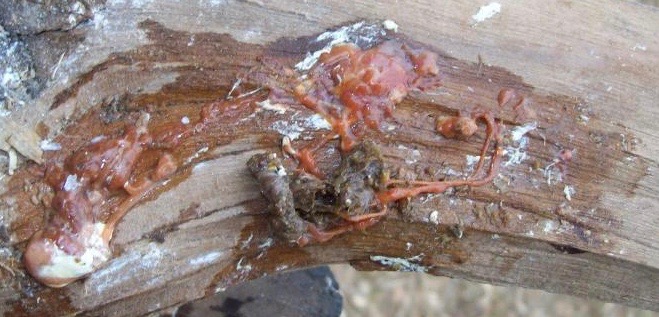
Photo Credit: Stephanie Baker; BYC; BYC
Differentiating these three can be a bit tricky as various reddish things are excreted by chickens. To determine the difference between them look for other symptoms: decreased appetite, lethargy, fluffed up feathers and failure to thrive. The big one here is age: coccidiosis is mostly seen in birds under six months because they haven’t built immunity against it. If you have an older bird who has had access to the outdoors and pecking in the soil there is decreased likelihood of coccidia being the issue.
 Bitchin' Chickens
Thank you, very good and informative.
LikeLiked by 1 person
A word of caution about dismissing vitamin deficiencies: What you wrote is true, IF you are feeding quality feed. What I have noticed over the last year and a half or so, is that it has become near impossible to find fresh feed in feed stores. Bags on the shelf are at least 4 months old, often much older. Stores get bags that are old from their distributors. Now some feed companies claim their feed is fine for six months, if stored cool and dry, but a) it’s doubtful that that is how those bags have been stored (feed stores get hot in the summer heat around here) and b) I don’t believe the manufacturers are talking about the vitamin content when they talk about shelf life, rather the absence of mold, insects and possibly rancid fats. Well, vitamins in a mix deteriorate rather quickly and feeds are best to use within weeks of milling, not months. If buyers don’t check dates, buy a six or eight month old bag and feed it out a couple of months later (because they stocked up on their last trip to the store), that feed can absolutely be deficient.
LikeLiked by 1 person
Good points, thanks for your feedback.
LikeLike
Absolutely FABULOUS! The uncomplicated truth about how our birds “present”. Nothing vague here. This can save our birds from suffering and death. Most “advice” breaks my heart because most of it is way off!
LikeLiked by 1 person
Thanks for the feedback.
LikeLike
Excellent article, Claire! I get so annoyed when I have often read the advice to give your chicken a bath when it is sick.
LikeLiked by 1 person
Agreed, I can’t imagine being on death’s door and then be given a bath. The best thing to do is offer comfort care: a warm, quiet place and try to determine what is going on with your bird. And hydration is more important than food in the early stages of recovery/treatment.
LikeLike
This is very helpful.
For example, I get so frustrated with people who are diagnosing brooder chicks with coccidiosis at the age of one week when they have never been out-of-doors or with a hen who might have been infected. Coccidiosis is not passed from the hen to the egg. But, it’s like Corid (because it is still readily available) is their go-to for any chicken who is not thriving, not realizing that it can be harmful to chickens who do not have coccidiosis, and certainly won’t cure anything BUT coccidiosis.
I realize that people just want to help, and they are recommending solutions based on the few clues a chicken owner posts, but have no information with direct contact with the sick chicken in question. But I find it unhelpful.
At the same time, I get it. Few of us have access to a vet who will deal with chickens. We are left out here on our own. Thanks to your blog where you regularly interview vets and look at case studies!
LikeLiked by 1 person
Thanks for your feedback. I’m happy when folks ‘get’ it.
LikeLike