
I met Seleta almost three years ago when she contacted me for advice about one of her sick hens. Unfortunately I wasn’t able to help, but that was the start of our online correspondence about small flock health issues.
If your memory needs jogging, Seleta hit the headlines in 2020 when her hen, Blue, became the first chicken in the world to undergo heart surgery for Patent Ductus Arteriosus. Never one to be shy about inviting folks to collaborate with me, I asked if we could present a case study featuring Blue. What followed were cases on one of her hens with pica eating disorder, another who was egg bound and required a spay surgery to save her life, as well as a hen with ILT. She even wrote a post about her great room turned into an aviary for her house chickens and her birds’ adverse side effects after being treated with Fenbendazole.
I enjoy hearing from her, but sometimes a bit of dread creeps in because despite Seleta’s best efforts her flock has experienced a number of health issues – many of them far from run-of-the-mill and often requiring expensive specialist care. This one doesn’t disappoint in that regard.
I doubt there are many chicken owners as dedicated as Seleta and her husband who have spent considerable amounts of time, money and energy to care for their flock.
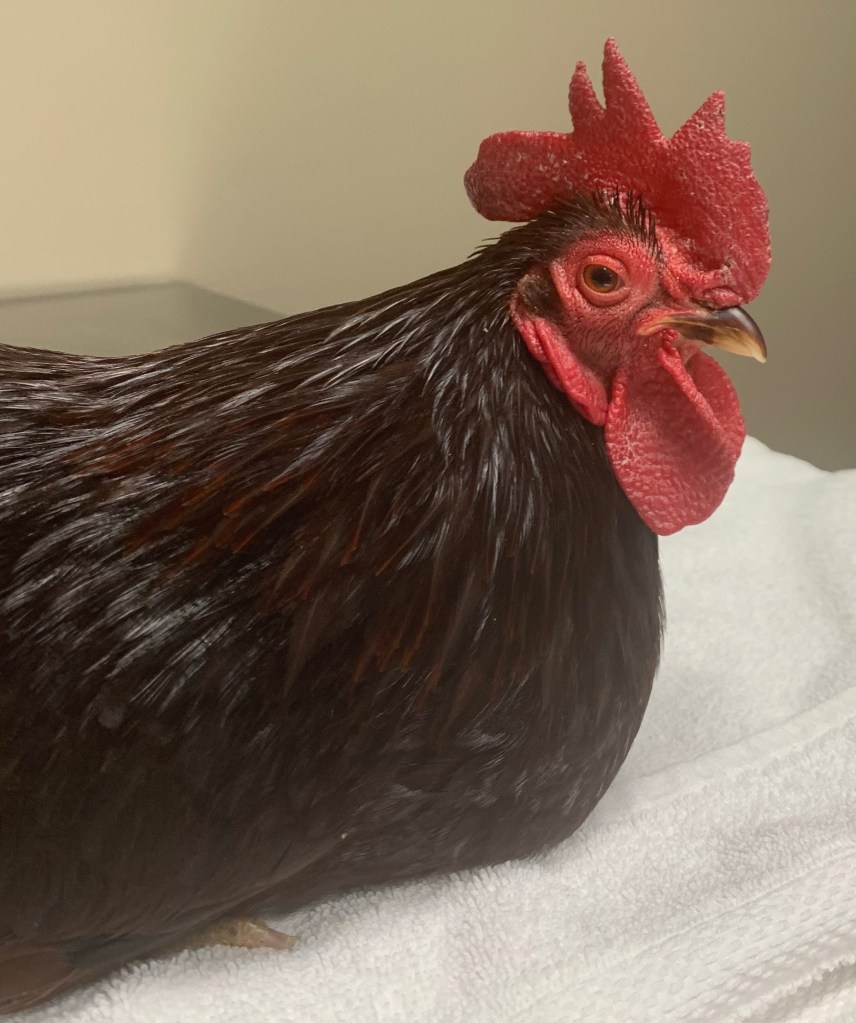
Dazzle came to our family by way of Kade that we met at a poultry show in Wyoming. We were there showing our Nankins and he had brought a pen of several Rhode Island Red (RIR) bantams to sell because he was getting out of the breed. At some point during the day, my son told Kade he really liked his birds and wished he could take a couple home. I’ll be darned if he didn’t tell my son to pick out a pair he liked. I tried to resist, I really did, but anyone who knows Kade also knows he’s quite a character and can be rather convincing. My son was thrilled with his new acquisitions and promptly named the hen, Razzle and the rooster, Dazzle. Not bad for spur of the moment names. For the record, I had never really much been a fan of RIRs. They just weren’t that interesting a breed to me and seemed rather plain, though I will admit, the birds we got from were kinda pretty, a much deeper red colour than the hatchery RIRs I had seen in the past.
Dazzle proved himself to be quite the character over time. He took a liking to my husband and he would sit on his shoulder or on the chair above him in the evening. I’ve always joked about him being a bit of a diva. I’ve never seen him mount any of the hens, which was evidenced by non-fertile eggs for incubation. He gripes at me every time I give him his medication as if he’s telling me where to go. In fact, he kind of reminds me of the rooster version of a cranky old man yelling at passing kids to “get off my lawn”. His silly antics and his clear care and concern for his girls absolutely captured our hearts.
April 6, 2023: Dazzle suddenly fell off the chair he had been sleeping on. After that, he seemed reluctant to jump up onto or down from anything and I thought he might somehow have hurt himself. It was strange behavior, but not particularly alarming at that point.
April 9: He tried to jump up onto a chair and missed. When he landed he had what looked like a seizure and began thrashing his legs and flapping his wings. I picked him up as soon as I could get to him and the thrashing stopped but his comb and wattles were purple and he seemed confused and lethargic.
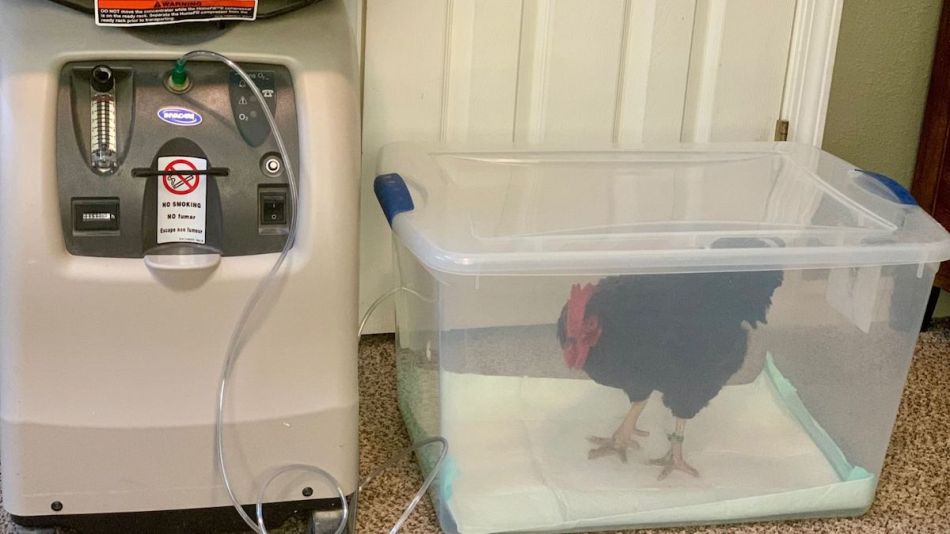
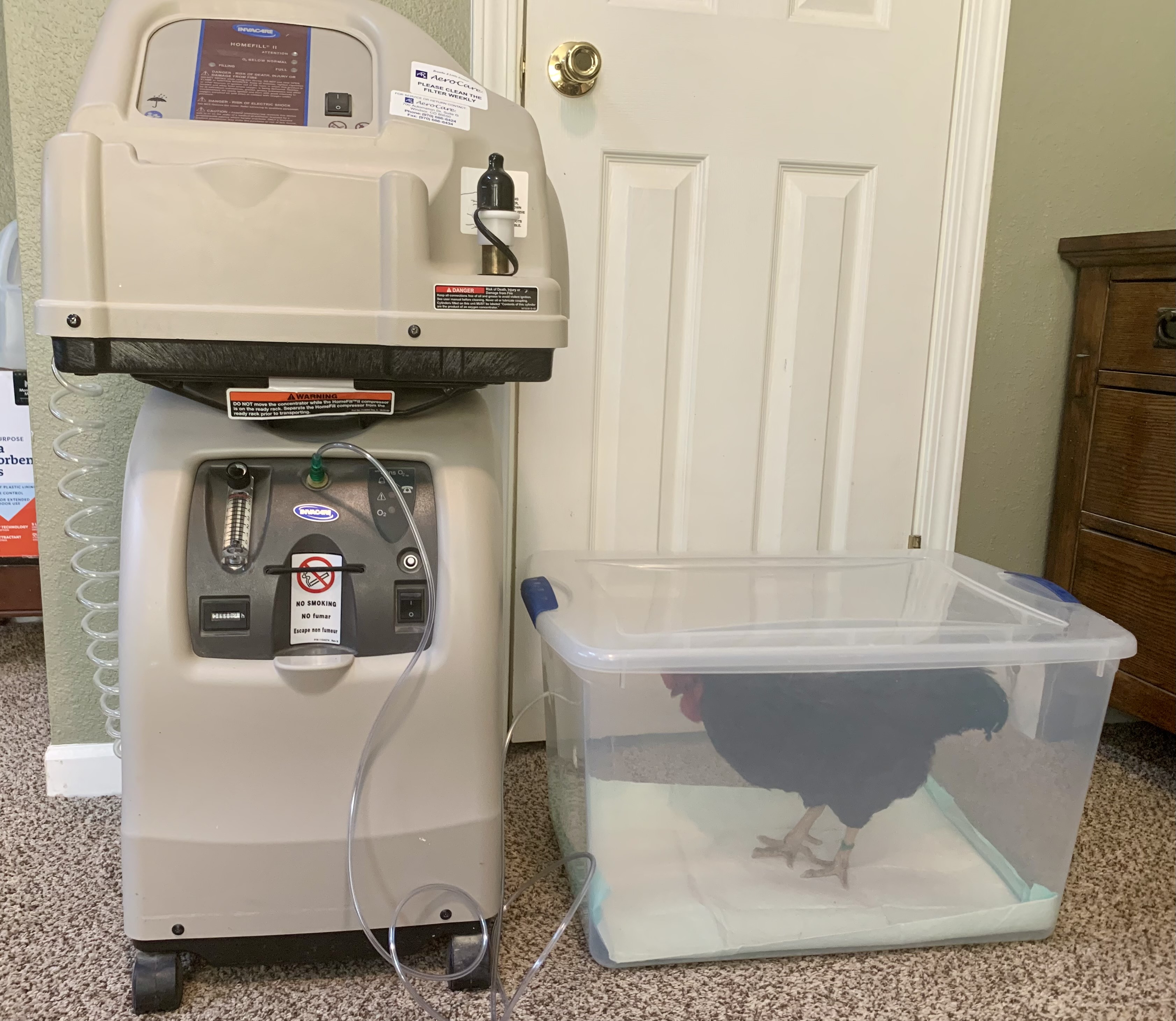
We are lucky enough to have an oxygen condenser in our home. I made an oxygen chamber out of a large Rubbermaid tub, oxygen tubing that went from the condenser to the tub, and a 1” hole in each end for ventilation for a previous chicken that needed oxygen therapy. I placed him in the tub and turned on the oxygen. Over a short period of time his colour returned to its normal bright red. Aside from those odd episodes everything was otherwise normal. He was eating, drinking, preening, and defecating just fine.
Since the episode that morning was so scary, I decided to take him to the urgent care at Colorado State University to be checked out. During his exam he was very quiet and intermittently lethargic, sleeping between handling sessions. The only abnormality noted was that he had developed cataracts in the left eye. His blood work was relatively normal except for a slight increase in his packed cell volume (PCV) at 44% that was most likely an indicator of some mild dehydration. He also had a low white blood cell count (WBC), but it didn’t really offer any explanation for the episode earlier in the day. There was no heart murmur, arrhythmias, or neurological deficits. They recommended that we get a video of an episode next time, which could help determine if it was seizure activity or a syncopal/fainting type issue. They also recommended future blood work to monitor the WBC count and potentially radiographs to look at the shape of his heart and the major blood vessels. At that point we decided to take him home for continued monitoring and follow up with our regular veterinarian.
April 14: I was able to get an appointment with our wonderful veterinarian, who is board certified in avian exotic medicine. At that point Dazzle hadn’t had any more episodes, but we did notice that when held in certain positions or if he was under any stress, his comb would start to turn a bit dark. In addition, he was walking with a stiff gait on his right side and his perception and balance just seemed a bit off.
Radiographs revealed a normal sized heart, but a very subtle suggestion of atrial enlargement. Echocardiogram (ECG) showed that the ventricles of the heart looked normal, but they were not able to get a good view of the atria because of an overlying air sac. It was suspected that the development of cataracts in his eye had probably thrown off his balance and potentially caused some head trauma when he had fallen off the chair. The head trauma may have been related to the episode we then saw on the 9th. We chose to treat him with an injection of an NSAID to address the possibility of central nervous system inflammation and continue monitoring for any changes.
April 29: Dazzle went into acute respiratory distress and his comb and wattles turned purple with periodic open beak breathing. I put him in our oxygen chamber (the Rubbermaid tub) and his colour quickly returned to bright red and he stopped open beak breathing. I got him out of the chamber to see how he would do and he gradually began to turn purple again. At that point, I just put him back in the oxygen chamber and left him in there since he seemed so much more comfortable. Since he was not at all stable outside of the oxygen chamber, I loaded him up with oxygen tanks in tow and took him back to the urgent care at Colorado State University.
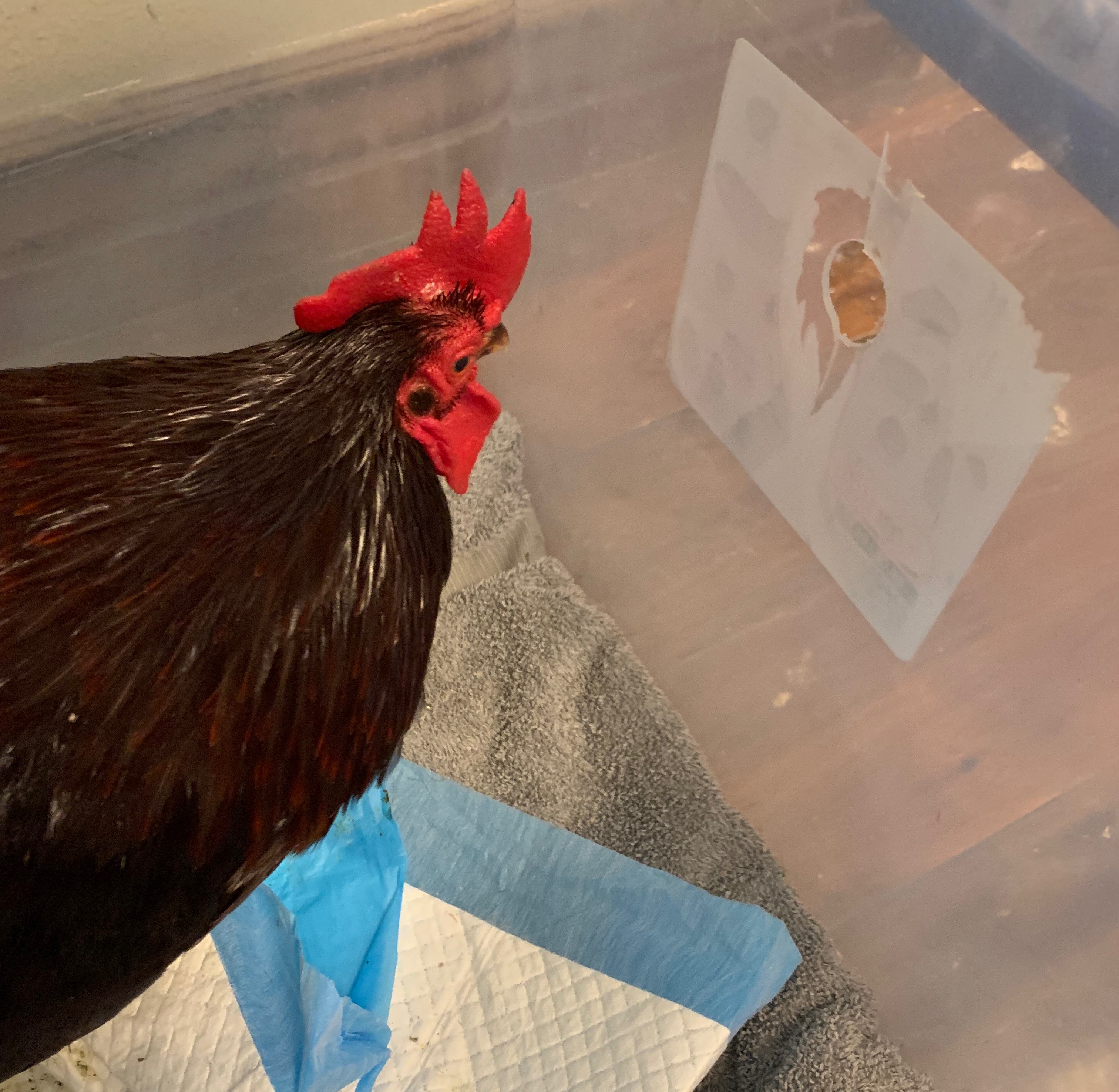
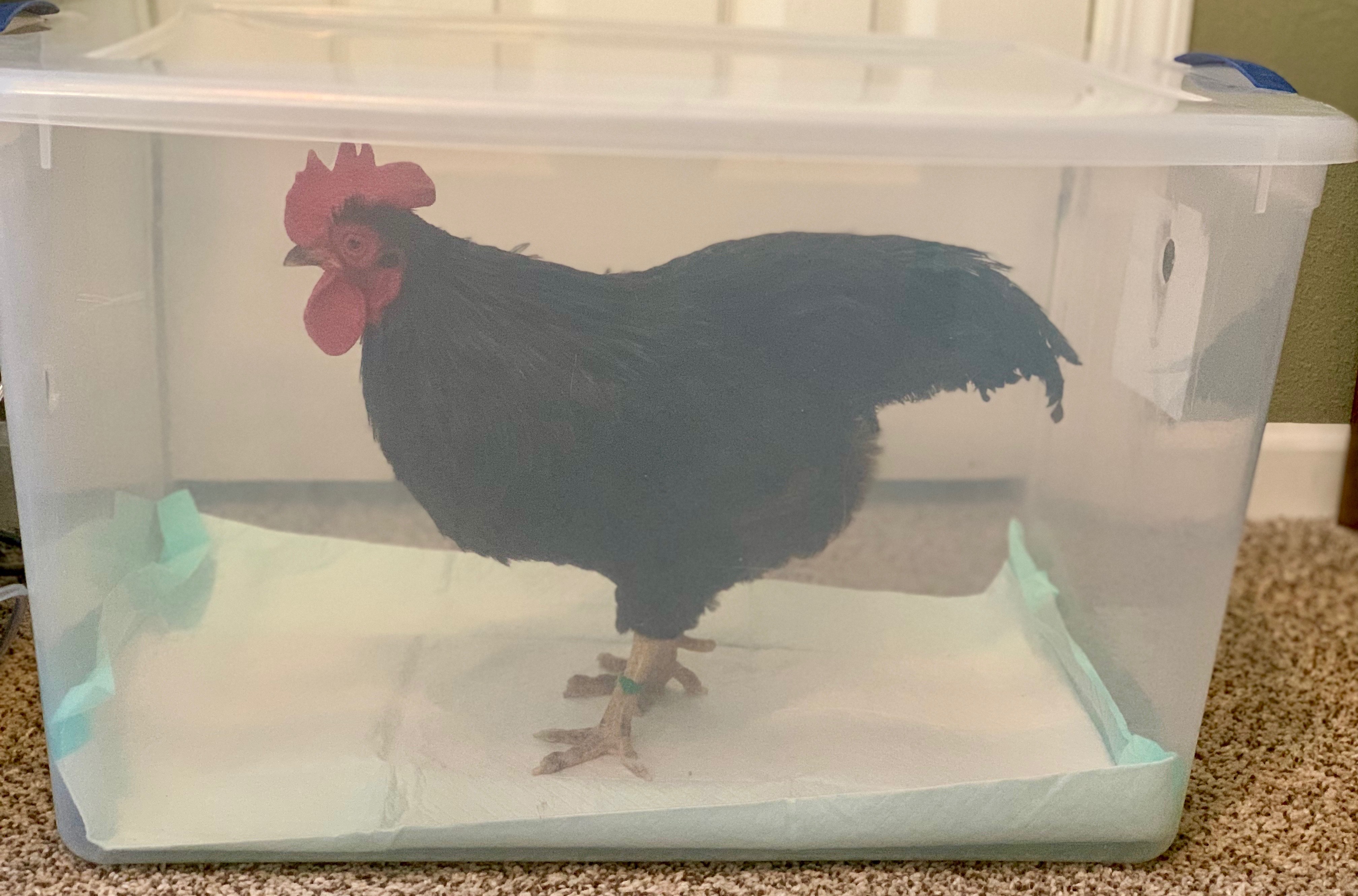
The exam revealed the same thing we had experienced at home where he was bright red until being out of oxygen for a few minutes when it would turn dark purple/blue, but otherwise the physical exam was unremarkable. It was the weekend, so diagnostic services for exotics were severely limited and we were all reluctant to stress him in order to get blood work at that point. Sedation to get imaging was discussed but ultimately decided against since his condition was rather unstable. Since I had the capability of providing him oxygen at home, it was decided that I would keep him at home until we could follow up for further diagnostics on Monday. In the meantime, they also had me start him on TMS (antibiotic Trimethoprim-Sulfamethoxazole) and Meloxicam (pain management) in case this was a brewing respiratory illness he could have picked up from my flock.
May 1: We were able to make an emergency appointment with our avian specialist for diagnostics. The echocardiogram this time showed that there were some mild changes in the ventricle walls of his heart. Radiographs showed that the previous atrial enlargement was not apparent now. We also sent out a CBC and the only thing of interest was a PCV of 53.8%. Based on her experience and cases she had seen in the past, she believed Dazzle had pulmonary hypertension and suggested we start therapy with Sildenafil (Viagra). *insert jokes here* We were also instructed to continue the oxygen therapy, begin weaning him off oxygen once the medication began working, limit activity and stress, and continue the NSAID (non-steroidal anti-inflammatory drug) therapy. All of that being said, he had a guarded prognosis at this point. If the medication was not successful or he was unable to wean off oxygen we would have to make some very difficult decisions.
Over the next several days we began to see some small improvements but it wasn’t entirely consistent. One day he could go without oxygen for six minutes, the next twenty-three minutes, then and the following day not quite as long. Then, just as we were slowly getting things under control, Dazzle’s crop stopped emptying, he quit eating, and his poop was the runny green color seen with malnutrition.
After emailing our veterinarian, she suggested that we decrease the dose of Sildenafil by half because she believed it was most likely a side effect. Humans report gastro-intestinal (GI) side effects with the medication and though knowledge of side effects in animals was limited, it seemed to make sense under the circumstances. She also had me start giving him some subcutaneous fluids to help increase GI motility because dehydration can also contribute to the problem. We also added Enalapril (heart med to treat high blood pressure/heart failure) and Pentoxifylline (used to improve blood flow through the blood vessels) to his medications.
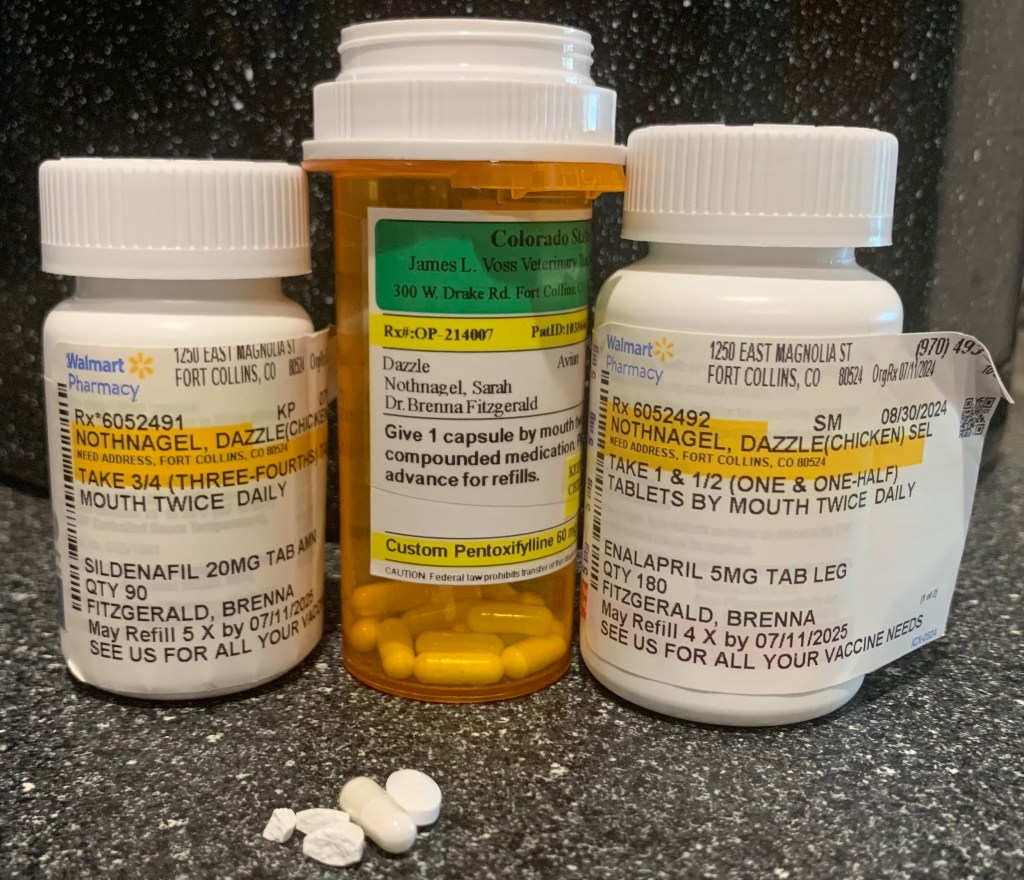
After we decreased the Sildenafil Dazzle wasn’t able to be out of oxygen for quite as long for a couple days, but his crop began working again which was a huge relief! With the addition of the other two medications we started to see improvements again. He went from two litres to one litre of oxygen, and from thirty minutes out of the chamber to two or three hours.
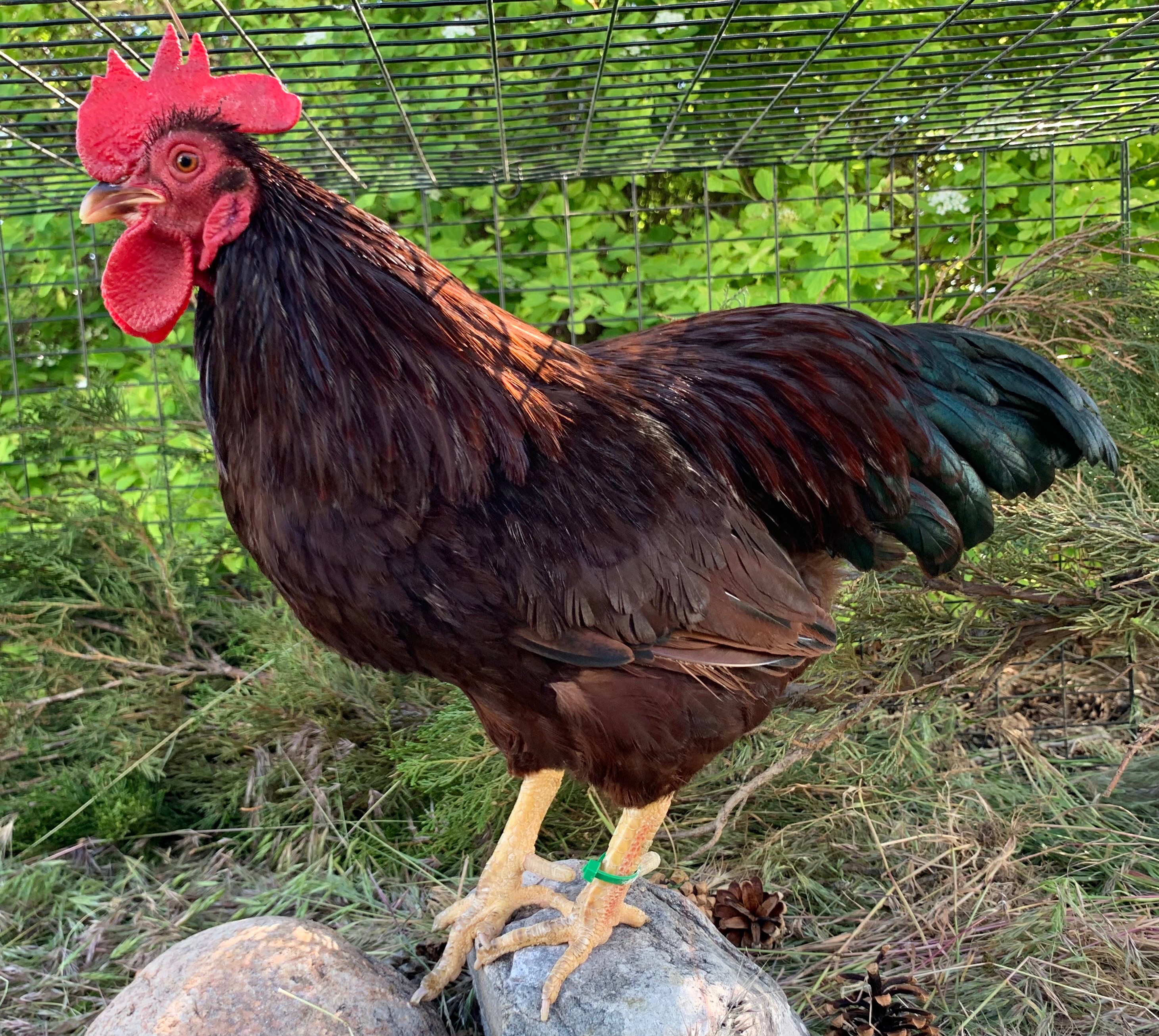
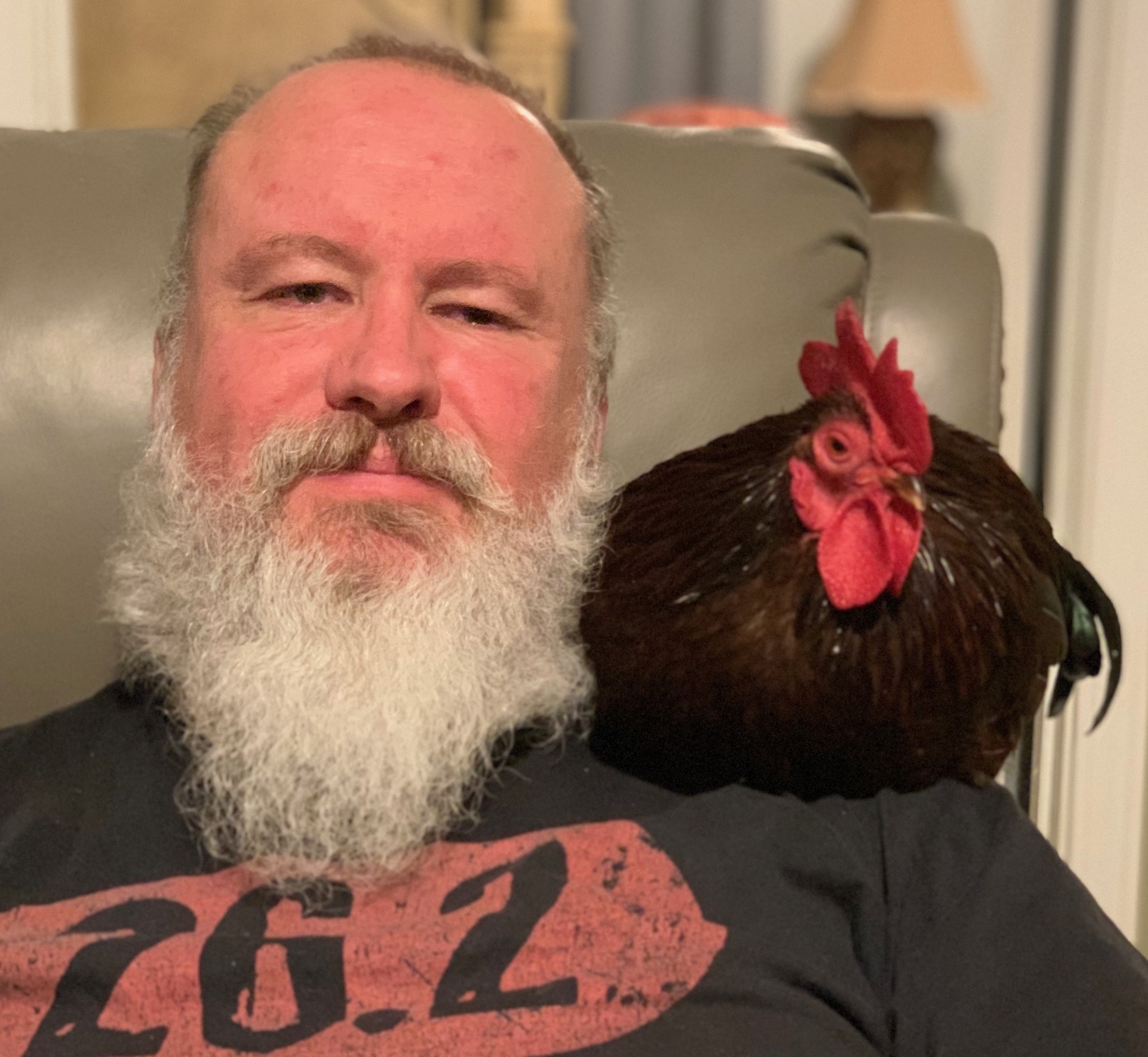
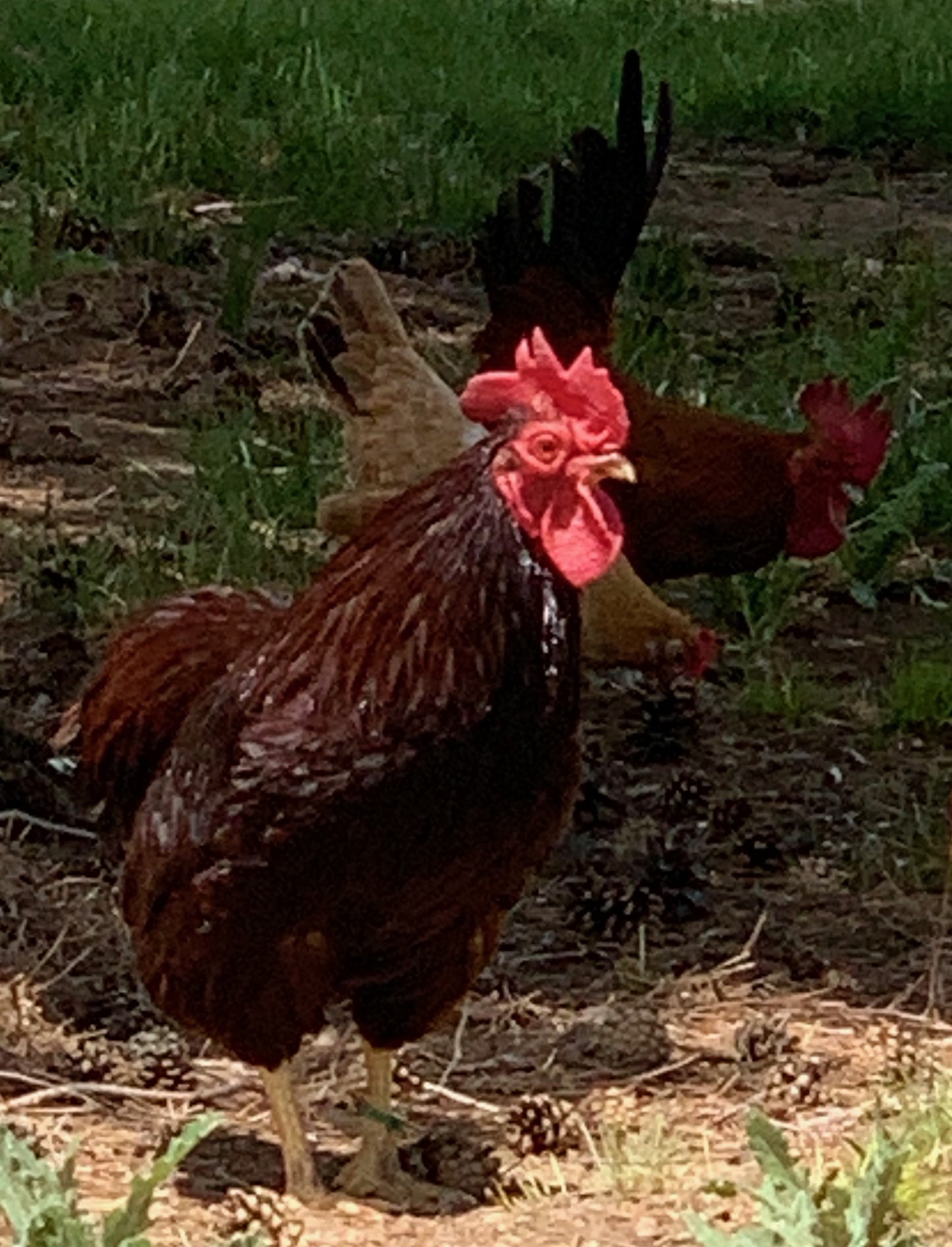
May 13: Dazzle was completely weaned off oxygen and rejoined his girls. His comb was bright red and he was back to grouching at me for everything again!
Update: Over the past year and a half, since this ordeal with him started, we have had to slowly increase his medications. We are able to tell he might need another increase because he becomes more exercise intolerant and is slower to recover from exciting events like a nail trim or a scuffle. After a few days with the medication adjustments he seems to do better.
He is starting to get to pretty high doses on some of his medications though and our veterinarian thought it might be a good idea to check a packed cell volume (PCV) to see if therapeutic phlebotomy (removal of blood) might be helpful. His PCV in July was 57%. For reference a normal PCV in a chicken is between 35-45% with some variation depending on breed and sex of the bird. Dazzle underwent light sedation and had a total of 25ml of blood removed. The following day his comb was so much brighter red and he was crowing with the other roosters. Historically, when he starts feeling crummy for any reason, he quits crowing.
September 2024: Since birds regenerate red blood cells at a much higher rate than dogs and cats, our veterinarian recommended checking him every four weeks to see if another procedure is warranted. This past Friday he had another therapeutic phlebotomy done since his PCV was up to 54%. This time they removed 30ml of blood. His recheck PCV today is 44%. I just sent the results off tonight so I won’t know until at least tomorrow if they are happy with that number or if it will continue to guide us in the right direction for next time. He certainly doesn’t seem to be bothered much by having it done and you can tell he feels better almost immediately.
October 2024: Dazzle is doing well! We checked his PCV this past month and it was still okay so we didn’t end up having to do a therapeutic phlebotomy. We are planning on checking his PCV in another week or so to see if his PCV is still okay or if he needs to have another phlebotomy. He seems to be doing great even in the face of the rest of my flock struggling with ILT.
What is Pulmonary Hypertension?
Pulmonary hypertension generally refers to high blood pressure that causes the heart to have to work much harder to pump blood and eventually causes enough damage to induce a right-sided heart failure. Pulmonary Hypertension Syndrome is typically associated with broiler breeds because of their high metabolic requirements, but our avian veterinarian has treated several chickens, both male and female, that live at high altitude. We live at 5177’ above sea level on our farm. Living at high altitude, the partial pressure or how many oxygen molecules are in a particular volume of air decreases since there isn’t as much pressure to push the molecules closer together. This results in an increased respiratory rate to compensate for the lower volume of oxygen being inhaled with each breath and an increased heart rate.
There are lots of other factors at play like chemoreceptors and vascular changes that occur, but I won’t bore you with an entire physiology lesson. Over time, the body will compensate for the lower level of oxygen in the air they breathe by increasing the number of red blood cells, which carry oxygen where it is needed. This increase in red blood cells is what we see when a bird has a high PCV (though that is not the only reason a high PCV might be encountered). While it’s great that they have more cells to carry oxygen, too many of those cells can cause the blood to become thick and sludgy which makes the heart work much harder.
If you are able to respond to the signs that your bird may have developed pulmonary hypertension, you may be able to treat the condition with medications and decreasing stress. However, if the disease continues to progress it will eventually lead to difficulty breathing, purple comb and wattles indicating cyanosis (lack of oxygen), lethargy, ascites (accumulation of abdominal fluid) resulting from heart failure, or sudden death.
Seleta Nothnagel works nights in the Clinical Pathology Department at the Colorado State University Veterinary Teaching Hospital as a Medical Laboratory Scientist. They do blood work like chemistry panels and CBCs, urinalysis, coagulation studies and blood banking for all of the animals seen at the VTH. Before that she worked in the microbiology department in human medicine at a hospital for 10 years and in veterinary medicine as a Registered Veterinary Technician for 10 years.
Thanks to Seleta, for once again, sharing her story and photos, used with permission.
 Bitchin' Chickens
Well done, very educational. Thank you
LikeLiked by 1 person
Very interesting case. I envy Seleta, working in the Clin Path Department at CSUVTH.
LikeLiked by 1 person
Dazzle is lucky to have an owner who is so invested in his well being and that has access to the resources to provide the type of care he needs. Great story. Glad he’s doing well ! – Alicia
LikeLiked by 1 person