
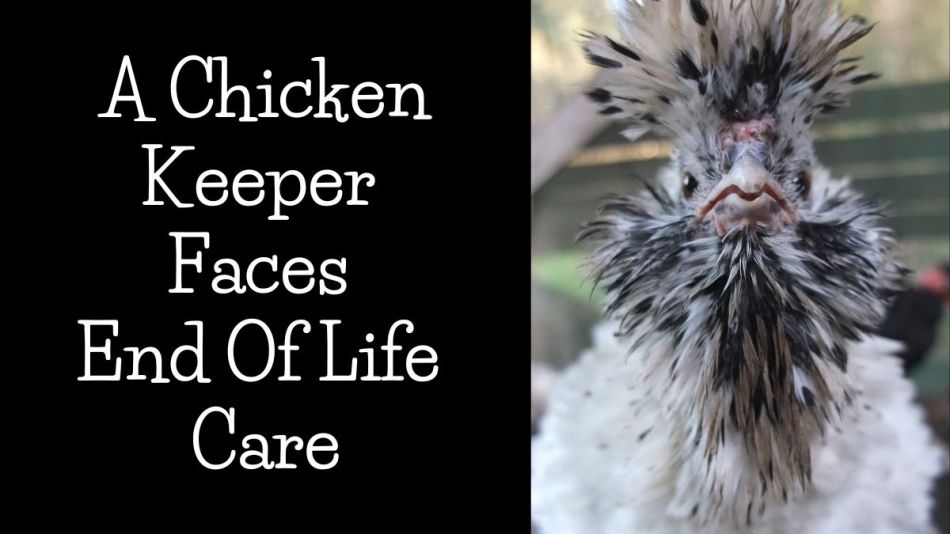
Most likely every chicken keeper understands that not all birds are equal and that they all have distinctive personalities. Despite not wanting to show any favouritism there will always be ones that stand out for some reason: their beautiful plumage, colourful eggs, friendly nature or quirky habits.
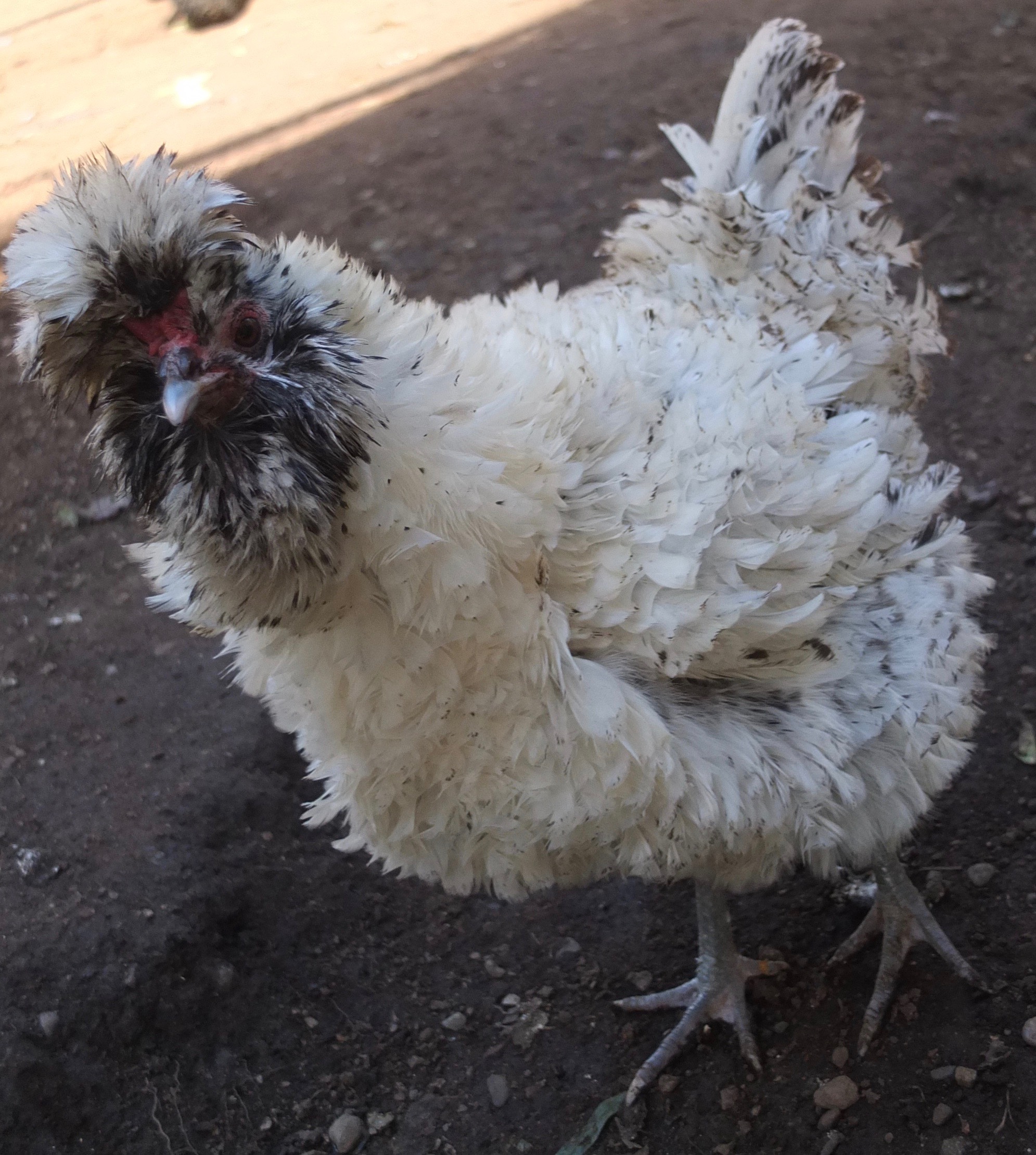
On May 1st 2018 I had a hatch that included three frizzled hens. I kept Skye and rehomed her sisters Coco and Nigella as chicks, a move I came to regret. Luckily, the folks that adopted them ended up moving 18 months later and asked if I want them back. I jumped at the chance. Although each of them was beautiful, none were as friendly as Skye.
For almost seven years she has been my favourite hen, always underfoot each time I head out to the coop. She’s never been keen on being picked up or even patted, but she loves to be close to me and investigating whatever I’m up to.
Unlike many of my hens she’s never shown any interest in having chicks. I don’t even remember the last time I saw her lay an egg. I know some folks would consider that free-loading but I made Skye a commitment that she could live out her days in the place she was born.

There are many truisms about keeping chickens, two of them being, ‘It’s always the favourite bird that gets sick/dies/attacked by a predator’ and ‘Shit happens when you least expect or are prepared for it’.
I live on a small island off the west coast of mainland Canada. Our climate is considered Mediterranean, meaning we have hot, dry summers and rainy winters. My 4.5 acre heritage homestead is smack-dab in a temperate rainforest. Gone are the days when you can predict the weather at any given time of the year. Last year, we had three long, cold snaps (November, January and February) and I had a rooster get frostbite for the first time.
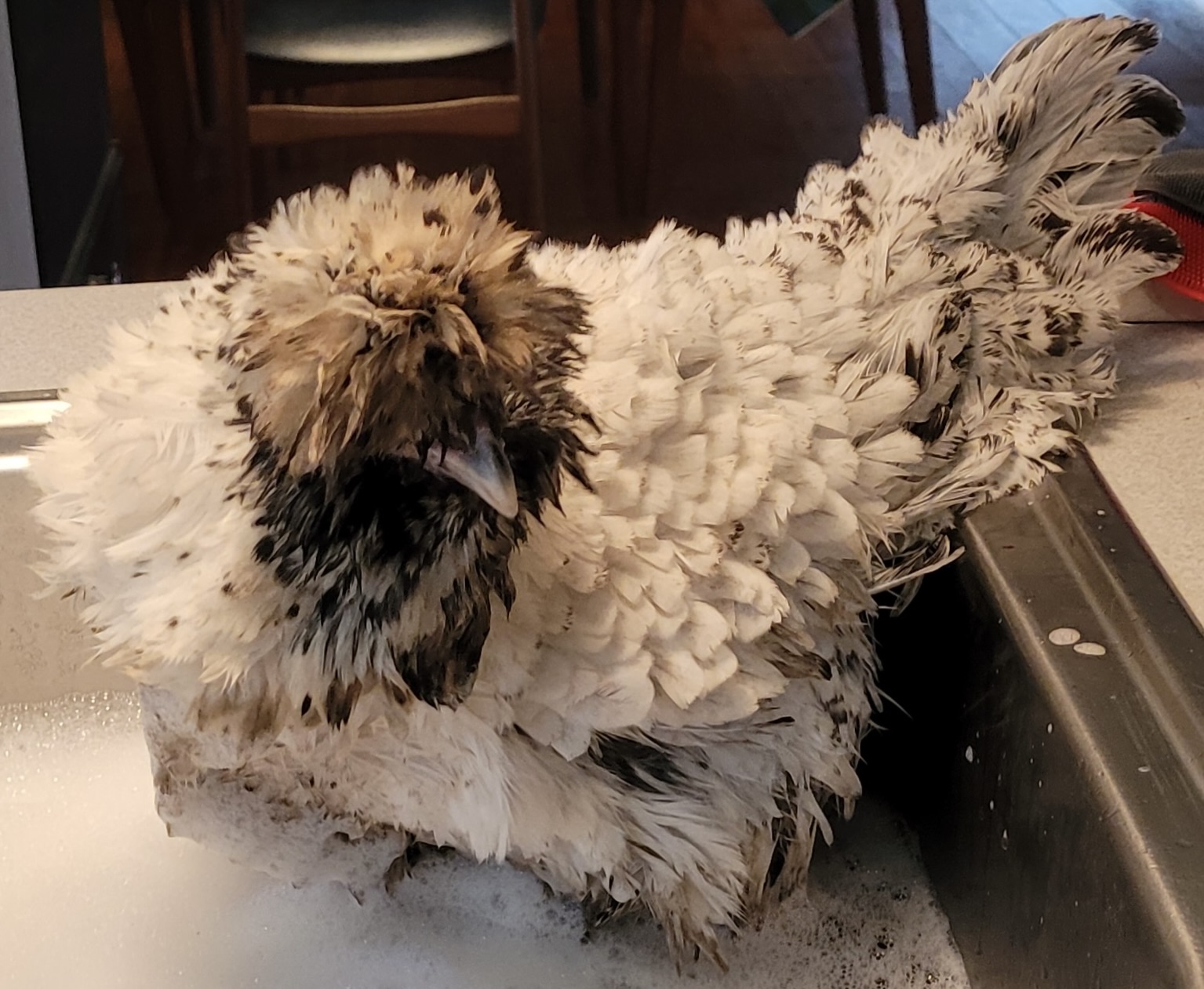
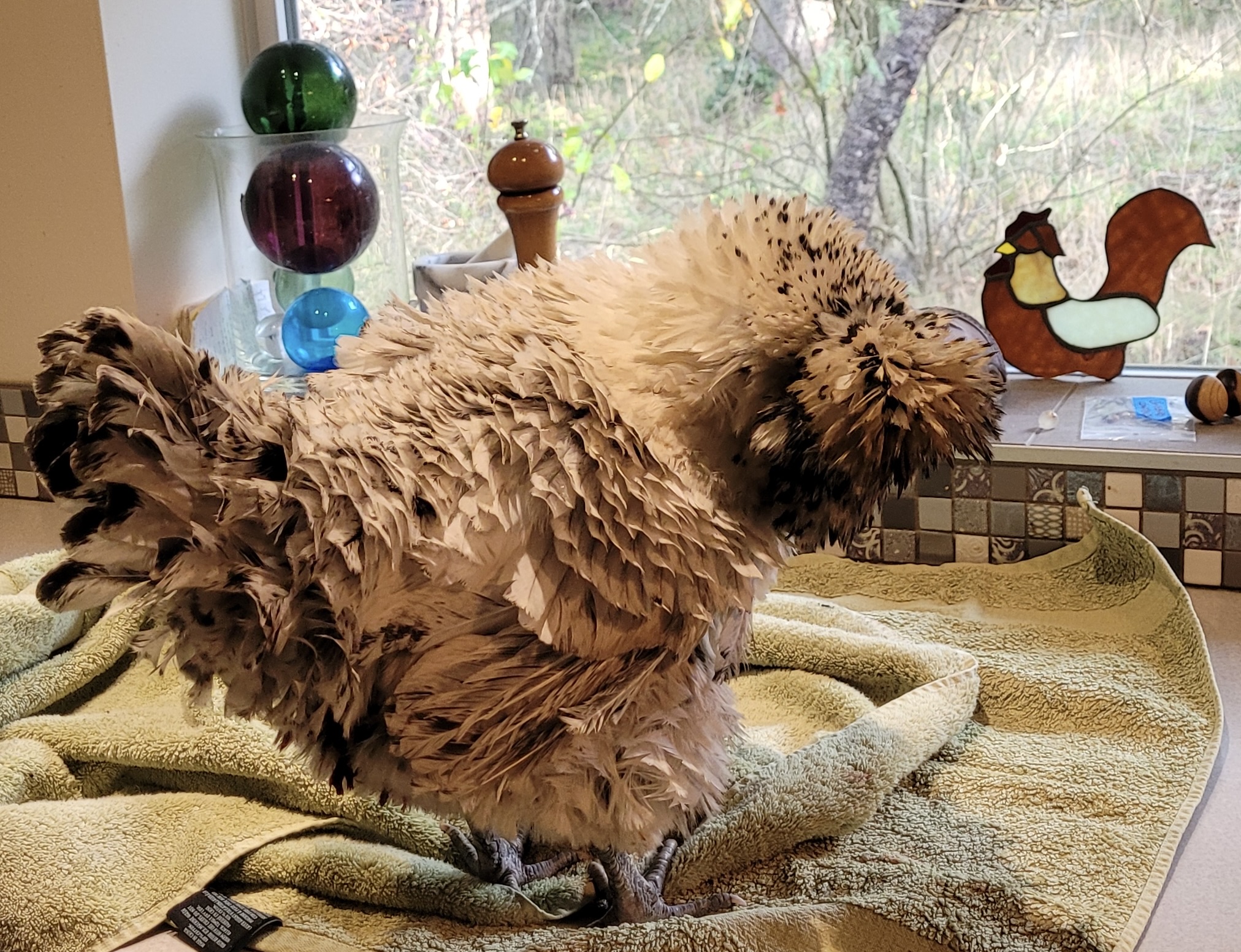
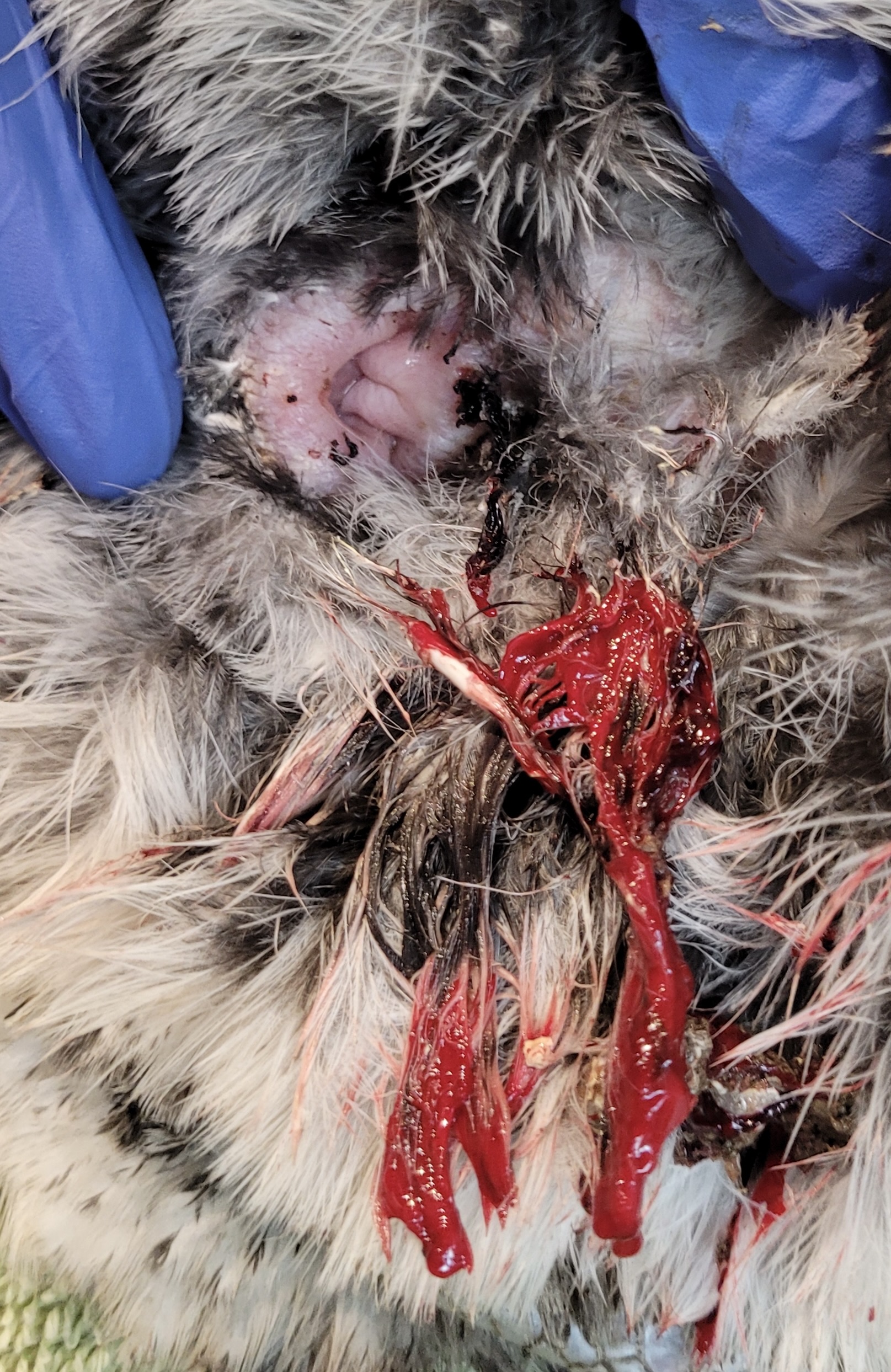
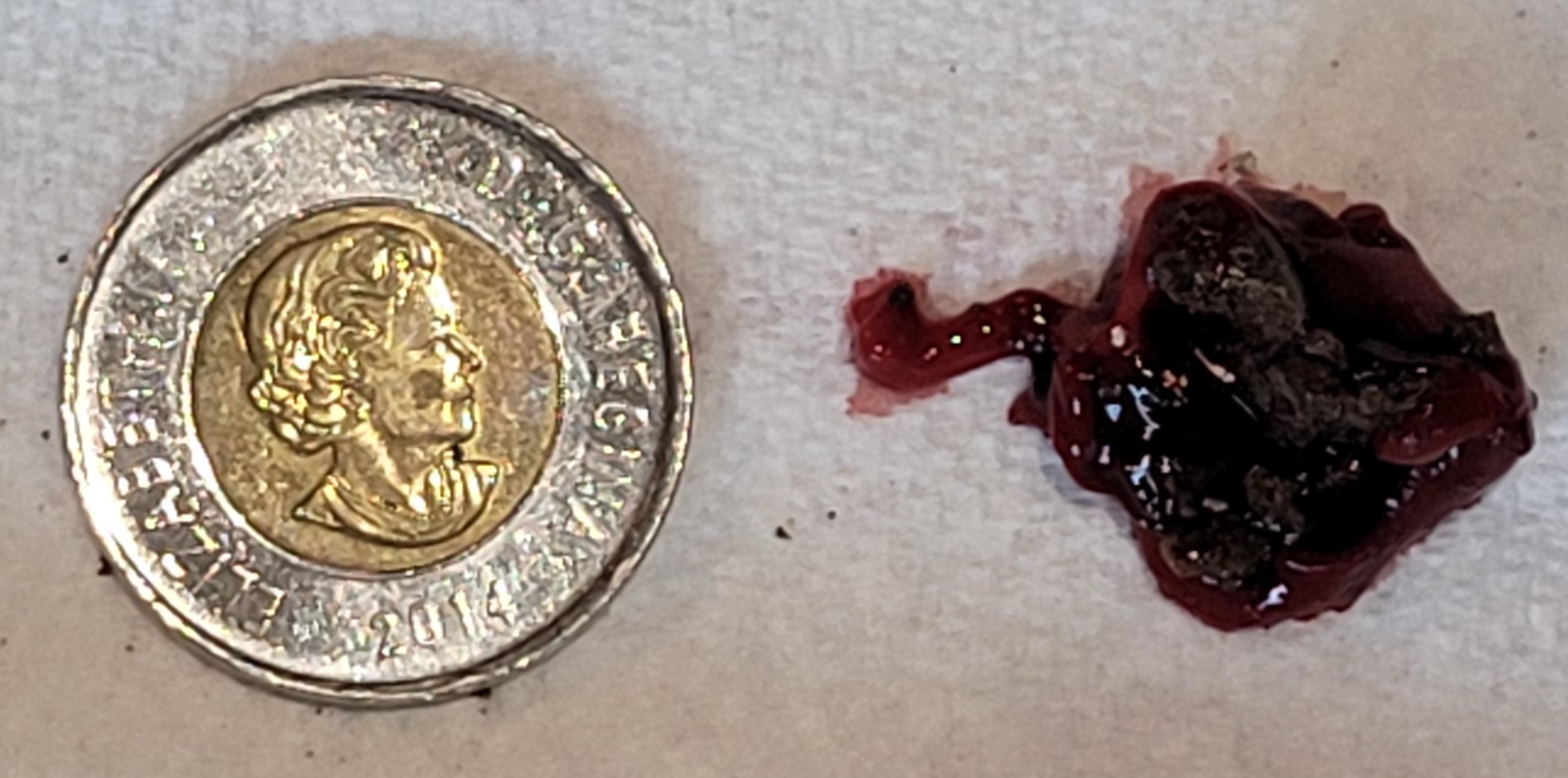
In November I saw a bloody spot on Skye’s feathers around her vent. I was concerned that it might be a prolapse, but upon bringing her in the house for a bath discovered a blood clot. I managed to wash it off and it appeared to be a one off. She had no other symptoms and I didn’t see anything unusual over the next couple of months.

Last winter we skated along with not a snowflake in sight. We even had a drier January than usual. The warmer El Niño weather system flipped to La Niña in February. The forecast was for 3”-4” of snow. In anticipation, I took Monday off work just to be home to deal with my flock (e.g. knocking snow off tarps, carrying fresh water outside). It started snowing about 8am and carried on through the night. I woke up Tuesday to see 12” of snow. The temperature was -5C. I had the forethought to park my car at the end of my 700’ windy driveway by the main road. Even the local bus service was cancelled. I ended up taking that whole week off as ‘snow days’. Just as well because I ended up carrying out fresh water to my birds multiple times a day. My flock hates snow so I made paths to encourage them to come out to drink and experience the sunshine. I cleaned the coop and instead of wheelbarrowing the shavings to a compost pile I dumped them in the pen for the birds to root through. They enjoyed my company.
It didn’t snow any more, but the weather was subzero over night and just above 0C some days which meant the snow melted very slowly. It took two full weeks till it dissipated. Some days my birds hunkered down in the coop or in a covered area. Despite being out with my flock multiple times a day I didn’t really notice anything amiss. Skye, who is usual front and centre, seemed to be a bit slower but she was eating and drinking. Her feathers were ruffled and not as shiny as usual. I chalked it up to the prolonged cold weather.
A few days later I was out and saw from the corner of my eye an interaction between my young rooster and Skye. I thought he was attempting to mate with her which surprised me as the males usually only target hens that are both sexually mature and still laying. Later I saw her hop in the nest box (no egg) and thought his instincts were confirmed. It’s not unheard of that senior hens who haven’t laid in months drop the occasional egg. At some point I heard her making a purring noise which I thought was endearing. Little did I know at the time it was a harbinger of things to come.
The next day I heard a wheezing rattling sound coming from Skye. Every time she breathed in or out she sounded awful. That rattle is called rales and is usually a symptom of a respiratory infection, something I’ve had little experience with in my flock.
She let me pick her up without a fuss – not typical of her – and she was thin – never a good sign. I made her comfortable in a crate by the woodstove. She rattled for hours. Not wanting to prolong her misery and being realistic about her age I arranged for a friend to euthanize her the following day.
Another friend encouraged me not to give up. As a Hail Mary I went through my chicken first aid kit and found my dead dog’s prescription antibiotics. I confirmed with the Poultry DVM website that doxycycline was a broad spectrum drug used to treat avian respiratory infections. I usually discourage using antibiotics without a firm diagnosis but I really felt this was my only option. I wasn’t concerned about a withdrawal period as she’s no longer laying.
I divided the capsule between her water and her food. She rattled all afternoon and evening. I whispered goodnight listening to her laboured breathing as I turned off the light. I got up a couple of times in the night to go to the bathroom and the wheezing had stopped. I fully expected to find Skye dead in the crate in the morning. My only consolation was she was warm and safe during her last few hours.
I was totally surprised to see her standing at the crate door greeting me. I had a week’s worth of medication so I needed to deal with whatever bacterial infection she had (if it was viral the antibiotics wouldn’t have knocked it down). I kept her fed and watered. She had an appetite but definitely not her normal one.
One of the benefits of crating a sick bird is you can monitor inputs as well as outputs. I looked in the crate for evidence of poop. On the second day there was a very small dark poop surrounded by some yellowish semi-liquid. Then nothing that I could see over the next two days. On the fifth day I lifted her out of the crate to check her weight (still a bit thin) and upon getting back in she pooped a small, but pretty normal looking poop.
Without lab work or a vet who could do diagnostics it was hard to know if the rales were the problem or just a symptom of a larger issue. I would have to keep treating her to see if she could maintain improvement. At least she wasn’t declining or, even, remaining static. If that was the case I would have euthanized her.
During her convalescence Skye never appeared lethargic. On the contrary, she parked herself by the crate door facing out and was curious what was going on. Although she was eating and drinking I wasn’t satisfied that it was enough. By day 7 her appetite picked up and she was consuming more water. I decided to put her out the night of day 8. I was off for four days after that, which gave me the opportunity to monitor her reintegration with the flock.
I went out the next morning and there she was running to meet me. Her appetite was definitely back to normal. The flock acted like she’s never been gone.
Eleven days after returning her to the coop I noticed she, again, seemed a bit ‘off’. She was still right there at my feet, but she wasn’t eating as much and seemed to have lost weight.
I decided to go through with my original plan. I called her over and she happily obliged. She jumped in the crate and we drove to my friend, Margaret who has euthanized several of my birds using the cervical dislocation method. She takes a very spiritual approach to end-of-life care. Margaret walked around her garden holding Skye and felt that Skye was ready to go. The whole thing was over very quickly.


The loss of any bird is tough but this one will be especially hard. She’s been such a great friend and just a couple of weeks ago she looked fantastic. I’ve got many photos of her, made many memes featuring her and will have lots of memories. Nobody else can fill her shoes.
I will have a necropsy done and report back about what was actually going on internally. She spent her whole life with me and every day she was a pleasure to have around.
RIP Skye May 1, 2018 – March 9, 2025
 Bitchin' Chickens
How very sad to lose such a good friend! Thoughts and prayers out to ya!
LikeLike
So sorry 😦 It is never easy, nor should it be. She was loved and had a bond with you and you did what was necessary for a swift and painless end.
LikeLike
Similar situation for me, she became wheezy and sick. Took her to the vet and for 10 days gave her antibiotic injections trying to save her life. She perked up and went on for a couple of weeks after that doing great but after 2 to 3 weeks, the same scenario began and after a week, she was no longer eating and could not walk well. I had kept her in a crate most of this time. I finally took her to the vet and had her euthanized. An autopsy was done and she was indeed riddled with cancer. She was the sweetest little chicken and I do miss her. Thank you for sharing 🩷
LikeLike
I too live in the temperate rainforest, quite a bit south of you in Humboldt County California. I keep a small backyard flock, right now it’s four. Although they aren’t pets, whenever I walk out into the yard they all come racing over to the gate to see what I have brought for them! When I first got chickens in this particular suburban homestead where I live now, one of my chickens got attacked by a hawk when I was at work. I was able to trim off the bloody feathers kind of patch her back together as best I could, and she lived quite a long time after that! Chickens are resilient. I’ve also had two hens that I gave end of life care to in the house. I love chickens.
I really appreciate this blog of yours, and your shared experience!
LikeLike
Thanks for sharing and the feedback.
LikeLike
Oh, Claire. I’m so sorry for your loss. Big hug ! – Alicia
LikeLike
I’m so very sorry for you loss. What a lovely chicken/friend was Skye. I certainly understand your loss and ache. May you remember all the good times you had with her. Lovely little chicken! RIP 🙏 ❤️
LikeLike
I’m so sorry for your loss. What a wonderful life Skye had. She was very fortunate to have someone who was willing to help and make her last days as comfortable.
Rest in peace Skye…
LikeLike
I am in my 17th year as keeping chickens as companion pets. I try to tell myself the joy they have given me is worth the pain of losing them. I have had two euthanized by a vet (injection) sad as hell, but peaceful. I’ve lost acess to that vet as I moved far from the area. For those that I cannot nurse back to health, (I am a nurse by occupation, but for people) I take them inside and keep the clean and comfortable- chicken hospice care. It has taken an emotional toll that I know you have been through. I work in out-patient care now, so hard to see death that often. I have 9 hens now and the youngest group are 5 years old. It’s very lovely as your 7 year friendship with Skye was. I’ve had 73 chickens/roosters over my time.
I have no intention to acquire anymore. I do not regret these years but can not handle anymore. I would accept some adult hens, you know the ones whom are termed “freeloaders” after their egg years. If that doesn’t happen I am done when the 10 I have are gone. The one rooster I have with my 9 older girls turns two this July. He’s sweet and respects the oldest two girls who are almost 7 and are not interested in mating. I enjoy your site; you have great info and have a beautiful spirit. 💗 Mary
LikeLike
It’s tough becoming attached to animals that have relatively short lifespans. I like the idea of offering a retirement home to older hens that would otherwise be culled. Thanks for sharing your story and for the feedback about my blog.
LikeLike