
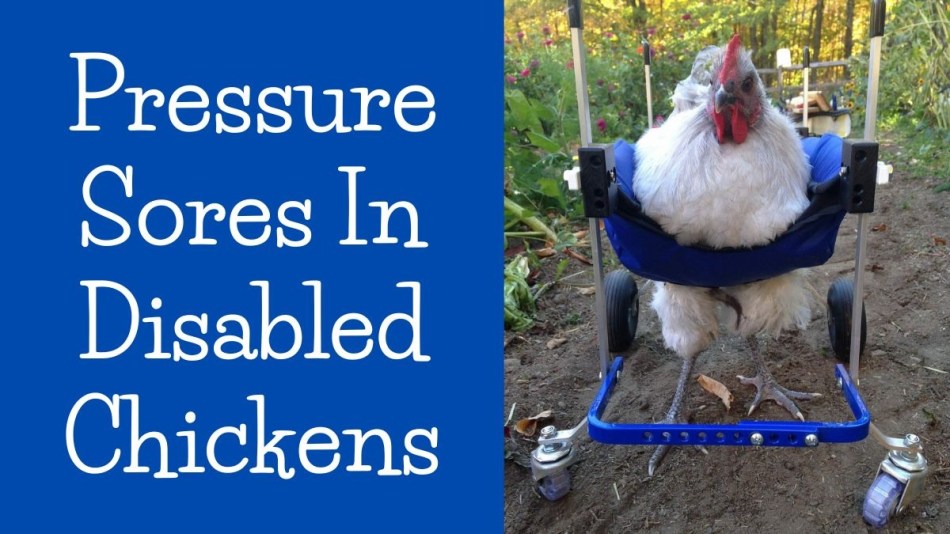
Pressure sores, or bedsores, are injuries to the skin and the tissue below the skin caused by pressure over a period of time. In people, they most often occur on skin that covers bony areas of the body such as the heels, ankles, hips and tailbone. Those who are most at risk have medical conditions that keep them from changing positions or moving. Or they spend most of their time in a bed or a chair. Bedsores can arise over hours or days. Most sores heal with treatment, but some never heal completely.
Historically, farmers viewed chickens as livestock and culled those that were ill or injured. As more folks see their chickens as pets there has been an increase in both house chickens and the rescue of disabled or mobility impaired birds.
Just like in other animals and people, chickens that are unable to stand, walk, or reposition themselves regularly are at risk of developing these wounds due to prolonged pressure on certain parts of the body.
Understanding, preventing, and managing pressure sores in chickens is essential for anyone caring for birds with limited mobility, such as those recovering from injury, living with neurological issues or physical disabilities.
Pressure sores are areas of damaged skin and underlying tissue caused by constant pressure or friction. In chickens, these typically develop:
- Over bony areas (keel bone, hocks, elbows, hips)
- Where the body presses against hard surfaces
- In areas exposed to soiled bedding, moisture, or poor ventilation
These sores can start as mild redness or feather loss and progress to open wounds, infection, or necrosis if not addressed promptly.
Risk Factors
- Neurological disorders (e.g., Marek’s disease)
- Leg deformities (e.g., slipped tendon, splayed leg, arthritis)
- Obesity or excessive breast muscle
- Injuries that prevent walking or perching
- Age-related weakness
- Poor coop hygiene
- Hard bedding (bare wood or wire) and insufficient padding or support
Symptoms
Routinely inspect disabled birds for early signs of pressure sores, which include:
- Feather loss over pressure points
- Red, inflamed, or shiny skin
- Scabs or ulcers
- Odour or discharge from wounds
- Reluctance to be handled due to pain
- Increased vocalization or distress when touched
Prevention
Proper Bedding
- Use soft, dry, and absorbent bedding (e.g., pine shavings, straw, towels, or fleece).
- Consider memory foam or orthopaedic padding under resting areas.
- Keep bedding clean and dry to reduce bacteria and moisture buildup.
Frequent Repositioning
- Gently reposition the chicken every few hours to relieve pressure.
- Use slings or supportive hammocks for chickens that can tolerate them.
- Encourage mild movement or range-of-motion exercises under supervision.
Supportive Devices
- Use padded boots, hock protectors, or donut cushions to reduce pressure on vulnerable joints.
- Wraps and braces should be used with veterinary guidance to avoid causing new pressure points.
Nutrition and Hydration
- A well-balanced diet with enough protein, vitamins A and E, and zinc supports skin health and healing.
- Ensure constant access to clean water.
Treatment
Clean the Area Gently
- Use a saline solution or diluted antiseptic recommended by a vet.
- Avoid scrubbing or using hydrogen peroxide, which can damage healthy tissue.
Medications
- Topical treatments like veterinary-grade ointments (e.g. Silver Sulfadiazine cream, Manuka honey or antibiotic gels) may be prescribed.
- Pain management is crucial—ask your vet about safe options (i.e. Meloxicam) for chickens.
- Raw coconut oil helps to keep the skin moisturized which reduces the risk of tightening, itchy and painful skin often experienced during sore healing. Organic raw coconut oil also contains medium-chain fatty acids which have antimicrobial properties and can help reduce the risk of infection, a big risk in open pressure sores.
- Turmeric mixed with coconut oil to form a paste can be applied directly to the pressure sore. Turmeric stains but this will not harm the bird at all. It aids healing by reducing inflammation and oxidation.
- Calendula tea cooled to room temperature can be used to bathe the wounds before applying topical ointments.
Protect and Isolate the Wound
- Use non-stick dressings and padded bandages.
- Prevent pecking from flockmates by isolating the bird or using a protective saddle or cone.
Address the Root Cause
- Treat underlying conditions (e.g., joint infections, neurological issues).
- Improve the bird’s environment, mobility, or equipment.
Pressure sores can escalate quickly, and infected wounds can become life-threatening. Contact a veterinarian immediately if:
- The sore is deep, bleeding, or discharging pus
- The chicken is lethargic or losing weight
- There’s a strong odour, swelling, or heat around the area
- You’re unsure how to properly clean or dress the wound
Caring for a disabled chicken requires consistency and dedication. With the right support, many mobility-impaired chickens can enjoy comfortable, meaningful lives as backyard pets or sanctuary residents.
Pressure sores are a challenge, but treatable. Through early detection, prevention and compassionate care, you can give your bird the care they deserve.
Community Supports
- Avian veterinarians
- Online small flock chicken support groups
- Mobility aid suppliers (e.g. wheelchairs, custom slings, prosthetics)
- Animal sanctuaries experienced in special-needs poultry care
 Bitchin' Chickens
0 comments on “Pressure Sores In Disabled Chickens”