
We’re all familiar with ‘life hacks’, those simple but clever tips for accomplishing a task more easily and efficiently. They’re all about simplifying your life, reducing frustrations, and hopefully saving some money in the process. I’ve posted a few DIY projects in the past and thought I’d put together a few chicken keeping hacks to reduce some of the potential stresses that come with having chickens. These ones all involve feeders, waterers, cooling or heating systems.
As you can see not all hacks hit the mark. I’ll start with a couple of flops before moving on to some that are more successful.
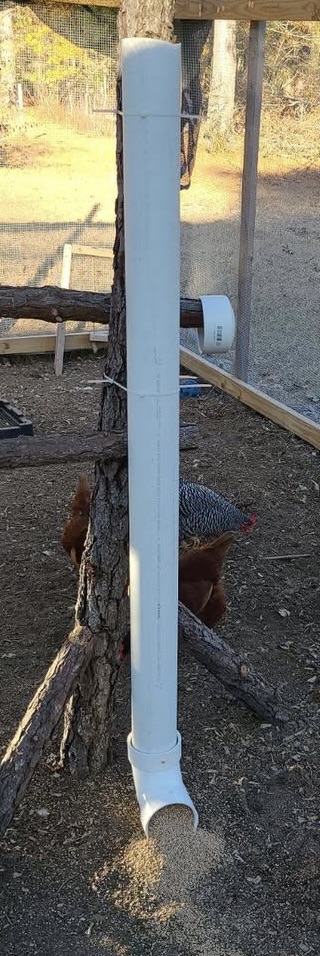
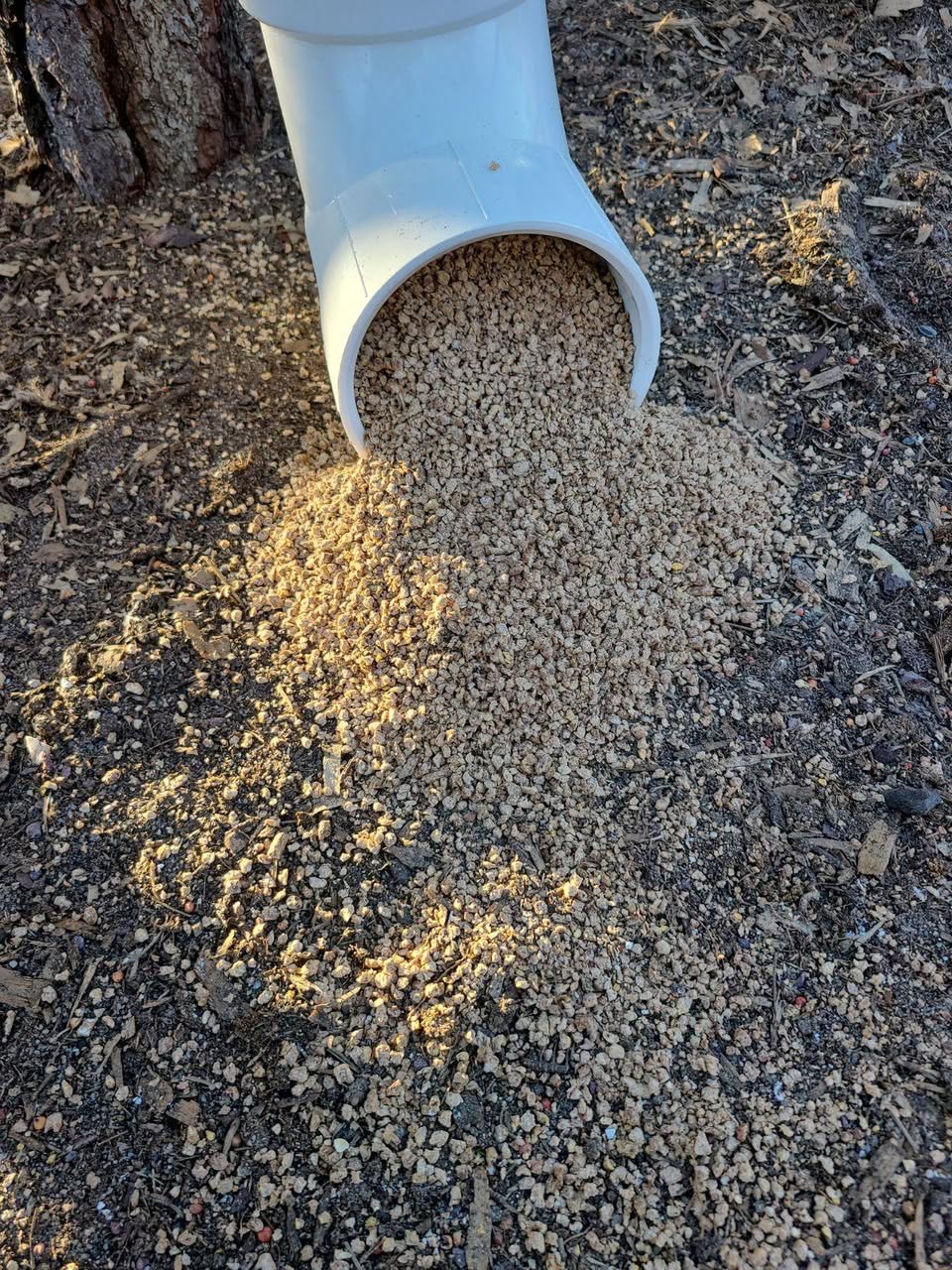
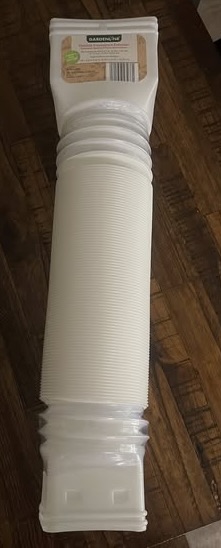
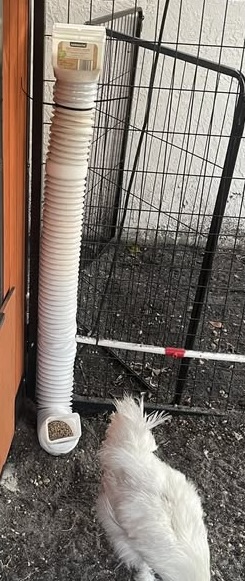
Here are two suggestions for DIY feeders – the first made from PVC and the other a dryer vent hose. Obviously the former needs an adjoining Y-piece that would prevent spillage. The later is pretty flimsy and easily damaged. Both of them would benefit from a cap that would prevent rodents from getting into the feed at night.
I’m fortunate that I live off the west coast of Canada where winters are generally mild and I only have to contend with real winter weather for a matter of days or a couple of short weeks rather than months. During those times I carry out fresh water several times a day. I would like to explore a heater water system but they only work with galvanized waterers. The plastic ones would risk melting.
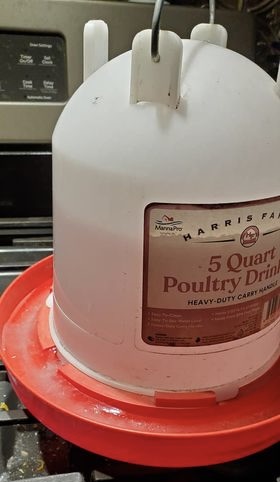
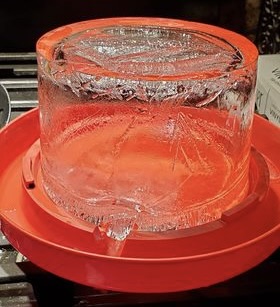
We often feel that dehydration happens in hot weather, but it can also occur during cold weather when water gets frozen. When that happens chickens can experience the classic signs of dehydration: decreased egg production, digestive issues, stress on kidneys, seizures/convulsions, metabolic issues (ascites), balance problems and death.
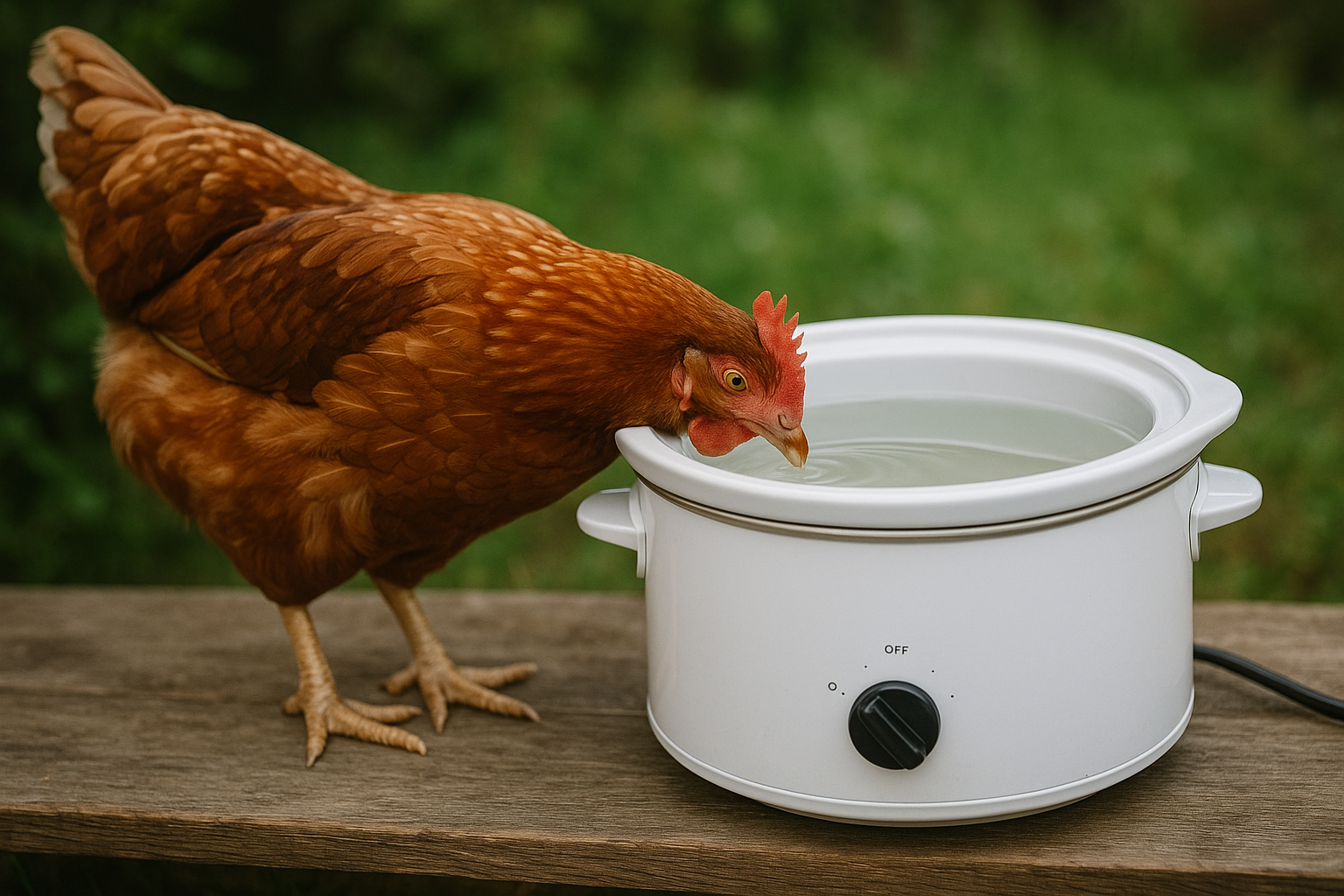
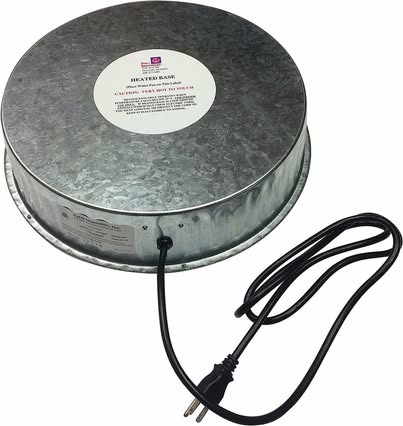
Please stop sharing using crock pots as chicken waterers before someone loses their flock or even their house. It’s a terrible idea. Having that warm water in the coop will add to the humidity in the air that will contribute to frostbite. The open bowl concept means they can get wet leading to hypothermia. If they stand on the edge, they can burn their feet or knock the crock over. It is also a huge fire hazard. Just spend the money on a good heated waterer made for chickens. You got into chickens for a reason. A small investment and some care will go a long ways. – Anonymous
Here’s what I have done to my food and water dispensers for my chicks, to keep them from walking, pooping and kicking wood shavings in them.
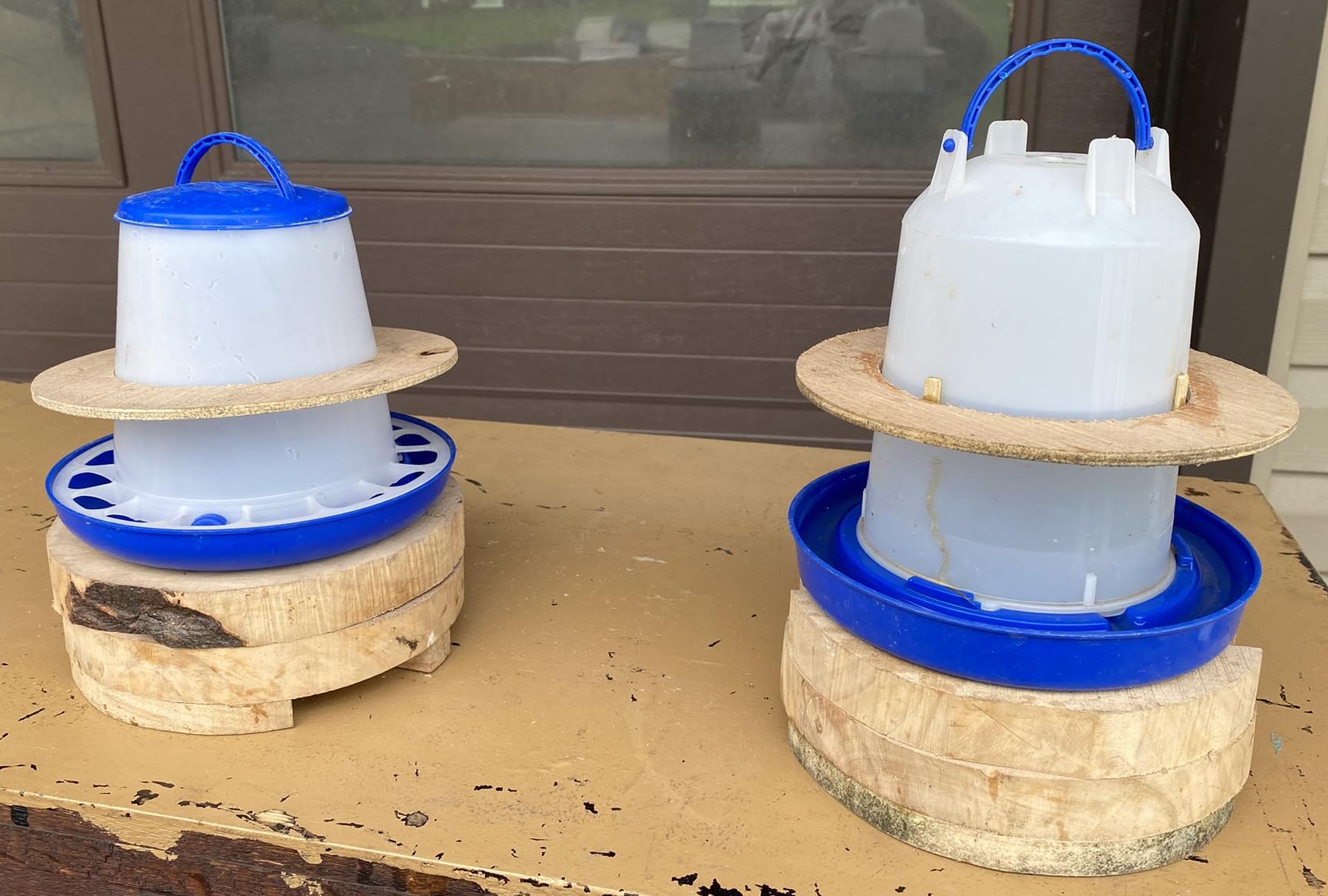
Photo credit: Gordon Alger
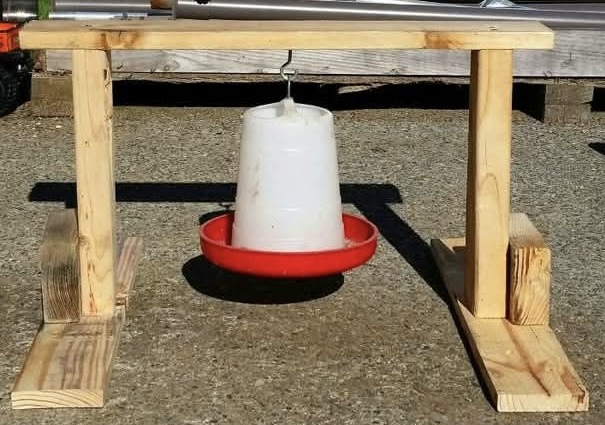
Photo credit: Unknown
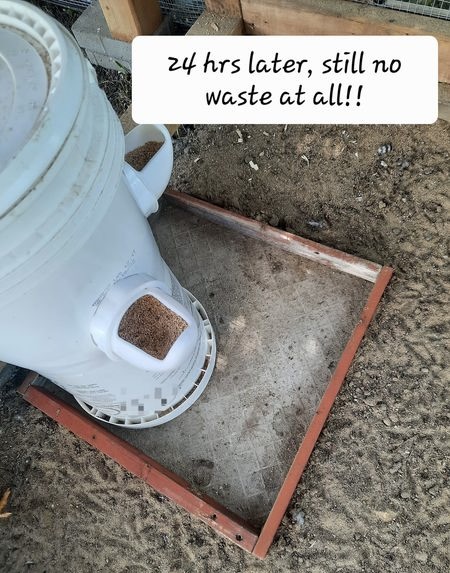
This hack has changed my life. Install your feeding inserts this way instead of the way they are meant to be used. No more waste! – Julianne Howard
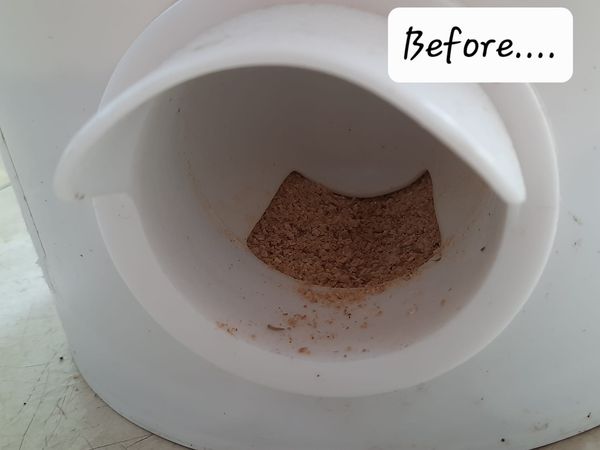
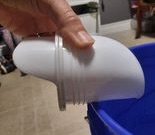
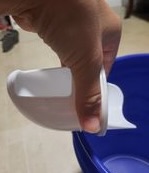
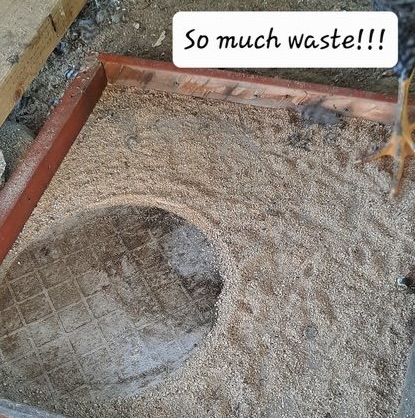
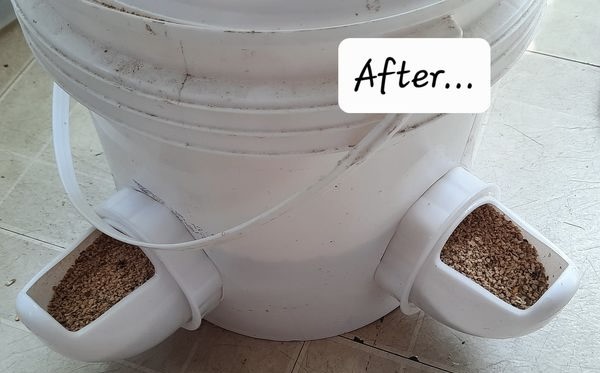
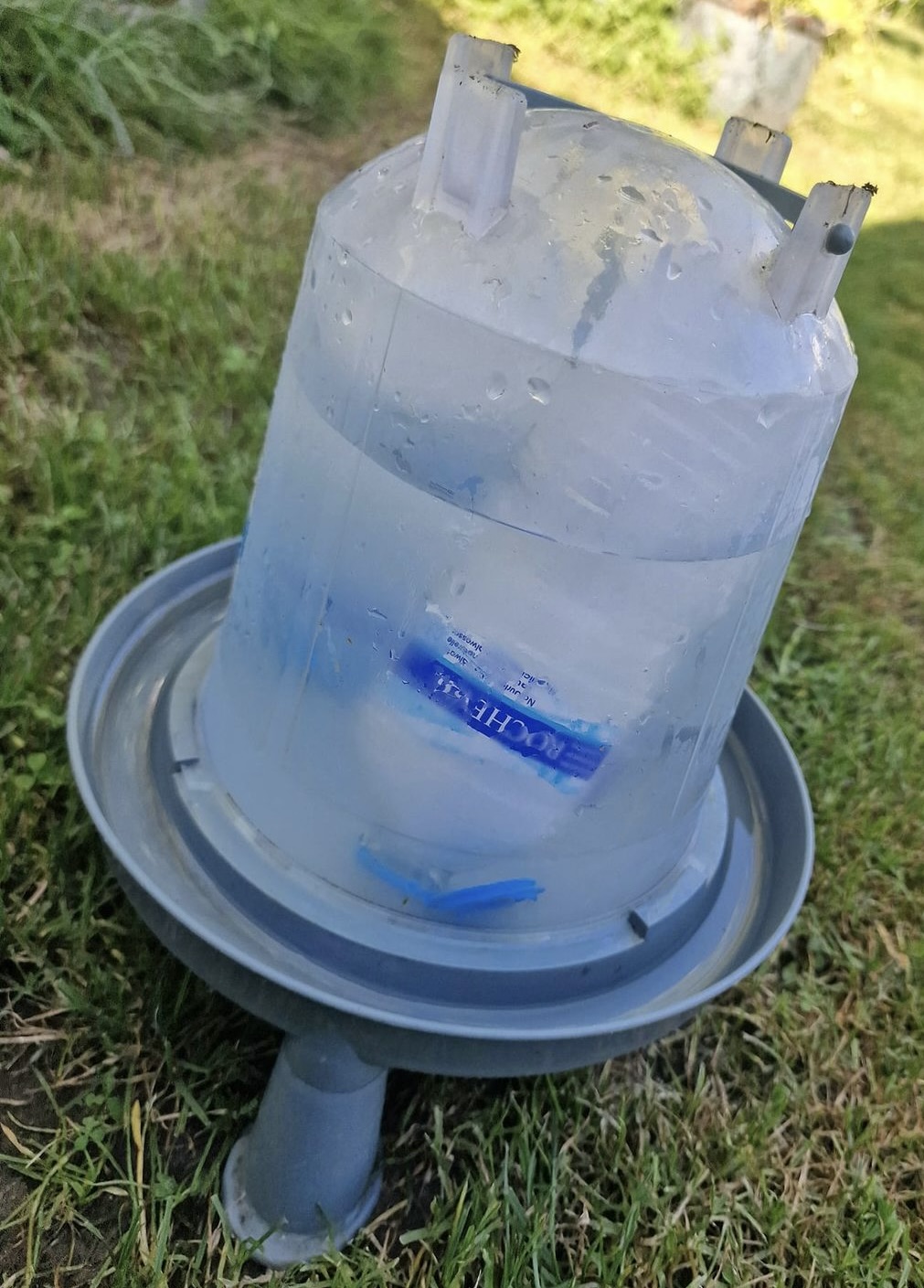
In hot temperatures this is how I keep my chickens watering station cold: two 1/2 litre frozen water bottles fit inside this three litre watering device. Open the bottles before placing it upside down. I also put some aluminium foil around it to block out the sun. – Davy Davy
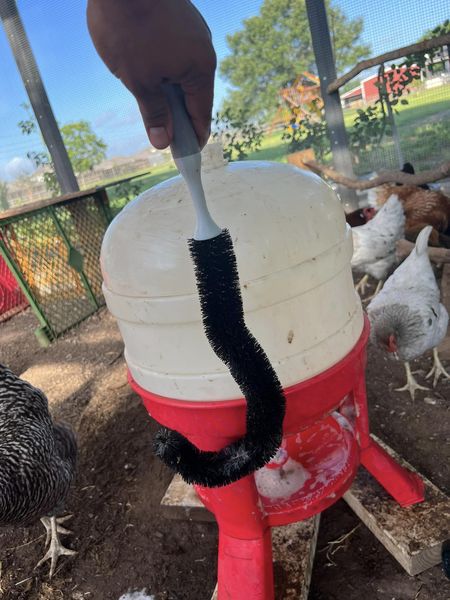
The opening is not big enough for a hand to fit. I used to just set the hose nozzle on the jet setting to clean the inside. Today I used a brush meant to clean a dryer vent hose bending it to this shape and scrubbed away. It worked great and got it looking like new. – Marvin Aviles
DIY A/C System Using A Cooler And Electric Fan
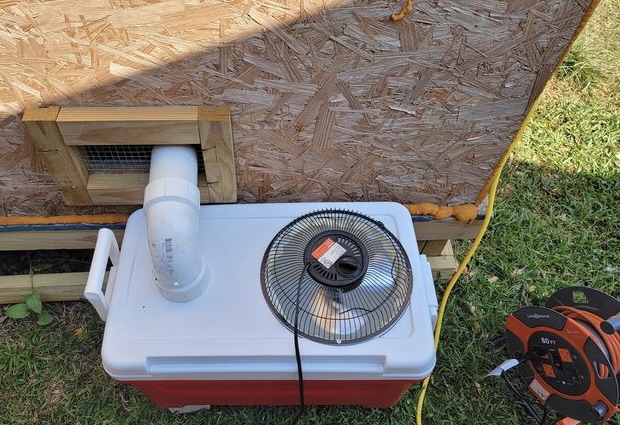
Photo credit: Shawn Sanford
I haven’t seen anyone with something like this so thought I’d share what we did as maybe it could help someone else. No judgement if you choose to heat or not.
This is our first year raising chickens in extreme cold temperatures here in Canada. While we started with the philosophy that chickens are very resilient and can survive, our plan was to not add any form of heat. We saw the quality of life decline and that wasn’t what we wanted for our chickens. After brainstorming many ideas, the biggest concerns were reliability and fire hazards. We came up with this. Thankfully our coop is right across from our house, 40’ away).
We installed a 5” diameter spiral pipe with 6” diameter insulated flex that connects our chicken coop to our house. We added an inline fan that sits inside the pipe at the pipe house entry. Our warm house air blows into our chicken coop heating it up nicely. You can’t search if this would work or not, so we took a risk but it has worked great.

Our house typically sits at 20C/68F. The temperature outside is currently -35C/31F (wind chill -43C/45F). Our coop is sitting at -5C/23F. On a typical -20C/4F day, our coop varies from 4C/39F – 8C/46F during the day. Our coop is insulated and has open ventilation. – Melissa Marie Jeftic
Thanks to everyone who shared their hacks and photos.
 Bitchin' Chickens
Love the DIY cooler. Going to give it a try up in the Okanagan.
LikeLike