
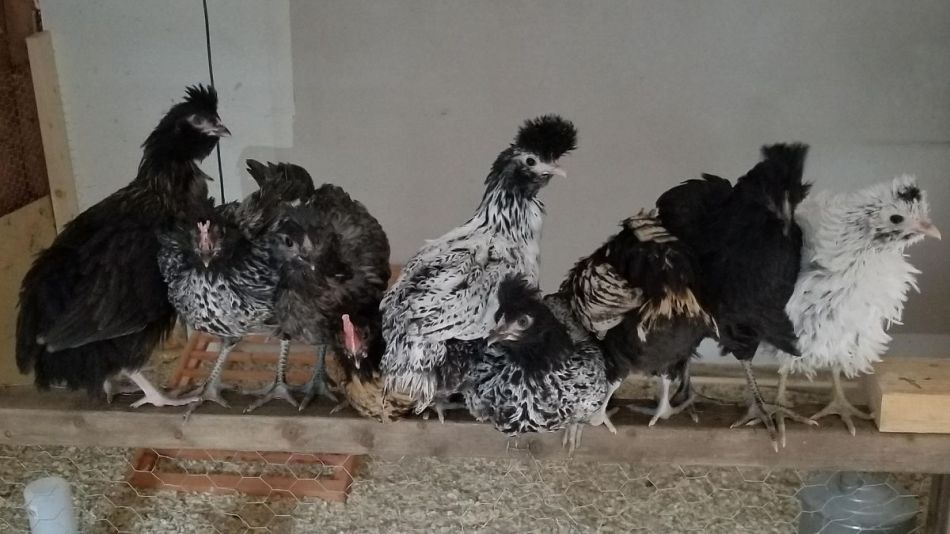
I’ve kept chickens since 2005 and during that time I’ve had dozens of birds – some purebred and others, barnyard mixes. Some folks are happy with a flock that consists of all one breed, not me. I’ve worked to obtain or create birds that reflect a variety of genetics that create interesting features and eggshell colours. Some of my favourite features are frizzled feathers, muffs and crests. I’m happy when I’ve been able to combine them all into one bird.
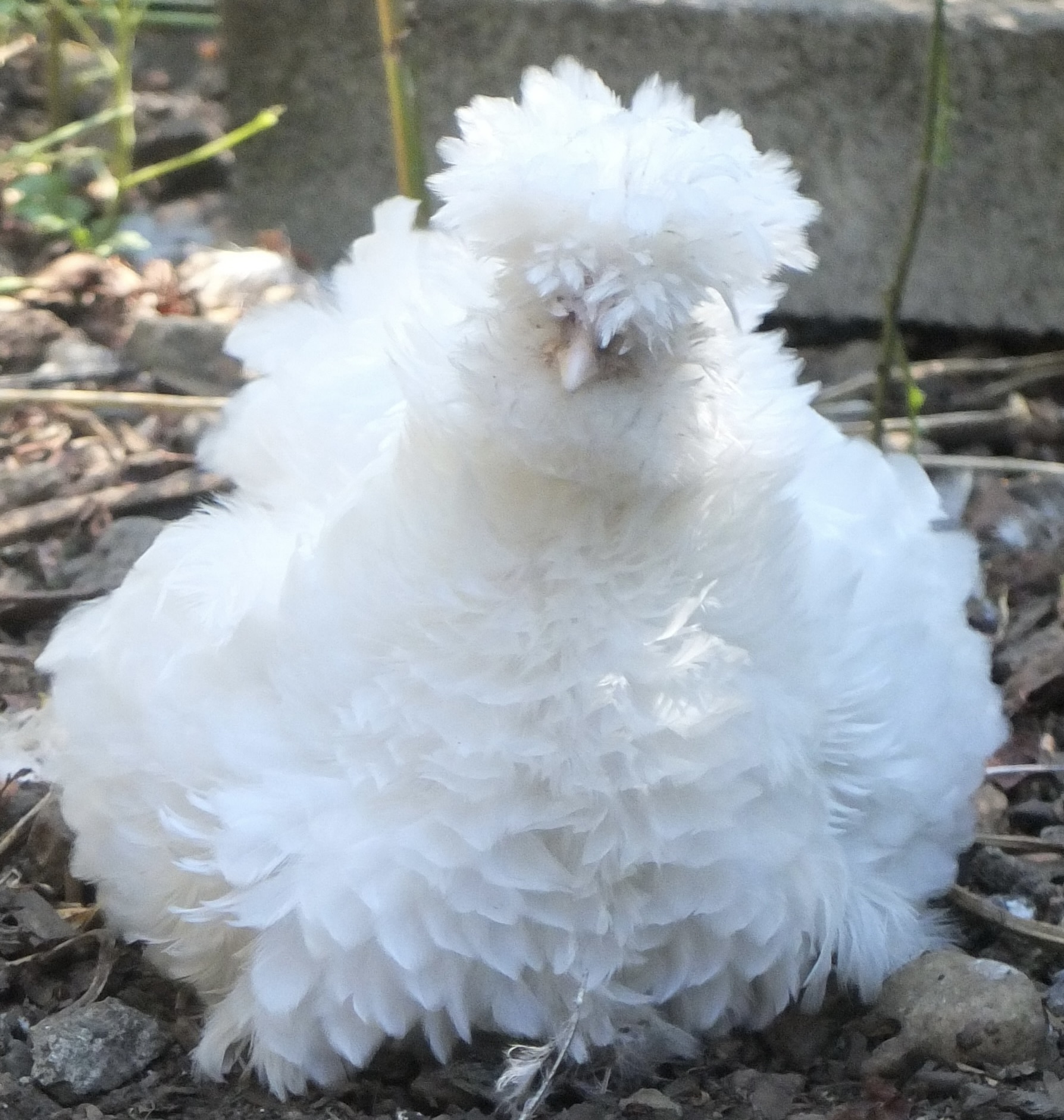
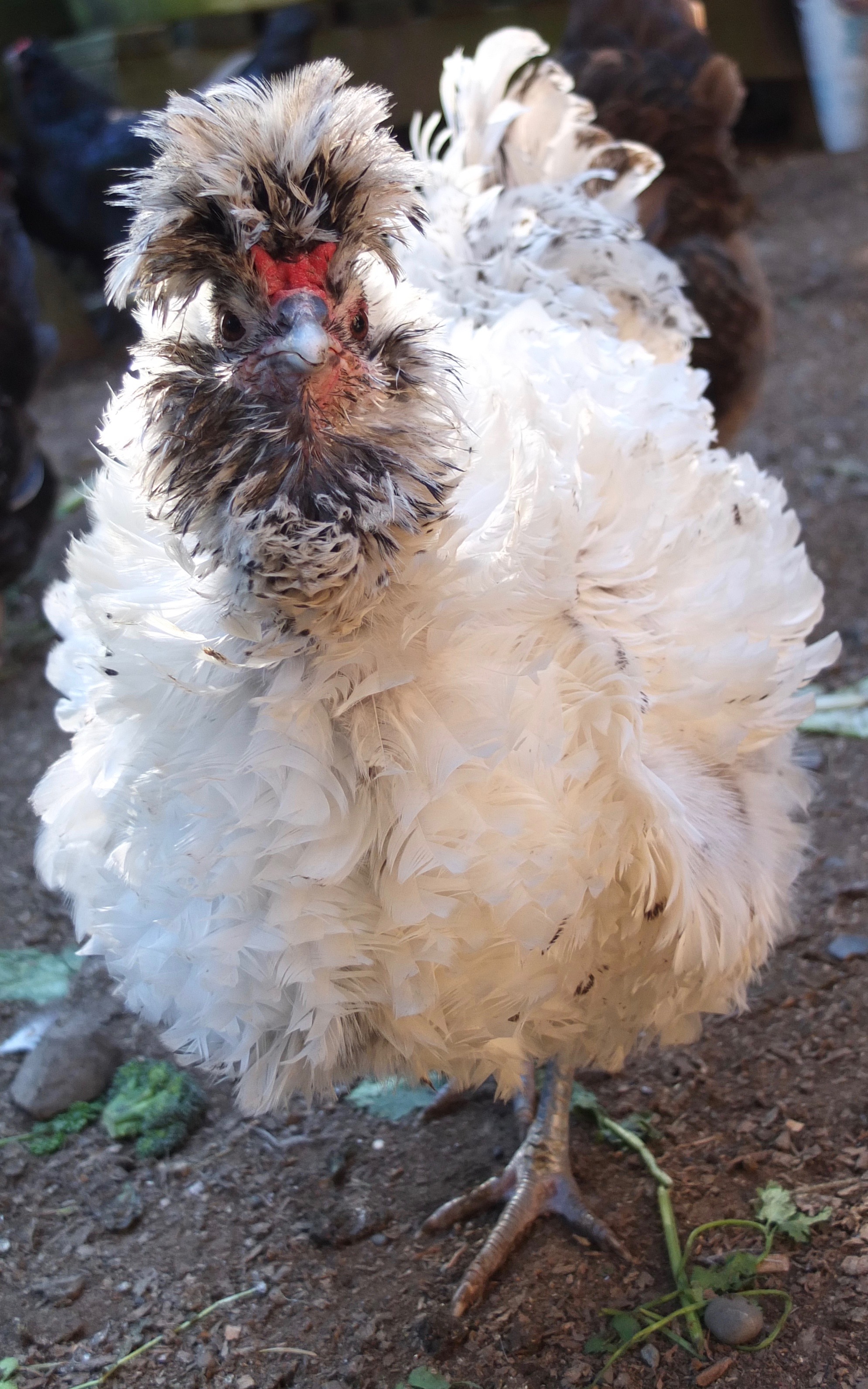
Photo credits: Bitchin’ Chickens
This post is about crests – those feathers on the top of a chicken’s head. From the massive pom-pom of the Polish to the bouffant Silkie and the jaunty tuft of a Crevecoeur, crested chickens are some of the most instantly recognizable and adored birds in the poultry world. But what gives them those wild head feathers? Let’s dig into the genetics behind these feathered crowns.
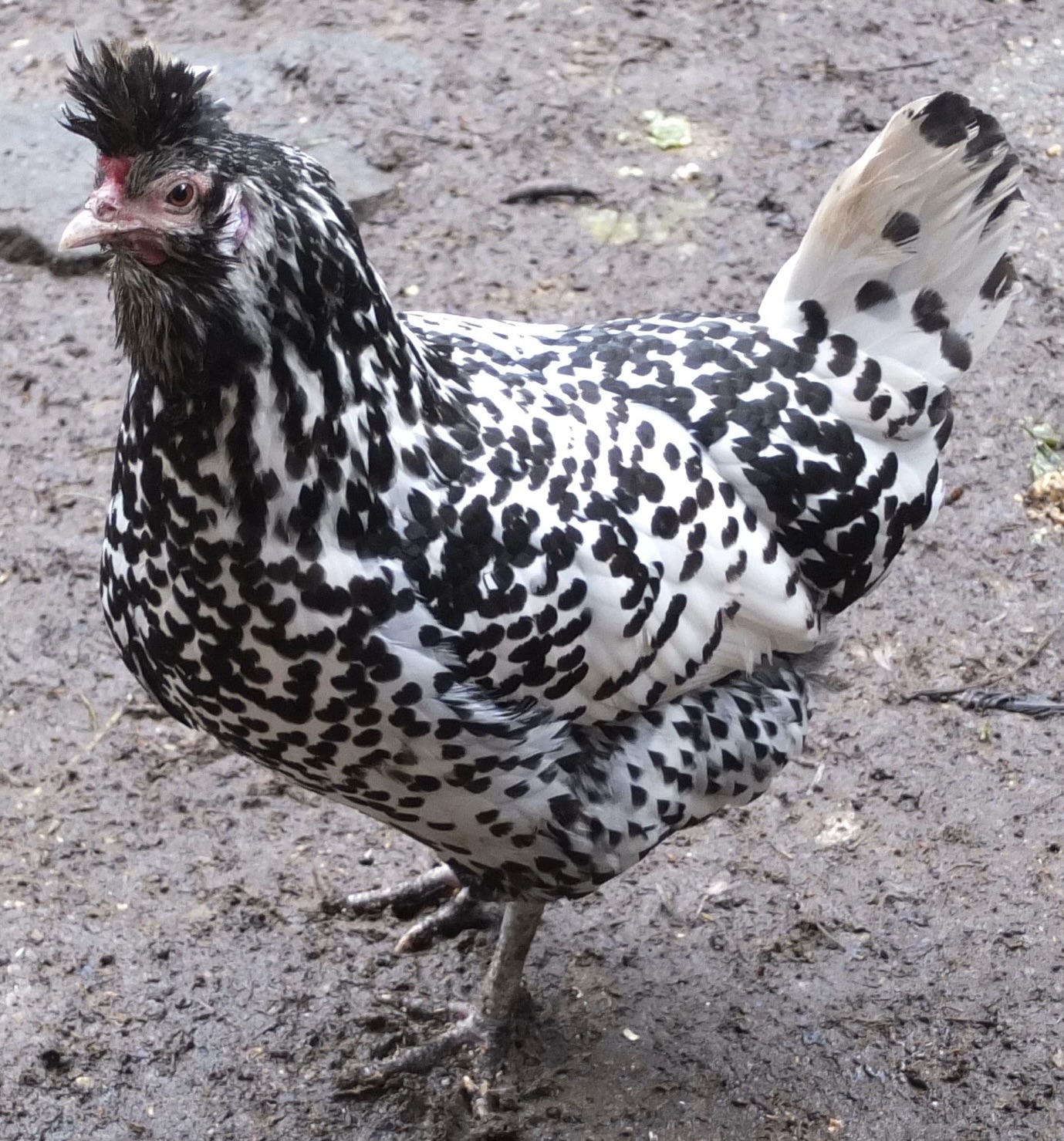
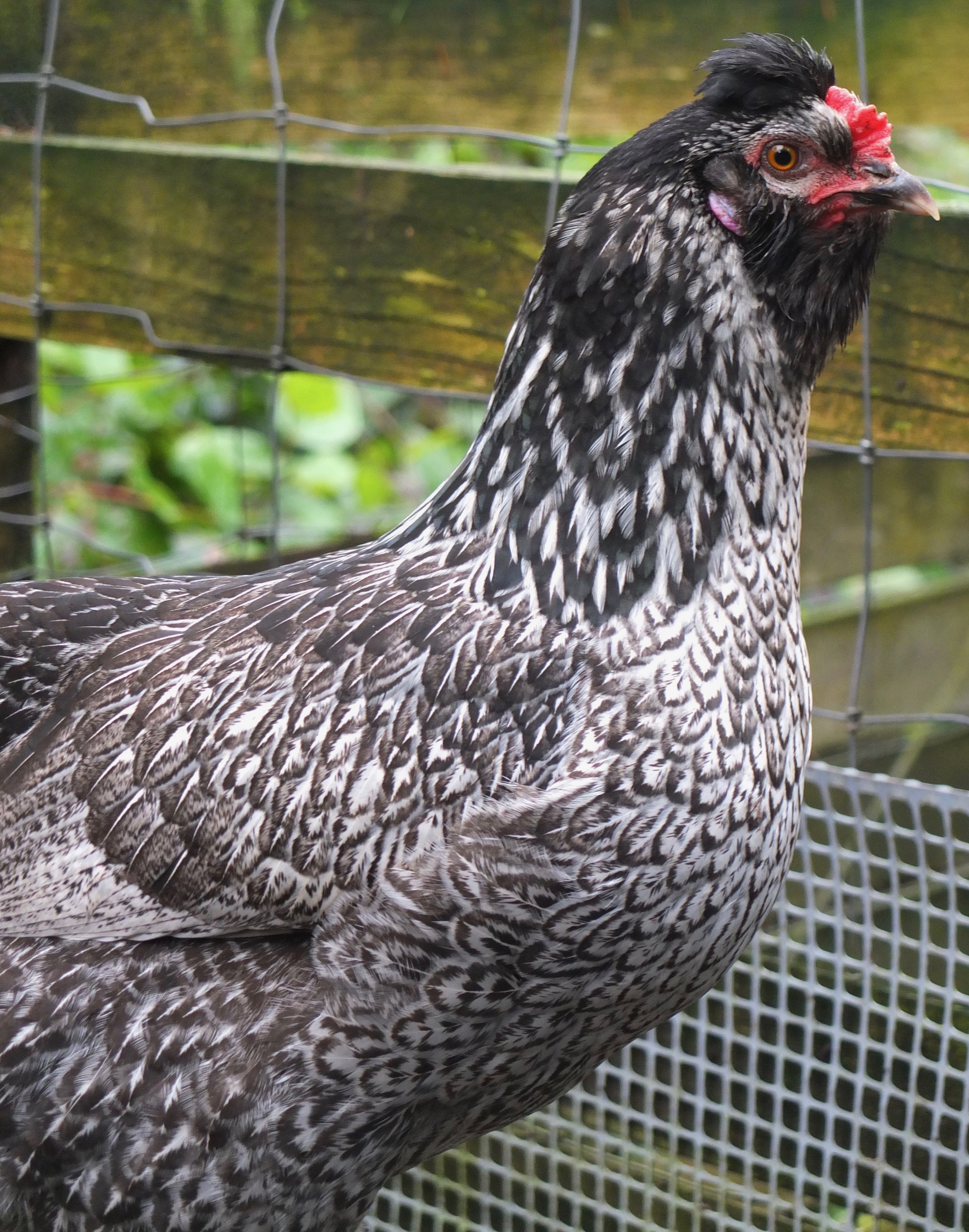
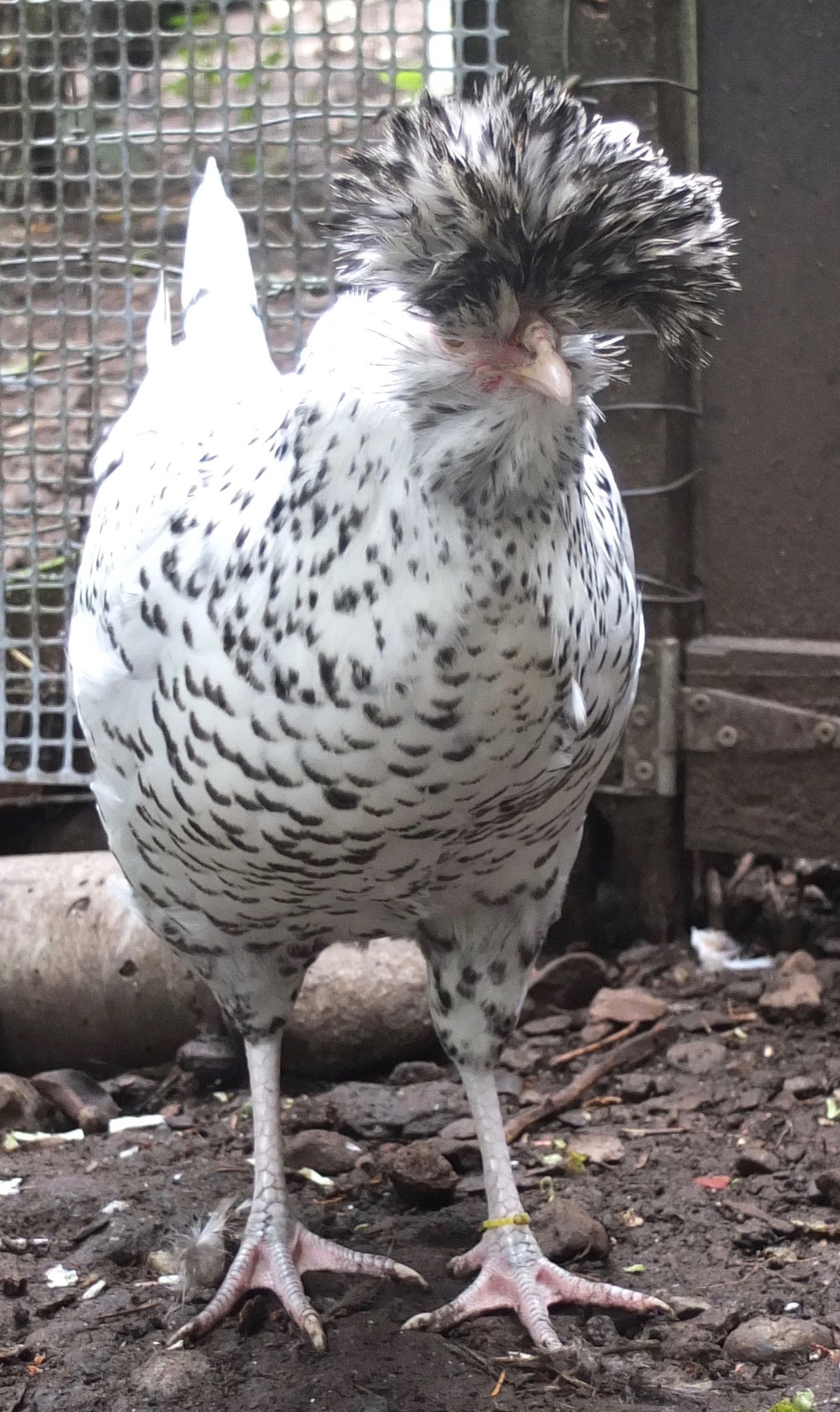
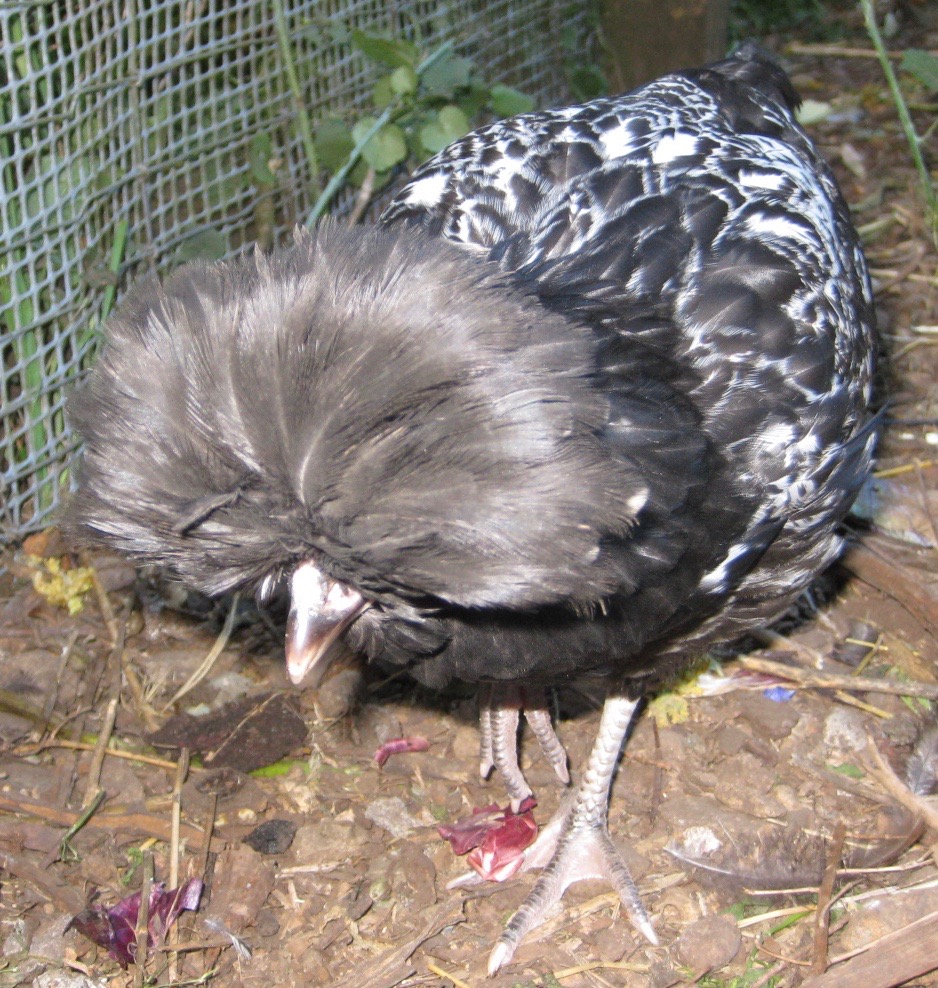
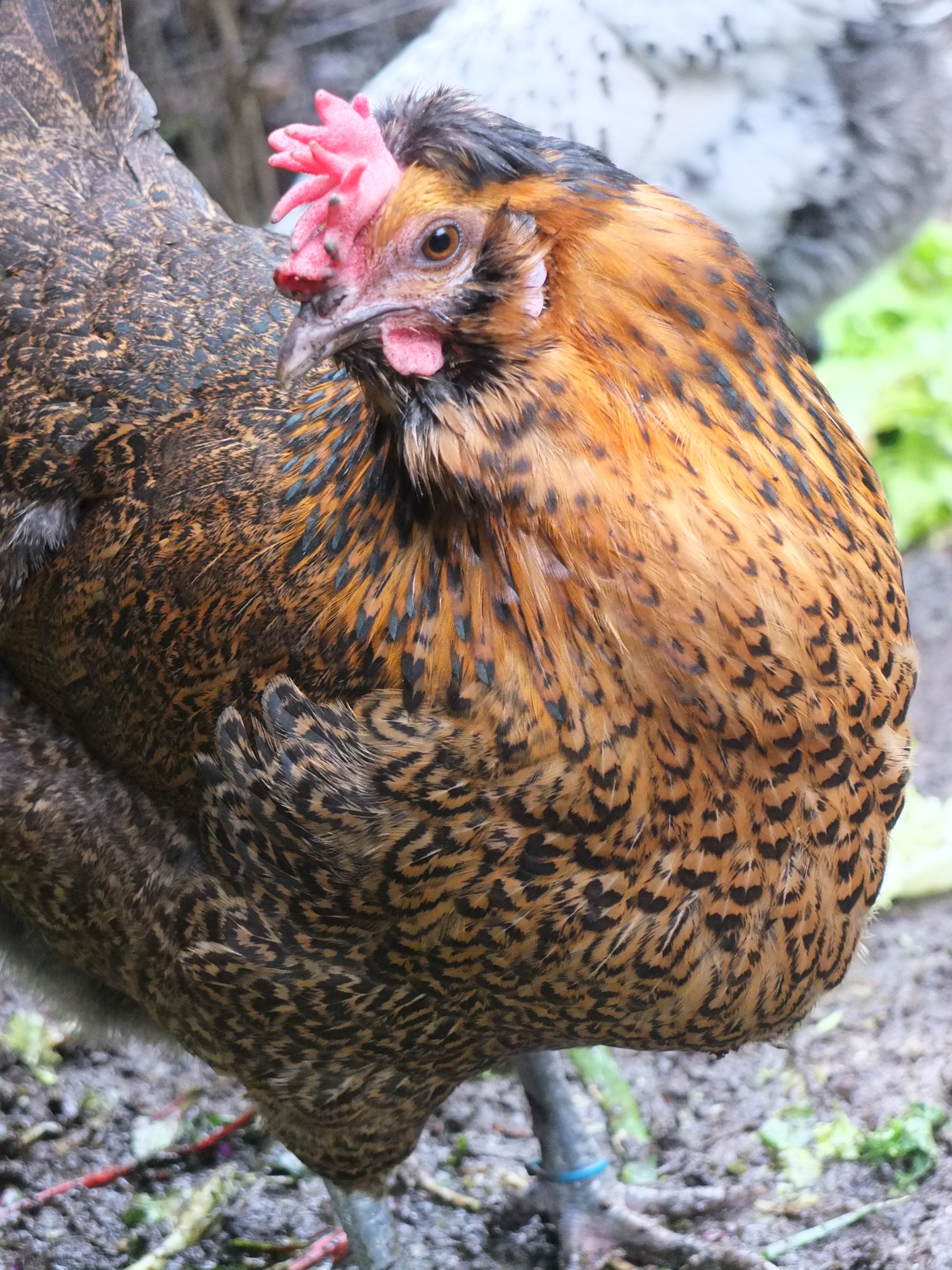
Photo credits: Bitchin’ Chickens
A chicken’s crest is a tuft of feathers that grows from an enlarged portion or vaulted skull. This feature is controlled by a dominant autosomal gene known as C, or the Crest gene.
• Birds with one or two copies of this gene (C/c or C/C) will develop a crest.
• Birds without it (c/c) have a normal, smooth head.
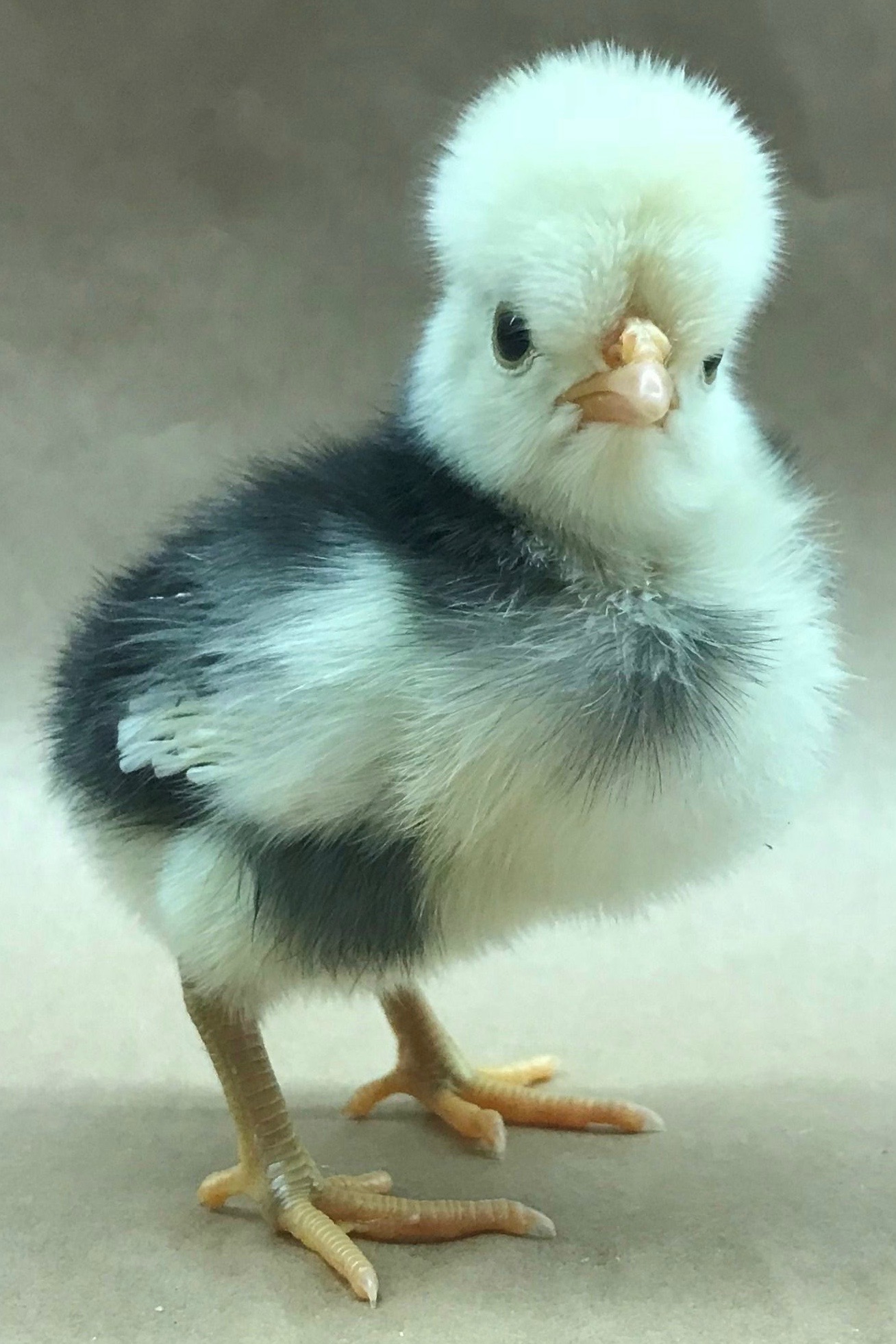
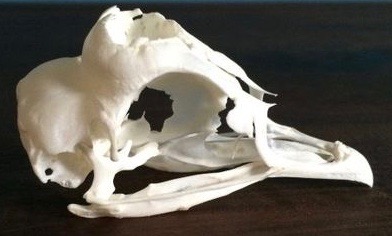
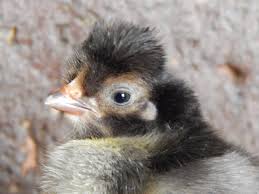
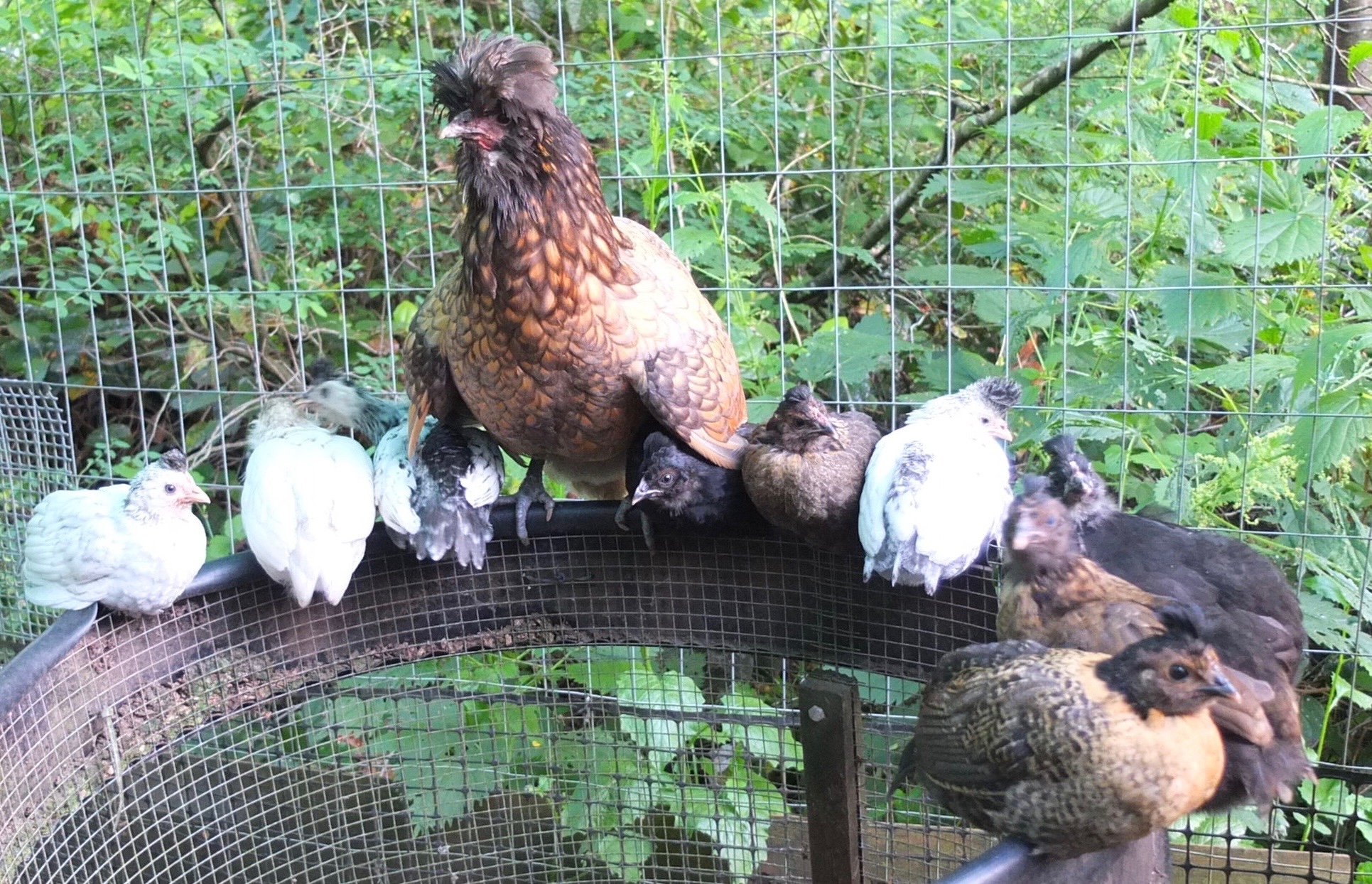
Photo credit: Bitchin’ Chickens
The crest is the result of a cranial hernia, an area of the skull that bulges upward. This allows the feather follicles to grow in a tufted or upright orientation rather than lying flat. In some breeds like the Polish or Sultan, this skull structure is dramatically pronounced, giving rise to the globe-shaped pom-pom.
How the Crest Gene Interacts With Other Traits
Genetics rarely work in isolation, and the crest gene is no exception.
• Crest × Comb Type: In crested breeds, the placement and size of the comb (especially the V-comb) can be altered by the shape of the skull. Some crested birds have a reduced or displaced comb as a result.
• Crest × Feather Type: Silkies, which carry both the C (crest) and h (silkie feather) genes, display a particularly fluffy and round crest because the silkie feather structure lacks barbicels, causing the feathers to fluff out rather than align smoothly.
• Sex-linked Interactions: The crest gene itself is not sex-linked, but in crossbreeding programs it can appear to segregate with sex-linked traits if particular lines are used repeatedly (for example, in certain ornamental breeding projects).
Health and Practical Considerations
While crests are endearing, they can come with challenges:
• Obstructed Vision: Large crests may block a bird’s vision, making it harder to avoid predators or navigate obstacles. Some keepers trim or tie up crest feathers for safety.
• Flightiness: Due to their vision issues they sometimes tend to being more nervous than some docile breeds.
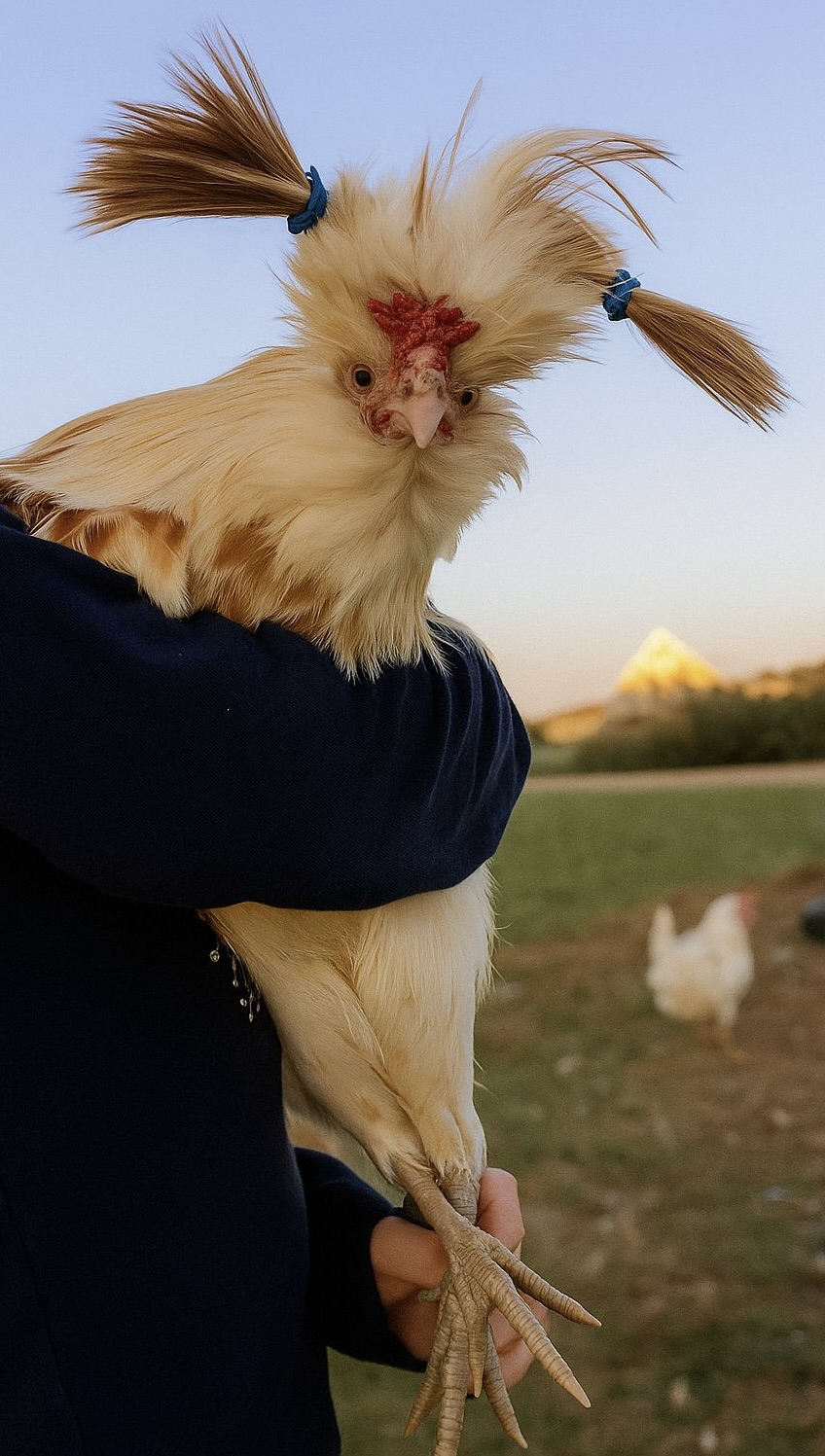
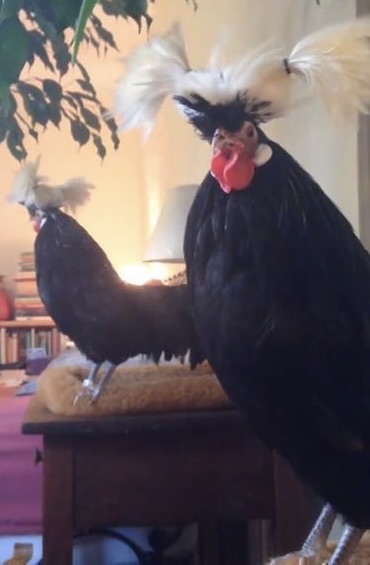
Photo credit: Unknown
•Injury and Pecking: Curious flockmates sometimes target crested birds, pecking at their feather bases or even the thinner skull area beneath.
• Mite and Moisture Issues: Crests trap moisture and can harbour external parasites if not checked regularly. Good ventilation and grooming go a long way.
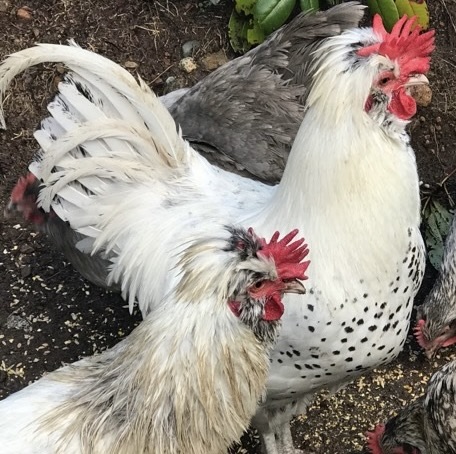
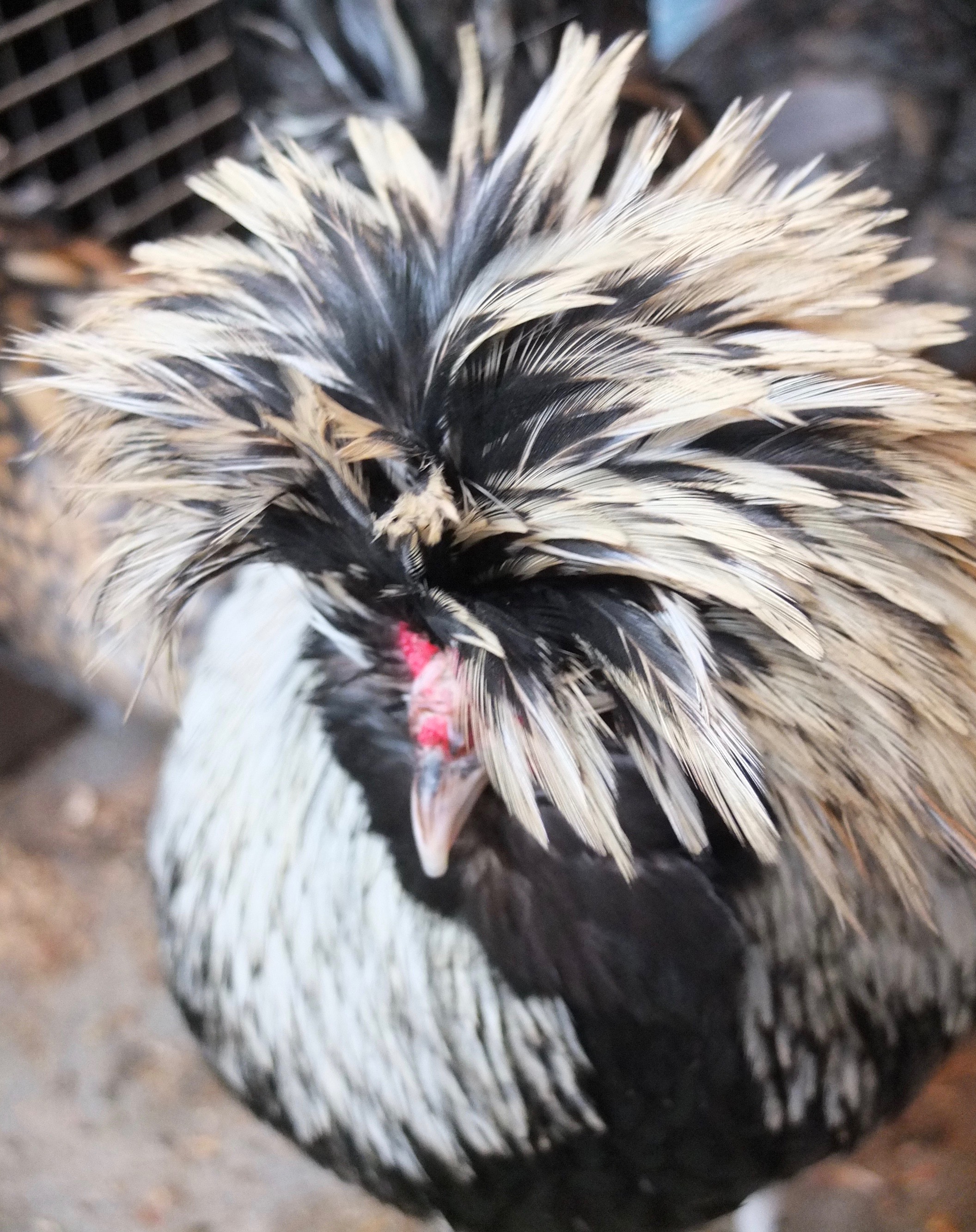
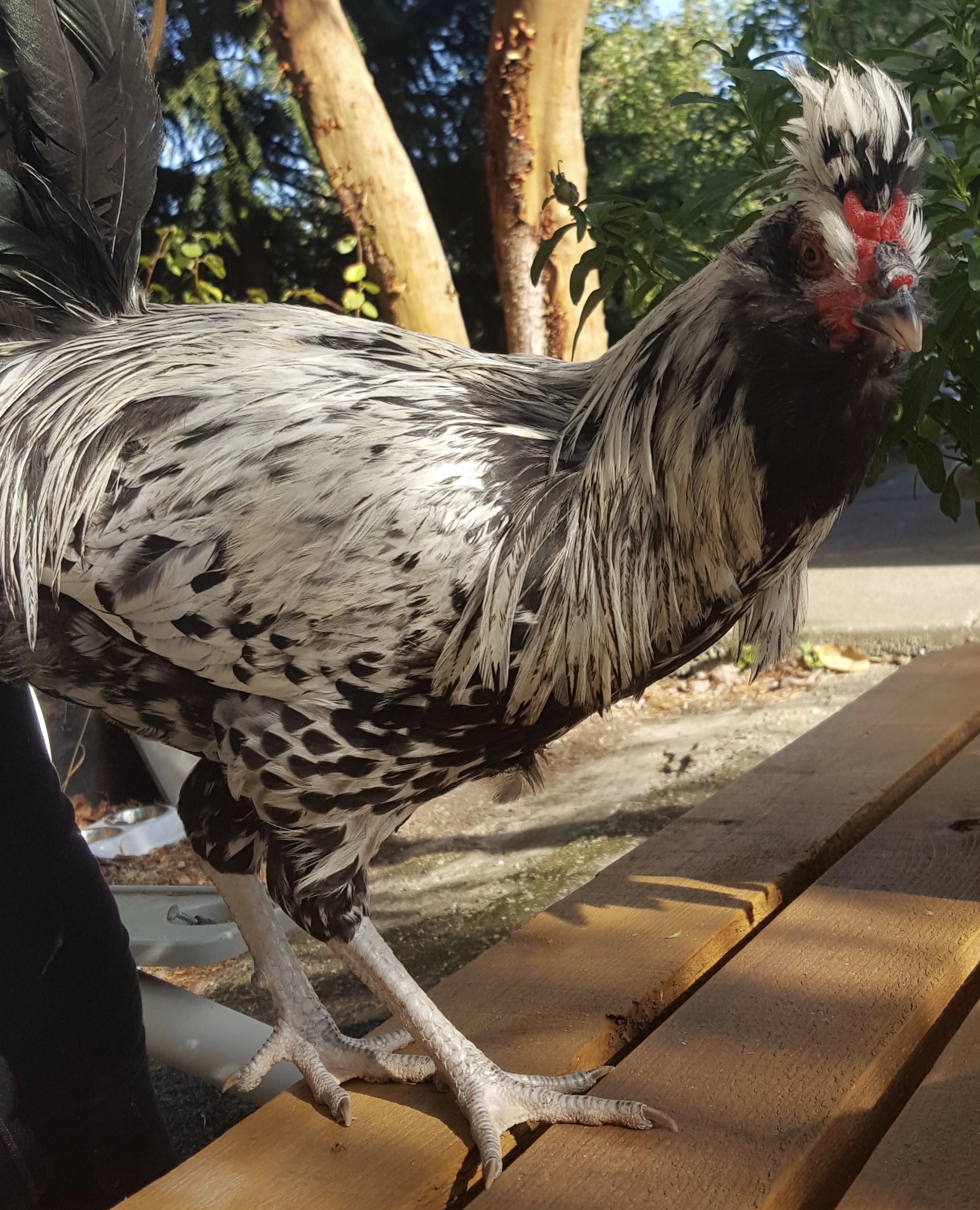
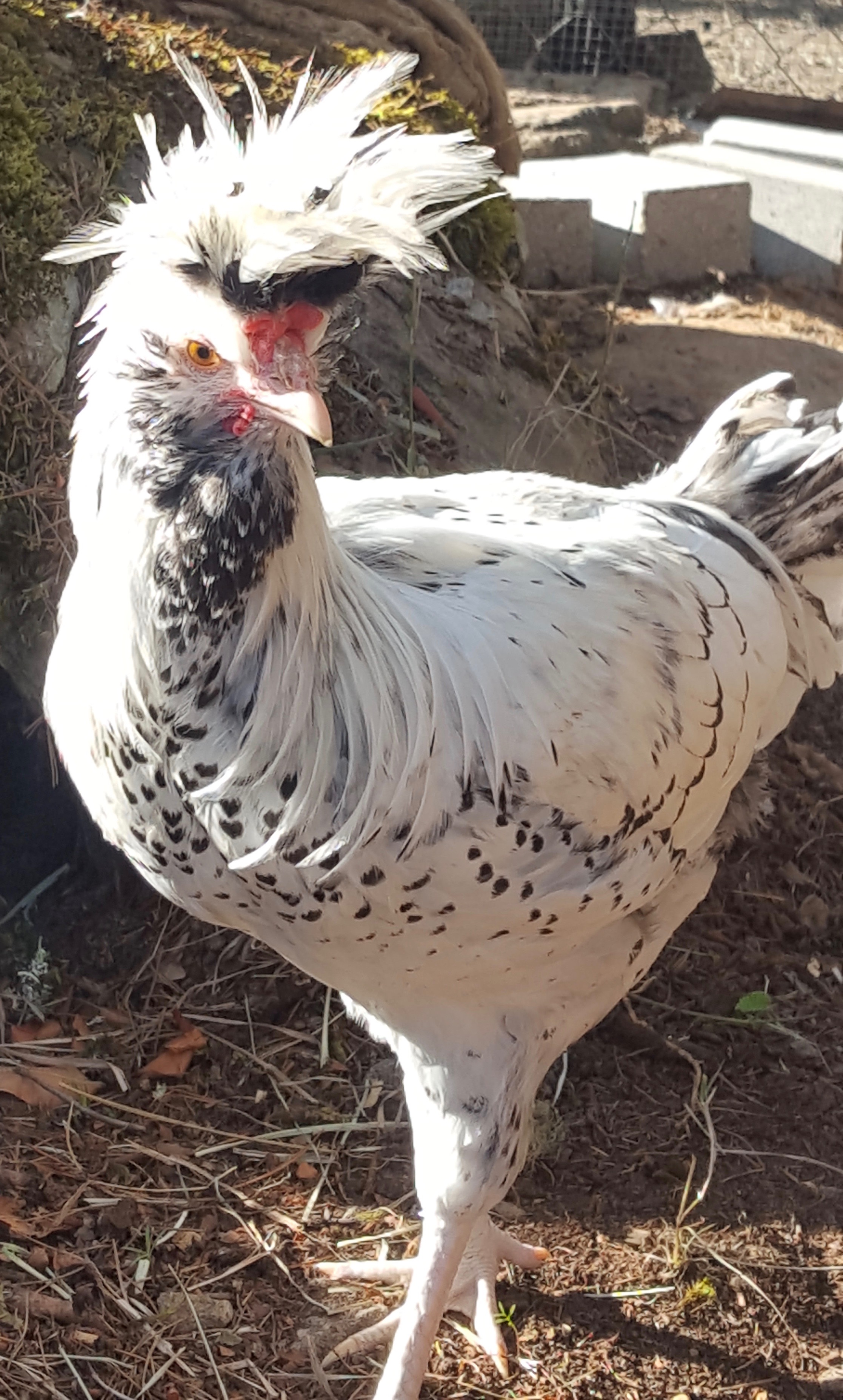
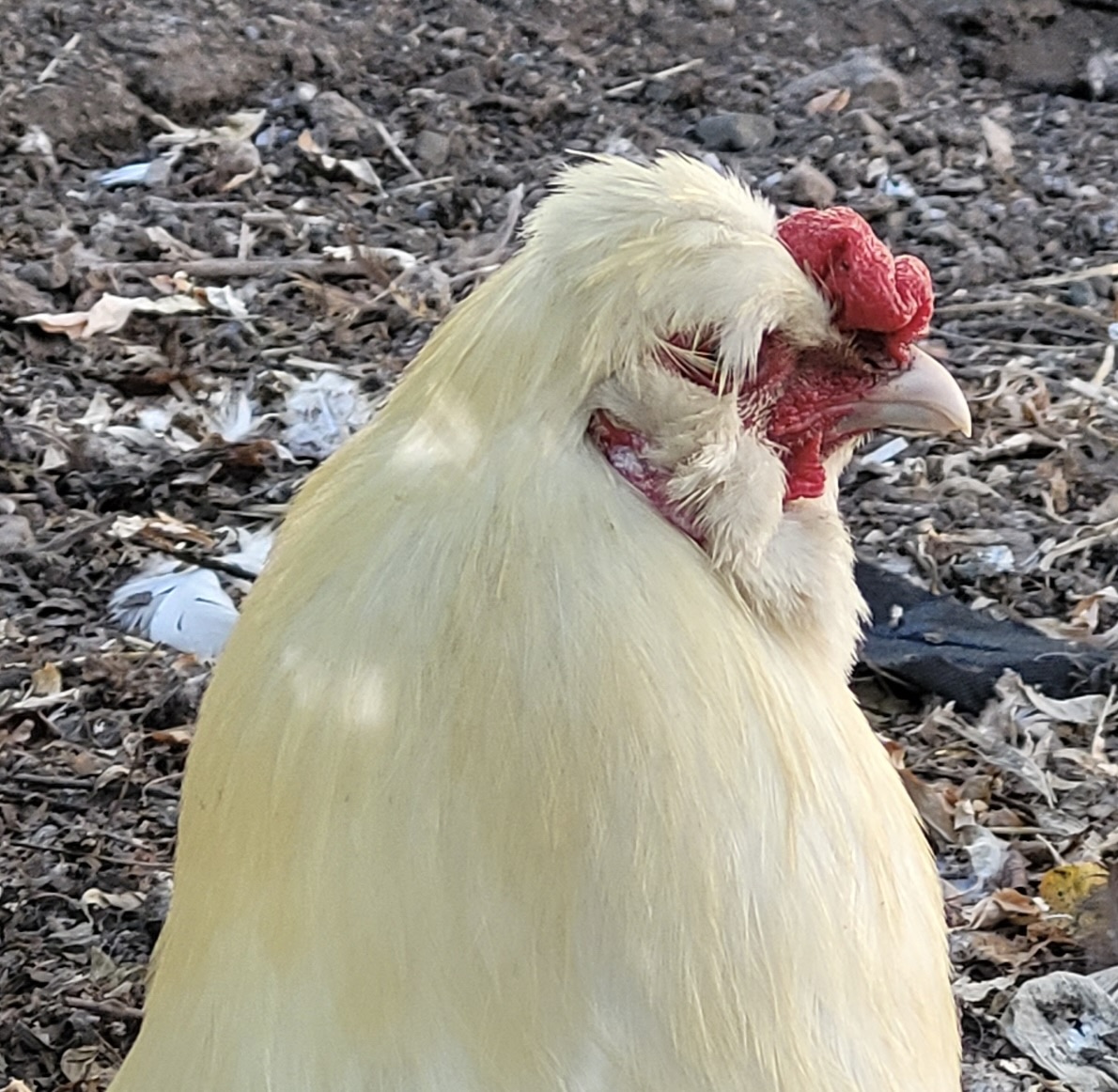
Photo credits: Bitchin’ Chickens
Crested Breeds
The crest gene has appeared in multiple chicken populations globally, sometimes through selective breeding, sometimes by chance mutation. Common crested breeds include: Polish, Silkie, Appenzeller Spitzhauben, Houdan, Sultan and Crevecoeur. These breeds demonstrate how the same genetic trait can be expressed differently depending on feather structure, skull shape, and selective breeding goals.
Citations
• Somes, R. G. Jr. (1990). Mutations and major variants of plumage and skin in chickens. In Crawford, R.D. (Ed.), Poultry Breeding and Genetics (pp. 169–208). Elsevier.
• Dorshorst, B., Okimoto, R., & Ashwell, C. (2010). Genomic regions associated with crest in the chicken. Poultry Science, 89(8), 1594–1601.
• Pitel, F., et al. (2000). Mapping of the chicken crest gene (C) to chromosome 1. Animal Genetics, 31(5), 353–357.
• Smith, J., & Burt, D. W. (2008). The avian genome: Evolution and domestication. Genome Dynamics, 4, 123–137.
• USDA Agricultural Research Service (2023). Poultry Genetic Resources and Trait Database.
“Serious science. Not-so-serious chickens.”
 Bitchin' Chickens
Thank you for this great article
LikeLike