
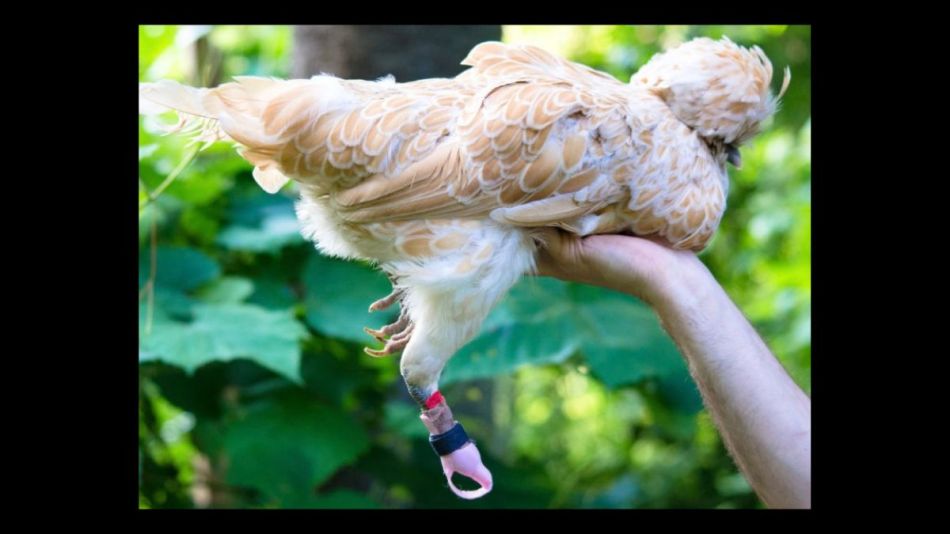
Every so often, a chicken loses a foot or leg from frostbite, predator attacks, infection, or congenital deformity. For many keepers, the first reaction is heartbreak and the second is the big question: “Can a chicken live like this?” The answer is often “yes”, with a bit of care, creativity and, sometimes, even a prosthetic leg.
Why Chickens Lose Feet or Legs
Chickens can lose limbs for a variety of reasons, including:
- Frostbite: In cold climates, roosters and heavier breeds are prone to frostbite on combs, wattles, and toes. Severe tissue death can lead to auto-amputation.
- Predator injuries: Attacks from raccoons, rats, or dogs can leave birds maimed.
- Infection or bumblefoot: Chronic foot infections may lead to necrosis or require surgical amputation to prevent systemic illness.
- Congenital defects or trauma: Birth defects or crushing injuries sometimes result in malformed or missing limbs from the start.
While gruesome-sounding, many chickens adapt remarkably well, especially if the amputation heals cleanly and pain is managed early.
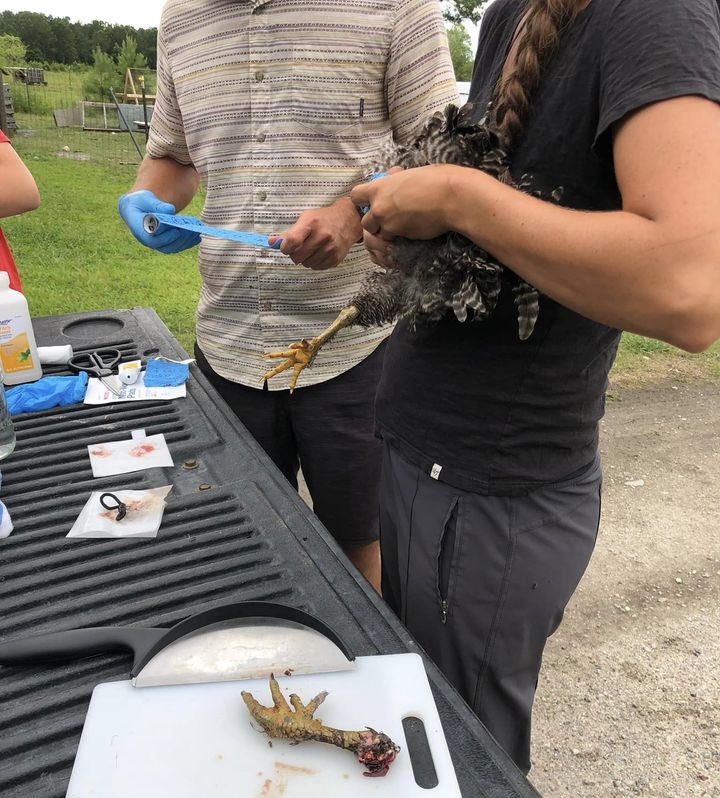
He disappeared for two days and came back with a completely dead limb. – Emma Elizabeth
How Chickens Adapt
Chickens are light-boned and have strong balance instincts. After losing a foot or leg, they often:
- Learn to hop and perch using one leg.
- Rely more on low roosts or ramps instead of flying.
- Spend more time sitting, which makes soft bedding and easy food/water access essential.
If they’re kept on dry, level ground with limited competition from aggressive flockmates, one-legged birds can lead long, happy lives. Some even continue to lay eggs normally.
Enter the Prosthetic Chicken Leg
Prosthetic limbs for chickens sound like science fiction, but they’re very real. Advances in 3D printing and lightweight polymers have opened the door to customized, comfortable prosthetics – often designed by veterinary students, makers, or compassionate owners.
Key features of successful chicken prosthetics include:
- Lightweight design: Heavy prosthetics can throw off balance or cause strain.
- Soft socket or wrap: To prevent chafing on the stump.
- Proper alignment: Mimics a natural stance to allow walking or perching.
- Secure attachment: Elastic, Velcro, or 3D-printed harness systems work best.
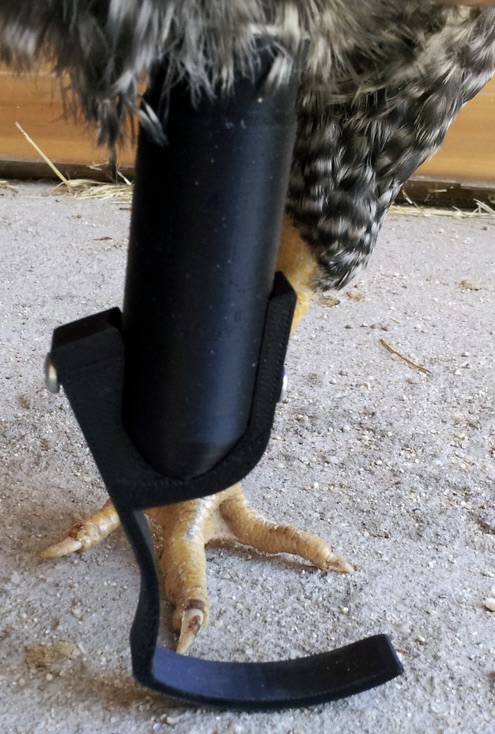
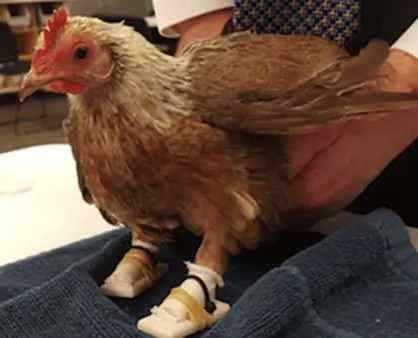
Photo credits: Unknown; T3DMC
Some prosthetics replace a foot, while others substitute an entire leg. In rare cases, veterinarians have implanted titanium rods or other permanent fixtures, similar to avian orthopedic surgeries performed on raptors or exotic birds.
DIY and Compassionate Care
For keepers without access to veterinary prosthetics, simple solutions can make a huge difference:
- Modified boots: Using soft padding or silicone caps to protect stumps.
- Custom supports: 3D-printed or molded plastic braces for partial limbs.
- Mobility aids: Wheelchairs or slings to help birds relearn balance during recovery.
What matters most isn’t the tech, it’s the environment. A chicken with one leg thrives best with:
- Soft, dry bedding.
- Low roosts or platforms.
- Easily reachable feeders and waterers.
- Docile companions who don’t bully or peck at the injured bird.
Case #1
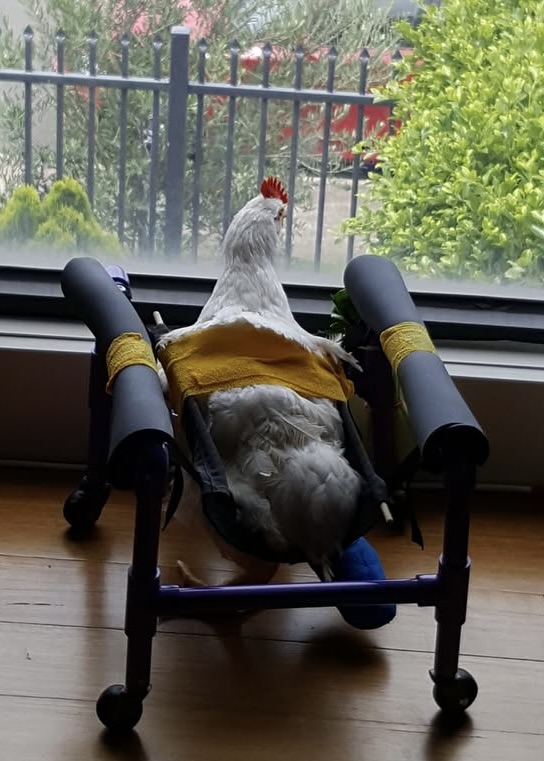
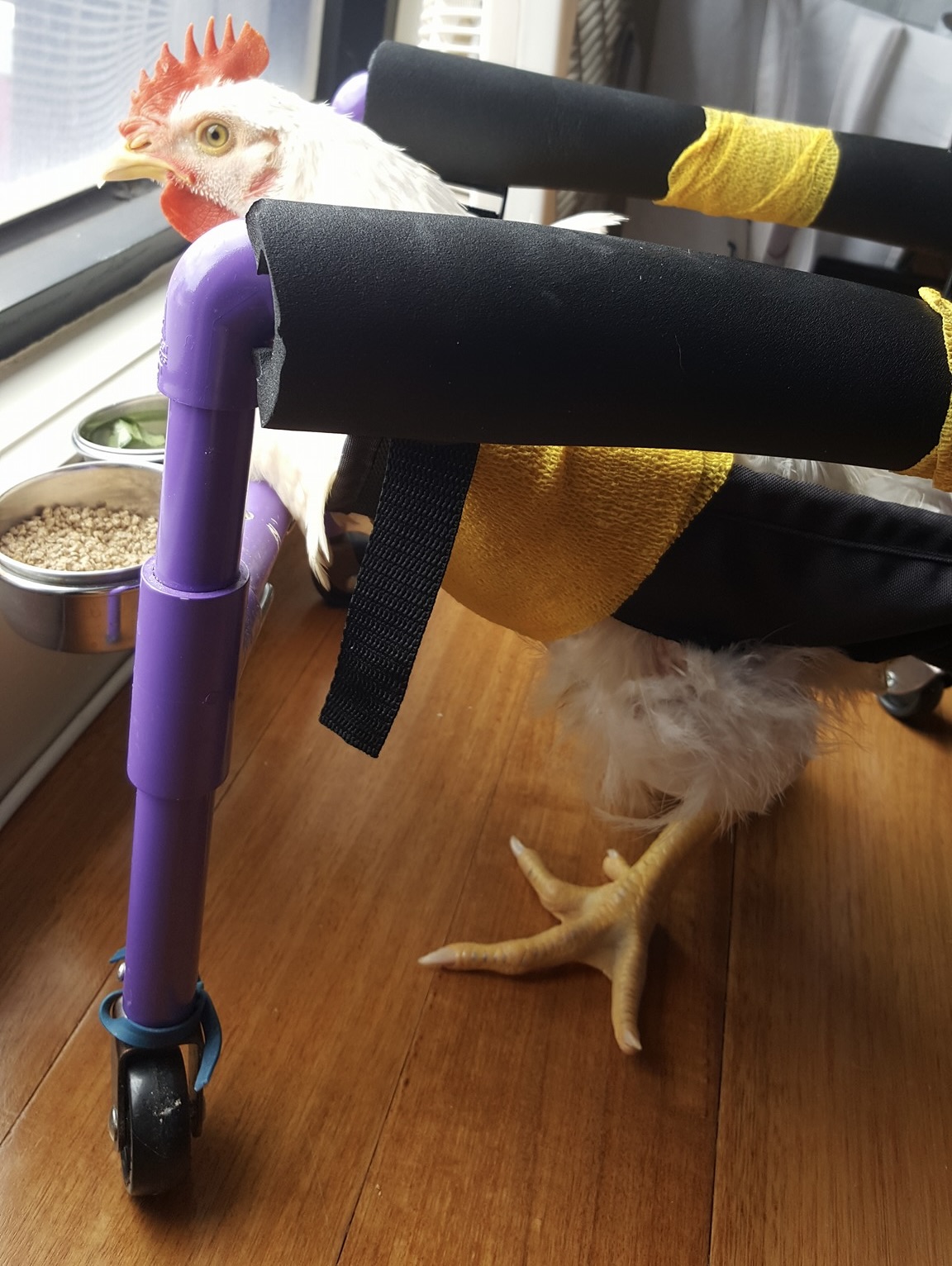
We’d like you all to meet Rocket, a very special chook. He was born with contracted tendons so bad he couldn’t stand up on his own. Last week, we removed the bad leg that was twisted up awkwardly to encourage him to start using and strengthening his good leg. He hangs out at the clinic in the afternoons listening to his favourite radio station.
Our next plan for Rocket is to get him strong on his good leg and then look at fitting a prosthesis for him.
His wheelchair is from Chicken Therapy Chairs and we adore such inventions from like-minded people. We’re always looking for new avenues to help give quality of life for those who are differently abled. – Bird And Exotic Animal Clinic
Case #2
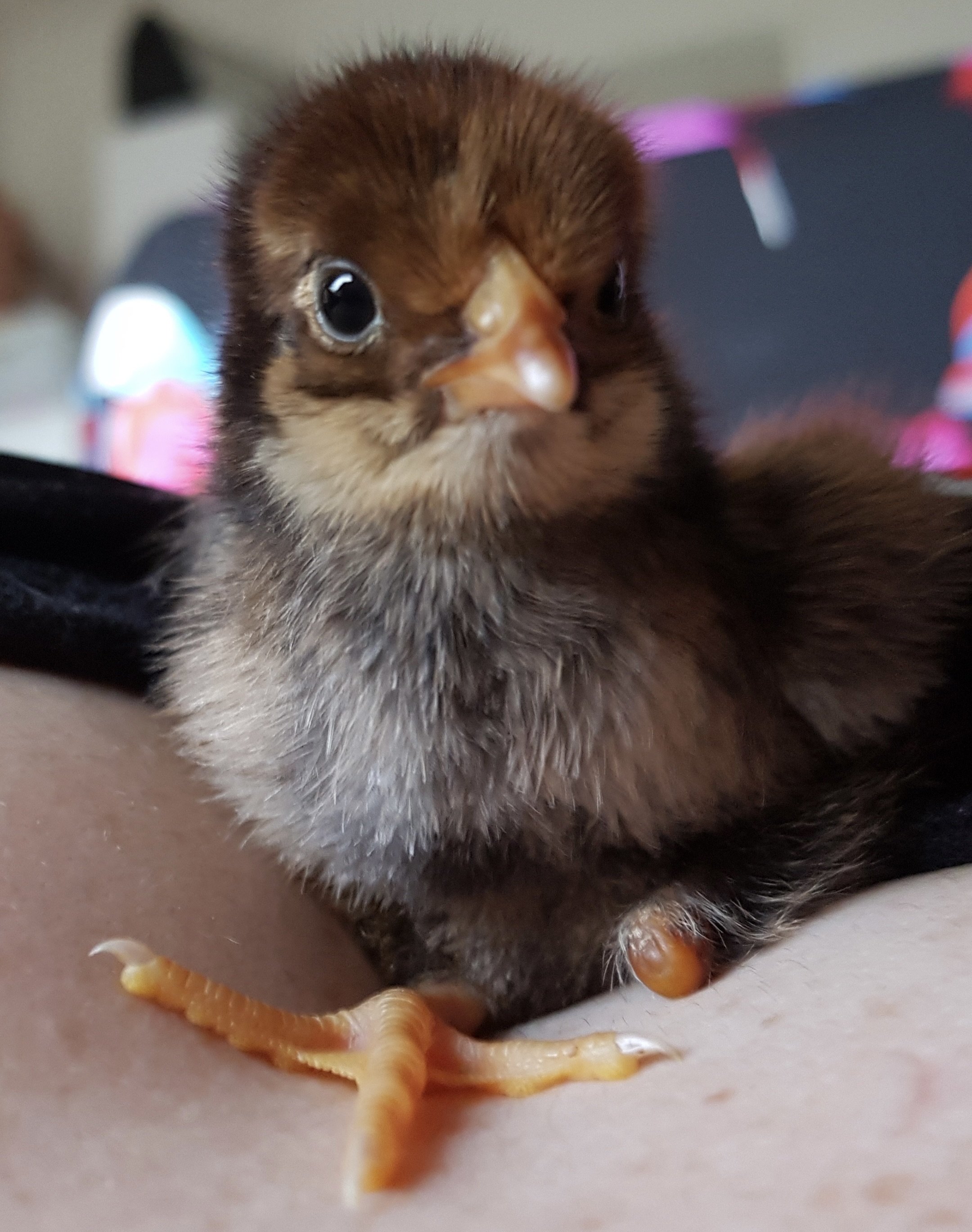
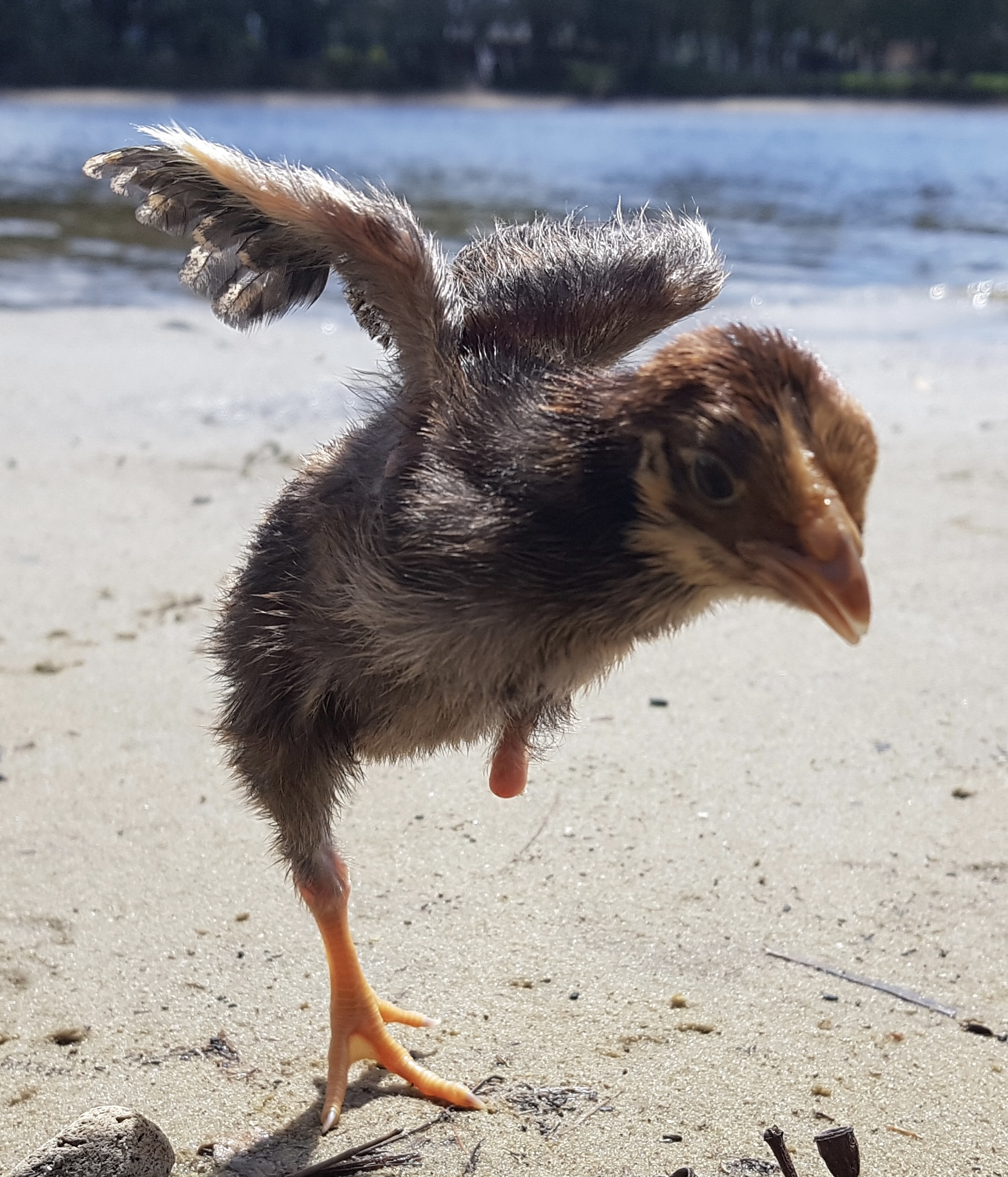
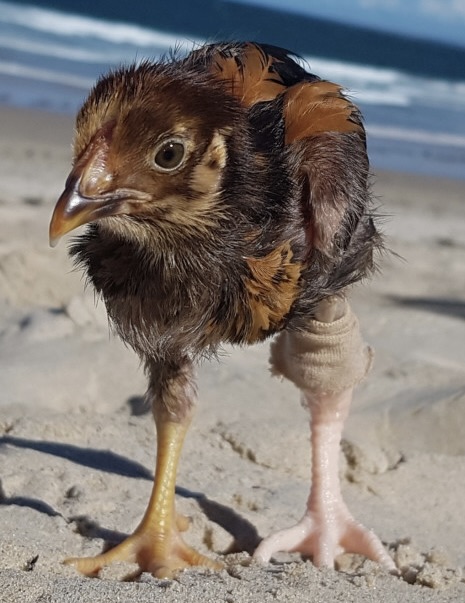
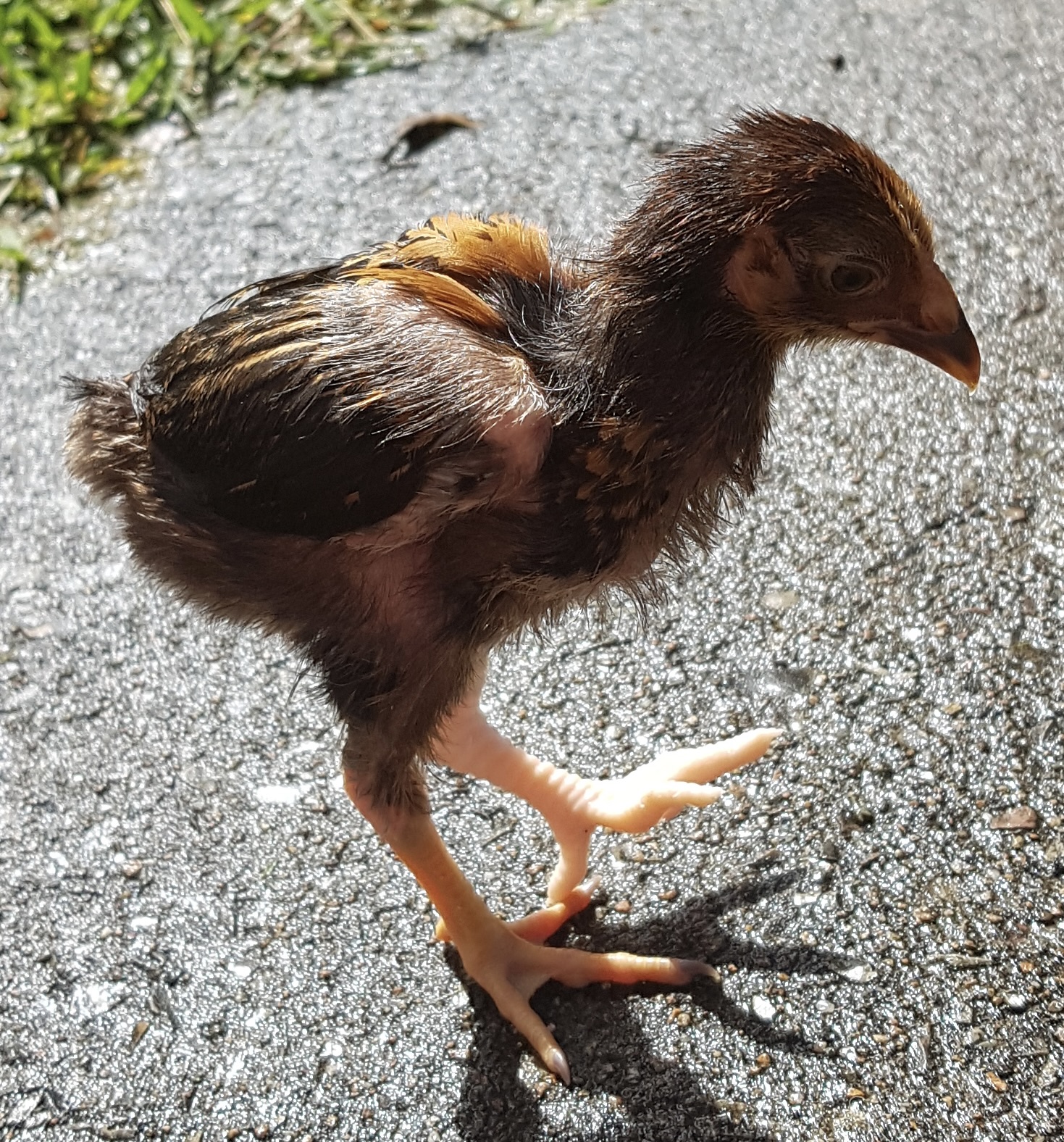
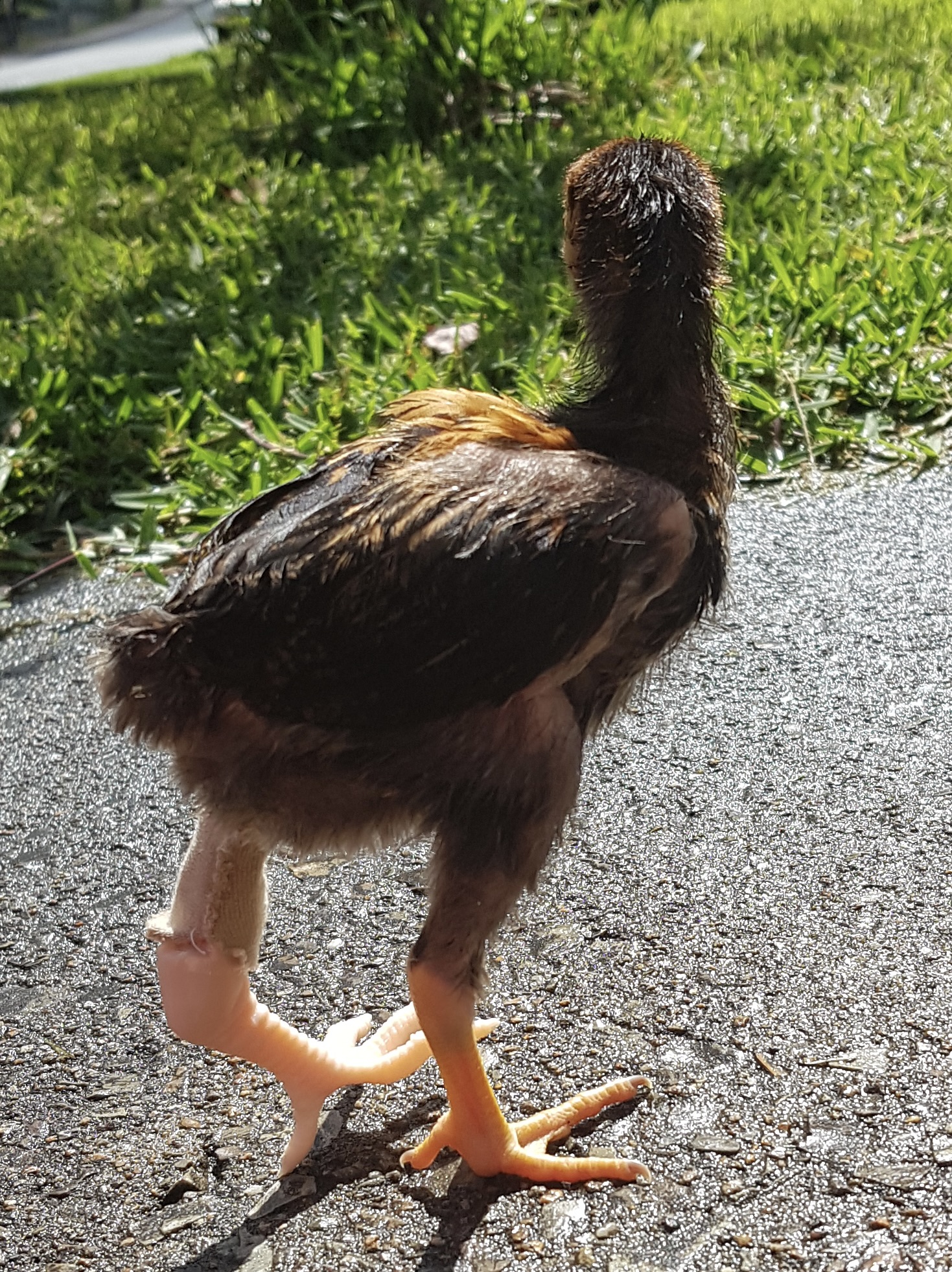
This leg was designed from scratch for a Wyandotte chick called Hopalong who hatched with a congenital deformity, missing a leg. Her mobility issues caused her to be trampled by her siblings and mother hen. She couldn’t get food, water, or heat by herself and quickly lost condition. Her first owner didn’t have the means to care for her, and on her third day of life she was adopted by her new family. She was close to death and required around the clock care with help to eat and drink to get her strength back. At 3.5 weeks old she was doing very well, although she still had a phobia of outside grass and of being left alone. She could hop very well and had built up the muscles in her good leg, but was unable to do certain tasks such as scratching in the dirt or scratching an itchy head.
This first prototype was tested with various filaments including pla and tpu. The best results so far come from using flexible filaform tpu with a shore rating 85A with 100% infill. – Sandy Stannard
Case #3
Cecily’s quality of life was poor, given that she had a deformed leg caused by a slipped tendon that never got fixed. Instead of euthanasia, her new owner decided amputation surgery and a prosthetic would be the better option, which cost $2500.
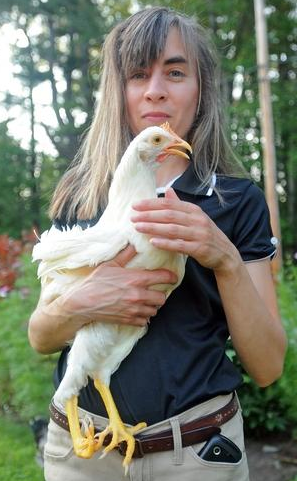
Photo credit: Steve Lanava
The surgery was performed by avian orthopedic specialist, Dr Emi Knafo, DVM. With Cecily under sedation, Dr. Knafo amputated the right leg and did a CT scan of her left leg, which was used to make a 3D-printed prosthetic leg.
Quality of Life Is Paramount
Not every bird will tolerate or benefit from a prosthetic. Managing pain, infection, and balance issues are valid concerns. In those cases, supportive care, gentle handling, and a stress-free setup go further than any gadget.
Some keepers choose euthanasia when the injury is severe, but many others report that once the wound heals, one-legged chickens return to normal routines – dust bathing, scratching, and asking for treats like nothing ever happened.
Chickens Are Survivors
At the end of the day, chickens are tougher and more adaptable than we give them credit for. Whether they’re strutting on one leg or sporting a 3D-printed prosthesis, they remind us that resilience can come with feathers and a wobble and still be downright inspiring.
- Ducharme, N.G., et al. (2022). Avian Orthopedics and Limb Prosthetics. Journal of Avian Medicine and Surgery, 36(3), 145–154.
- McMillan, F.D. (2019). Quality of Life Assessment in Poultry. Veterinary Clinics of North America: Exotic Animal Practice, 22(2), 387–402.
- MacNeill, A.L., & Struthers, S. (2017). 3D Printing in Veterinary Medicine: Prosthetics for Avian Patients.Veterinary Record, 181(9), 225–229.
- Merck Veterinary Manual. (2024). “Lameness and Limb Disorders in Poultry.” Merck & Co., Inc.
- University of Calgary Faculty of Veterinary Medicine (2020). 3D Printed Prosthetic for a Chicken Named “Lucky” Sparks Global Interest.
Thanks to everyone who shared their stories and photos.
“Because every chicken deserves a comeback story.”
 Bitchin' Chickens
0 comments on “Getting a Leg Up: Prosthetics and Life on One Foot for Chickens”