
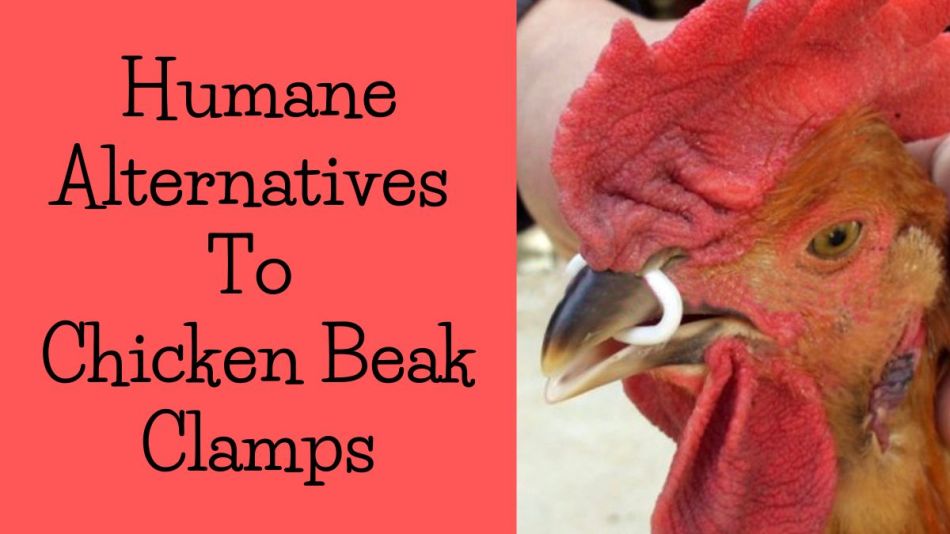
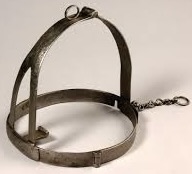
I’ve kept chickens for almost two decades, blogged about them for the last seven years and written lots of posts about stress, bullying, pecking and flock management. So how is it I’m just now hearing about beak clamps? I was scanning through online images and came across chickens with odd contraptions in their mouths. I took a double-take and let out a “WTF?”. What looks like a ‘scold’s bridle’- a nasty medieval appliance used to control women turns out to be a tool to manage feather picking.

Over the years I have had lots of birds and so few incidents of feather pecking I can count them on one hand. Pecking, bullying and acts of aggression can almost always be attributed to stress: competition for food, water, roost bars or nest boxes; crowded or unsanitary conditions; changes in flock dynamics; recent predator activity or too many roosters to hens ratio.
Some poultry keepers, especially those in commercial settings, use various tools to control aggressive pecking. One of the most controversial is the beak clamp (also called a beak bit, beak clip, or anti-peck ring).
While these devices can reduce feather damage, they come with welfare concerns.
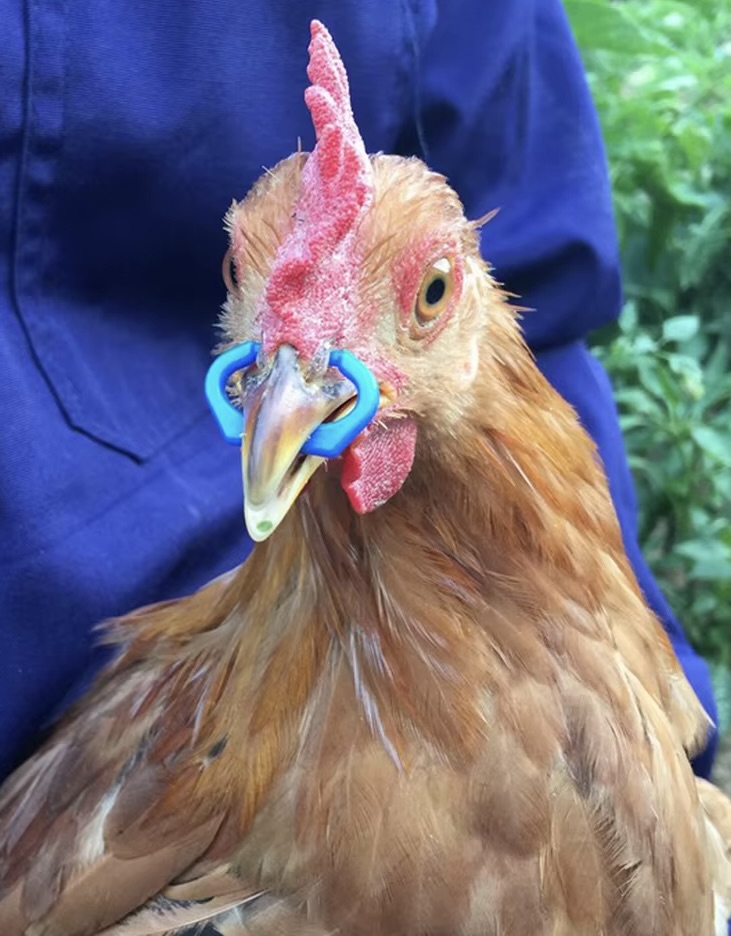
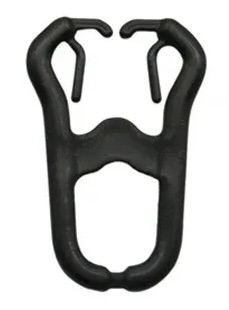
What Are Beak Clamps?
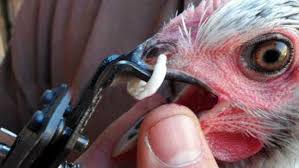
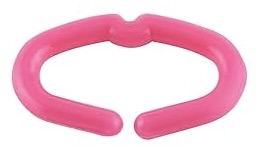
Beak clamps are small plastic or metal devices inserted into the bird’s nostrils and mouth to force the beak slightly open. This reduces the bird’s ability to grasp or pull feathers and, as you can image, eat, drink and preen. Related products include:
- Anti-peck bits: flexible plastic pieces that sit between the upper and lower beak.
- Nose rings/clips: devices inserted through the nostrils to prevent the beak from fully closing.
- Jaw spacers: less common, used to reduce force during pecking.
As someone who has recently been diagnosed with clenching my teeth at night I can tell you that the remedy is not pleasant. At bedtime, I pop a custom-made nightguard over my bottom teeth to prevent my unconscious behaviour. While it may do the job, it’s a clunky piece of hard plastic which is uncomfortable and increases salivation. Thankfully, once asleep, I’m unaware of its presence. Unfortunately, for chickens forced to wear clamps they are stuck with it 24/7.
Why Do People Use Beak Clamps?
To Reduce Feather Pecking and Cannibalism In flocks where destructive pecking is already established, beak clamps immediately reduce the bird’s ability to yank feathers or inflict wounds. It doesn’t stop pecking entirely, just makes it less damaging.
To Replace Beak Trimming Some commercial farms use bits as a ‘non-cutting alternative’ to infrared or hot-blade debeaking. The logic is that altering behaviour mechanically seems less invasive than permanently altering the beak.
As a Rapid Intervention When birds begin drawing blood (which attracts more pecking), clamps are believed to offer an emergency stopgap to prevent escalation.
To Control Aggression in Game Birds In pheasants, quail, and partridge, where aggression is naturally high, clamps are sometimes used to protect plumage and prevent injury.
The Controversy
While clamps can reduce immediate feather damage, they come with serious welfare drawbacks:
- Pain and pressure: Devices can irritate the nostrils or cause discomfort over time.
- Impaired eating and drinking: Some birds struggle to pick up feed or preen properly.
- Stress and frustration: Interfering with the beak affects natural exploration, dust bathing, and social communication.
- Risk of injury: Wrong sizing or poor installation can damage soft tissue.
In backyard and small-scale settings where you can manage behaviour through environment and nutrition, beak clamps are unnecessary and can be replaced with far more humane approaches.
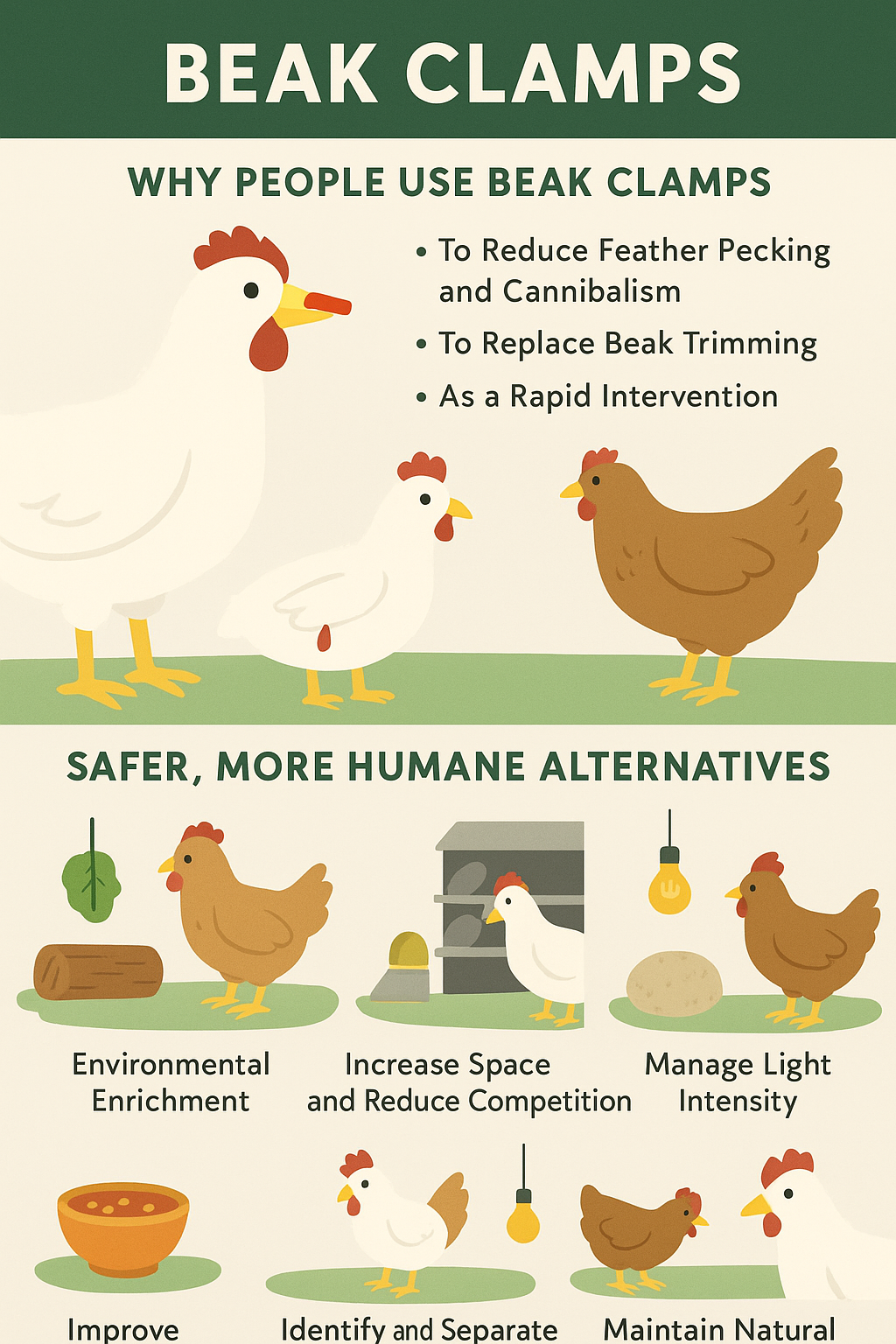
Safer, More Humane Alternatives
Birds with things to do are far less likely to peck flockmates.
- Hang cabbage or leafy greens
- Scatter feed to promote foraging
- Use deep litter for digging
- Provide logs, branches, dust baths
- Supply pecking blocks or compressed hay
Enrichment is one of the most scientifically proven ways to lower feather pecking.
Increase Space and Reduce Competition
Overcrowding and resource guarding are two top triggers.
- Add feeders and waterers
- Provide multiple perches at different heights
- Reduce bird density, especially in winter confinement
If one hen is guarding food or water, the rest will start redirecting stress behavior toward each other.
Improve Nutrition
Feather pecking is strongly linked to dietary deficiencies, especially protein, methionine, sodium, and fibre.
- Make sure feed is appropriate for age
- Provide adequate insoluble fibre
- Avoid low-quality feeds that encourage boredom eating
Nutritional corrections alone can dramatically reduce pecking.
Manage Light Intensity
Bright lighting overstimulates birds and increases aggression.
- Avoid using artificial lighting in the winter as hens need a break from laying
- If you do use coop lighting use warmer, dimmer types
- Avoid sudden changes in day length
- Reduce flicker (common in cheap LEDs)
Lower, steady light helps birds stay calm.
Identify and Separate Aggressors Early
- Some hens are chronic bullies. Temporarily separating them and not the victims often disrupts the hierarchy and stops repeated attacks.
- Short-term separation (24–72 hours) can ‘reset’ social order.
Maintain Natural Beak Wear
- Overgrown, sharp, or overly hooked beaks make feather plucking easier.
- Use natural logs, rough stones, abrasive enrichment and varied foraging substrates.
Healthy beak wear reduces the physical capacity to yank feathers.
Introduce Distractions Before Bullying Starts
- If your flock is nearing maturity (16–20 weeks), add enrichment early.
- Feather pecking prevention is most effective before the behaviour becomes a habit.
Beak clamps exist because feather pecking can become a serious welfare problem, but the devices themselves carry major welfare concerns. In small-scale or backyard flocks, they’re unnecessary. Addressing the root causes of stress, boredom, and poor nutrition is far more humane, more effective, and better for flock harmony.
With the right proactive management, you can prevent feather pecking entirely, no hardware required.
Citations
- Riber, A. B., et al. “Welfare consequences of feather pecking and cannibalism in layers.” World’s Poultry Science Journal, 2018.
- Rodenburg, T. B., & van Krimpen, M. “Prevention and control of feather pecking in laying hens.” World’s Poultry Science Journal, 2013.
- Harlander-Matauschek, A., et al. “Feather pecking in domestic chickens: causes, implications and solutions.” World’s Poultry Science Journal, 2010.
- de Haas, E. N., et al. “Environmental enrichment and its effect on feather pecking in laying hens.” Applied Animal Behaviour Science, 2013.
- Lambton, S. L., et al. “The ability of welfare interventions to reduce injurious pecking in laying hens.” Poultry Science, 2010.
“Practical science for chicken keepers who care.”
 Bitchin' Chickens
I have a feather pecker and I will never punish her with a device like this. I am trying various methods to see what works best but all considering the wellbeing of all parties involved. Thank you for this article! I will try some of the suggestions here!
LikeLiked by 1 person
Shocking! Whether it is the shoes fitting comfortable, the hearing aid sitting right, the braces with the right tension, etc., as humans we know how much effort it takes to make something comfortable on or in our own bodies. It seems to me these chickens must hunker down and suffer while hoping someone notices they have a problem before too many days have passed and it is too late to stop permanent damage. Would we apply such a device in order to live comfortably with a problem pet like our dog or our cat? I don’t think so. Thank you for all the human options for dealing with the problem. Return to love and let it guide you decisions. Please.
LikeLike
It’s like a torture device. 😡 Horrible.
LikeLike