
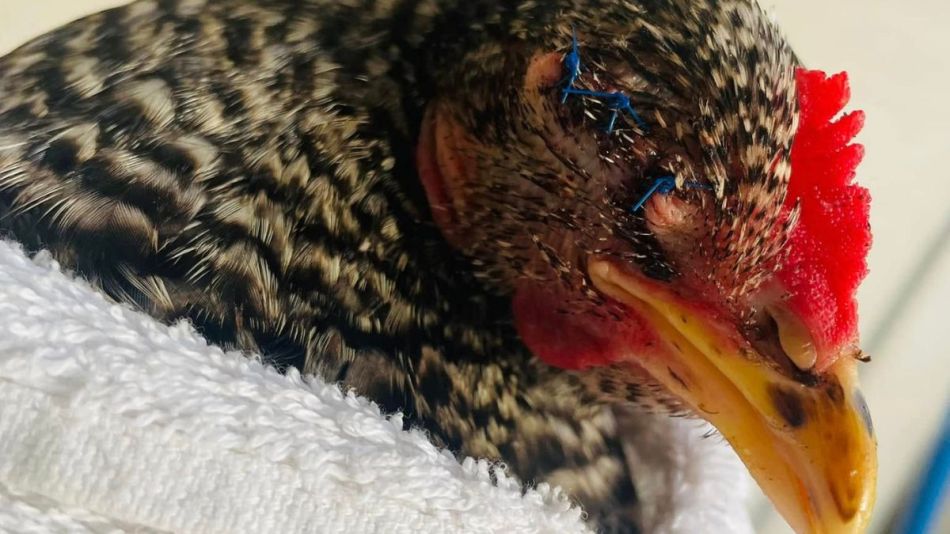
Eye enucleation is the surgical removal of the entire eyeball and associated tissues within the orbit. In chickens, this procedure is typically performed when the eye is irreparably damaged due to trauma, severe infection, neoplasia, or chronic pain that cannot be resolved by other treatments. The goal of surgery is to remove diseased tissue, eliminate discomfort, and prevent further complications such as systemic infection.
Pre-operative Considerations
A complete veterinary examination is required before surgery. Diagnostic steps may include: clinical assessment of the affected eye; culture or cytology for infectious causes; imaging (if available) to assess orbital structures; or bloodwork to ensure the bird can safely undergo anesthesia
Chickens are fasted briefly (shorter than mammals due to their digestive anatomy), and anesthesia is induced using inhalant or injectable agents designed for avian physiology. The bird is placed on their side with the affected eye facing upward.
Surgical Technique
After the feathers around the eye are trimmed and the area disinfected, a sterile drape is placed. A local nerve blocker may be administered to reduce pain during and after the procedure.
A circular incision is made through the eyelids around the eye to access the orbital contents. The surgeon carefully dissects connective tissue while protecting important structures. The optic nerve and associated vessels are isolated and ligated to control bleeding. The eye is removed as a single structure, along with any infected or necrotic tissues.
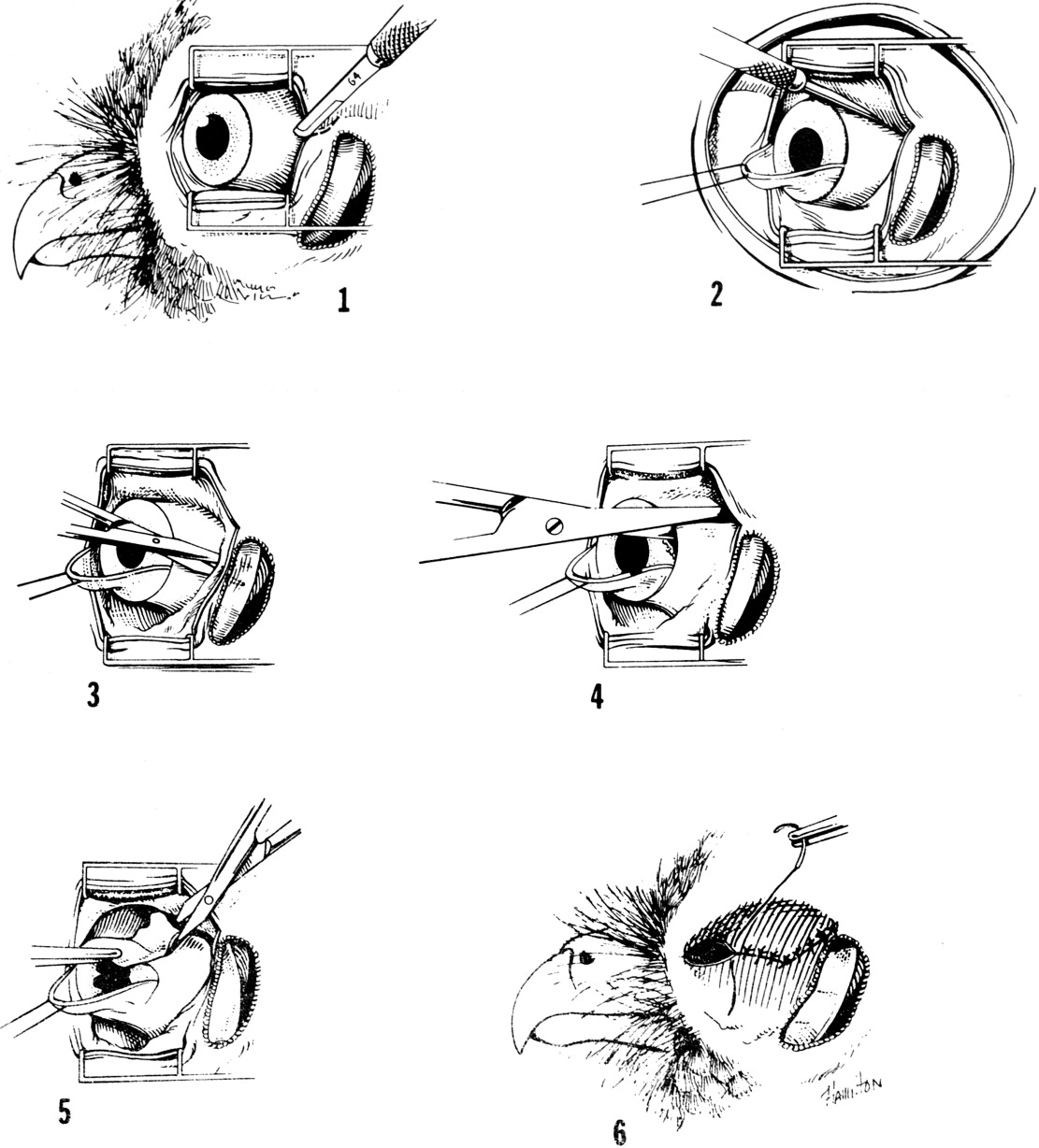
Once removal is complete, the orbit is flushed with a sterile solution to reduce the risk of residual contamination. The eyelids may be sutured closed (creating a clean, flat surface where the eye once was), or the orbit may be partially packed depending on the veterinarian’s approach and the bird’s condition.
Post-operative Care
After surgery, the chicken is monitored continuously until fully awake. Pain management is a priority, typically using avian-safe analgesics and anti-inflammatory medications. Antibiotics may be used if infection was present or suspected. The bird is kept isolated in a clean, warm environment to reduce stress and prevent other chickens from pecking at the surgical area.
The surgical site is checked regularly for signs of swelling, discharge, or irritation. Sutures are normally removed in 10–14 days if they are not absorbable. Most chickens adapt quickly to having only one eye and resume normal behaviours, including eating, roosting, and flock interaction.
Prognosis
With appropriate care, the prognosis after eye enucleation is generally good. The procedure eliminates chronic pain and can prevent the spread of infection to deeper structures. Long-term quality of life is usually excellent, and most chickens return to normal activity once healed.
Case Study: Popeye, Red Jungle Fowl Hen
About a month ago, our hen presented with a swollen eye, which is often a sign of an upper respiratory. We treated with antibiotics Denagard and Tetracycline and tried to squeeze the gunk out of the eye. None of it worked and it just got more and more swollen. She had no other symptoms, ate and drank normally. Despite her eye she was still active.
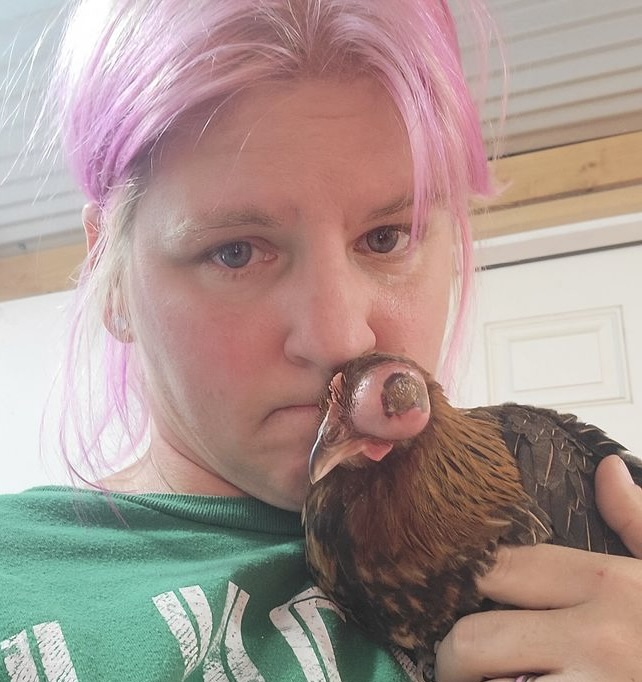
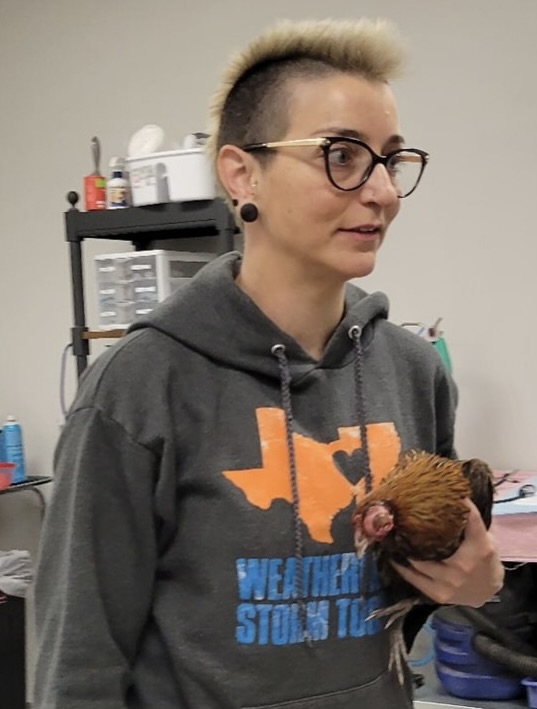
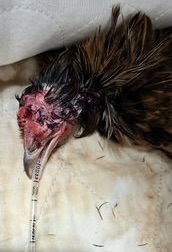
Kat; Dr Hanna, DVM; Popeye
After several weeks, she wasn’t eating as much and was becoming lethargic so I took her to our vet, Dr Hanna at Houston Spay Neuter Clinic. She tried to lance the swelling with no result so the decision was made to remove the eye.
I know a lot of people would say just cull her but she is just too sweet and we fought too long to not try this option for her. She might not survive surgery with anesthesia and I had come to terms with that.
The eye was successfully removed and she was waking up from surgery. Popeye was not out of the woods because we all know how sensitive chickens can be but that nasty painful eye is gone and I am hopeful.
Week 2: The sutures came out. Popeye is recovering well. She is healing beautifully from her eye removal about a week ago (attached before pic) and is still as sweet as ever. She has always just been the sweetest girl even though her “breed standard” says she shouldn’t be. She is a red Indian Jungle Fowl and should be flighty and unapproachable.We have had her from a tiny chick and she is just extra special to us.
Hope you can all see why sometimes, a chicken is more than just lunch or dinner even if you aren’t vegan because we sure are not.
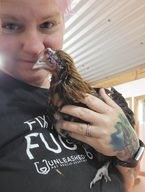
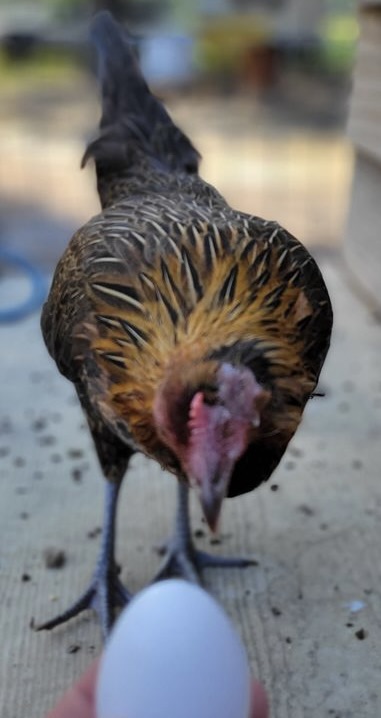
We cannot afford nor do we take all our chickens to the vet when they are sick or injured. We have over 200 chickens and we pass no judgement on other chicken tenders who would never have done this for a chicken and hope we won’t be judged because we couldn’t possibly do this for all our chickens were it needed.
Week 5: Popeye started laying again.
Thanks to Kat K Miller for her story and photos, used with permission. Featured photo credit: Jess Leibeck
“Serious science. Not-so-serious chickens.”


0 comments on “Case Study: Chicken Eye Enucleation Surgery ”