
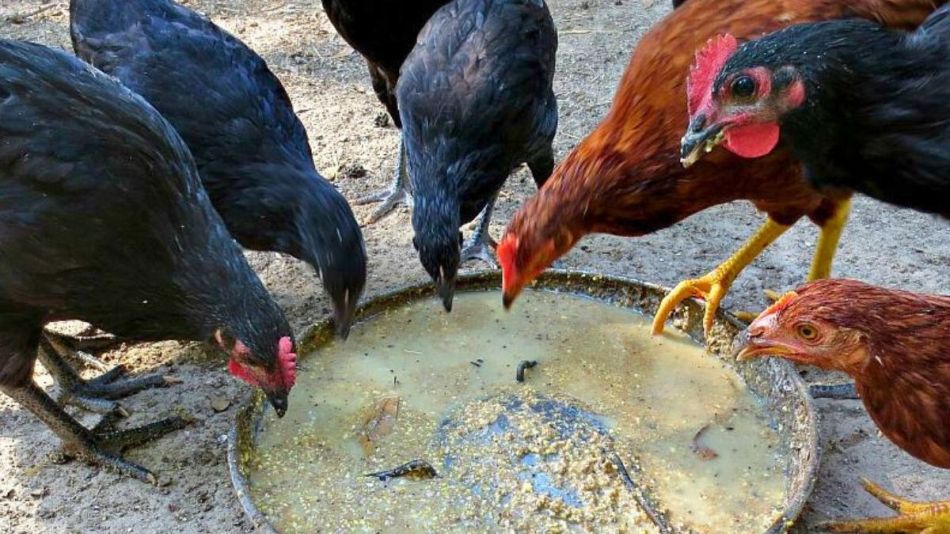
Over the last few years there seems to be an explosion of interest in fermented foods: yoghurt, kefir, sauerkraut kimchi, kombucha, apple cider vinegar, tempeh and miso. The purported benefits include improved gut health and digestion, enhanced nutrient absorption and boosted immune system.
Like with many trends, fermented feed has trickled down to chicken keepers. Some swear it produces shinier feathers, healthier guts and lower feed bills. Others complain it’s too messy, smelly, or just not worth the fuss. So what’s really going on when you soak that grain into a bubbly brew and does it actually help your flock?
Fermented Feed
Fermented feed is regular chicken feed (usually crumbles, mash, or grains) soaked in water and allowed to sit for a day or two so natural lactic acid bacteria (like Lactobacillus) can grow. It’s the same microbial process that turns cabbage into sauerkraut or milk into yogurt, but made chickens. The bacteria partially digest starches and proteins, producing lactic acid that lowers pH, preserves nutrients, and suppresses harmful microbes.
The Pros Of Fermented Feed
- Better digestion and nutrient absorption The fermenting process breaks down anti-nutritional factors (like phytates) and makes amino acids, vitamins, and minerals more available. Chickens get more nutrition from the same scoop of feed.
- Improved gut health The beneficial bacteria in fermented feed help balance the chicken’s intestinal microbiome. Studies show increased populations of Lactobacillus and decreased E. coli and Salmonella. That means fewer digestive upsets and firmer droppings.
- Stronger immune response A healthy gut supports the immune system. Some research indicates fermented feed can increase antibody production and resistance to certain infections.
- Less feed waste Fermented mash tends to clump together, reducing selective eating and waste. Some keepers report feed consumption drops by 10–30% because the birds fill up faster and absorb nutrients more efficiently.
- Healthier feathers and eggs Anecdotally, keepers notice glossier feathers, more consistent laying, and harder eggshells, likely linked to improved digestion and mineral uptake.
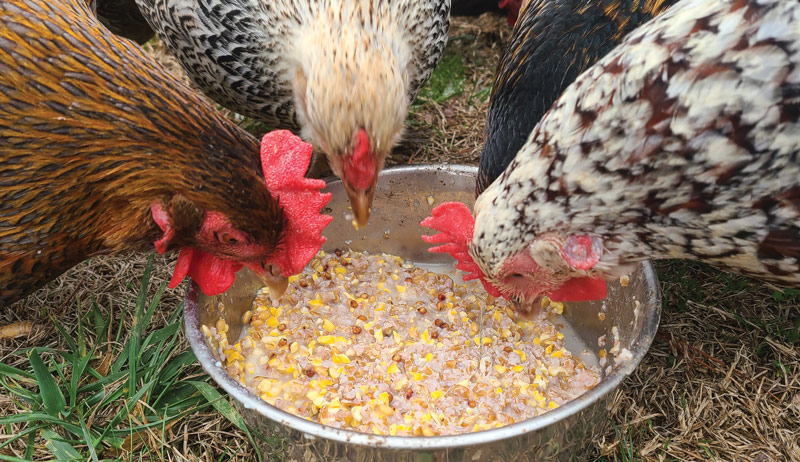
Photo credits: Hobby Farms; Homestead and Chill
The Cons Of Fermented Feed
- Short shelf life Fermented feed can spoil if kept too long, especially in warm weather. It should be fed within a few days after fermentation is complete.
- Requires time and consistency You can’t just dump and forget it. You need to maintain the routine, stirring daily and prepping batches.
- Mess factor Fermented feed is wet and sticky. It can gum up feeders, attract flies, and make coop cleanup harder, if spilled.
- Potential for contamination If fermentation goes wrong (too much air exposure, wrong temperature, unclean container), molds or harmful bacteria can grow. A bad ferment smells rotten or rancid – never feed that.
- Not ideal for every setup Automatic feeders and large-scale flocks don’t handle wet feed well. Fermentation works best for small backyard flocks where you hand-feed.
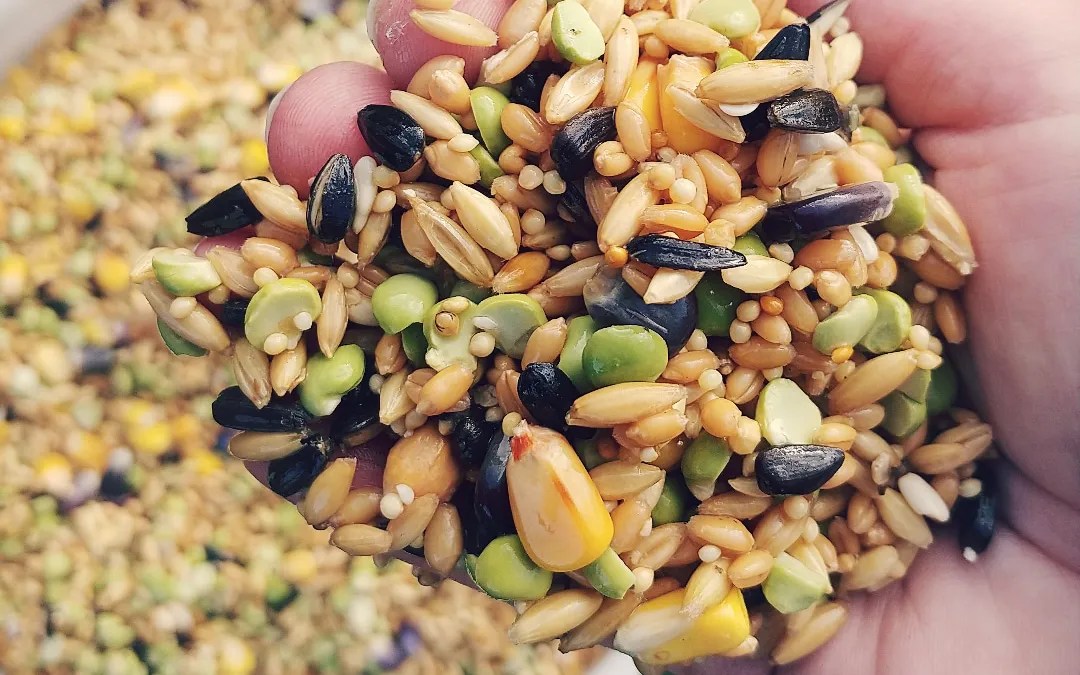
Photo credit: The Trough Farm
How To Make Fermented Feed
What you’ll need
- A non-metal container (plastic, glass, ceramic, or food-grade bucket)
- Unmedicated chicken feed: crumbles, mash, or grains
- Dechlorinated water (chlorine can kill the good bacteria)
- A stirring stick or spoon
Step-by-step
- Add feed to the container fill it about one-third full.
- Add water until the feed is submerged by 1”–2”.
- Stir to mix, then loosely cover (a cloth or lid set on top, not airtight).
- Let it ferment at room temperature for 2–3 days. Stir once daily. You should see bubbles and smell a tangy, yeasty aroma like sourdough.
- Feed and repeat. Scoop out what you need and top up the container with more feed and water to keep the cycle going.
How to feed it
- Offer about ⅓ less volume than your usual dry feed – it’s denser and more filling.
- Serve it in shallow bowls or troughs, not gravity feeders.
- Remove uneaten portions after a few hours to prevent spoilage.
- Rinse feeders daily.
Tips for success
- Use clean containers each cycle to prevent cross-contamination.
- If it smells sour (like vinegar) it’s fine; if it smells rotten or musty, toss it.
- Cold weather slows fermentation – try placing the bucket in a warmer area.
- Warm weather speeds it up – feed smaller batches to prevent spoilage.
Fermenting feed is not recommended for busy chicken keepers or those hoping for low maintenance pets. It’s a solid, science-supported way to improve gut health, reduce waste, and make feed more digestible if you’re consistent and careful. For small flocks, the benefits can outweigh the hassle. For large or automated operations, it’s not practical. As always: start small, observe your flock, and trust your nose – if it smells bad, it is bad.
Citations
- Engberg RM et al. “Fermented feed and intestinal health in poultry.” Animal Feed Science and Technology. 2009.
- Xu Y et al. “Effect of fermented feed on growth performance and intestinal microbiota in broilers.” Poultry Science. 2022.
- Canibe N & Jensen BB. “Fermented liquid feed — microbial and nutritional aspects and impact on animal performance.” Livestock Science. 2012.
- Ricke SC. “Perspectives on fermented feeds and the role of lactic acid bacteria.” Frontiers in Veterinary Science. 2021.
- University of Maine Cooperative Extension. “Fermenting Chicken Feed: A Guide for Backyard Flocks.” 2020.
Featured photo credit: The Farmer’s Lamp
“Serious science. Not-so-serious chickens.”


0 comments on “Fermented Feed for Chickens: Bubbles, Benefits and a Few Drawbacks”