
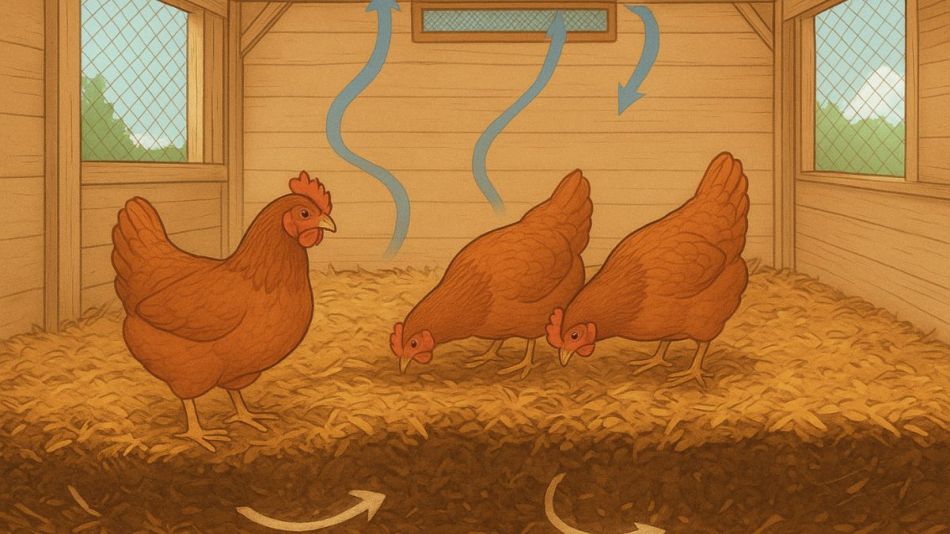
When it comes to chicken coop management, the deep litter method is one of the topics that generate debate. Advocates swear by its ability to reduce labour, control odour and even boost flock health, while critics warn that poor maintenance can quickly turn it into a bacterial swamp. So what’s the truth? Let’s dig in to the science and practice behind deep litter bedding.
What Is the Deep Litter Method?
The deep litter method can be a low-maintenance, composting-based approach to coop hygiene. Instead of cleaning out bedding weekly, you allow layers of organic material – typically pine shavings, straw, or hemp – to build up over time. As chickens scratch, poop, and mix the litter, beneficial microbes and fungi break down waste into compost right inside the coop.
At its best, the deep litter system becomes a mini-ecosystem that mimics the natural forest floor: dry on top, microbially active underneath, and always smelling earthy, not foul.
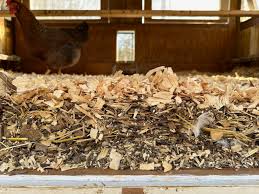
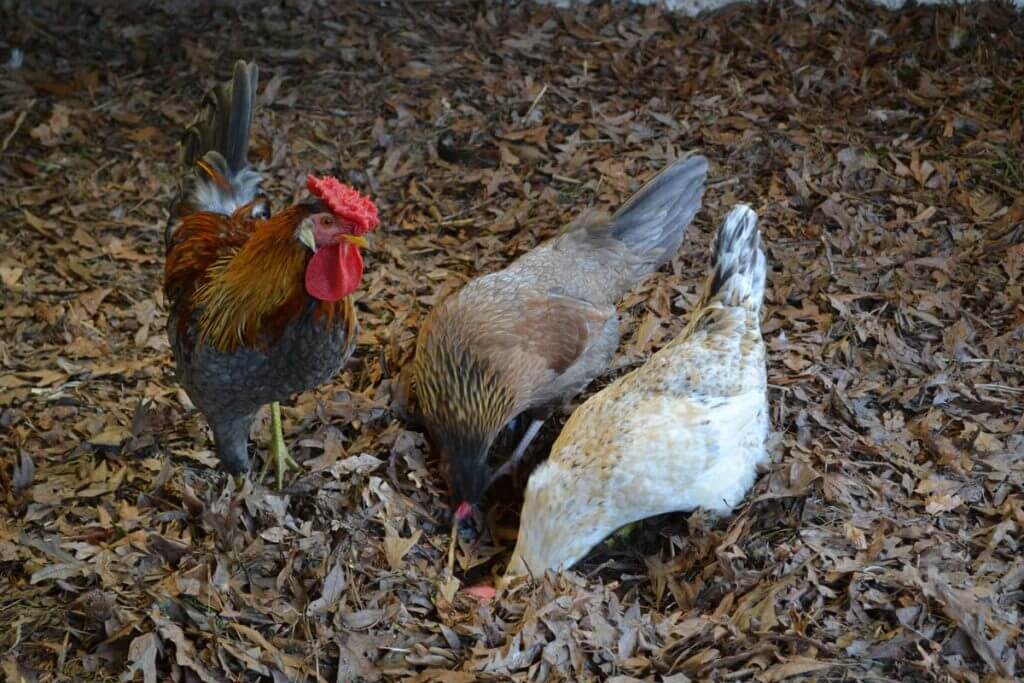
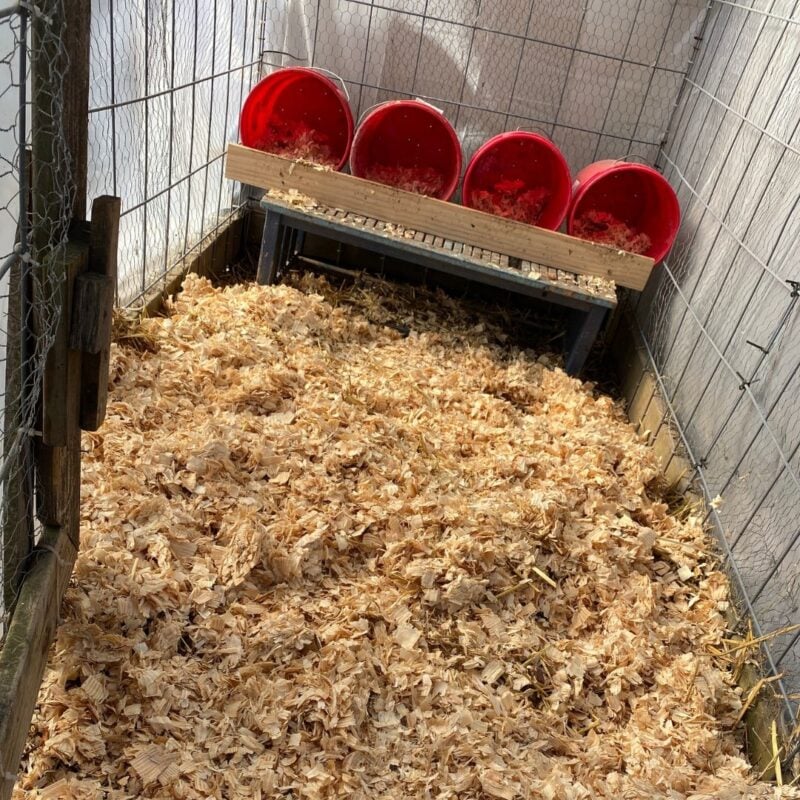
Photo credits: Kummer Homestead; Homesteading Family; Mama On The Homestead
How to Do It Properly
- Start with the right base: Begin with 4”- 6” of dry, carbon-rich material such as pine shavings, hemp bedding, or chopped straw. Avoid sawdust because it compacts too easily and can cause respiratory irritation.
- Turn it often: Chickens do most of the work for you, but you can help by stirring the litter weekly with a rake or pitchfork to introduce oxygen.
- Add new layers: Sprinkle on fresh bedding every few weeks to keep the top dry and balance nitrogen-rich manure with carbon.
- Monitor moisture: The litter should feel slightly damp but not soggy. If it smells like ammonia or feels wet, add more dry material immediately.
- Ventilation is key: The deep litter method only works with good airflow. Trapped moisture equals trapped bacteria.
- Annual clean-out: Once or twice a year, remove the composted litter and use it as garden fertilizer after a short curing period.
The Pros
- Natural composting: Turns chicken waste into a valuable soil amendment rich in nitrogen, phosphorus, and beneficial microbes.
- Reduced cleaning frequency: Instead of weekly clean-outs, you may only need to do a full clean once or twice a year.
- Odour control: When balanced properly, microbial activity neutralizes ammonia smells far better than thin, frequently replaced bedding.
- Warmth in winter: The composting process generates mild heat, helping to keep the coop more comfortable in cold weather.
- Encourages natural behaviours: Chickens love to dig, scratch, and dust-bathe in the deep litter, which reduces boredom and aggression.
The Cons
- Requires attention: If you neglect stirring or balancing carbon and nitrogen, the litter can turn anaerobic producing ammonia, excess moisture, and harmful bacteria.
- Not ideal for damp climates: In humid areas, it can be hard to keep the litter dry enough for proper composting.
- Possible parasite buildup: Mites and worms can proliferate if the litter is not managed properly or left too long without cleaning.
- Heavier to clean out: The eventual removal of deep litter is labour-intensive compared to smaller, frequent clean-outs.
When the Deep Litter Method Works
This system is ideal for well-ventilated coops with dry flooring, such as raised wood floors or concrete. It’s particularly useful for backyard flocks in temperate climates where humidity is moderate. The key is balance: healthy microbial composting only happens when conditions are dry, oxygenated, and carbon-rich.
The deep litter method is not a lazy person’s shortcut – it’s a living compost system that requires mindful management. Done right, it rewards you with lower maintenance and nutrient-rich garden compost. Done wrong, it becomes a wet, smelly mess.
Whether you’re a backyard keeper or managing a larger flock, deep litter can be a sustainable method that turns chicken waste into a win for your coop, your soil, and your workload.
My Experience
I am an experienced composter and was intrigued to try a sustainable method of coop management. I attempted the deep litter system just once and it was an unmitigated failure. My coop has a concrete foundation, including the floor and first foot at the base of the walls, which I thought would make it a great candidate for dealing with the on-going soiled bedding. I followed the instruction of layering bedding and turning it regularly. I live in the Pacific Northwest where we experience rain during nine months of the year which means my flock tracks a lot of moisture into the coop and there is a lot of humidity in the ambient air. That was the beginning of the end for me.
Despite my best efforts, the bedding did not appear to break down, the accumulated poop was releasing ammonia and worst of all, my birds who were supposed to be my helpers, weren’t scratching and turning the shavings. Even after just a few short weeks, the level of the bedding was rising, interfering with the opening of the coop door. I wondered how high the ‘compost’ would have reached if I had continued for months and if the door opening would have been hampered. I threw in the towel and removed everything, cursing as I shovelled, the stinky, heavy mess. I went back to my tried and true method of using shavings and cleaning out the coop on a regular basis.
If you’ve used this method and it’s worked for you leave your comments below.
“Smart hens, messy coops, and the truth about keeping chickens.”


I did it one year and it worked well in Connecticut. It ended up being a fine, dryish stuff. I used medium and small wood shavings. Rarely smelled ammonia but heavy humid weather would trigger a need for more new shavings. BUT it makes a lot to do when it is clean out time. I’ll be 80 soon so I have gone back to more frequent, but less heavy, cleaning.
If I was younger I’d do it and I would be sure my coop got a door that let me push the bedding out into a cart.
LikeLike