
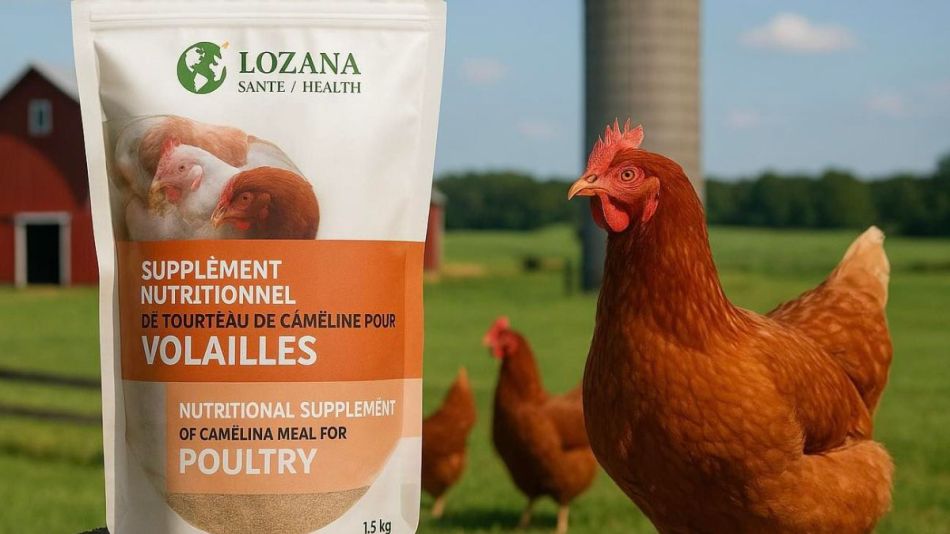
After three years of being dog-less, my partner and I recently adopted a six-year-old Standard Poodle. Knowing almost nothing about her backstory, I wanted to give her the best care possible. I stumbled across camelina oil while researching supplements for our dog and immediately had the thought: Could my chickens benefit from this too? Because apparently, once you have chickens, every nutritional question eventually becomes a chicken question.
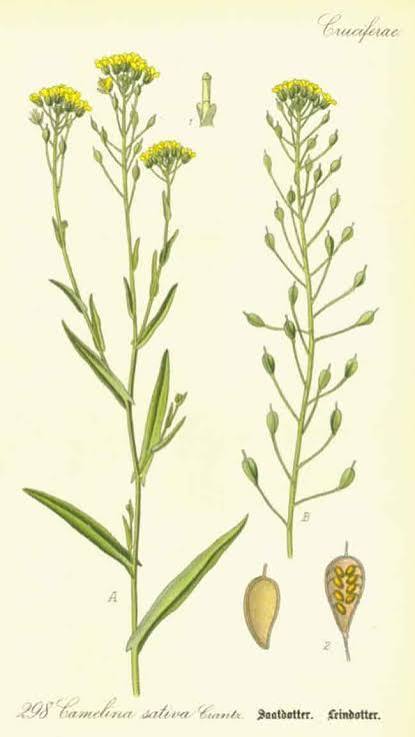
Camelina oil is used in poultry feed as a source of omega-3 fatty acids. It’s related to canola and belongs to the Brassicaceae family. What makes camelina interesting is its high concentration of alpha-linolenic acid (ALA), an omega-3 polyunsaturated fatty acid.
Should you start drizzling camelina oil over your chickens’ breakfast? Research suggests camelina can be a useful dietary fat and omega-3 source, but camelina oil, whole camelina seed and camelina meal are different ingredients. And, as often is the case, more isn’t automatically better.
What Is Camelina Oil?
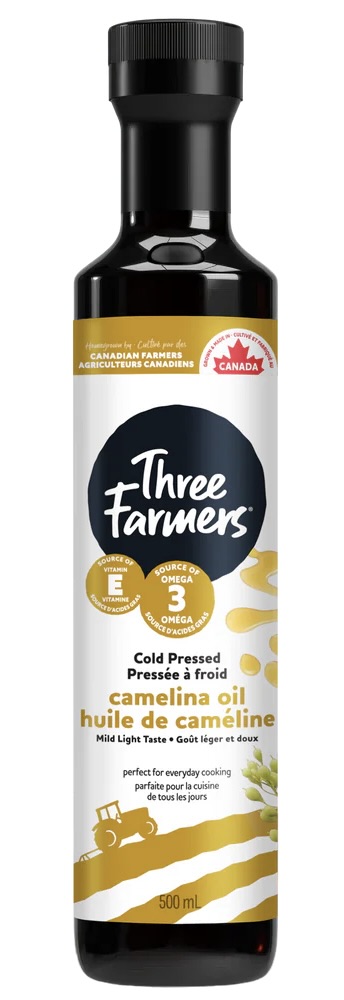
Camelina oil is pressed or extracted from Camelina sativa seeds. It contains substantial amounts of:
- Alpha-linolenic acid (ALA; omega-3)
- Linoleic acid (LA; omega-6)
- Oleic acid (omega-9)
- Other mono- and polyunsaturated fatty acids
ALA is an essential fatty acid, meaning chickens need to obtain it from their diet. They can convert some ALA into longer-chain omega-3 fatty acids, but that conversion is limited.
Feeding more ALA doesn’t mean every extra gram magically becomes DHA.
The Big Attraction: Omega-3
Camelina’s biggest nutritional selling point is its omega-3 content. Research has shown that feeding camelina products can increase omega-3 fatty acids in chicken tissues and eggs. In broiler studies, camelina oil increased ALA and other omega-3 fatty acids in breast muscle without negatively affecting growth performance. In other words, what’s on the menu can influence what’s ultimately on your plate.
Want Omega-3 Eggs? Camelina Can Help
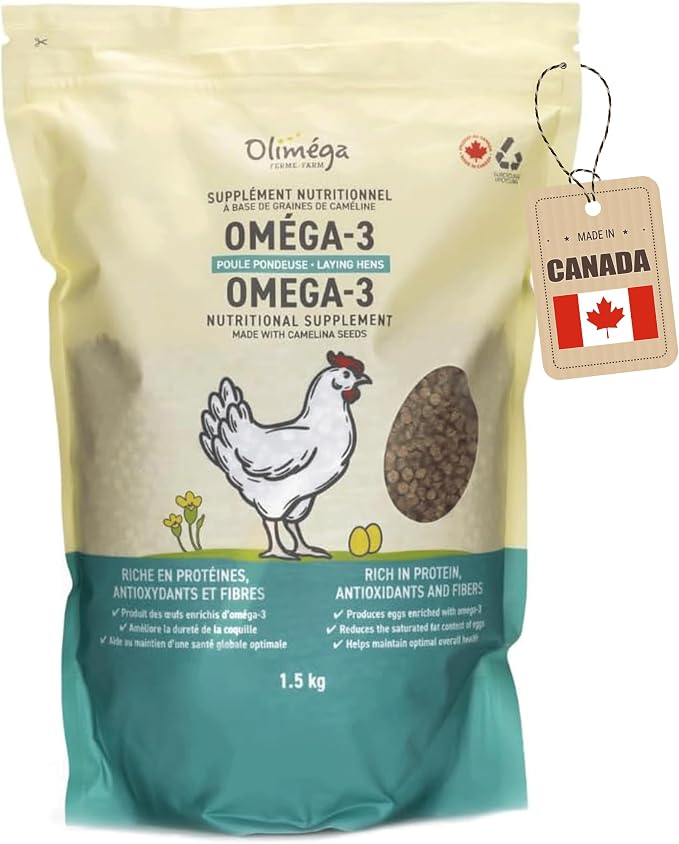
When hens consume camelina-derived omega-3 fatty acids, some are incorporated into developing egg yolks. One study found that feeding 5% or 10% extruded camelina meal increased total egg omega-3 fatty acids by approximately 1.9- and 2.7-fold, respectively, without adversely affecting egg production or most measures of egg quality.
Other research using full-fat camelina seed, cake and oil has also found increased omega-3 fatty acids in eggs, including ALA, DPA and DHA. If you’re interested in producing eggs with a different fatty-acid profile, camelina has some legitimate science behind it.
Is Camelina Oil a Chicken Health Miracle?
Nope. Omega-3 fatty acids play important roles in cell membranes, immune signalling, inflammatory regulation, nervous-system function and reproduction. But supporting normal physiology isn’t the same as treating disease. There’s no good reason to claim camelina oil will treat arthritis, respiratory disease, infections, heart disease or whatever mysterious ailment has your hen may have. Camelina oil is food, not veterinary medicine.
If you’ve got a sick chicken, figure out what’s wrong. Don’t reach for the oil bottle and hope for the best.
What About Feathers and Skin?
Fatty acids are important for healthy skin and feathers, but a properly formulated poultry diet already supplies the essential fatty acids chickens need. Poor feather quality, feather loss, dry skin, slow regrowth or excessive feather picking can have many causes, including molting, parasites, nutrition, disease, environmental conditions, stress and feather pecking.
The Biggest Risk: Too Much Oil
Here’s where enthusiastic chicken supplementation can go sideways.Oil is extremely energy-dense. Adding significant amounts to a nutritionally complete commercial ration increases its energy density without necessarily increasing protein, vitamins, minerals and other nutrients.A chicken may then eat less feed because it has already met its energy requirements. Chickens don’t eat individual nutrients, they eat a diet. A complete poultry ration is formulated to provide the appropriate balance of energy, protein, amino acids, calcium, phosphorus, vitamins, minerals and essential fatty acids.
Adding a bunch of one ingredient because it sounds healthy can mess with that balance. Your chickens need a nutritionally balanced diet.
Camelina Oil Is Easily Oxidized
The same polyunsaturated fatty acids that make camelina oil nutritionally interesting also make it vulnerable to oxidation. Oxidized oils can develop rancid flavours and other compounds associated with deterioration.mResearch in laying hens has found that higher camelina inclusion can increase measures of lipid oxidation in eggs. One study found that hens receiving 15% camelina meal produced eggs with higher levels of TBA-reactive substances than hens receiving lower levels. Translation: fresh camelina oil and rancid camelina oil are not the same thing.
Store Properly
Keep camelina oil in a tightly sealed container, away from heat and direct sunlight, protected from excessive exposure to air and according to the manufacturer’s storage recommendations. If it smells rancid or otherwise seems spoiled, don’t feed it. ‘Natural’ does not mean ‘immune to going bad’.
Camelina Oil ≠ Camelina Meal
This is one of the most important distinctions in the camelina conversation.
A large amount of poultry research involves camelina meal, cake or whole camelina seed, not pure camelina oil. They are not interchangeable.
Camelina meal contains protein, residual fat, fibre, minerals, glucosinolates and other plant compounds. Pure camelina oil is, well, oil. Canadian feed regulations specify limits for glucosinolates and erucic acid in camelina meal used as a feed ingredient and establish maximum inclusion levels for that ingredient.
Don’t read a study saying chickens were fed 10% camelina meal and conclude, “I’ll give my chickens 10% camelina oil.”
That’s not how this works. Different product. Different nutritional composition. Different considerations.
What About Glucosinolates?
Camelina belongs to the mustard family and naturally contains glucosinolates. These compounds are particularly relevant to camelina seed and meal because they’re associated with the non-oil portion of the plant. That doesn’t mean camelina is automatically toxic to chickens. Research has found that camelina meal can be incorporated into poultry diets at studied levels without obvious adverse effects on production. One laying-hen study found no detectable glucosinolates or their isothiocyanate metabolites in eggs from hens receiving 5% or 10% extruded camelina meal. But again: meal isn’t oil. The nutritional and safety profile depends on the actual camelina product and how it was processed.
Could Camelina Affect Egg Quality?
Generally, studies using moderate amounts of camelina have found that eggs remain acceptable in terms of production and quality. A higher inclusion isn’t necessarily better.
One study comparing 0%, 5%, 10% and 15% camelina meal found that the 5% and 10% treatments did not adversely affect egg production or most egg-quality characteristics. At 15%, egg production decreased and indicators of lipid oxidation increased.
More camelina does not equal healthier chickens.
Does Camelina Make Chickens Grow Faster?
Not necessarily. In broiler studies, camelina oil has generally been useful for changing the fatty-acid profile of meat, but it hasn’t consistently produced a growth advantage.Don’t think of camelina oil as chicken HGH. It’s better understood as a source of dietary fat and omega-3 fatty acids.
Should You Feed Your Chickens Camelina Oil?
For a backyard flock eating a nutritionally complete commercial feed, chickens don’t need camelina oil to be healthy. Camelina can be a useful dietary ingredient when incorporated appropriately into a formulated ration, particularly when the goal is to increase dietary omega-3 fatty acids and produce omega-3-enriched eggs or meat. Occasionally pouring oil over feed because “omega-3s are healthy” isn’t necessarily an improvement. You can have the best intentions and accidentally create an imbalanced diet.
Camelina oil is legitimate poultry nutrition. The research supports several potential benefits: a rich source of the omega-3 fatty acid ALA; can increase omega-3 fatty acids in eggs and meat; and can change the fatty-acid composition of chicken tissues and animal products.
Caveats:
- More isn’t necessarily better.
- Excess supplemental oil can disrupt the energy and nutrient balance of a complete diet.
- Polyunsaturated oils are susceptible to oxidation.
- Rancid oil should never be fed.
- Camelina oil, whole seed and camelina meal are not interchangeable.
- Much of the research involves formulated poultry diets, not backyard chickens getting spoonfuls of oil on top of their regular feed.
- Camelina oil is not a treatment for disease.
If your chickens are eating a properly formulated complete feed, camelina oil isn’t something they need. When used appropriately as part of a balanced ration, camelina is an interesting way to increase dietary omega-3s and potentially produce eggs with a substantially different fatty-acid profile.
Credits & References
- Kakani R, Fowler J, Haq A-U, et al. Camelina meal increases egg n-3 fatty acid content without altering quality or production in laying hens. Lipids. 2012;47:519–526.
- Orczewska-Dudek S, Pietras M. The Effect of Dietary Camelina sativa Oil or Cake in the Diets of Broiler Chickens on Growth Performance, Fatty Acid Profile, and Sensory Quality of Meat. Animals. 2019.
- Aziza AE, Quezada N, Cherian G. Egg quality and lipid composition of eggs from hens fed Camelina sativa. Journal of Applied Poultry Research. 2009;18:143–150.
- Cherian G, et al. Egg quality, fatty acid composition and immunoglobulin Y content in eggs from laying hens fed full fat camelina or flax seed.
- Canadian Food Inspection Agency (CFIA), Canadian Feed Ingredients Table, regulatory specifications for camelina meal and other feed ingredients.
Featured photo credit: Lozana
“Because chicken science is cooler than you think.”


0 comments on “Camelina Oil for Chickens: What Are the Health Benefits & Risks?”