
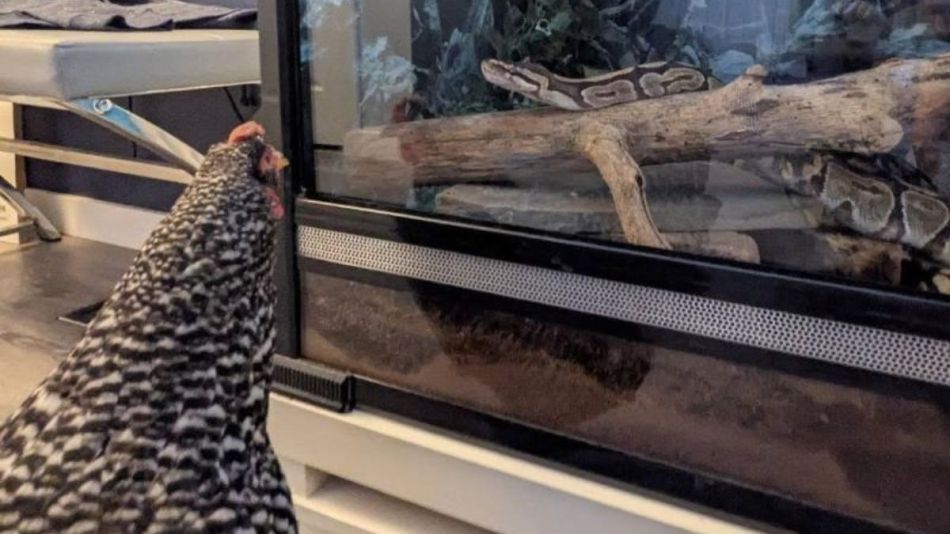
I’m a chicken keeper and a naturalist. Not all poultry folks are both. The responses to encounters with wildlife run the gamut: from acceptance that those species have the right to exist, to working harder to predator proof coops and runs and restricting birds’ free-ranging access, and all the way to wanting to eradicate every form of wildlife on a property whether those animals have shown any predatory behaviour ‘just in case’.
I live in an island with few native predators: mink, marten, raccoons, hawks, owls, ravens and, of course, dogs. I am fortunate, in that, I’ve had relatively few negative interactions with potential predators. I live on a small acreage surrounded by forest and some of my neighbours have had to contend with both mink and raccoons.
As we encroach on, or destroy, the natural habitat of many species we’ll have more encounters with those seeking an easy meal. A knee-jerk reaction would be to kill anything that might pose a threat to our flock – a strategy that can backfire as more animals may move in to fill the void. Many folks’ means of controlling those predators can be cruel: leg hold traps, poison, or tempting snakes to eat indigestible fake eggs. A more meaningful response would be to figure out how we can keep our birds safe without eradicating other species. Or if we can’t live with those predators are we able to relocate them?

I recognize that I don’t have to deal with the risk of big predators: coyotes, fox, bobcats and bear, or the exotics like large snakes and alligators. I feel for the folks that do. And, of course, not all encounters with wildlife are negative. Many chicken keepers have stories of feeding wildlife as a means of deterring them from predating on their flock, or co-existing animals that live on their property without harming livestock.
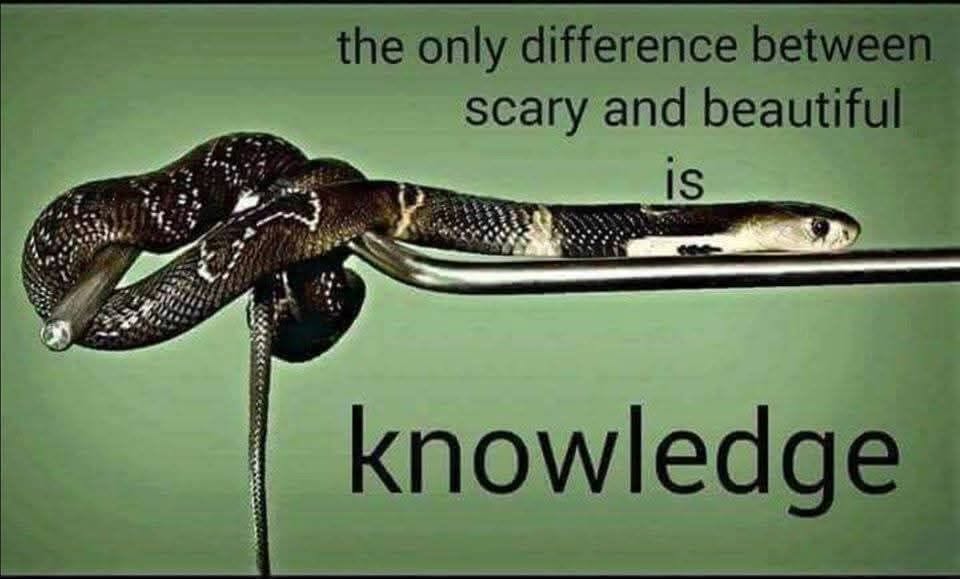
As chicken keepers we might not see and understand those on the other side – the folks who love, appreciate, rescue and rehabilitate potential predators of chickens, their chicks or even their eggs.
The following is an account from Snake Rescue & Relocation Pensacola.
Warning, this is a crummy post, but I think given what I just saw, it is a necessary one.
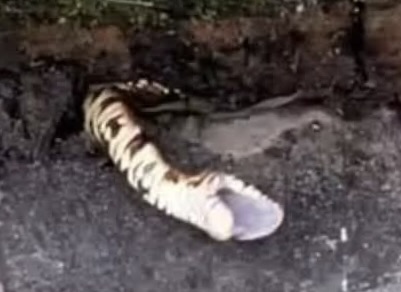
A video was posted on another group of this snake (this is a screenshot of the video). This was a harmless banded water snake. We can free handle them because they are harmless. They almost never bite, and when they do, they usually don’t even draw blood. I get more “injured” picking blackberries. The person that posted this attempted to cut the snake in half with a shovel, and failed. Once the snake was immobilized, they took a video of him suffering and then asked for identification.
1) This is a living, breathing, sentient creature. He can feel pain, and in this moment, he is suffering. His back is broken, and he doesn’t understand what is going on. A few minutes earlier, he was just moving through someone’s yard, hunting toads or looking for water. Just minding his own business. And a second later, someone approached him with a shovel, tried and failed to cut him in half, and started making a video of him as he suffered.
The snake’s expression in this photo is a universal one that transcends all living things; unbearable agony and pain. We would usually call someone a psychopath if they did this to any other animal, but for some reason, because it was a snake they tortured, we’re supposed to give them a pass.
2) If this same snake had been passing through my yard, my 12-year old daughter would have picked him up, we would have admired him for a few seconds, and then set him back down to go about his business. So seeing what a grown adult did with a shovel to this poor creature is just pathetic. You can tell a lot about a person by how they treat animals.
3) Euthanasia is never pretty. But in some instances, it is an act of kindness and compassion. If you find yourself in a situation where a stupid neighbor has tried to kill a snake by cutting it in half with a shovel, or a snake is suffering in some other capacity and you need to euthanize it, you must destroy it’s brain. You cannot cut off its head. This is not humane and does not kill the snake (or any animal) instantly. Destroying the brain in one quick shot is the only way. It must be instantaneous.
4) Please don’t ever do what this person did; kill and ask for identification afterwards. Pages like this exist to educate and to teach people a better way. If you see a snake in your yard and want an identification, snap a picture from a safe distance and send it to us or post it in the Florida Snake Lady group for a positive ID, and then we’ll go from there. But it’s also important to remember that you don’t need a positive ID to just walk away.
5) Everyone “has kids and dogs”, myself included, so killing a snake the second you see one is not a legitimate excuse, especially when there are so many free relocation resources out here today. If you see a snake in your yard that you are not sure of (or that you are positive is venomous), get the kids and dogs inside and call us.
6) We only have six venomous snakes here in Florida. Take it upon yourself to learn what they look like (visit the local snake pages, watch YouTube videos, etc). It is not a difficult task for an adult. If you spend ten minutes doing this everyday for a week, you would be amazed at what you can learn. Once you know what our venomous snakes look like, you will be able to deduce the non-venomous ones that pass through your yard.
7) I am not a tree hugging hippie. I am not a radical environmentalist. I am just an average person living an average life. But watching what over-development has done to the area running between Navarre and Perdido Key over the last 26+ years has been the second most heartbreaking experience of my entire adult life. The entire area is unrecognizable to me now. The developers won’t stop until every last glade is filled in and paved over, with a cookie cutter patio home or storage facility built on top. Unfortunately, there is nothing I can do about that. There is nothing any of us can do. But helping wayward animals running from the overdevelopment in search of food and shelter is something. And if it’s the only thing we can do, then let’s do it
RIP little buddy. I am so sorry for what happened to you. I asked the woman who posted the video for your location so I could get to you and help you to the other side, but she never responded. So I prayed that God would end your suffering. I’m so sorry I couldn’t get to you sooner.
There is a Facebook page specifically for this issue: The Pro Snake Poultry Group. Unfortunately it can be extremely hard to keep some snakes (specifically rat snakes) out of chicken coops. While they may steal a few eggs they also help keep rodent population down which can be attracted to the chicken feed. Some chicken folks have an agreement with them and allow the trade off. They can’t sustain a complete diet on eggs so the loss is usually minimal. If you use ceramic eggs they should be screwed, or glued, down as a snake may eat a loose one that it can’t digest it. It will die a slow painful death if not caught and forced to regurgitate on time. A well kept coop with correct size hardware cloth usually minimizes snake interaction, but sometimes they still find a way in. – Snake Rescue & Relocation Pensacola
Electric Fence
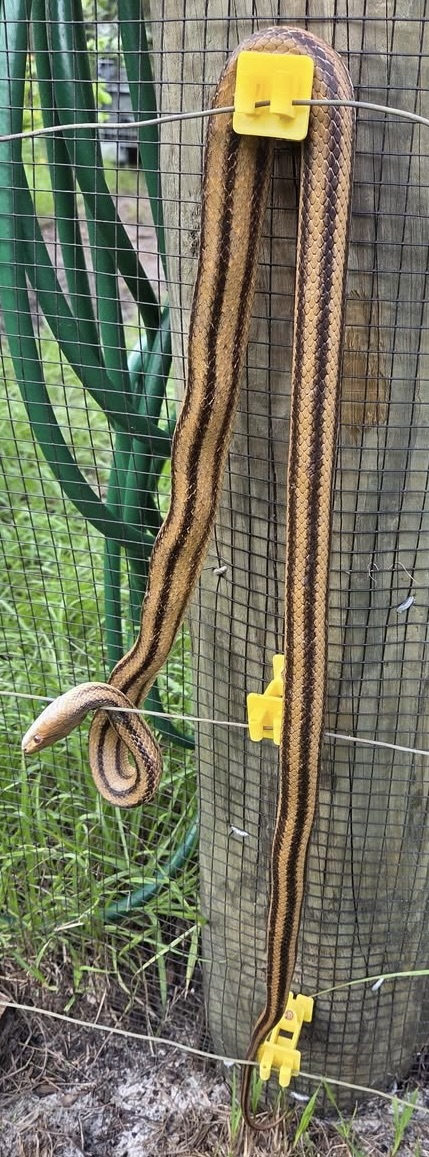
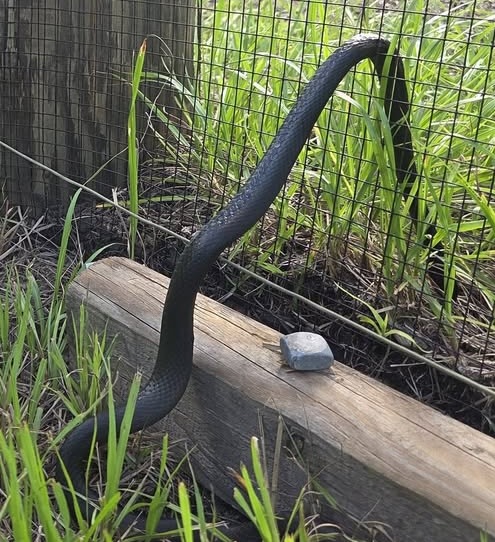
Photo credit: Joey Cortinas
Fake Eggs
This rat snake presented with a foreign body in its abdomen that suspiciously looked like an egg, but this was no ordinary egg. Chicken farmers often use artificial eggs to encourage egg production, guide laying, reduce stress, and prevent bad habits (like eating their own eggs). The rescuer found the snake in their chicken coop, noticed a ceramic egg was missing, and immediately brought the patient to us. This obstruction can block the GI tract, causing chronic dehydration, muscle atrophy and death, if left untreated. Our team sedated the patient and gently massaged the egg out through the oral cavity. Since the egg was successfully removed without surgery, this rat snake was ready to return to the wild after only a few days in care. – Faith Eller, RVT, Wild Care Oklahoma
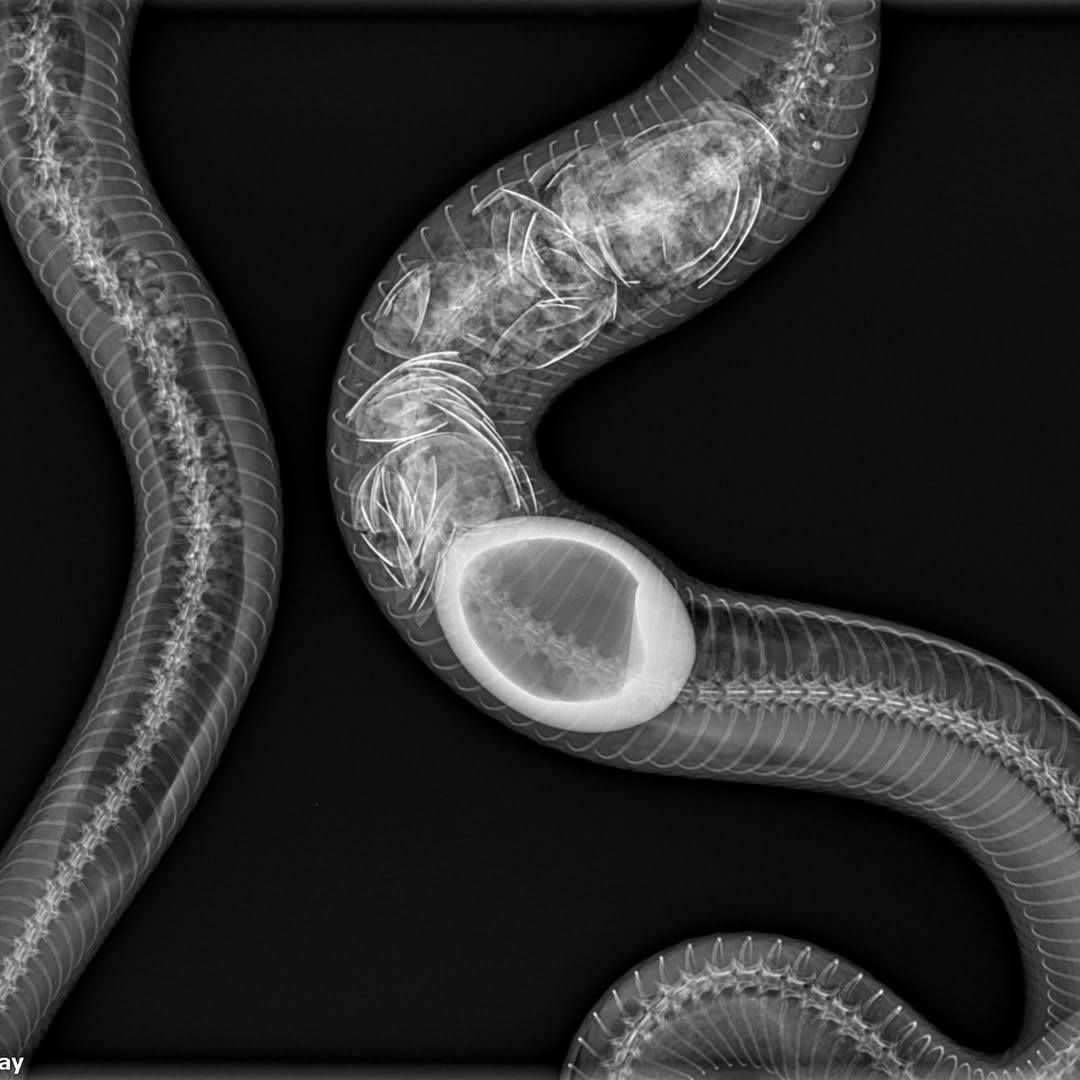
Photo credit: Wild Care Oklahoma
Meet Goldilocks who I have started finding asleep with my chickens. She’s a rat snake, about 4′ long. I can’t see a way to keep her out of my chicken house and I don’t want to hurt her. While I don’t mind losing an occasional egg or two, I do worry that she might injure one of my chickens (ten Bantam Cochin hens and a rooster). They objected at first, but now seem somewhat resigned to this snake curling up with them. I have been extracting her every few nights without a problem. If she’s a danger to them, the only thing I can think to do is relocate her, but I would prefer to leave her alone if they can coexist peacefully. – Laura McSpofforson
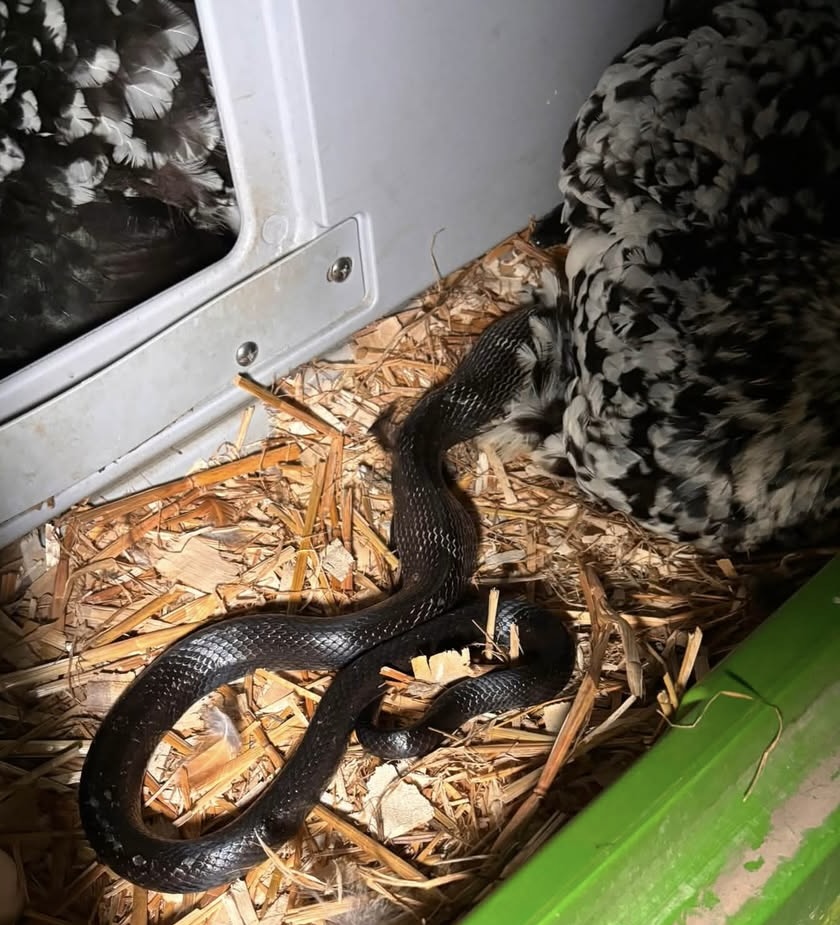
Photo credit: Laura McSpofforson
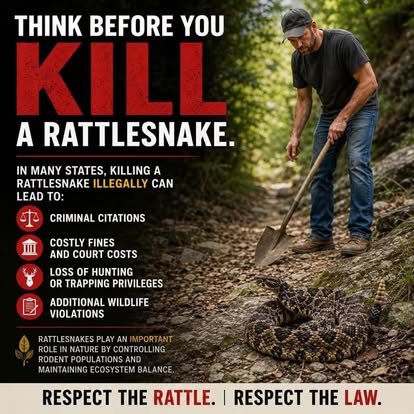
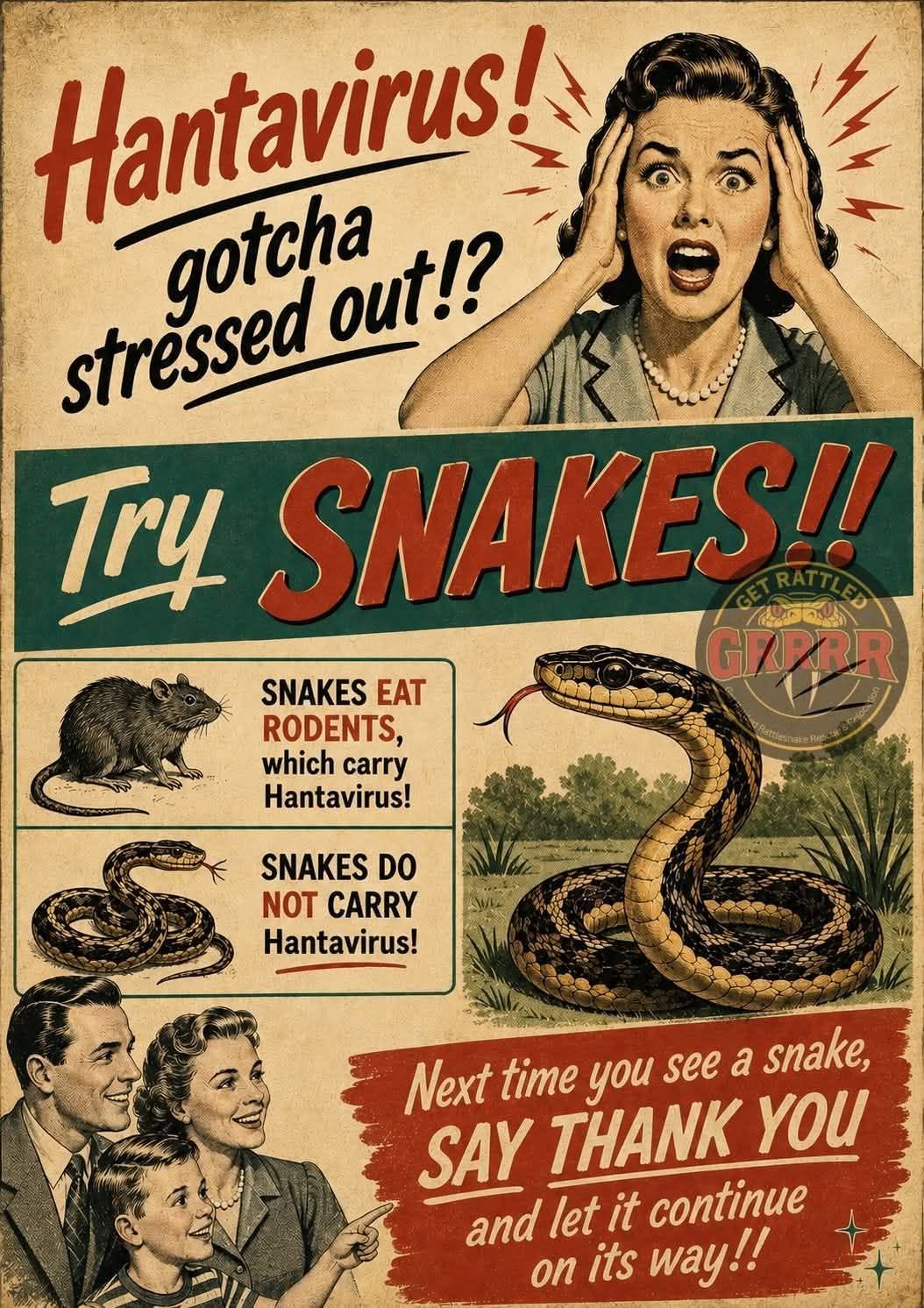
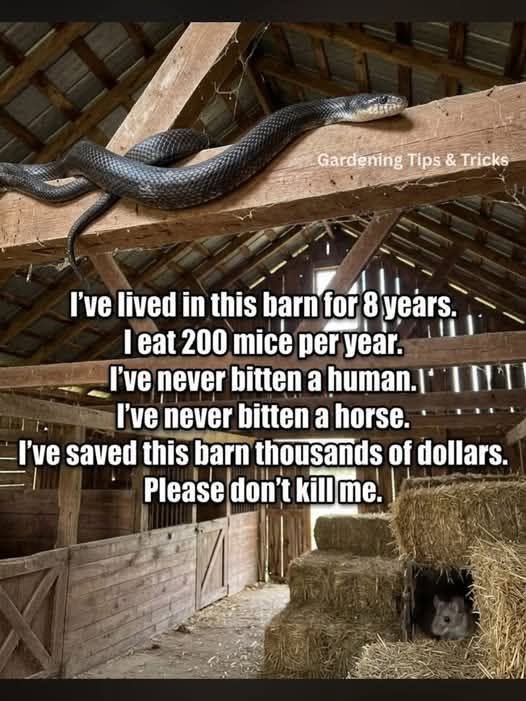
One of the greatest challenges wildlife faces is not always direct harm but it is misunderstanding. Snakes are often killed simply because they are snakes. Education changes that. When people learn that most snakes would rather avoid humans, they may choose to give one space instead of reaching for a shovel. Coexistence does not mean ignoring genuine conflicts. It means responding thoughtfully, humanely, and with respect for both people and wildlife. Practical solutions are often available and they are almost always better than fear-based reactions. Hopefully educating chicken keepers about snakes will engender a sense of stewardship and desire to protect them.
Thanks to everyone who shared their stories and photos. Feature photo credit: These Girls Crack Me Up
“Backyard chicken keeping, unfiltered and unapologetic.”


0 comments on “Protecting Your Chickens From Snakes 2”