
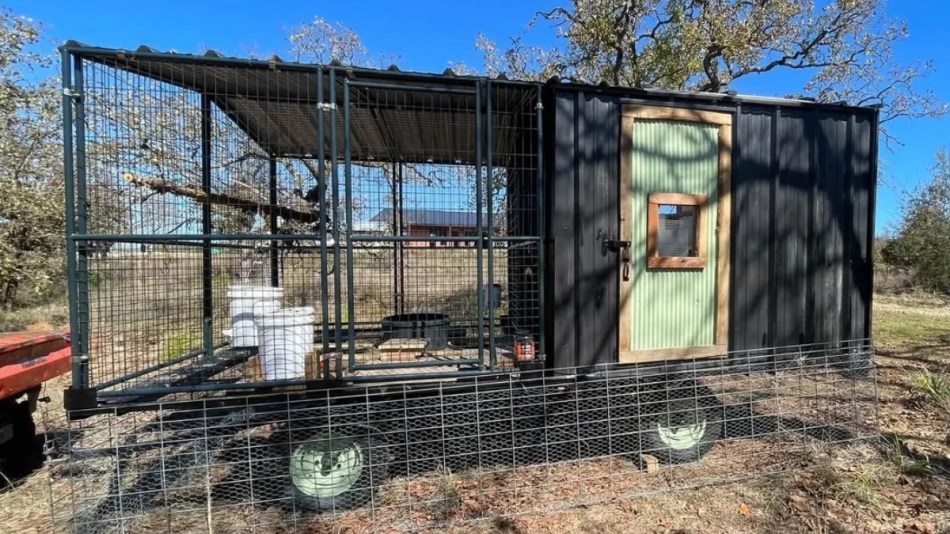
Over the last four years I’ve featured dozens of coops from the modest to the spectacular, new builds and those made with salvaged materials. I’ve noticed more older folks, women and upcyclers are building their own coops. The results are so much more interesting and satisfying than buying a pre-fab coop or hiring someone to do the work for you.
When I came across Cindy’s build I knew she’d be a great addition to my cool coop series. As a recent retiree myself I’m resigned to not having the strength, endurance or physical ability I did even five or ten years ago. Cindy, on the other hand, is a dynamo having taken an old hay wagon and converted it into a predator-proof home for her little flock pretty much all on her own.
I’m not only a tad bit envious, I’m secretly hoping she’d love to come visit me one day and offer her expertise on my own projects. All kidding aside, I give her kudos for her vision and the ability to bring it to life. I’m hoping that her story will inspire others to challenge themselves to do the same.
This is my 46th coop design post and the 1000 post since I began this blog in November 2018.
I live with my husband in the Kiamichi mountains in southeastern Oklahoma. I moved from the Dallas/Fort Worth metroplex to very rural Oklahoma when I retired this year. We have 250 acres of trees and meadows. We are looking forward to our first Spring garden and expanding our chicken crew once again.
I grew up with chickens on a farm and as an adult kept them in town for about 20 years. Presently I have three chickens. They were supposed to be pullets (one is not) and were supposed to be a Polish chicken – they are not. The hens are Plymouth Blue Rock and the rooster looks like a French Cuckoo Marans. I have one turkey.
I am decently handy with tools and I love to build as a hobby. My husband and I remodelled a 1917 home. We built a shop/garage and outdoor kitchen. I’ve built a 12’ x 18’ shed, a dog kennel and our fence.
To feed my need to create, I built this little chicken coop. I had six chickens typically. It functioned very well; I once saw an owl crash into the run trying to get my chickens! I also left the door open once and an owl did get several chickens.
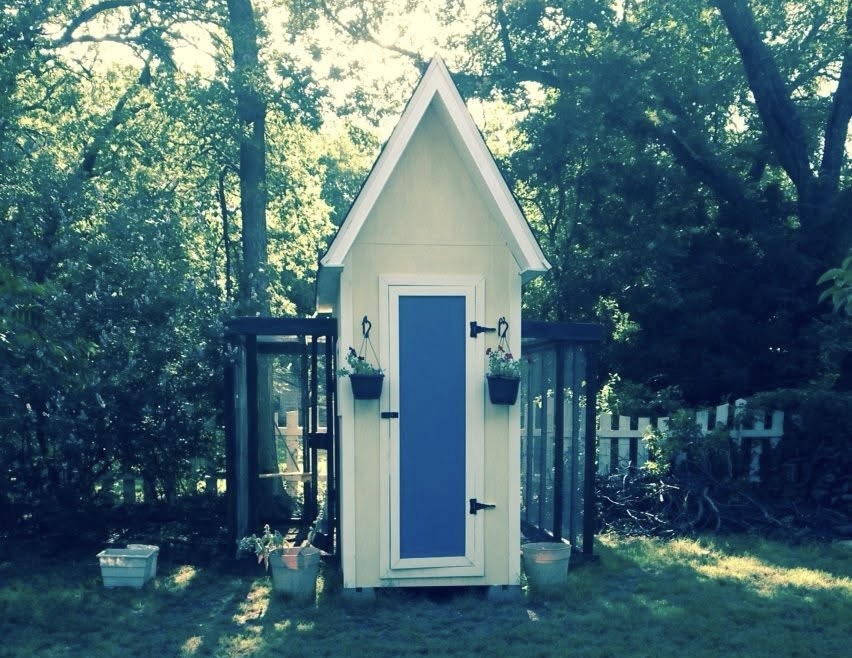
I built a small mobile coop then, too, that was more like a wheelbarrow style and could only house four chickens. Someone bought it from me because she drove by my yard all the time and thought it should be in her yard.
For this current venture with chickens, I had definite needs. Initially I hadn’t planned for a mobile coop, but I wanted to let them benefit from our beautiful meadow grasses instead of being relegated to a dirt floor run. I looked on Pinterest for chicken wagons. They didn’t meet my requirements exactly, so I thought about what I needed and designed my own.
I must have predator-safe features both in their enclosure and coop. On this property we have coyotes, foxes, raccoons, opossums, skunks, bobcats, feral hogs, snakes, mountain lions, roaming wild dogs, and even bears (one was killed on the adjoining property last month, so they are here although I’ve never seen one!). Aerial predators are primarily hawks and owls, occasionally eagles. I need to keep the flock safe mainly from hawks and dogs during the day, but the night-time coop has to be Fort Knox.
This design challenged how to keep chickens enclosed yet able to scratch and roam in grass freely. Most wagons are in a meadow and maybe have a fenced perimeter or free range and return to the wagon. That’s insufficient here. With the cost of chickens (and eggs) these days, I can’t afford to feed the wildlife with my flock. I knew a hay wagon (the frame is called “running gear”) would be tall enough to allow the chickens to move about on the ground, but have a secure coop above at night. This chicken wagon includes a coop, a porch, and the ground below (with axles and tongues to jump on or around, which they use like a jungle gym).
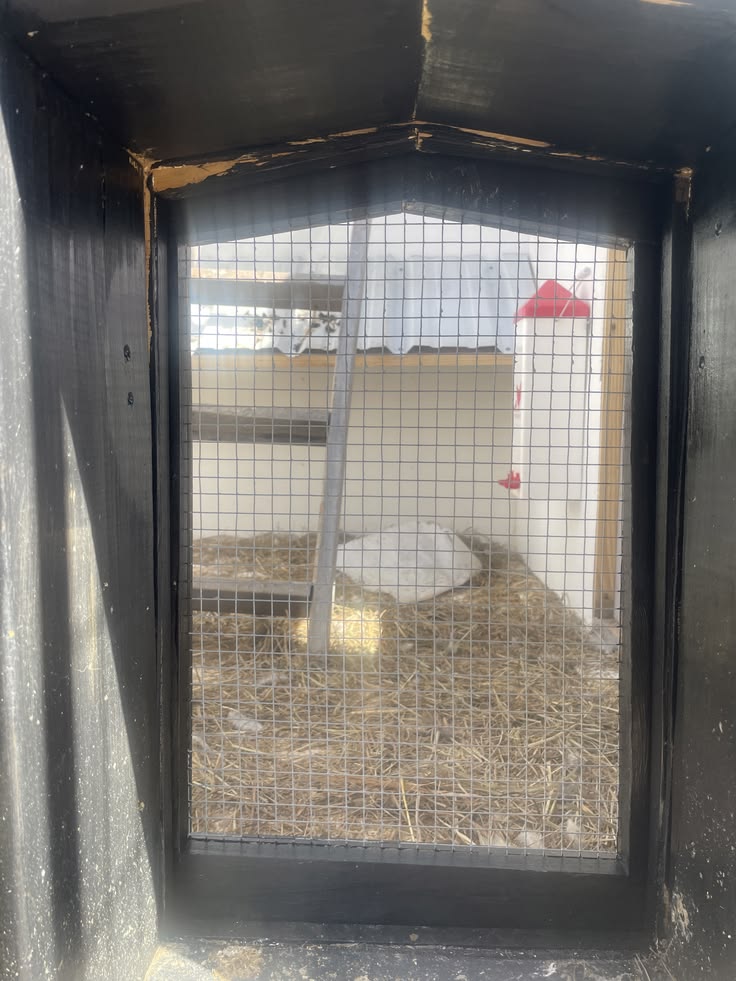
Ventilation is critical for coops, as we know. The coop has window openings with hardware cloth on all four sides to allow for cross breezes in summer. For terribly cold spells in winter, I built insulated inserts for each window/door. (Not to worry, the roof vents the length of the coop and won’t be closed; it is secured with hardware cloth, too). Additionally, I made ventilated window covers for especially rainy spells to help keep the blowing rain out of the dry coop.
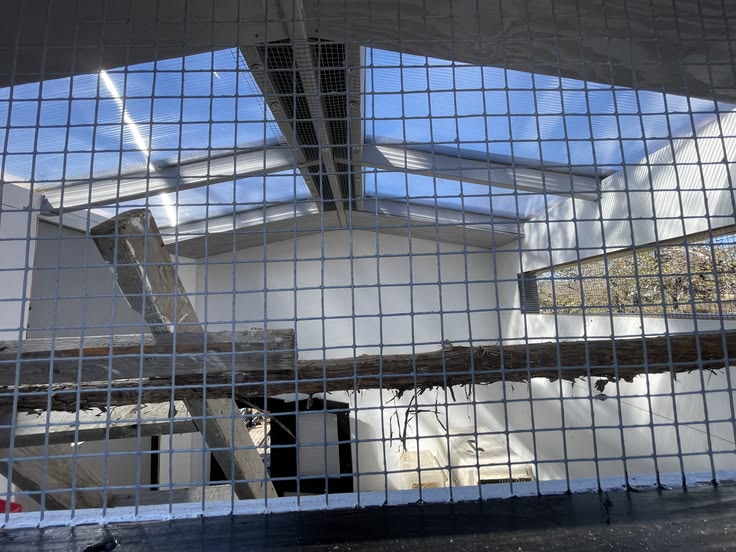
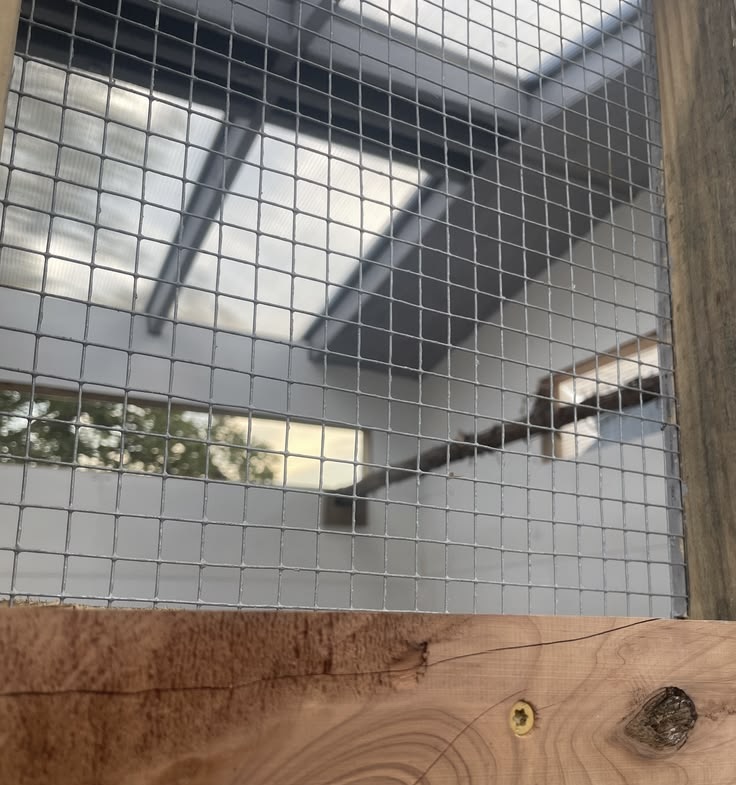
I want the birds to have rain and sun cover, but plenty of outdoor space. The ‘porch’ is a standard chicken pen from Tractor Supply, but I added a metal roof. I purchased it early to ensure that my wagon frame was wide enough to accommodate exact dimensions – good thing, too, because what’s listed isn’t the actual dimension.
The coop is insulated. “Why, oh why?” you ask. Because during a recent winter ice event in Texas electricity was out for days; the rooster literally froze losing most of his comb. Maybe I’ll regret it, but the enclosed coop is well-insulated, but ventilated.
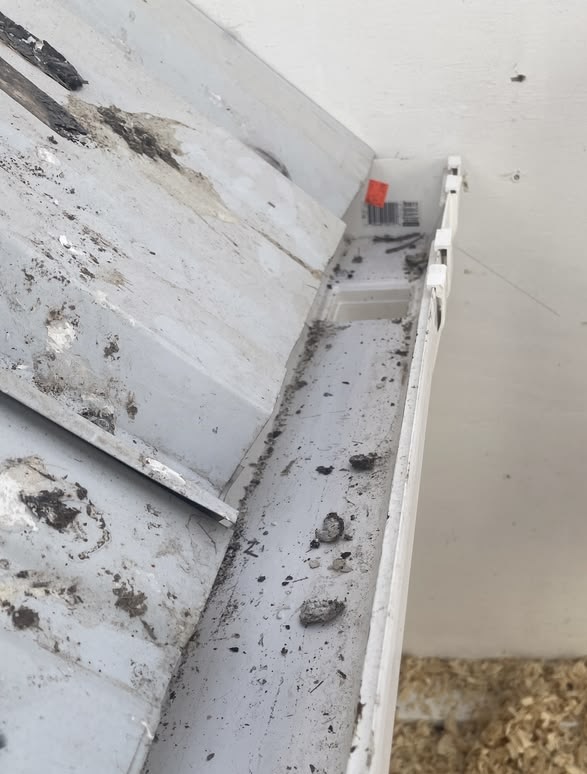
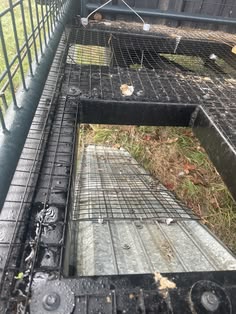
I didn’t want to shovel poop. I have permanent lung damage from COVID, so I have to be careful with my lungs. To avoid shovelling or stirring up poop dust, I settled on a sloped metal surface below the roost with a gutter for catchment. Then, the poop can be sent down the downspout through the floor with a small (kid’s) rake or washed out. The porch has 1″ hardware cloth so poop falls through except where the metal framing members cross. I don’t have to clean the porch at all. If I choose to, I can hose it off.
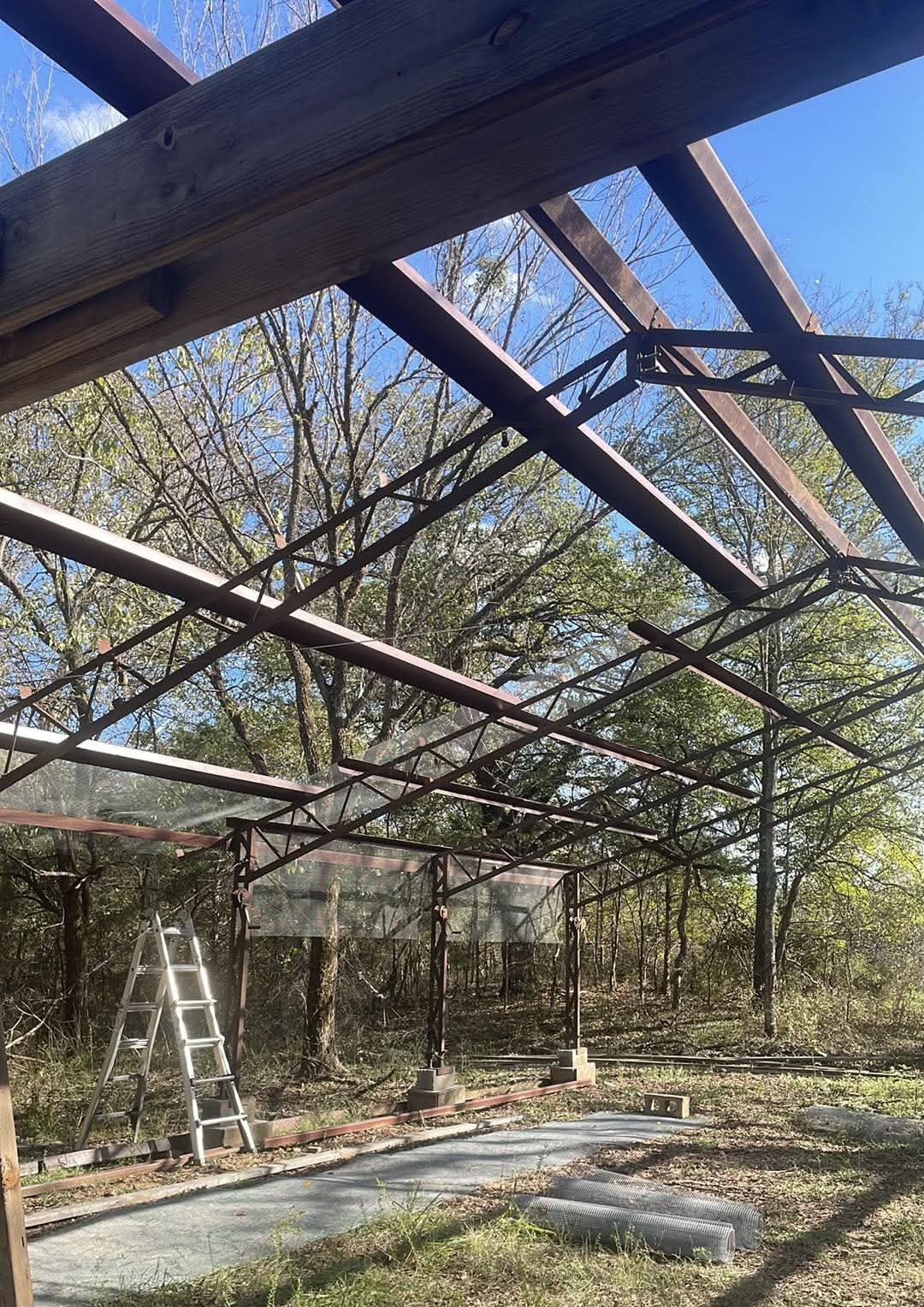
I am also building a permanent run farther away at the creek, attached to a garden enclosed in hardware cloth (because, again, everything from rabbits to crows will destroy a garden). The chicken run and garden are adjoining so the chickens can clean up at the end of garden season while fertilizing for next year’s garden, or can stay in the larger run securely when we are gone for multiple days. As a result, I designed the wagon to be able to ‘dock’ to the larger, permanent run.
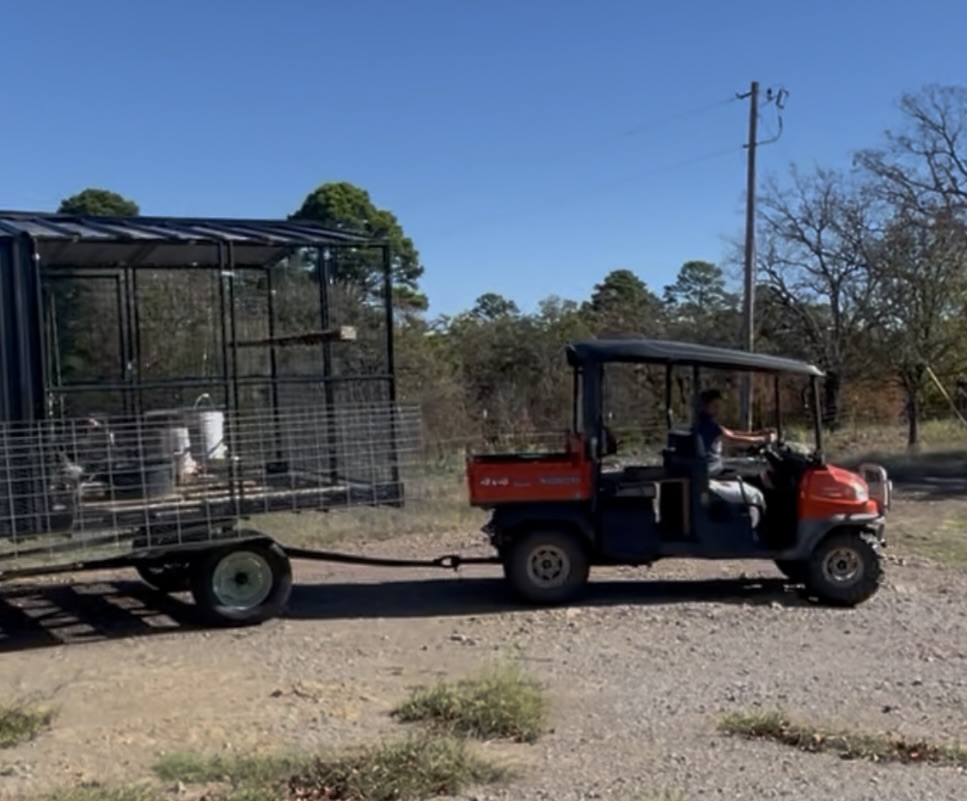
It takes me about 30 minutes to disconnect the ground-level enclosure panels, stow (hang) them for transport, hook up the wagon to my ATV, remove the wheel chucks, move the wagon, put down wheel chucks, and reassemble the enclosure panels.
This was my project. Don’t look at the welds on the frame. I stink at welding. My husband lent a hand or a muscle a time or two, but he stayed out of my hair.
The build took every bit of two months. The running gear had to be rebuilt. It had a couple of really stubborn king pins rusted in that took a lot of heating and beating. My welding machine died. I had issues with the first porch kit I bought and was delayed weeks for returning and replacing that. Also my hands sometimes need a rest day or two. My deadline was defined by when the chicks outgrew their temporary house: a dog kennel!
I never dreamed someone would ask me for ‘before’ pictures. I didn’t do a good job of documenting the build.
Budget
I used a lot of things we had on hand: metal for framing the floor, lumber for walls, hardware cloth, hardware (hinges, etc), double-walled polycarbonate panels, sub-flooring, exterior metal, ridge cap, screws, pig panels and chicken wire to line the ground-level enclosure and some paint. The ladder I use to get into the porch or coop is repurposed from the porch kit shipping crate.
What I spent money on: old running gear $100, new tires $300, ‘porch’ kit $750. I purchased paint, plywood, insulation, and FRP (fiberglass reinforced panels) + glue for the floor.
Interesting story on the running gear: I was looking for something else on Facebook Marketplace. The seller was a short drive away. The listing was for old equipment: hay forks, trailers, and other implements. Every item was $100. There was a photo of a field with a bunch of equipment lined up in tall grass. Lo and behold, I thought I saw running gear! I contacted the seller immediately and, sure enough, there was old running gear and it was for sale: $100!
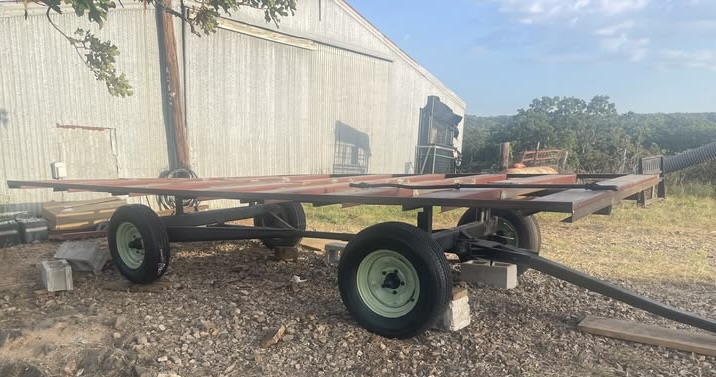
I’ve spent $2200. If I had to purchase everything, I’d likely double that cost. Most hay wagons are $1,000 and up.
Coop
8’ x 16’ The upper level includes the 8’ x 8’ porch and 8’ x 8’ coop.
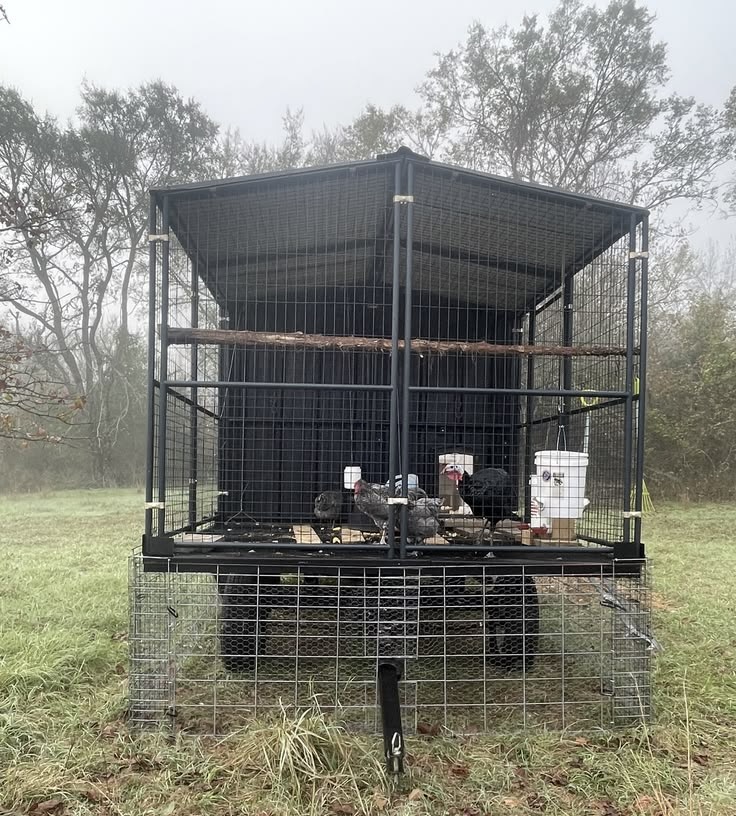
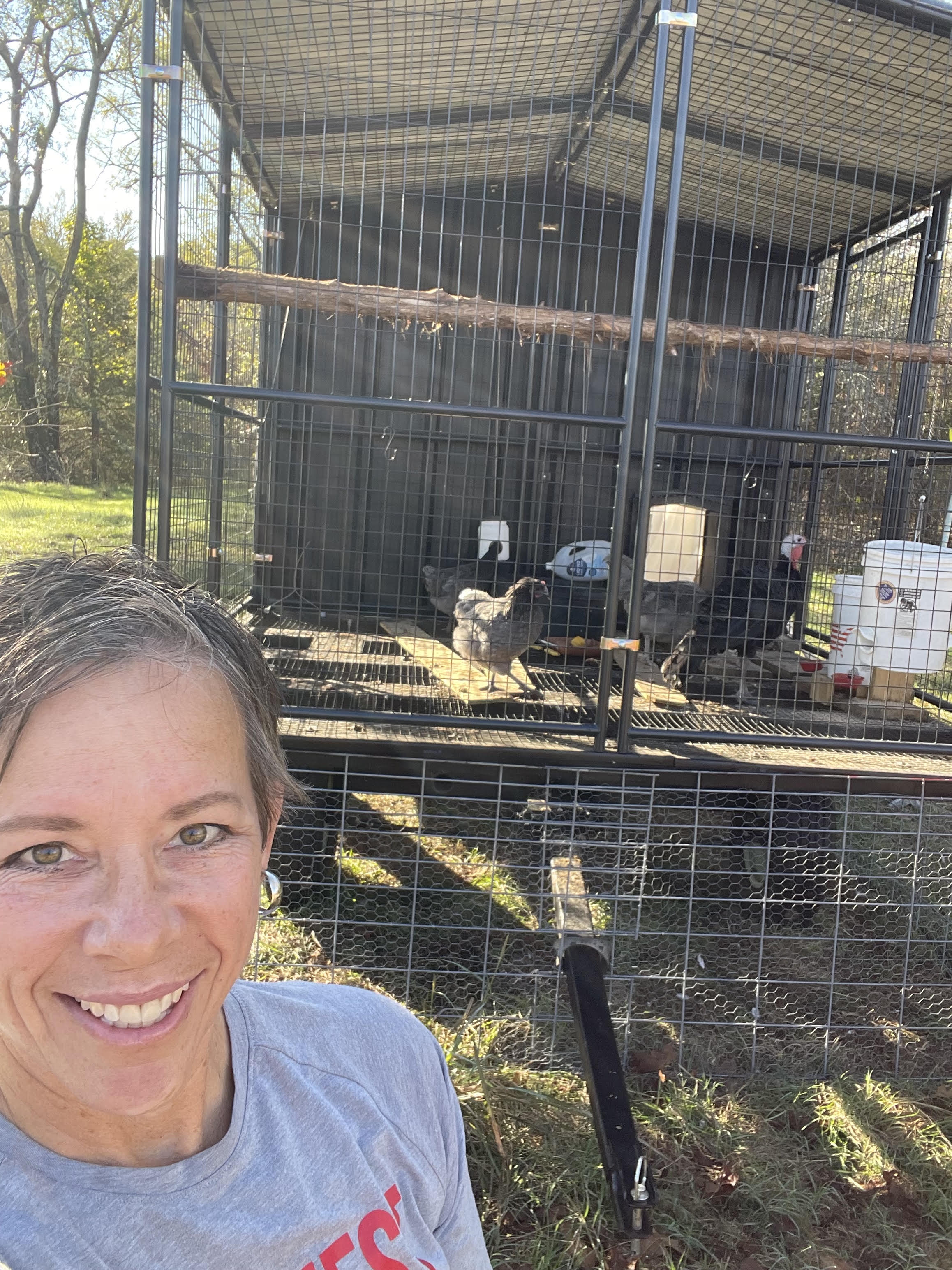
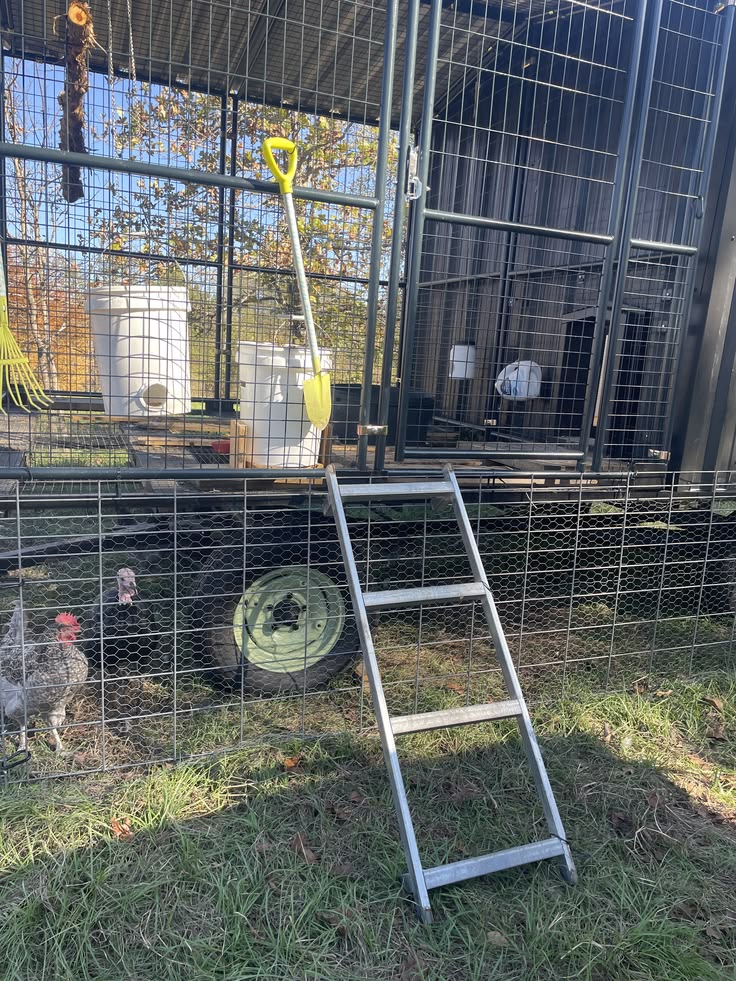
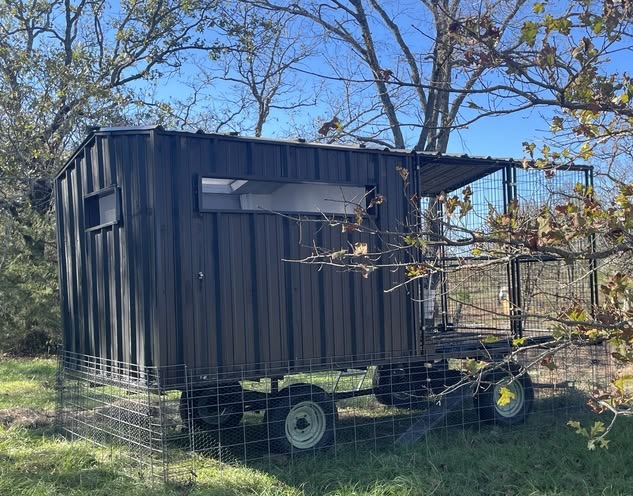
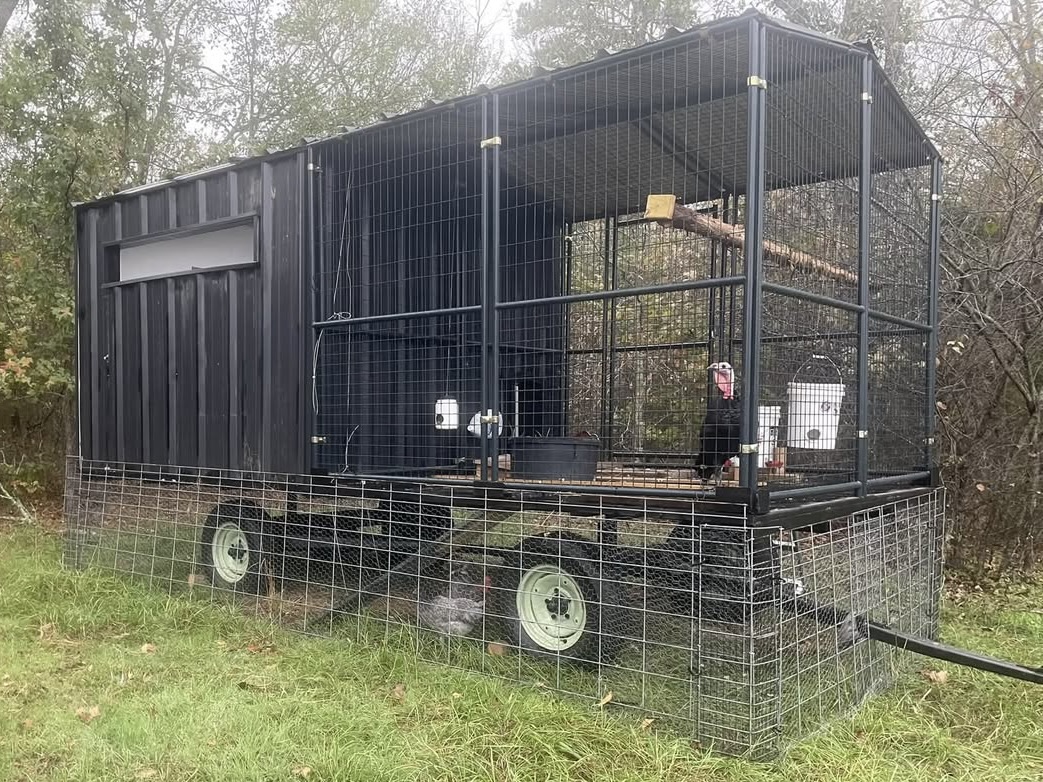
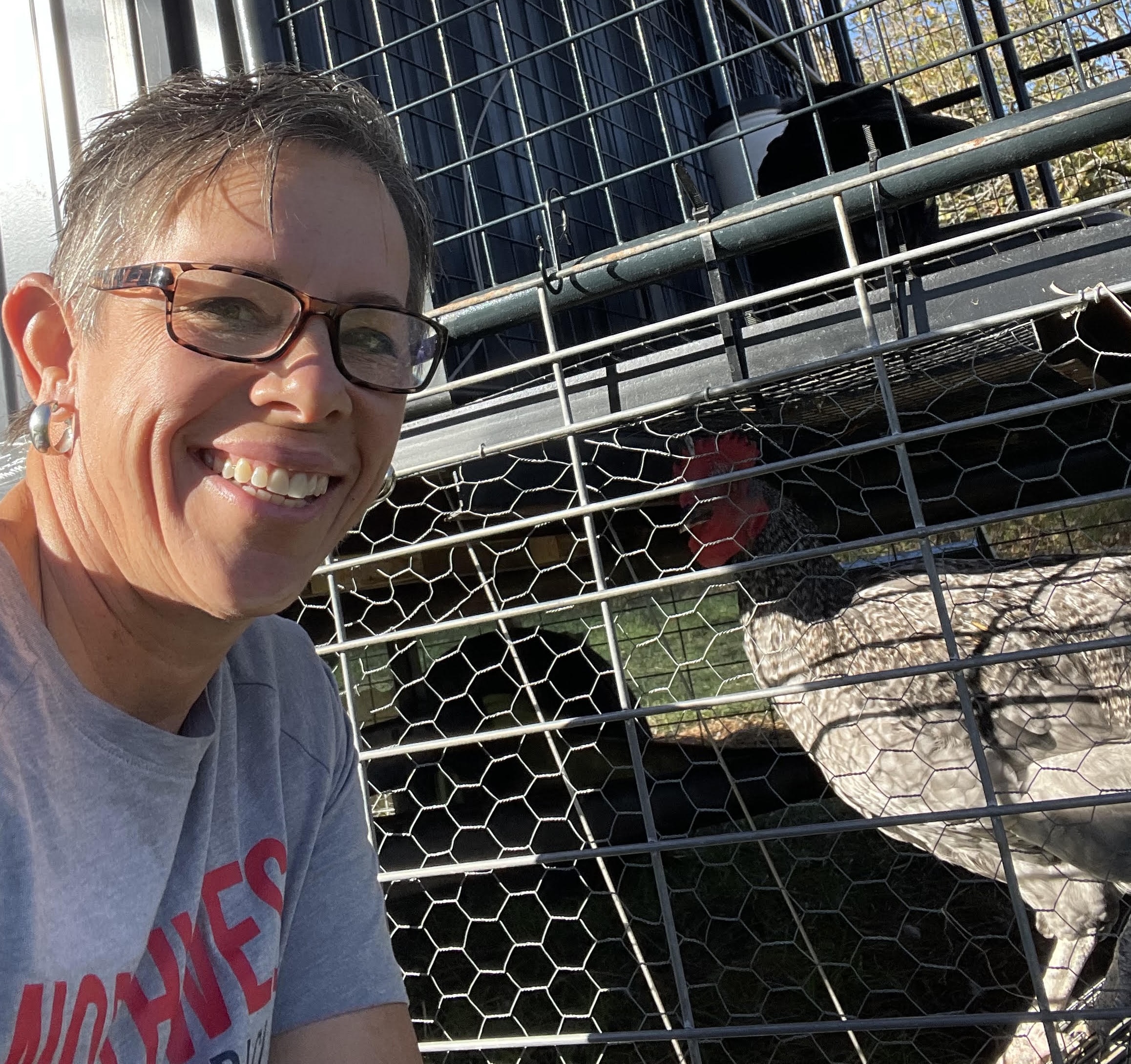
The enclosure at ground level doubles the square footage, totalling 256 sq. ft of usable space in, and under, this wagon.
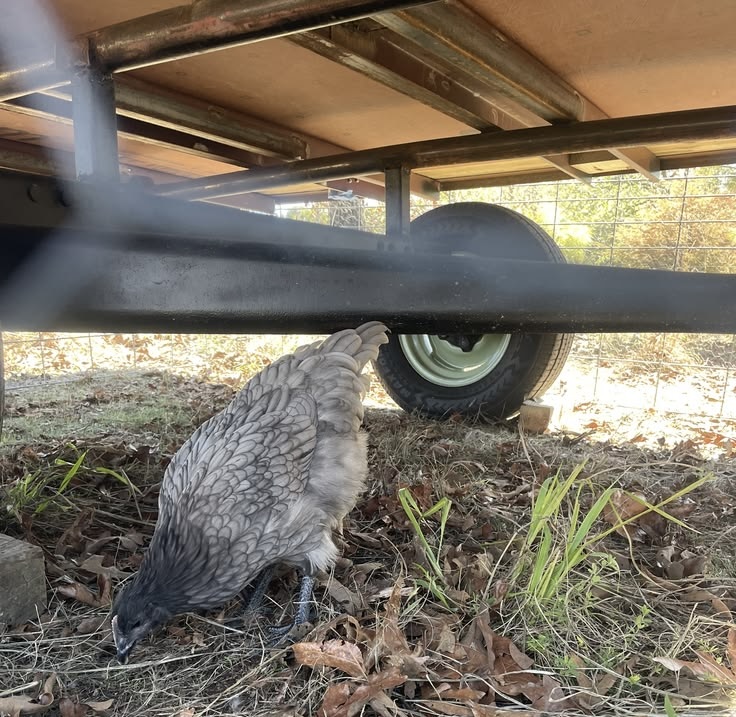
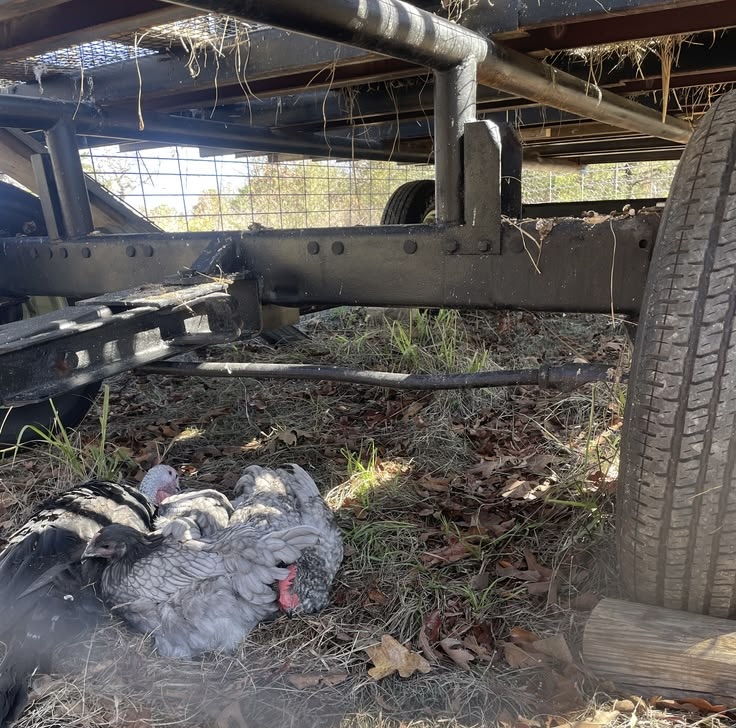
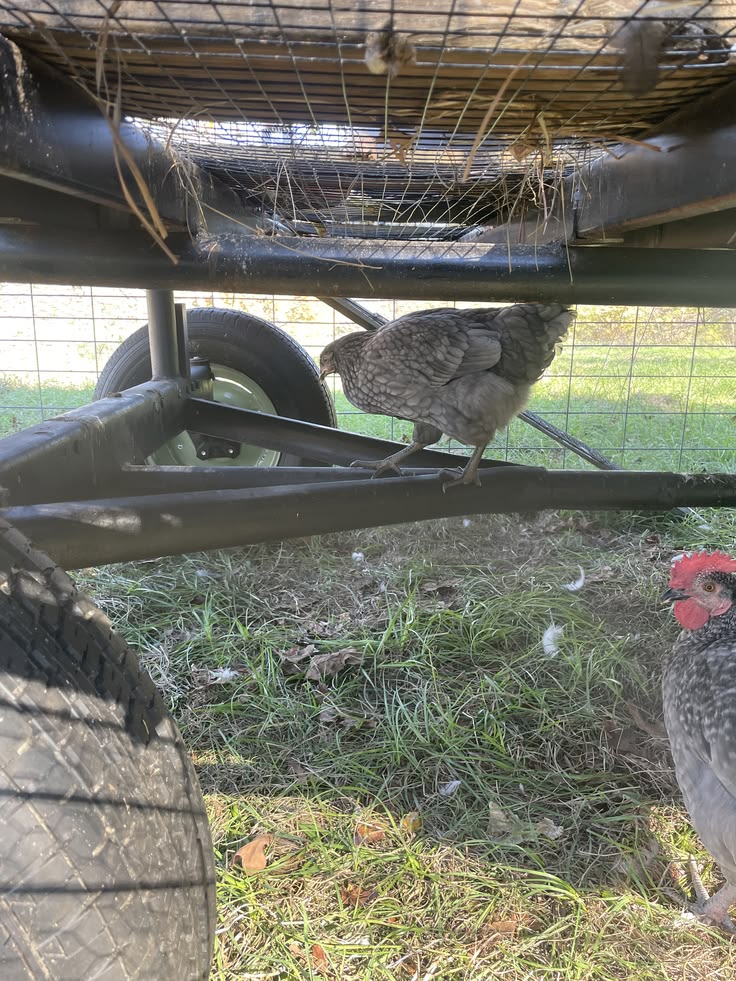
Features
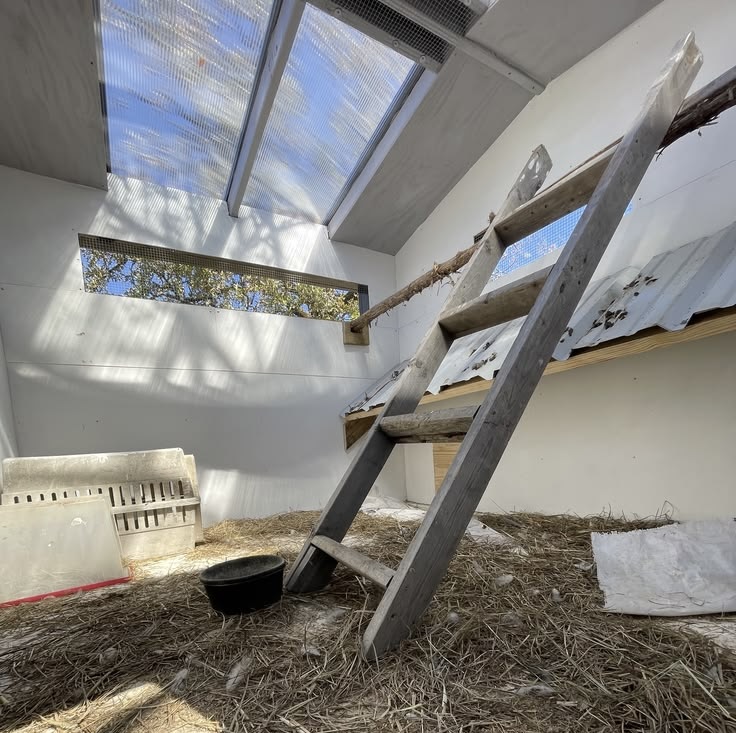
- Skylights in the coop because I am a fan of sunshine and cock-a-doodle-doo! I want my birds to know when it’s time to get up. Sun on a winter day will warm the coop. I’ll install a solar-powered fan next summer when it’s hot in the coop.
- Gutter catchment with a custom drain through the floor that closes so predators cannot enter from below.
- The ramp that lets the chickens access the ground has to be pulled up when the wagon is being moved. It is made from a piece of tin married to a piece of pig panel, covered in hardware cloth so the birds have traction. The ramp is hinged to the underside of the hay wagon, and it is raised and lowered by a cable and pulley system. When I stow the ramp, a small carabiner connects the cable to the porch wall.
- Roosting bars are made from cedar trees I cut from our property: one on the porch, one inside the coop.
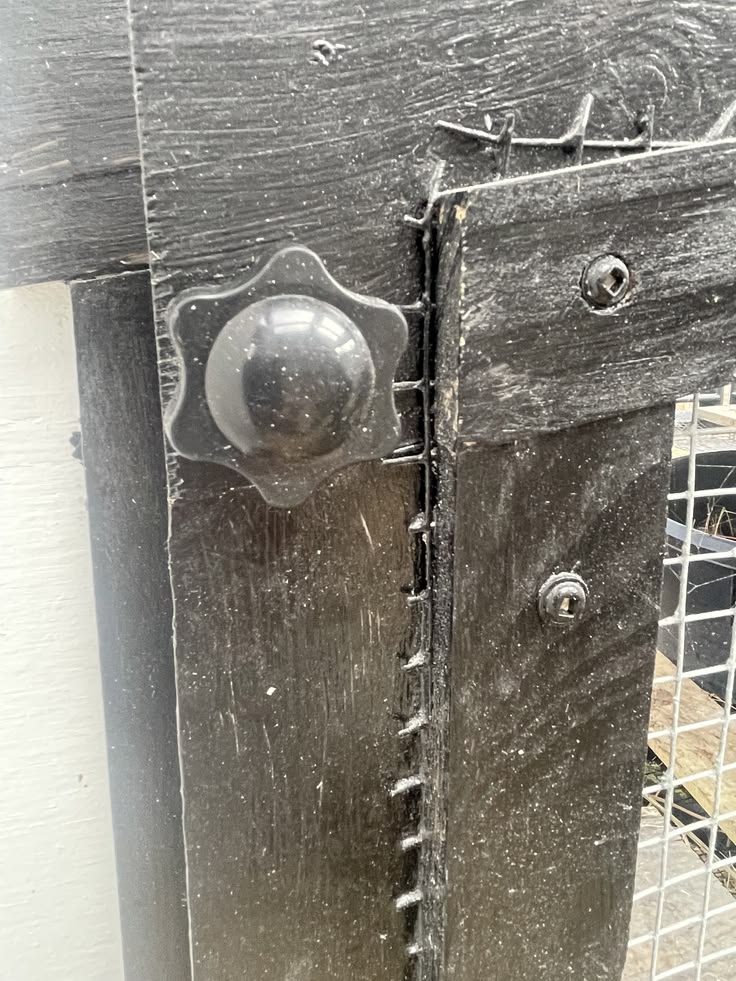
- The door between the coop and porch is closed at night. I used thumb screws and threaded wood inserts to ensure that I could lock down that pass-through chicken door securely every night. I am serious about predator-proofing. I intentionally did not include an automatic door because it forces me to ensure all the birds made it inside and are safe before they are locked down for the night. I’ve read so many failure stories about automatic doors.
- Window covers can quickly and easily be hung when we have heavy or extended rain events. The coop does fine with light rain, but because it will be oriented every which way over time, I needed to prepare for rain from any side. The rain covers stay with the wagon and hang on the enclosure panel when not covering windows.
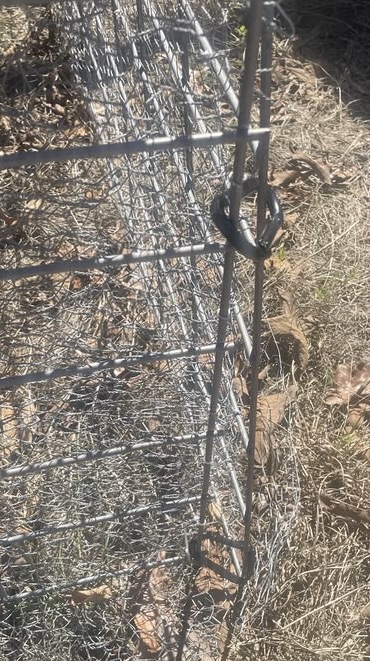
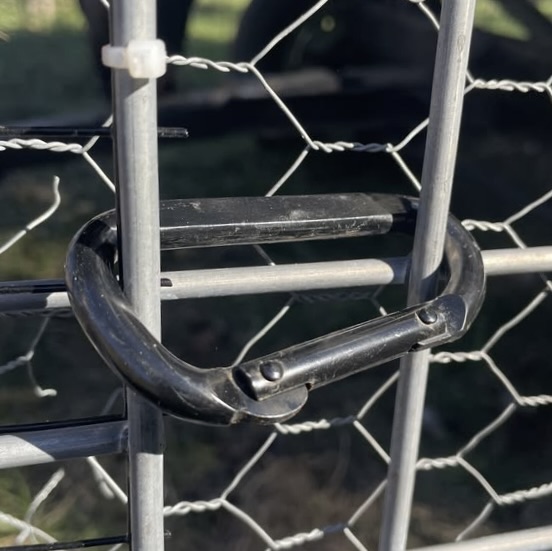
- Fence panel enclosures on the ground have custom corner closures. I scored pig panels, bent 90°, reinforced the corners with welds, then lined with 1″ hardware cloth. Corners are clamped using heavy duty carabiner clips.
- Inside the coop are a nesting box (a storage bin that my previous hens utilized which is so easy to clean and to add more), cedar post roost with poop catchment and water in case I’m late unlocking them in the morning.
Plans for the future
The wagon will dock to the permanent run. I framed out and marked the wall where that door will go and reserved materials for the revision of a door.
Many thanks to Cindy for sharing her fantastic build and photos, used with permission.
“Where nerds and hens flock together.”


0 comments on “Kick Ass Woman Built Chicken Coop 2”