
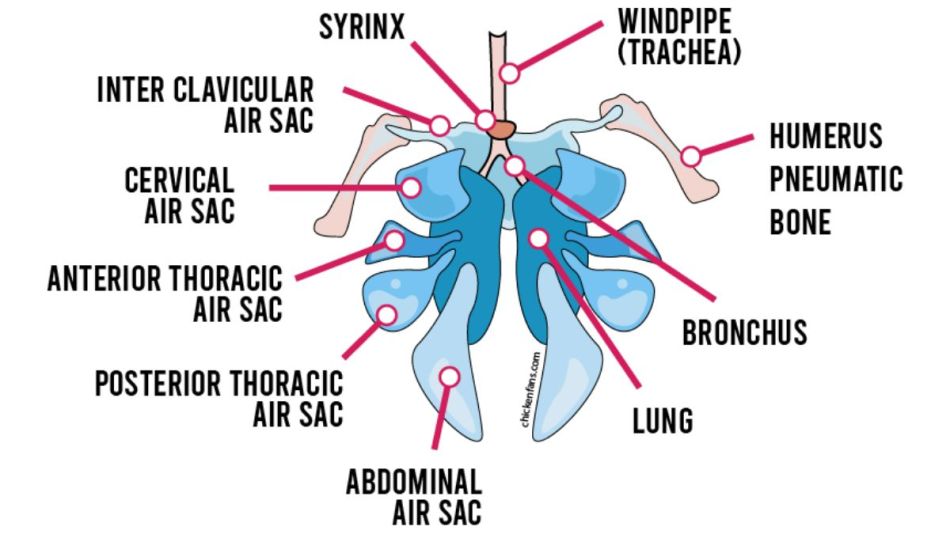
Air sacs are an essential part of a chicken’s respiratory system, but they’re very different from lungs. Chickens, like all birds, have a unique respiratory anatomy designed for high-efficiency oxygen exchange to support flight (even though chickens don’t really fly). These thin-walled, balloon-like structures act as bellows, moving air through the lungs in a one-way flow system, which is far more efficient than the in-and-out breathing of mammals.
Chickens have nine air sacs: one interclavicular, two cervical, two anterior thoracic, two posterior thoracic and two abdominal, which are distributed throughout the chest and abdominal cavity and even extend into some of the hollow bones.

Air sacs don’t exchange oxygen directly with the blood (like lungs), but do play a critical supporting role in breathing:
- Continuous airflow: Air sacs allow fresh air to flow in one direction through the lungs, even when the bird exhales. This ensures that the lungs always receive oxygen-rich air.
- Cooling system: Birds don’t sweat, so the air sacs also help regulate internal temperature by moving air through the body.
- Sound production and balance: Air sacs are involved in vocalization and help maintain balance in flight through the distribution of air in the body.
Breathing in chickens happens in two cycles:
First inhalation: Air enters the body and fills the posterior air sacs.
First exhalation: That air moves through the lungs, where oxygen exchange occurs.
Second inhalation: The now oxygen-depleted air enters the anterior air sacs.
Second exhalation: The used air is pushed out of the body through the trachea.

This two-step process ensures a constant stream of oxygen across the lungs, even during exhalation – much more efficient than how humans breathe.
Because air sacs are delicate and connected to so many parts of the respiratory system, they’re easily infected or inflamed – especially by bacteria, viruses, or fungi – leading to airsacculitis.
Any compromise to this system (like poor ventilation, high ammonia, or disease) can severely affect a chicken’s health and oxygen intake.
Airsacculitis
Airsacculitis is a symptom of a lower respiratory issue which causes inflammation of one or more of the air sacs and thickening with accumulated purulent, or caseous material within the air sac cavity. This is usually caused by a bacterial or fungal infection, and less commonly a virus.
The cilia in the respiratory system may become paralysed and unable to clear contaminants from the lungs. When this happens, opportunistic infections may occur, which can lead to secondary infection of the air sacs with E. coli or Mycoplasma gallisepticum, leading to the formation of fibrinous lesions.
Causes
Specific pathogens associated with airsacculitis include:
Bacterial Infections
- Mycoplasma gallisepticum – one of the primary pathogens involved in chronic respiratory disease (CRD)
- Escherichia coli – often causes secondary infections
- Ornithobacterium rhinotracheale (ORT)
Viral Infections
- Infectious Bronchitis Virus (IBV)
- Newcastle Disease Virus (NDV)
- Avian Influenza Virus
Fungal Infections
- Aspergillus fumigatus can cause fungal airsacculitis, particularly in environments with poor ventilation and damp bedding.
Environmental Factors
- High ammonia levels
- Poor ventilation
- Dusty or mouldy bedding
- Overcrowding and stress


Photo credit: L: Merck Veterinary Manual; R: Dr Luke Baldwin
Symptoms
Airsacculitis can be subtle in the early stages. As the disease progresses, symptoms include:
- Laboured or open-mouth breathing (gasping)
- Tail bobbing with each breath
- Sneezing or nasal discharge
- Swollen sinuses or foamy eyes
- Decreased appetite
- Lethargy and ruffled feathers
- Poor growth rates in young birds
- Decreased egg production in laying hens
- Gurgling sounds while breathing
- Death due to respiratory failure
Diagnosis
- Clinical signs and flock history
- Post-mortem examination, revealing cloudy, thickened, or pus-filled air sacs
- Laboratory tests such as PCR, culture, and serology to identify specific pathogens
Treatment
- Antibiotics are effective against bacterial infections but should only be used under veterinary care to prevent resistance. Tylosin, tetracycline, or enrofloxacin are commonly prescribed.
- Antifungals If fungal infection is suspected (e.g., aspergillosis), antifungal drugs like Itraconazole may be prescribed, though treatment is often difficult and prevention is more effective.
- Supportive Care Isolate affected birds to prevent spread; provide clean water, quality feed, and a warm, dry environment; improve ventilation and reduce ammonia levels.
Prevention
- Biosecurity: Limit traffic in and out of the coop, disinfect equipment, and quarantine new birds.
- Vaccination: Available for some diseases like Infectious Bronchitis and Mycoplasma.
- Environmental control: Keep coops clean, dry, and well-ventilated. Avoid overcrowding.
- Nutrition: Feed a balanced diet to support the immune system.
Credits: Farmers Weekly; Dr Jacquie Jacob; Poultry DVM


I have really had to study this to get a grasp on how it works. Pretty amazing. Thank you for the lesson. m
LikeLiked by 1 person
This is SUCH an important topic. Thank you so much for bringing more awareness and sharing the information! 👏
LikeLike