
Loads of sites come up in my feed. Some I scroll through, others I block and a few catch my interest and I click through to their page. Sanctuaries usually grab my attention and I often reach out to offer to post about their work on my blog. So far, I’ve profiled several rescue groups for my blog: in England, Canada, Australia and the USA.
This is my eleventh profile of chicken rescues and the second in a series about Ahimsa. From experience I know that folks running a rescue are busy 24/7 and don’t have a lot of spare time. I suggested that I scroll through their Facebook page to see what I could use. Ahimsa Safe Haven deals with a variety of species: 120 residents chickens, pigs, turkeys, quail, and feline leukemia virus (FeLV) cats. Due to the focus of my blog I only selected stories relating to poultry.
Quinoa had his very first appointment today at the Animal Rehabilitation Facility in Dexter. I have seen and experienced pretty great results from acupuncture on humans, and I had been searching for some time for an acupuncturist who would work on chickens. When we found ARF, they were not only willing to see a rooster but had ample experience with birds, and we have been so excited for this appointment!
Quinoa began deteriorating a couple years ago, starting with a tremor. We saw the vet, tried a multitude of things, and got no real answers. His tremor got worse, and we eventually went to a different vet, who led us down a different and unnecessary path, but that’s a story for another day. A few months ago, we went back to our usual vet, to see if we were missing anything or what else we could try. She could find nothing and said “it just is what it is.” But at this point, Quinoa can hardly walk. He is super stiff and needs his food elevated so he can get to it. He is on multiple pain meds daily and to be honest, his quality of life isn’t great. While we wholeheartedly believe in euthanasia when it is the kindest option, I don’t think we are there yet. He still gets super excited about food and eats like a champ, melts and basks in the sunshine, and enjoys hanging out with his friends, but we need to figure something out to help him move a bit better.
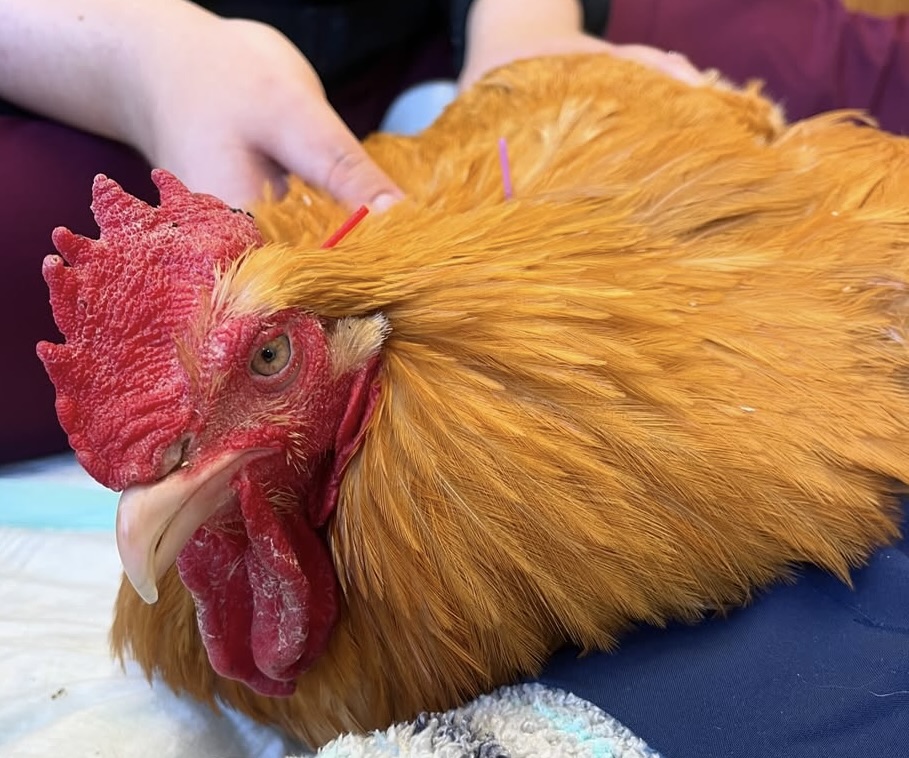
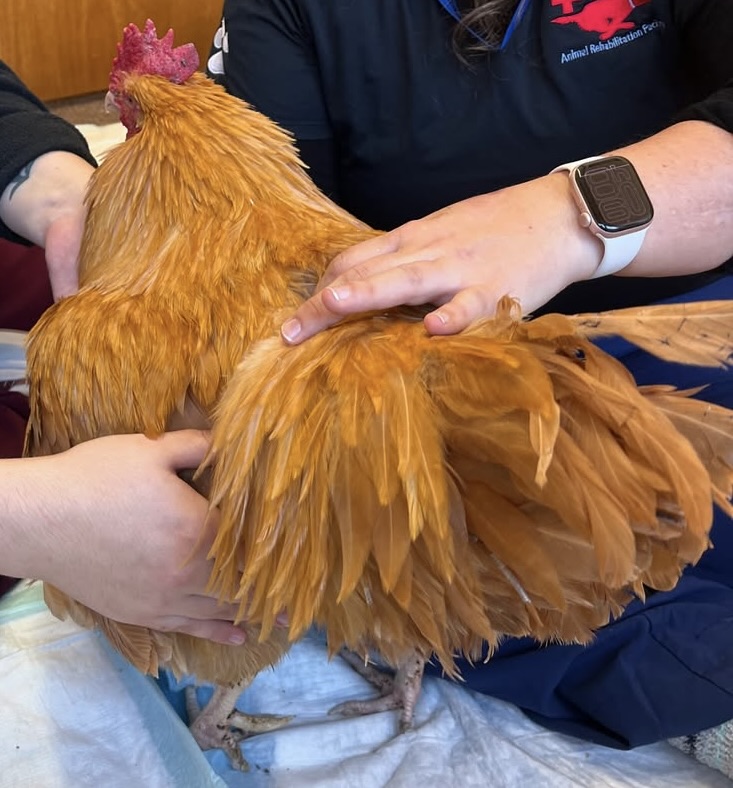
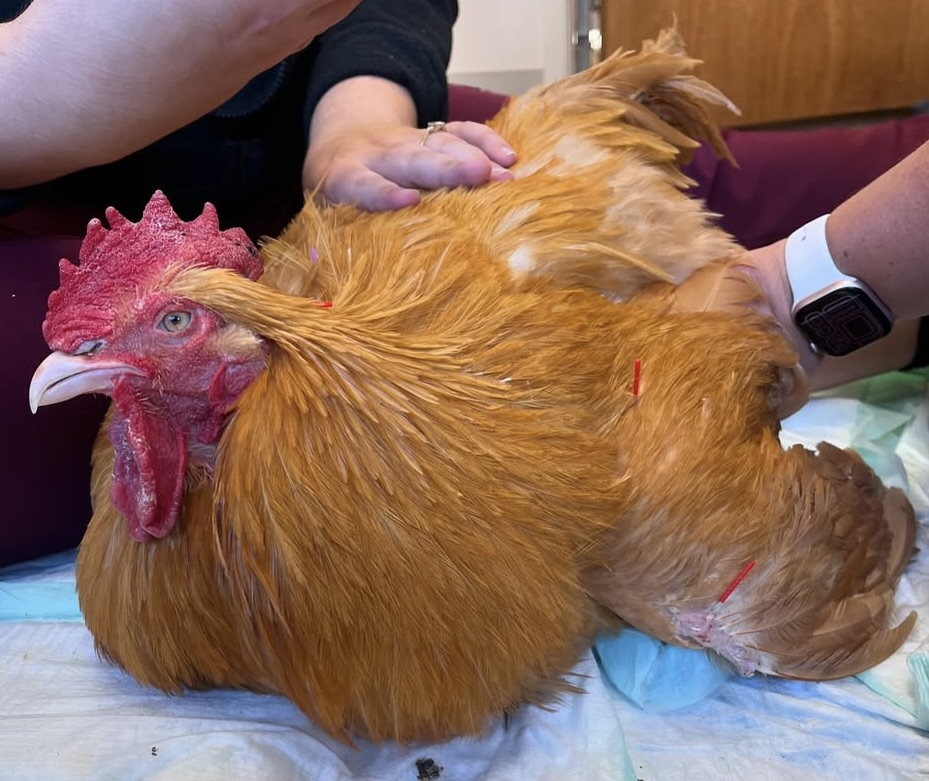
We headed out today to ARF bright and early, and Quinoa saw Dr Luiza, who is from Brazil where she taught acupuncture on birds and wildlife. She gave Quinoa a full exam before placing the needles and I have to say, Quinoa absolutely melted while they were in. He was so relaxed and sleepy. I had planned to hold him to keep him still, but I didn’t need to. He quickly became a puddle of rooster and even after his treatment was done, he had no interest in moving. Dr Luiza said that birds respond to acupuncture more quickly than mammals, and she thinks we’ll be able to tell if it’s working in him after just a couple sessions.
Did you know that roosters are prone to heart disease? The large breeds, like Brahmas, are particularly vulnerable, even from a young age. But tiny guys like Chester here can have cardiac issues as well. Chester is at least six years old and has a heart murmur. He takes heart meds twice a day for it. Many of our roosters do, as well as a few hens. We have joked with our vet about adding heart meds to the water (that’s not a thing – don’t do it) because it doesn’t seem to be a matter of if the birds have heart issues, but when. That’s the importance of veterinary care.
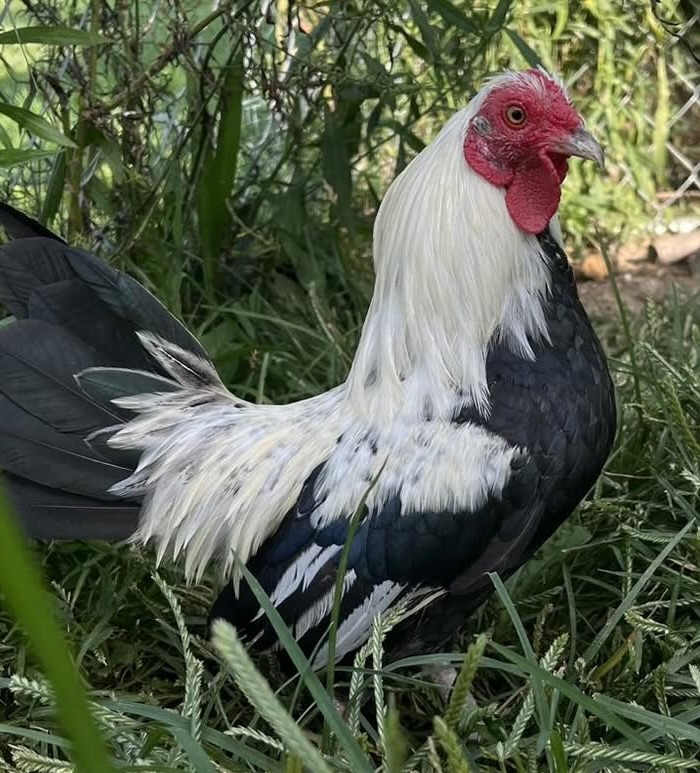
Getting birds to the vet at the earliest signs of illness. Chickens can’t tell us if they’re having chest pain. We have to watch closely for symptoms and get appropriate care at the first sign.
A few things you can watch for:
- darkening of the comb, face and wattles
- open beak breathing heavily after exercise or when it’s not hot
- staring “into space” or pecking at the air
- inability to stand or balance well
- crows or voice sounding gurgled or fluidy
- a large number of mites or lice, especially when no one else in the flock is affected as badly
- heartbeats that are audible even when not listening with a stethoscope
A lot can be done at home for chickens, but there is no replacement for real veterinary care, especially when it comes to the heart.
Indrid saw the vet today as he has been moving a bit more slowly and just seemed off. Even though our coops are heated, this is a tough time of year for the birds. He had bloodwork and X-rays done, and pretty much as expected, he has heart disease. Cardiac issues are so common in roosters as they age. Heart meds are probably the most commonly given meds here, as we have multiple boys on them for life. So when the vet said Indrid’s heart was enlarged, it wasn’t a surprise. What WAS a surprise was the chunk of metal that also appeared on his X-rays. The vet believes it is lead shot. Given its location in the centre of his chest, outside of the digestive tract, it would have had to enter his body with great force to become lodged so deeply. It’s not something he ate. He was shot.
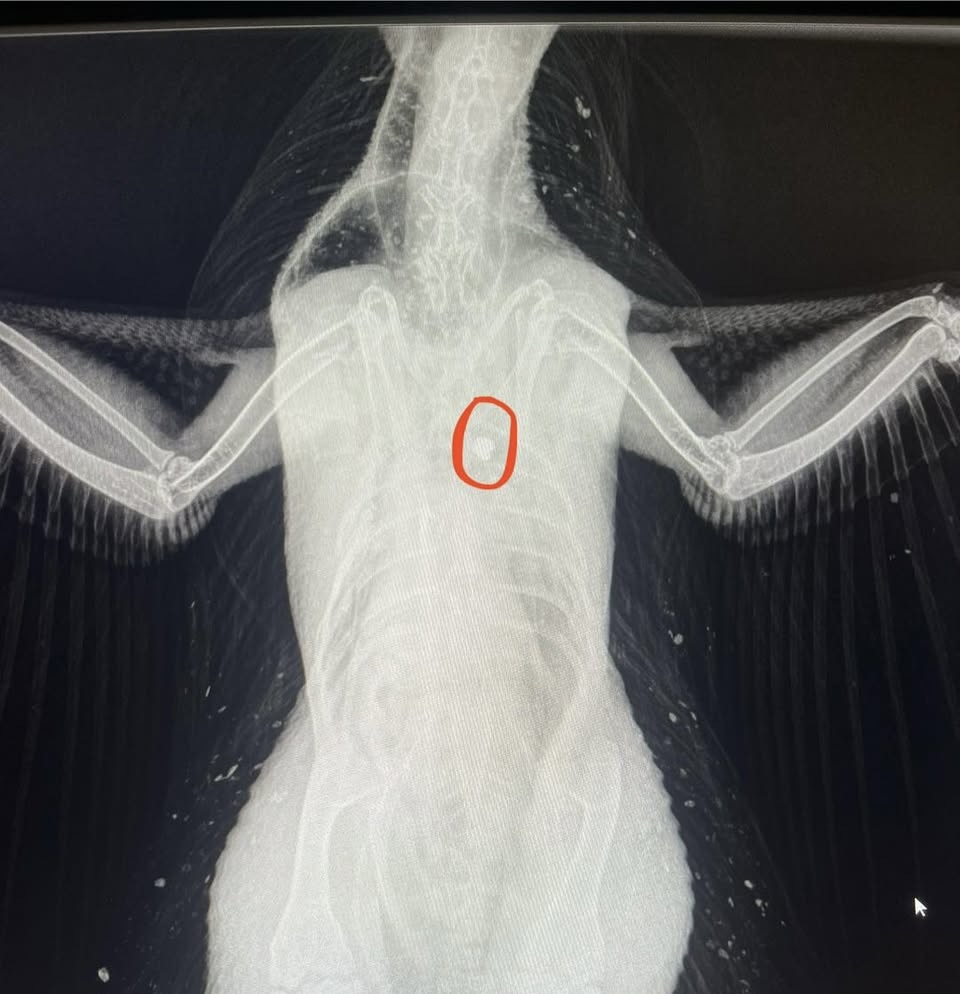
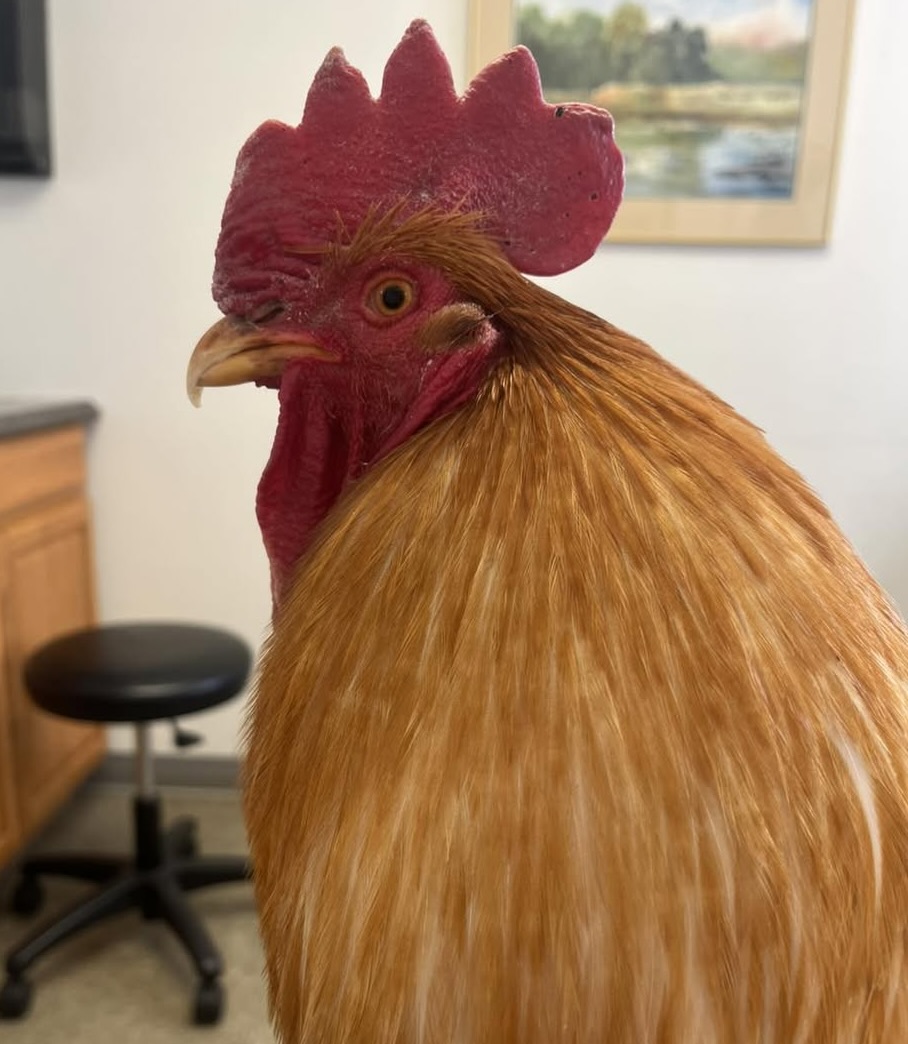
People sometimes ask why we advocate for roosters. Why, of all the animals in the world, we choose to rescue birds with a reputation for being aggressive towards humans. And this is precisely why. They are one of the most horrifically abused and misunderstood animals on the planet. Humans are far more dangerous than roosters will ever be, and yet many people view them unfairly as creatures who wish us harm. We are the ones to fear.
Indrid was not young when he came to us a few years ago. We have no idea how long the shot has been there, but any effects from the lead are likely permanent at this point. We are treating him with a chelation therapy just in case. He is also beginning his heart meds and possibly an antibiotic pending bloodwork results.
The beginning of his life seems like it was pretty rough. Tonight he is snuggled up with his lady friend, Laverne, fully medicated and safe, warm and happy. They both got blueberries when he arrived back home and his poor little heart should be feeling better soon. Indrid, I’m so sorry you’ve had to endure the things you have. We will never stop fighting for you, and we love you.
Roscoe was dumped on the side of the road near a nature preserve. No food, no water, no way to survive. He was still wearing a crow collar – a tight piece of velcro around his neck meant to stifle crowing that works by restricting air flow. He hid under the brush next to where he was left. Roosters don’t go far. The brush became his shelter, although it didn’t protect him from much. He pecked around in the gravel, looking for bugs, berries, grass, for anything he could eat. After some time, a kind human noticed that he was always next to the road on her way to work. She began taking him food and water. Roscoe ate it up, but he wouldn’t let her get close. His experiences with humans taught him to be afraid. In Roscoe’s world, humans were dangerous. So he stayed next to the road, hiding in the brush.
The kind human reached out to sanctuaries, and eventually we were notified. Cari went out to catch him. When she arrived at the address given, Roscoe was standing in his usual spot. Under the brush, where someone left him to die. She had her net and as she crouched down near him, he went on high alert and began to circle her, the way roosters do when they show dominance. She easily caught him with the net, and then pulled him close, tucking his head under her chin to tell him he was safe. He immediately pulled back, and pecked at her face, biting her lip as hard as he could.
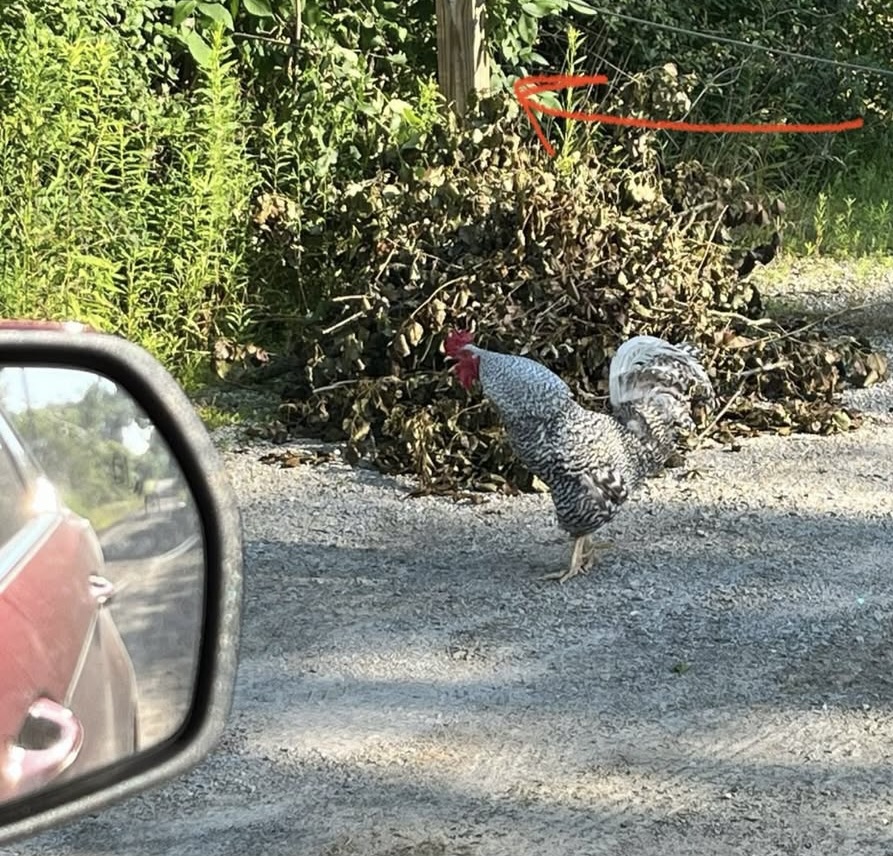
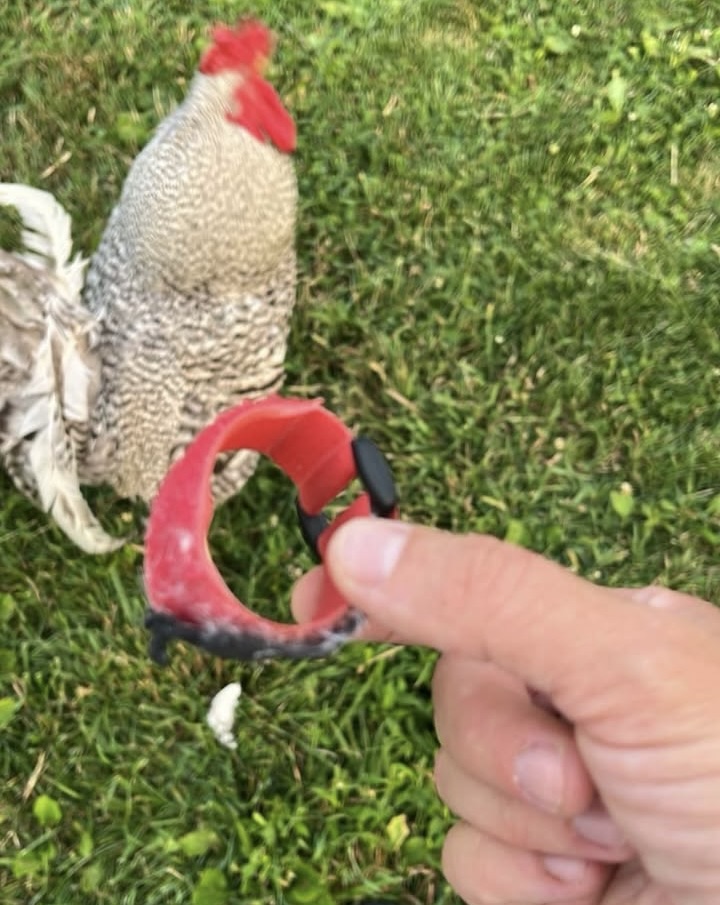
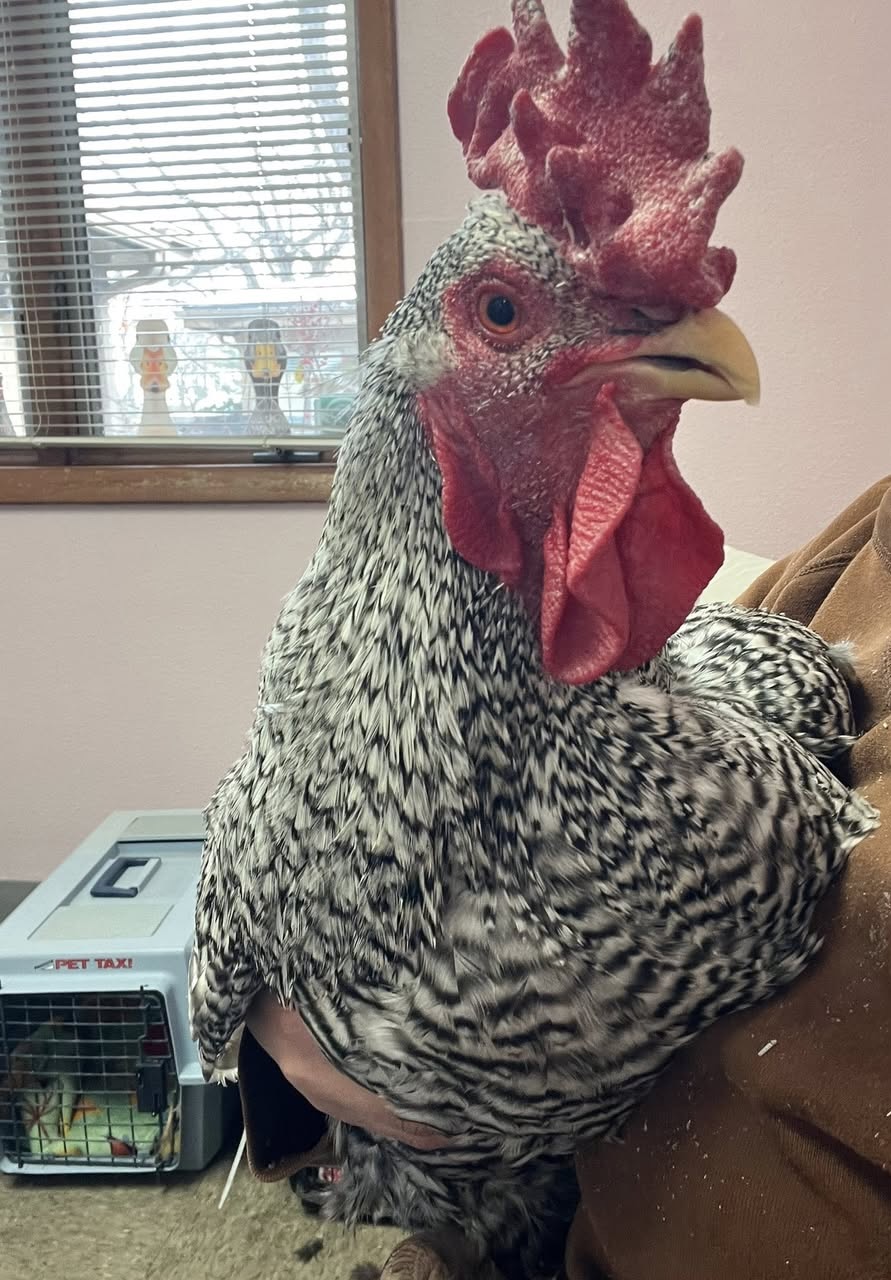
“Don’t mess with me,” he was saying. “I’m dangerous. I’m scary.” But what he meant was, “I’m afraid. I’m vulnerable. I have to act tough because I think you want to hurt me.”
Roscoe’s first weeks with us were filled with anger. He would charge across the yard any time he was out of his run, aiming for the nearest human. We thought he had a respiratory infection at first because his voice was so raspy. Discovering the crow collar hidden under his feathers was heart-wrenching, but after removing it his voice became clear and able to breathe more easily, he sang. We responded to his attacks by holding him close, rubbing his wattles, and feeding him blueberries. After just a couple weeks, Roscoe would come to us for food instead of racing after us. He tidbitted to us, offering to share his blueberries. He learned that not all humans wanted to hurt him. Some cared about him very much.
Roscoe is not young. Large breeds so commonly have heart issues as they age, and Roscoe is no exception. At a recent vet visit, X-rays revealed early heart disease as well as arthritis, and he was started on a few meds to help him truly feel his best. Since then, his personality has truly blossomed, and we are thrilled to say he has found a girlfriend here as well. Tonight as the snow blankets the ground, Roscoe is miles from the brush he was left under. He is tucked safely into his heated coop, snuggled up with his lady and a full crop.
If you have been to our sanctuary in the past couple years, or seen us at an event, you’ve probably met, and maybe even cuddled, Kalanchoe. He is the sweetest little tumbleweed and is known for pecking people’s pants until they pick him up. He loves love, and has never met a stranger. Yesterday evening, Kalanchoe began having seizures. I witnessed four of them before I was able to get ahold of our vet. He’s kind of an uncoordinated roly-poly, and at first I thought he had fallen off a perch or something and was struggling to get up. When I saw him rolling around on the ground again a few minutes later, I knew it was bad. Thankfully our incredible vet answered my desperate texts even though it was Sunday evening, and was able to help me control the seizures with meds I have on hand. He had nine that I witnessed, but likely had more before I knew what was going on.
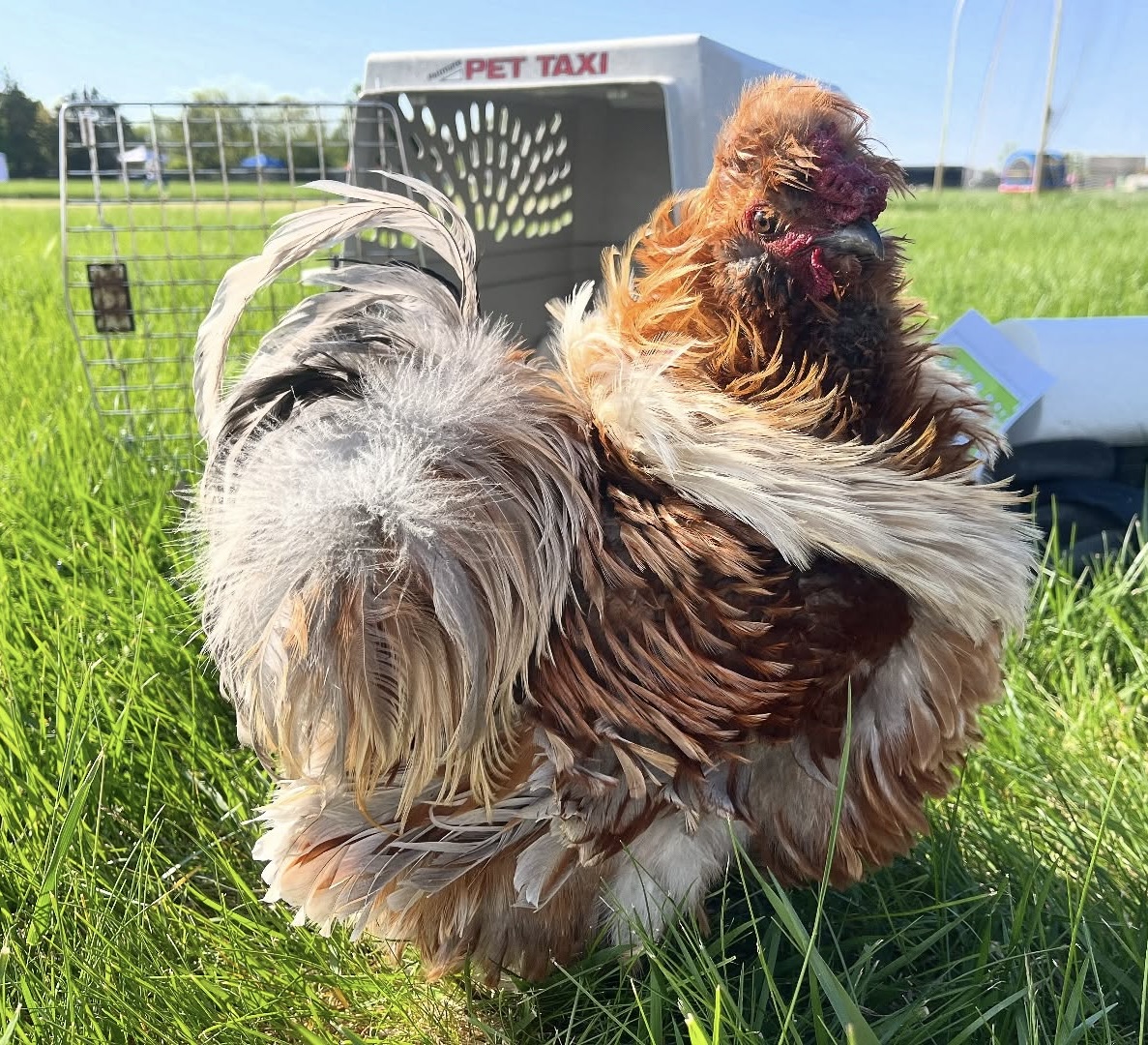
Today the vet squeezed us in for some diagnostics and honestly we still don’t have a lot of answers. His lungs look a bit patchy, his bloodwork shows a possible infection, and there’s something pushing on his intestines and gizzard. She is worried there’s a mass. We don’t really know what caused the seizures. He is sleeping next to my bed and will for the foreseeable future in case he seizes in the middle of the night. I am terrified that this isn’t going to end well for him. Today he seemed his normal and happy self. He’s eating well, pooping well, acting normally. But there’s something lurking. Please send all your best juju to this perfect boy. I tell him regularly that he has to live forever and we’re going to grow old together. He’s only two. He deserves to stick around.
Thanks to Ahimsa Safe Haven for sharing their stories and photos, used with permission.
“Saving one chicken won’t change the world — but it’ll change theirs.”


Beautiful stories. I have a huge flock in western NY and I love my boys as much as I love my girls. I’d like to know what kind of heart meds you use as I believe some of my boys might need some.
LikeLike