

Is it Murphy’s Law or do most emergencies happen at night or on the weekend when vets and services are closed? I had a dog with a knack for eating foreign objects that required surgery to extricate them. Most of his troubles seem to happen when the vet was closed, adding another whole level of stress to potentially life threatening events.
We live in an earthquake zone and most of us know we should have an emergency to-go bag packed and I’d hazard a guess that the vast majority of us feel like the ‘big one’ will not happen in our time. And from reading posts on several online farm groups it’s apparent that most of us are unprepared for all the things that may, and do, go wrong with chickens.
In the fifteen years I’ve had chickens I’ve experienced predator attacks, pecking injuries, a prolapsed vent, an egg bound hen, split beak, bumblefoot, worms, lice, scaly leg and body mites and chicks born with curled toes. I’ve also had birds that just seemed ‘off’ and either recovered, or sadly, died without a diagnosis.
So my questions to you are: Do you routinely check your chickens for parasites or injuries? Do you know what to look for? Or what to do if you find something? Got a good first aid kit?
Here are some hacks for those times when injury or illness befalls your flock.
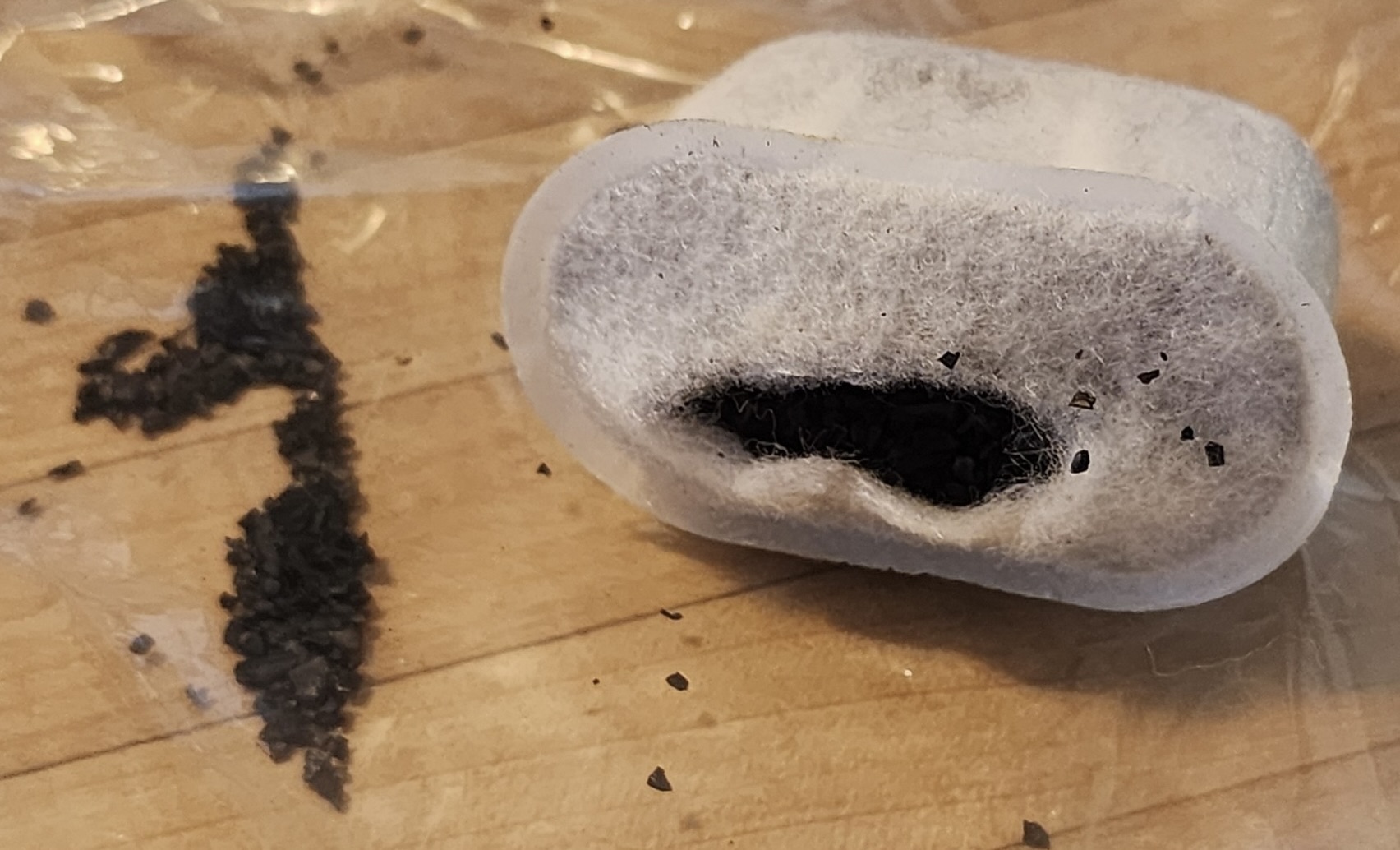
Just a little tip, if you are dealing with poisoning and don’t have activated charcoal (or it’s in pellet form like mine, and you want a smaller form to administer more easily). Your Keurig water filter refill is full of it. I cut this one open in the middle of the night.
This is your cue to have Epsom salt, activated charcoal in small form, milk thistle and n-acetyl cysteine for your chicken first aid kit when treating toxin poisoning. Having almost everything on hand in the middle of the night absolutely saved our girl. – Courtney Caldwell
Dust Baths
The first time you see a chicken dust bathing it can be a bit worrisome. Is it having a seizure? In its last death throes? Nope, just playing around in the dirt. It’s a bit counter-intuitive: you have to get dirty in order to get clean.
Chickens don’t use water to bathe like some birds, but prefer loose soil that they spread around their bodies by flapping and rolling. This activity shakes small parasites, like mites and lice, off their feathers. It also coats their feathers, which keep them clean.
Chickens need access to a dust bathing area all year long. I have two dry, covered areas with tires or metal rings that I fill up with wood ashes. Ashes are very fine and the perfect medium for dust bathing. The rings keep them from being spread far and wide.
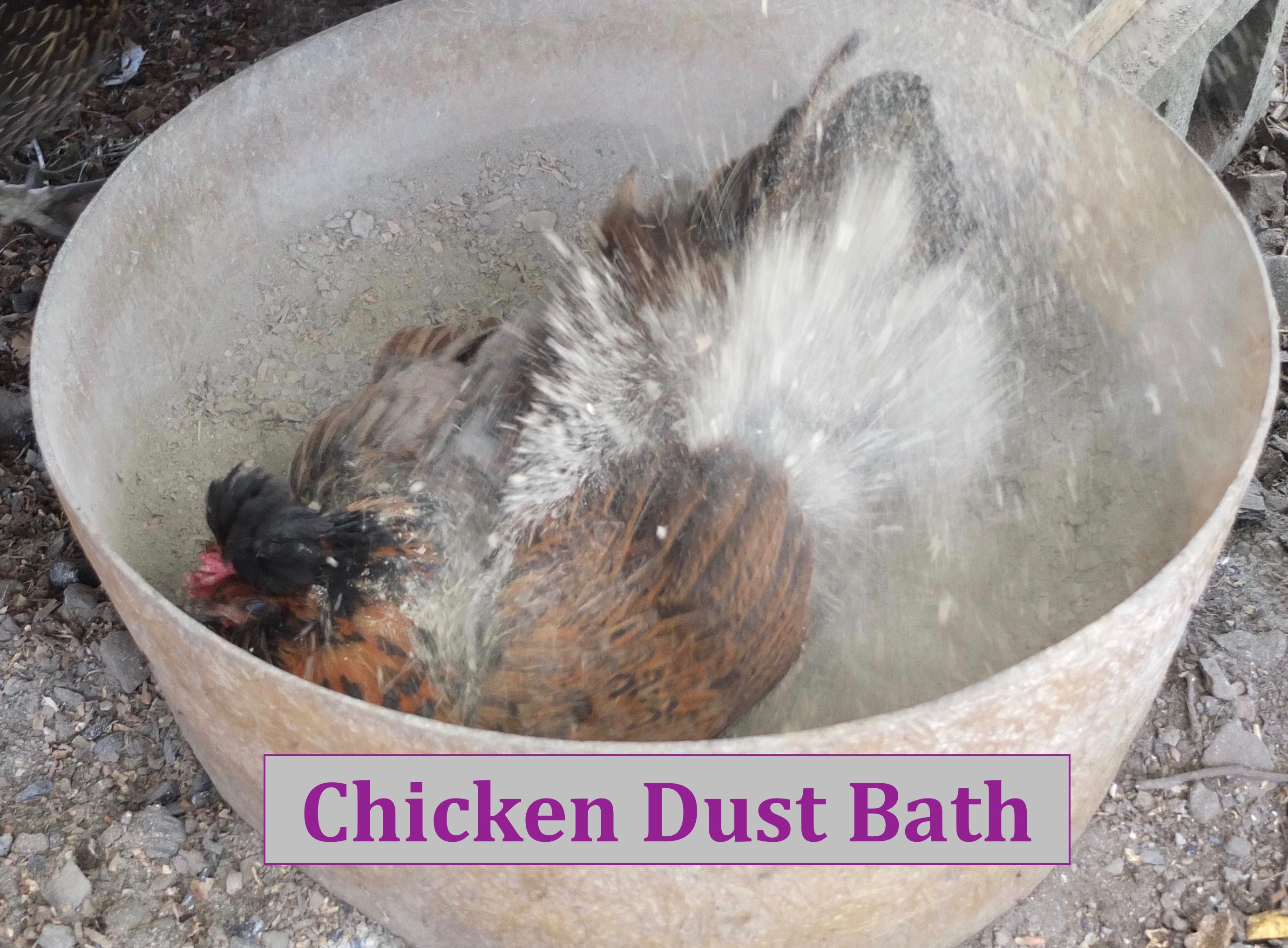
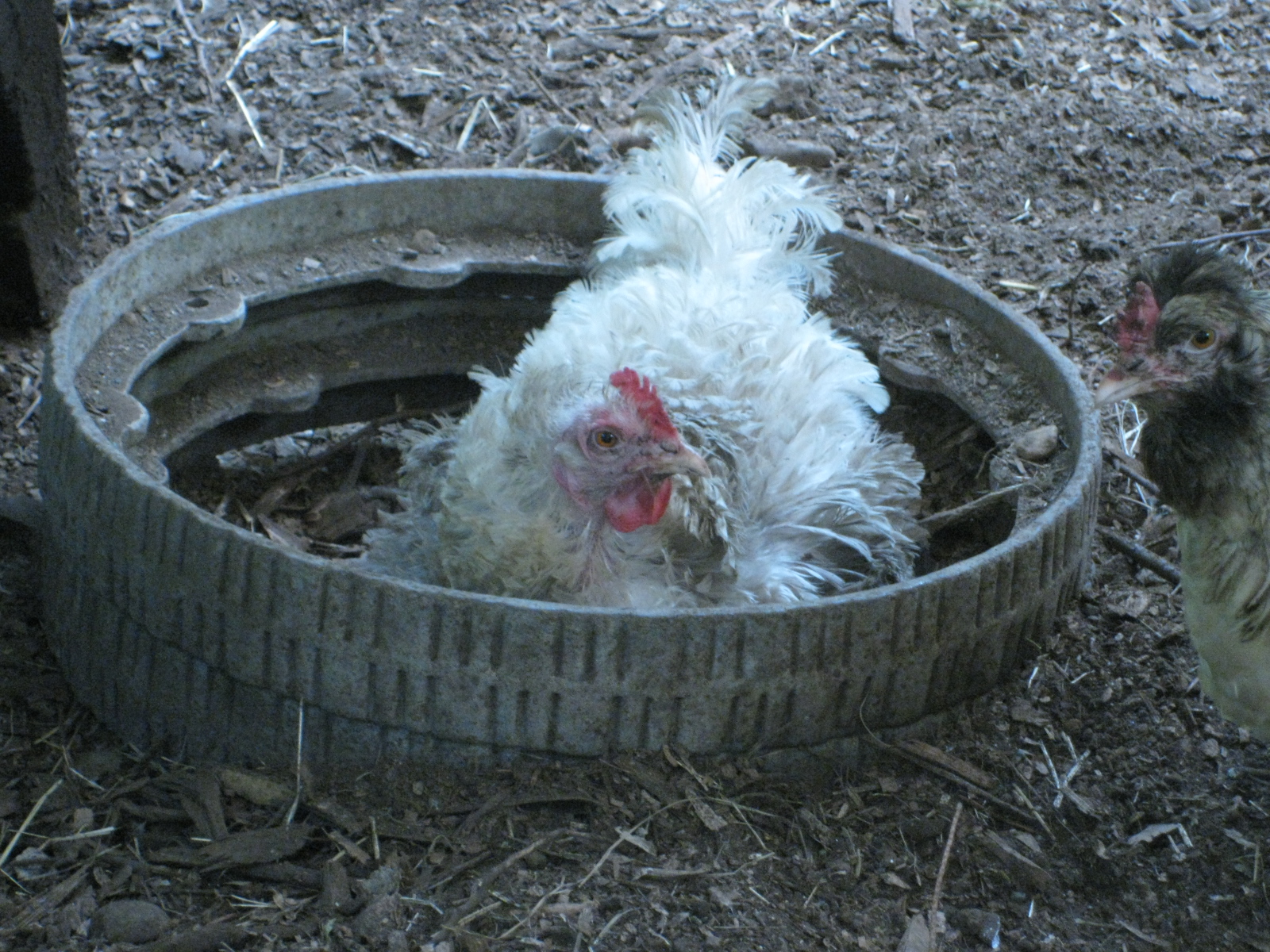
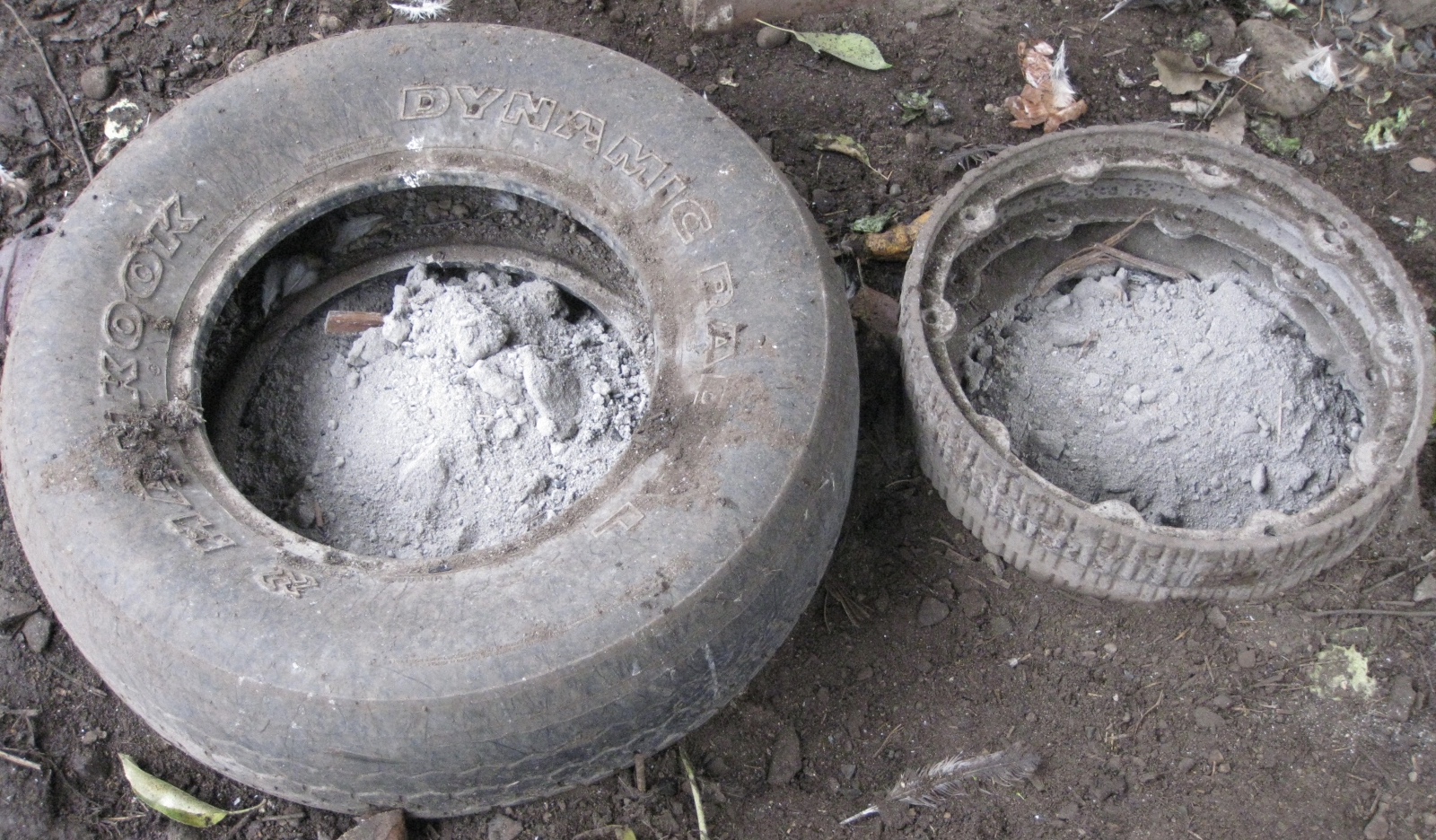
Photo credits: Bitchin’ Chickens
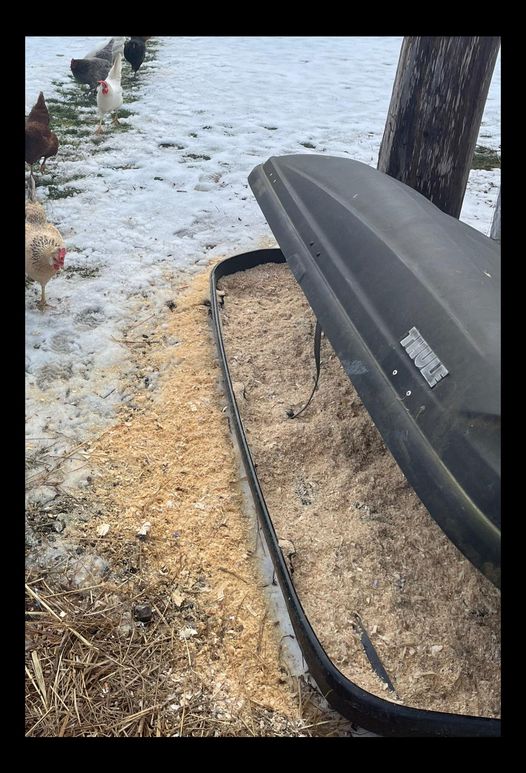
I’m currently unemployed but want my chickens to be as happy as can be. Sometimes you have to be creative when you’re poor. I wanted to give my girls a dust bath that the cats wouldn’t poop in and that wouldn’t fill up with water. This is what I came up with and they really love it. It’s a rooftop cargo holder that we’ve never used for that purpose. It opens and closes super easily and stays dry even in heavy rains. I filled it with ash, pine shavings and the dirt from their favourite flower bed that they were destroying. – Rebecca Riddell
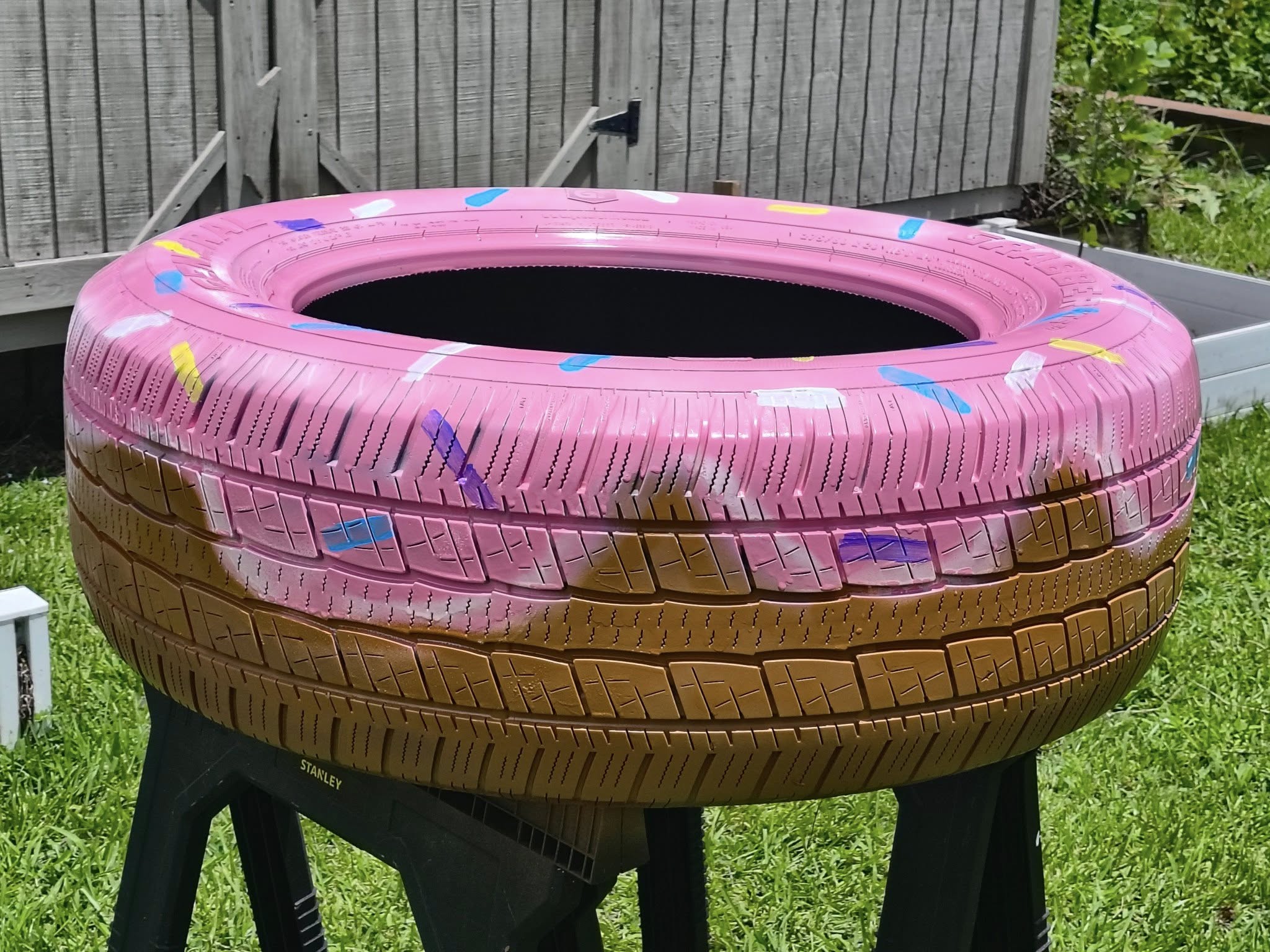
Tired of my chickens throwing the sand given to them for dust bathing everywhere so got a tire from a friend, painted it to be a doughnut and now they will have a designated sand pit that they can’t throw the sand everywhere. – Angela Belaire
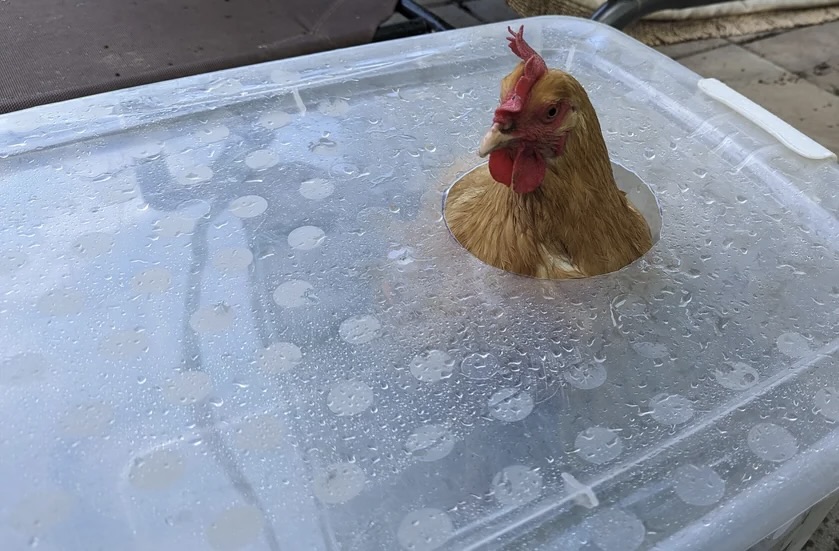
A number of conditions require soaking your bird in an Epsom salt bath: bumblefoot, vent gleet, injuries and external parasites. I use my kitchen sink but this hack allows you to soak your bird freeing your hands and preventing the patient from swallowing water.
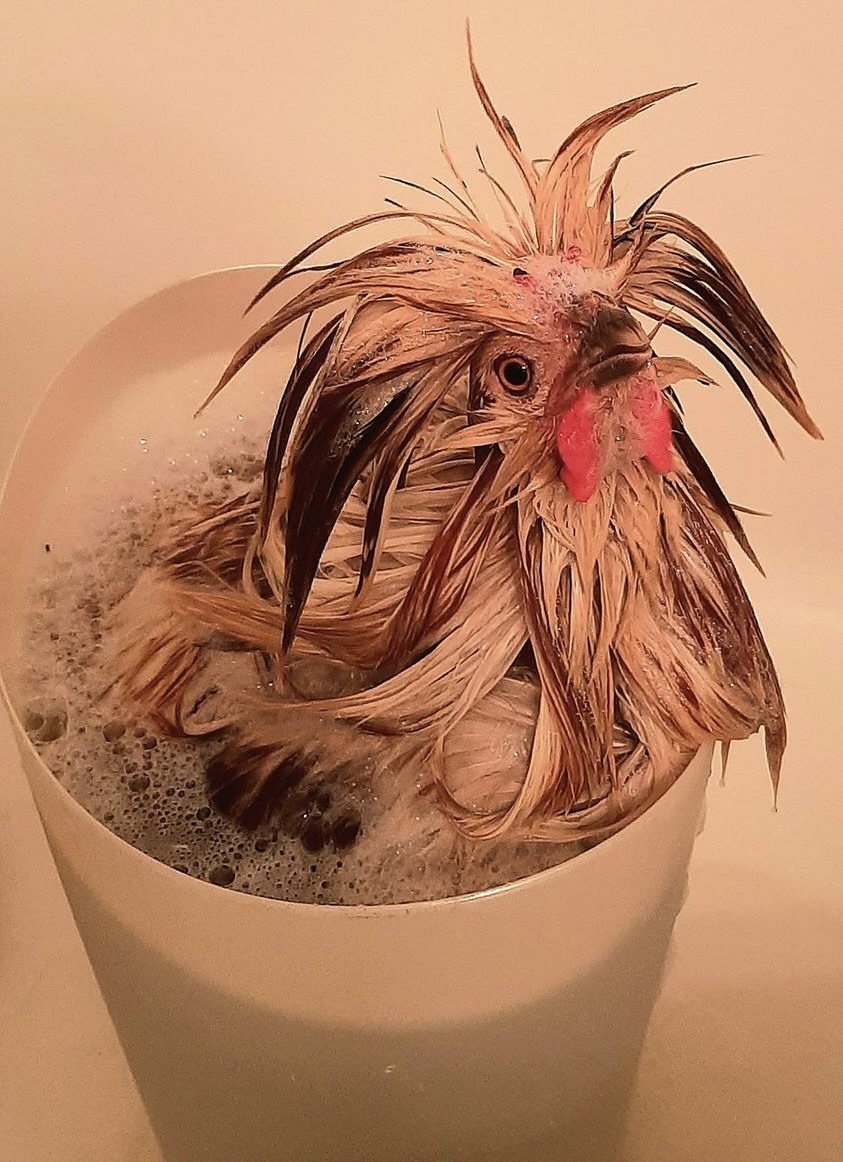
I have heard people in online groups say that Dawn dish soap baths are useless in combating lice. Here’s my personal experience using it. Because of where I live, the difficulty getting supplies and the fact that I have a sanctuary and people bring me birds in horrible condition, I always use Dawn dish soap in a warm bath as the first line of defence with severely infested birds. At least an hour soak in warm soapy water. I try to keep it as close to their body temperature as possible. I also use an irrigation syringe and wet rag to treat their head.
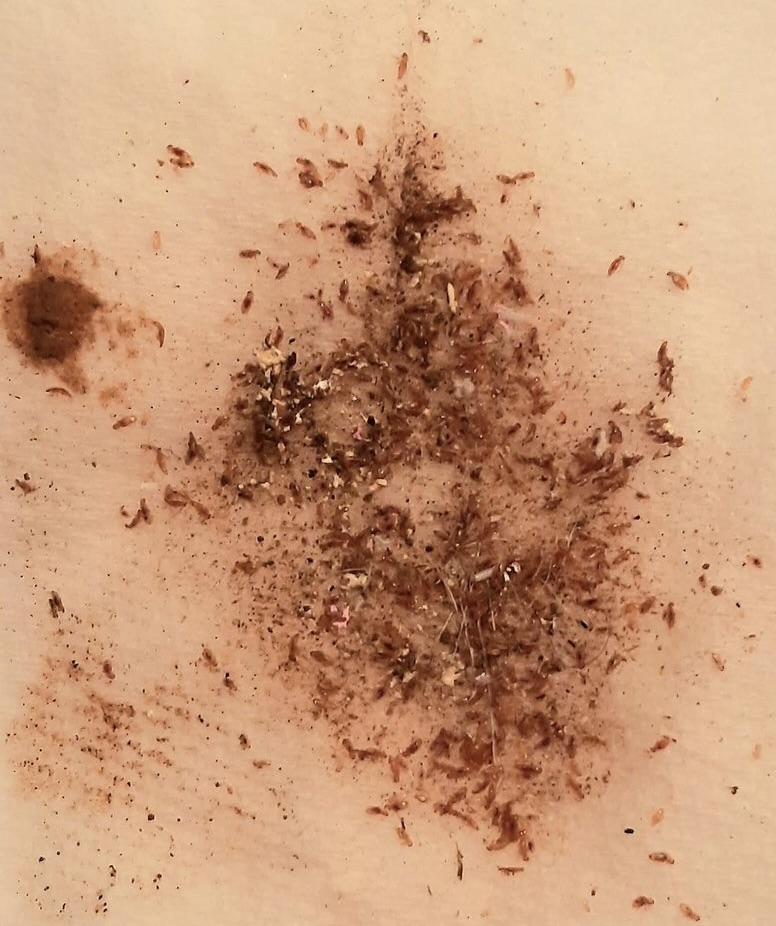
Additionally, I take a Q-tip dipped in undiluted Dawn and apply it to any clusters of eggs on the feather shafts. I have found this absolutely does make a difference. If nothing else, it helps remove the physical drain while you’re waiting on other options. It also let’s you get some high value nutrition in them before you add the stress of treating with pesticides. The photo shows the dead lice filtered out of the second rinse water. A substantial amount had already been flushed down the drain. – Carole Alden
Slings, Swaddles and Therapy Chairs
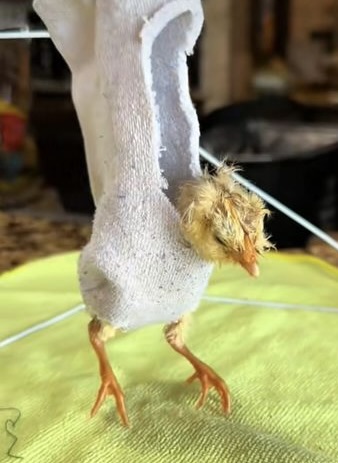
One of my chicks grew backwards in its egg and had a really bad case of splayed leg when it hatched. This chick is a trooper. My wife and I made a chick support seat/swing for it to assist in developing and correcting the splayed leg. – Eric Ouwinga
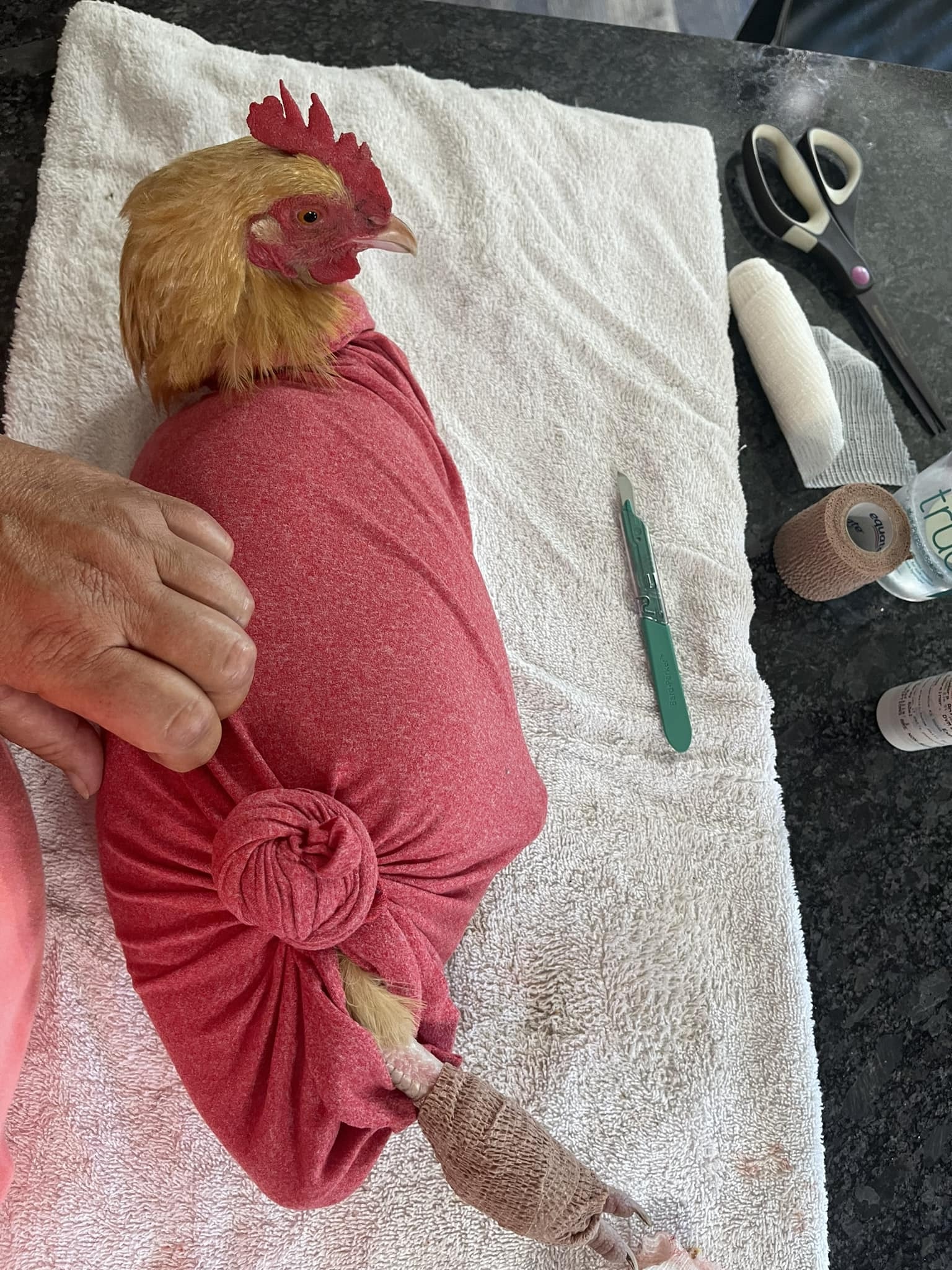
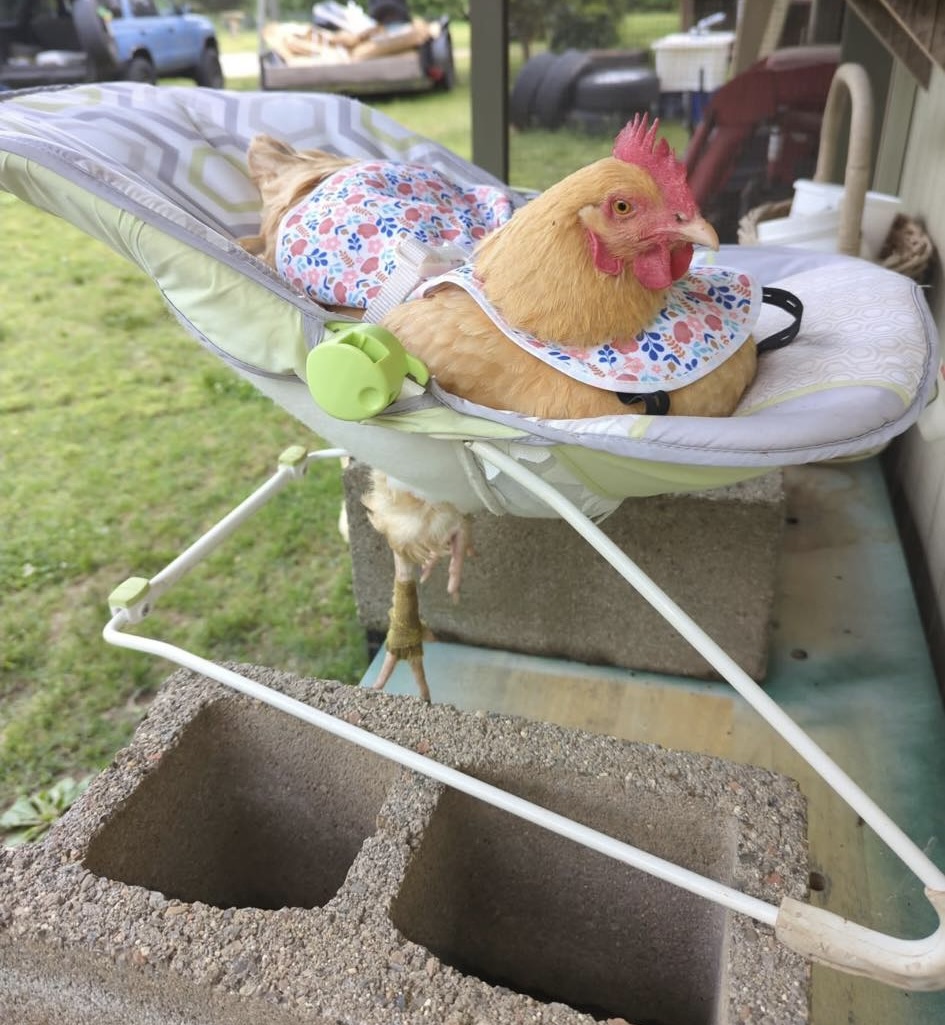
I had my first experience with a hen with bumblefoot. I had this crazy idea of cutting a leg from old stretchy leggings to hold her securely. It worked like a charm and thought I’d share the idea. Goldie is recovering well. – Linda Durkes
Thanks to everyone who shared their hacks and photos.
“Because knowledge is power — and feathers are optional.”


0 comments on “Chicken Keeping Hacks 7”