
Carotene, the golden-orange pigment that gives carrots and marigolds their sunny glow, plays a surprisingly important role in chicken physiology. From the colour of egg yolks to the strength of the immune system, carotene (and its relatives, the carotenoids) are deeply woven into the health and vitality of poultry.
What Is Carotene?
Carotenes are a group of fat-soluble pigments that serve as precursors to vitamin A (retinol) in chickens. The most common types are β-carotene, α-carotene, and β-cryptoxanthin, each capable of being converted into vitamin A through processes in the intestinal wall and liver.
In nature, carotenes are found in green plants, orange and yellow vegetables, and certain grains. Chickens obtain them primarily from feed ingredients such as corn, alfalfa meal, marigold petals, and leafy greens.
Functions of Carotene in Chickens
Vision and Eye Health
- Vitamin A derived from carotene is essential for maintaining retinal function and night vision. Deficiency can cause blindness, white exudates in the eyes and increased susceptibility to infections.
Immune System Support
- Carotenoids act as powerful antioxidants, protecting cells from oxidative damage caused by metabolic stress or infection. They enhance the activity of white blood cells and improve the bird’s overall immune response.
Reproductive Health
- Adequate carotene and vitamin A levels are crucial for fertility and embryo development. Hens deficient in vitamin A often produce infertile eggs or embryos with deformities.
Skin, Comb, and Feather Pigmentation
- Carotenes contribute to vibrant coloration in the comb, wattles, beak, and feathers. Healthy pigmentation is often a sign of good nutrition and strong immunity. Pale or dull skin and combs can indicate dietary deficiencies.
- One of the most visible effects of dietary carotenoids are rich golden egg yolks. While xanthophylls (like lutein and zeaxanthin) are the main drivers of yolk colour, β-carotene contributes to the depth and tone of pigmentation. Chickens on pasture often produce darker yolks because they consume carotenoid-rich plants.
Antioxidant and Anti-Stress Properties
- Carotenes help neutralize reactive oxygen species generated during heat stress, rapid growth, or disease challenges. This can reduce tissue damage and improve performance in both commercial and backyard birds.
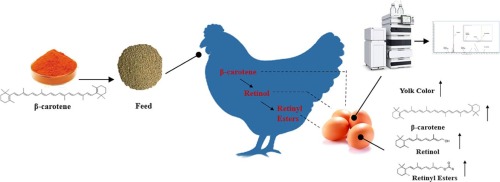
Image credit: Food Chemistry
Signs of Carotene (Vitamin A) Deficiency
When chickens don’t get enough carotene or preformed vitamin A, you might see:
- White plaques or crusts in the mouth or eyes
- Dull, rough feathers
- Poor growth and low weight gain
- Decreased egg production or fertility
- Weak immune response leading to secondary infections
Sources of Carotene For Chickens
- Green Forage: Alfalfa, kale, spinach, dandelion greens, and clover
- Grains and Supplements: Yellow corn, carrots, pumpkin, and marigold meal
- Pasture Access: Free-ranging chickens typically have higher carotene intake and better yolk colour than confined birds
- Feed Additives: Commercial carotenoid supplements (like lutein or canthaxanthin) are sometimes added to enhance pigmentation or immunity, especially in layer operations
Balancing Carotene Intake
While carotenoids are beneficial, excessive supplementation can lead to inefficient vitamin conversion and, rarely, pigment deposition in tissues. Moderation is key. Diversity in feed ingredients usually provides an optimal balance.
Backyard keepers can safely boost carotene intake through natural foods: toss in leafy greens, grated carrots or pumpkin. Your chickens will love it and you’ll be happy with their deep coloured egg yolks.
Carotene is more than a cosmetic pigment – it’s a cornerstone of chicken health and vitality. By supporting vision, reproduction, immunity, and egg quality, these golden compounds help chickens thrive from the inside out. Ensuring an adequate supply of natural carotenoids is one of the simplest ways to keep your birds bright-eyed, glossy-feathered, and resilient.
Citations
- Surai, P. F. (2012). Carotenoids in Avian Nutrition and Embryo Development: Absorption, Utilization and Function.Poultry Science Journal, 68(3), 351–374.
- Leeson, S., & Summers, J. D. (2001). Nutrition of the Chicken. 4th ed. University Books, Guelph, Ontario.
- Karadas, F., Grammenidis, E., Surai, P. F., Acamovic, T., & Sparks, N. H. C. (2006). Effects of carotenoid supplementation on egg yolk coloration and immune function in laying hens. British Poultry Science, 47(4), 561–566.
- McGraw, K. J. (2006). Mechanisms of carotenoid-based coloration in birds. Journal of Comparative Physiology B, 176(7), 713–722.
- Olson, J. A. (1999). Carotenoids and vitamin A. American Journal of Clinical Nutrition, 71(5), 1320S–1328S.
“Serious science. Not-so-serious chickens.”


0 comments on “The Role of Carotene in the Physiology of Chickens”