
If you’re like me, you look forward to crawling between cozy sheets for some shut eye. For much of my life I’d been a decent sleeper and able to power nap, waking up feeling refreshed. I worked the afternoon shift – 3pm-11pm – for ten years and then, two decades ago, switched to getting up at 6am for my commute via ferry. As I age I have lost the ability to drop off easily and sleep through the night. That’s a concern, not just because I often wake up tired, but because sleep is integral for our physical health. We know that sleep disturbances in people are associated with diabetes, heart disease, dementia, weight gain and immune system issues.
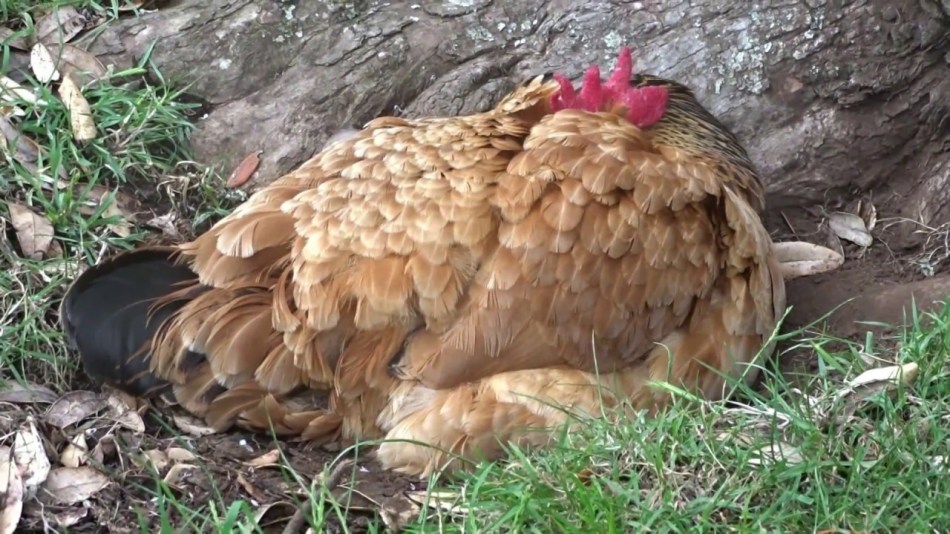
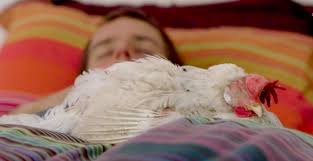
In observing my birds I can see they sleep in different ways: standing on the roost bars, sometimes with their necks lowered; in a ball, with head under wing; or sprawled on their side. I see folks who hold their chickens that seem content to fall asleep on their back – that’s a real sign of trust, as they are totally vulnerable to potential danger.
REM (rapid eye movement) sleep occurs in mammals and birds. For us, it can last for a few minutes to an hour, while just a few seconds in birds. This is the state in which we – and every other REM sleeper – dreams. I know when my dog is experiencing REM sleep because she starts to whimper, her eye lids flicker and legs move wildly. I imagine she’s thinking of swimming or running. Apparently chickens dream as well, probably about food and dust bathing. We might think the brain has shut down, but it’s working just as hard when we are awake as when we’re sleeping.
All your experiences of the day are consolidated into memory during deep sleep (slow wave sleep). This type is dream free and allows the brain to rest. When I don’t get enough of it I sleep longer and more intensely the following night. The same is true for chickens, who are able to catch up by sleeping more deeply later on. SW sleep can last for hours in people, while chickens take short power naps. As prey animals they can’t afford to be out of commission for lengthy periods of time.
(Animal Justice) 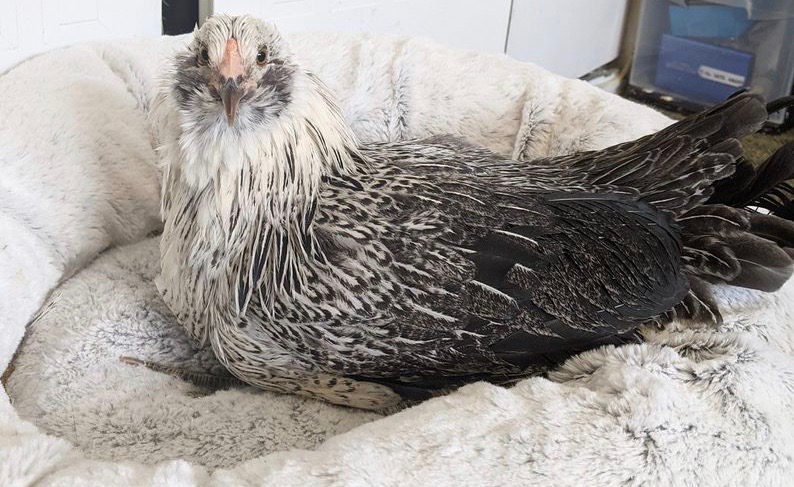
(Yelisia Nicole)
Folks might refer to chickens as ‘bird brains’, but they have relatively large brains in order to learn language, map their territory and recognize the members of their flock.
One of the cool differences between us and chickens is they have an additional type of sleep: uni-hemispheric slow-wave sleep (USWS). A chicken’s brain is divided into two hemispheres: each eye is connected to the opposite hemisphere, so they can actually sleep with one eye open and the other closed. This allows them to be both awake and asleep at the same time: the brain recharges while also remaining alert for predators. When they are sleeping in a more risky situation, they will increase the proportion of their sleep with one eye open and half their brain awake.
Do you have a coop cam? I haven’t set mine up yet, but when I’ve watched night time footage from other folks’ coops I’m always interested in how much they move around and jockey for position. You can tell a lot about the hierarchy of your flock based on who sleeps where. If you have staggered roost bars, birds with the highest status will be on the top rung. If your roosts are all on the same level those who are lower on the pecking order are on the periphery.
When birds sleep in a row the ones who are most protected (i.e. in the middle) can sleep with both eyes shut, while those on the edges are more alert for potential danger and need to sleep with one eye open. At some point during the night they swap positions: there are sentries on rotating watch duty, so by morning everyone gets a good sleep. This strategy ensures the overall health and safety of the flock is maintained.
So when does sleep start? A study from McGill University found that unhatched chicks go through sleep cycles. Although they are actively growing and moving the chick’s fetal brain would consume too much oxygen if it was awake for long periods of time. Their brains slow as a way to conserve the resources they have available.
The researchers found that the chicks’ brains were fairly inactive until @day 17 of their development inside the egg. The embryos didn’t respond to loud sounds but, interestingly, they could recognize the sound of a hen making a danger call.
Chicks, like human babies, require a lot of sleep. Those raised in brooders, without the influence of a hen, tend to have unsynchronized resting patterns and may be sleep deprived due to constant disruption from other chicks.
Less time being exposed to light – either natural or artificial – has been connected to better sleep, decreased mortality and better feed conversion.
(HomesteadSlackers) 
(BYC)
So now you know a little more about sleep what does this mean?
- Chicks need sleep, and lots of it. They do best raised by a hen with hatch mates of the same age. If placed in a brooder it is better that they are with chicks of the same size as disruptions in their sleep can affect health outcomes.
- Sleep disturbances contribute to stress and lowered immune system function.
- For those that consider using supplemental lighting throughout the winter to improve egg production I would advise against it for two reasons: forcing hens to lay more than they would without lighting often predisposes them to reproductive tract issues and, as discussed, chickens need uninterrupted sleep. Being under lights does affect the quality of their sleep.
- Think about the placement of your roost bars and how that can promote healthy flock dynamics. Mine are all on one level with plenty of space so there isn’t competition.
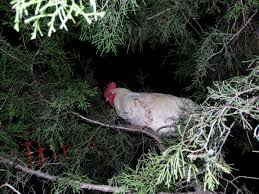
- Chickens’ natural instinct is to roost as high as they can to avoid predators. If they are sleeping in the nest boxes it might be because the nest boxes are too low or there is an issue in the pecking order.
Credits: Acta Agriculturae Scandinavica; New Scientist; Your Chickens. Featured Photo: Edwin Yang
 Bitchin' Chickens
Very interesting and informative . Thanks for sharing your expertise & knowledge on this topic .
LikeLiked by 2 people
Good Morning,
Can you clarify the last sentence in your blog. I have recantly moved my chicken coop set up and two of my hens want to sleep in nest boxes, one being at floor level and another out in the chicken run. Every evening I have to pick them up and place them on the roost. Any suggestions on how to re-train them to go to the roost?
LikeLiked by 2 people
Chickens are creatures of habit, they are territorial and don’t like change. If you’ve moved something that might have disturbed them. When I have new birds or teenagers that want to sleep anywhere but the roost bars, I pick them up and put them there. That might take a bit of time, but they will catch on. The only proviso to that advice is to be aware that when birds are sleeping on the floor or in the nest boxes it can be a sign of changes in the pecking order (i.e. bullying or pecking at night) or illness.
LikeLiked by 2 people
We had our chickens growing up in the house (yes, you heard right the house we didn’t know that might not have been a good idea at the time). When we built the chicken coop all the chicks wanted to sleep in the boxes but after a little while they slept on the roosting bars
LikeLike
You’ve outdone yourself with this one. I am so intrigued by the cross wired brain. I know what it is to sleep on high alert & it’s not nearly as restful as I need. You can get through anything for a short time. We are incredibly resilient after all. I would hate to think of my chickens having to experience this on a regular basis.
I had already decided not use lights to get them to lay in the winter and I had planned on doing two roost bars at different heights, but now I think they will both be on the same level. The more I read about it, the more sense it makes.
Related question: what do you feel is an appropriate height roosting bar for a large/ heavy breed chicken ? There is so much conflicting information out there ! I want them to be able to get high enough to feel safe, but am worried they will hurt themselves getting down. I have a pile of 2x2s sitting around. I could make a ladder for them to reach higher roosting bars…… I just keep hearing that the hens will jump or fly down which could lead to injuries such as broken bones or bumblefoot.
Ok, this is becoming a novella. Any advice on the height of the bars would be appreciated. Thanks, Claire !
LikeLiked by 1 person
There are several factors that affect roost height. You want your roosts to be higher than your nest boxes or the chickens will sleep/poop there at night. They tend to use ramps to go up to the roosts, but fly down. How much open floor space is there? If it’s cramped they can hit walls or other structures. I don’t have a lot of unobstructed floor space but just pad it well with shavings and have never had an issue.
LikeLike
Hmm yes. Good points. Thank you for taking time to consider the issue. Except for the roost bars (which are not installed yet) there is nothing but floor space. Right now I have painters tape on the floor marking the area where they will generally be.
Imagine an 8 ft by 8 ft by 8ft box. The human door is on the front of the coop, that door opens out – not in. On the right hand side (when you’re looking into the coop) , at ground level, are the openings to the nesting boxes which are actually outside the coop.
Directly in front of the human door (so the back wall) is the area for the roost bars. The left hand side will have a pop door to another run.
I would have to measure it to be sure, but I believe there is about 5ft of open space from the human door to the first roost bar. At least where I envision the first bar to be. And the space is eight ft wide.
Does that help ? I hope I haven’t over explained. I really do appreciate you getting back to me. Thank you !
LikeLiked by 1 person
That’s actually quite a bit of floor space for only 8 birds. Just make your roost bars a bit higher than the nest boxes. Some people block off the nests at night to train their birds to not sleep there.
LikeLike
Hi Claire, thanks again for taking the time. I wanted them to have a decent amount of space, just in case they ever needed to be confined to the coop for some reason. Yes, I will definitely make sure the bars are higher than the nesting boxes.
I believe the nesting boxes are 14 or 16 inches high. So, if I put the roosting bars at 3 or 4 feet high, that should work?
Does this ever get annoying to you? Newbies like me must be forever bending your ear! I’m just trying to do the right thing. I know that if something doesn’t work, I can change it, so I’m trying not to over think things, but I almost can’t help it. People that have been keeping chickens for a long time tend to be confident about the proper way to do things. The problem is, the advice isn’t always the same, which leaves me wondering who’s right?
Maybe, on some things, there isn’t, only one RIGHT WAY, but the way that works best for the chickens in their particular environment.
LikeLiked by 1 person
That should work. And no, it doesn’t get annoying. I’d rather help folks with set up or prevent issues before they occur, than after the fact. Keep your questions and comments coming.
LikeLike
Thanks so much. You’re the best! I’m still working my way through all your posts, little by little. I really have learned so much.
BTW, we finished getting the siding on the coop today and got most of the trim work done too. Next up, windows! We’re getting so close to being done. It’s pretty exciting. I appreciate your encouragement.
I wonder if there are any books you would recommend on chicken keeping? I have a few, but am always on the lookout for more.
LikeLiked by 1 person
Are you documenting your coop build with photos? Check out Gail Damerow’s books on chicken care.
LikeLike
I sure am. Every time we make a little progress I take a few pics.
Oh yes, I have her Storey’s Guide to Raising Chickens & was thinking about getting the Chicken Health Handbook, I believe it’s called? I’ll go ahead & order that one and reread the first one.
I’ve been showing my husband some of the coop posts you’ve made. He’s pushing for a poop board now !
LikeLiked by 1 person
You’ll appreciate the poop board.
LikeLike