
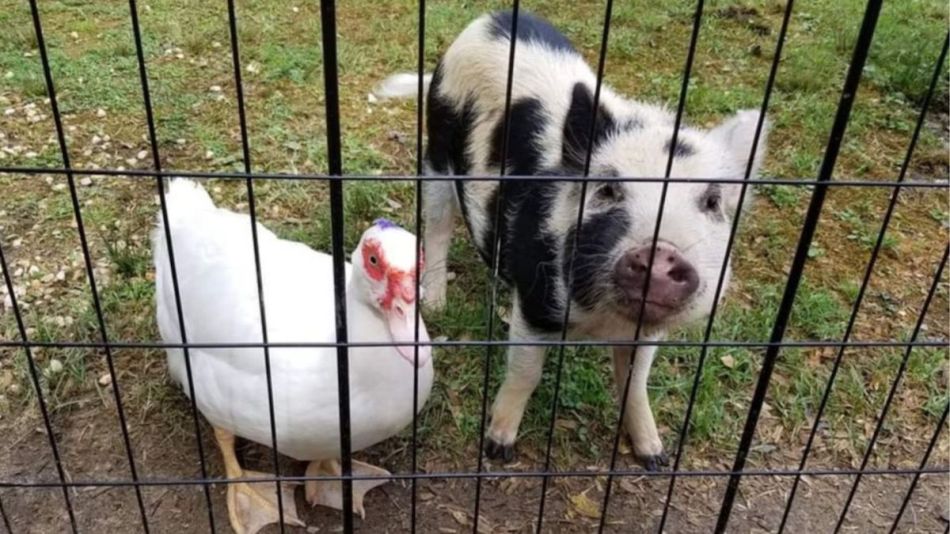
One of my followers, vet tech Debra Watt, periodically sends me DIY necropsy photos or questions for my mentor Dr Vicki Bowes. I was able to show Deb’s photos and notes to Dr Bowes for her diagnosis. In this case, it confirmed Deb’s suspicions of what killed her duck.
I was originally going to include this story as part of my series – done in partnership with Dr Bowes – of avian pathology cases, but felt I had enough material for it to be a stand-alone case. Deb does a good job of an at-home necropsy and provides us with detailed notes that help support a diagnosis.
Duckwheat, Muscovy duck, 7½ years old
Duckwheat was my only duck in a flock of chickens. She was still eating normally. Her egg laying decreased this year and the last few eggs were soft shelled/rubbery right before beginning molt in early September. As in previous molts, I let her be to decrease any stress.
Day 1: I found her sitting in a corner of the coop with her head tucked under one wing. I offered her some scratch as a treat, which she ate.
Day 2: Duckwheat was lying on the coop floor, with slight bruising around one watery eye. I put her in my sick bay coop located in a climate-controlled building and put a compress on her eye. She drank, but had no interest in food. I gave her 2 mls of Poultry Cell (nutritional supplement).
I also gave her 1 ml of Metacam (pain management) and some dried mealworms in her water, which she ate and actually looked a bit brighter. That evening I gave her 0.5ml Metacam. Her poop was dark green/black. No parasites were found in a fecal float test.
Day 3: Duckwheat died.
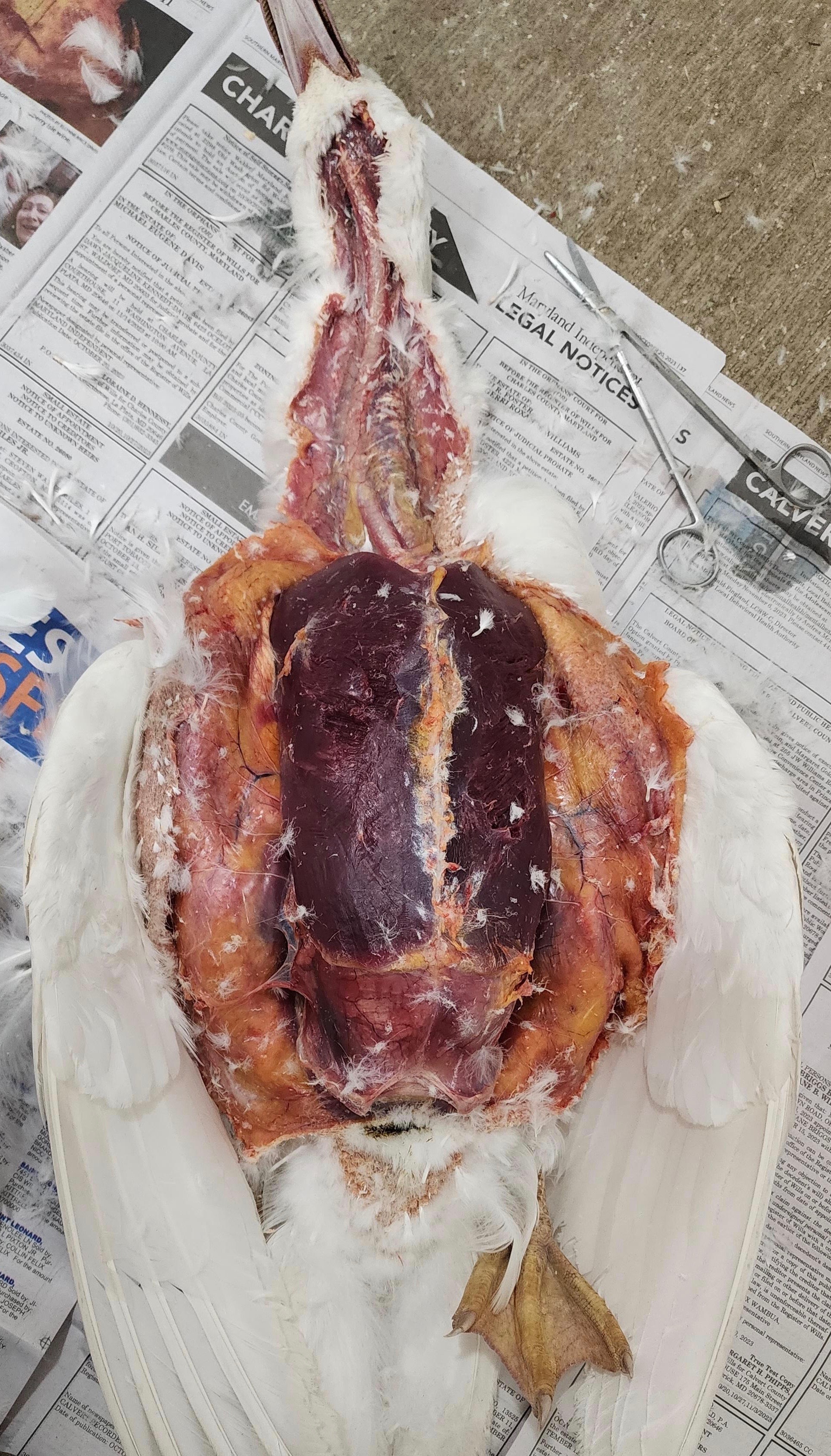
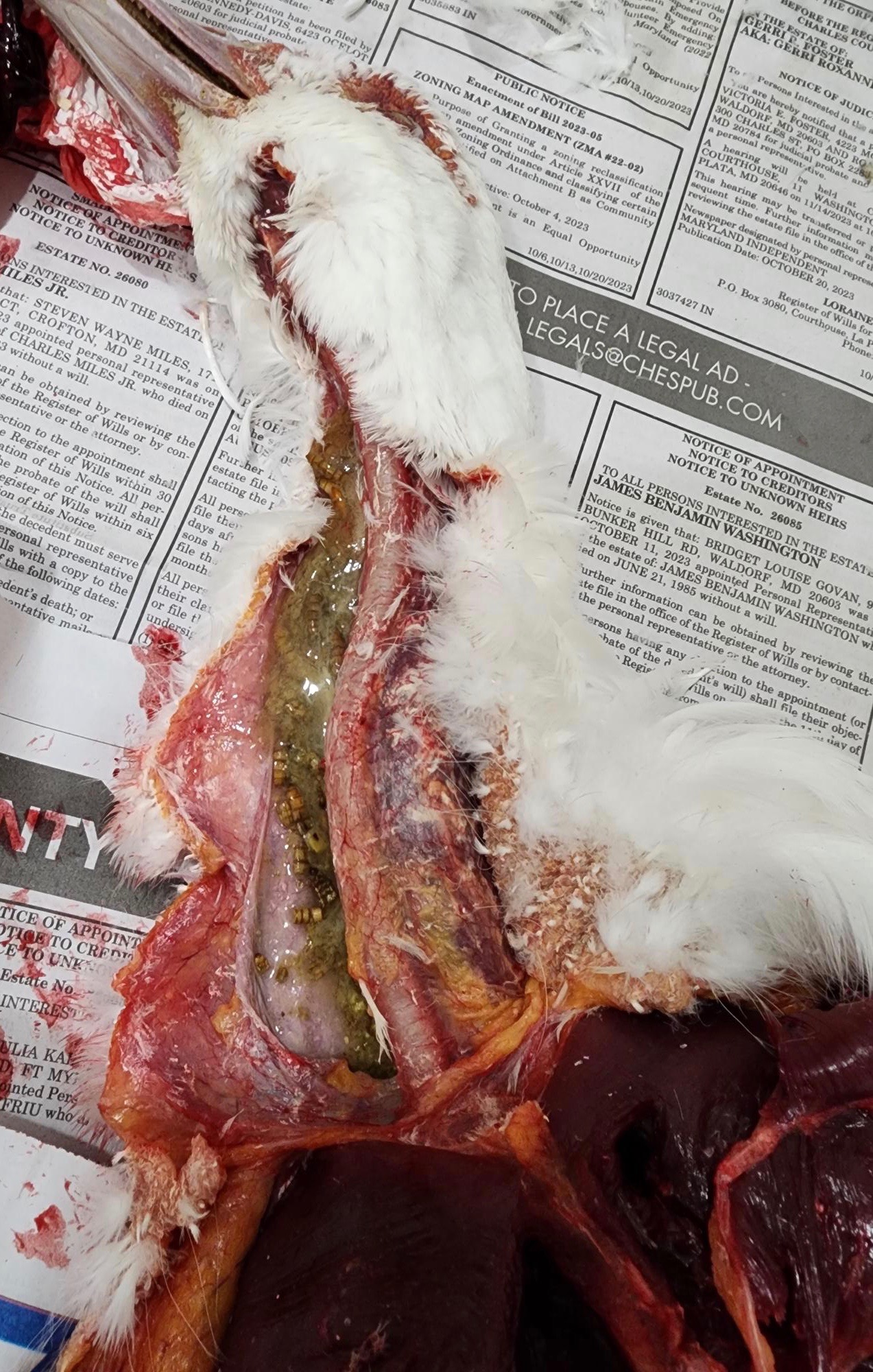
I did a DIY necropsy. Of note, her intestines were stuck together like glue. I think she may have had gout and am concerned that her diet contained too much calcium.
Diet: Nutrena NatureWise 16% protein pellet, Calcium min 3.70 max 4.70 and/or depending on product availability, Nutrena NatureWise All Flock 20% protein with Calcium at min 1.40% max 1.90%
In early spring during numerous molts, I’d add Nutrena NatureWise Feather Fixer 18% protein with calcium at min 3.25, max 3.75
Calcium supplements were very hard to come by for a couple of years. I offered a product called oyster shell but it wasn’t real oyster shell and they didn’t like it. Around April/May of this year, Manna Pro oyster shell became available. They eat it like candy. IF she consumed a lot, could too much oyster shell cause this?
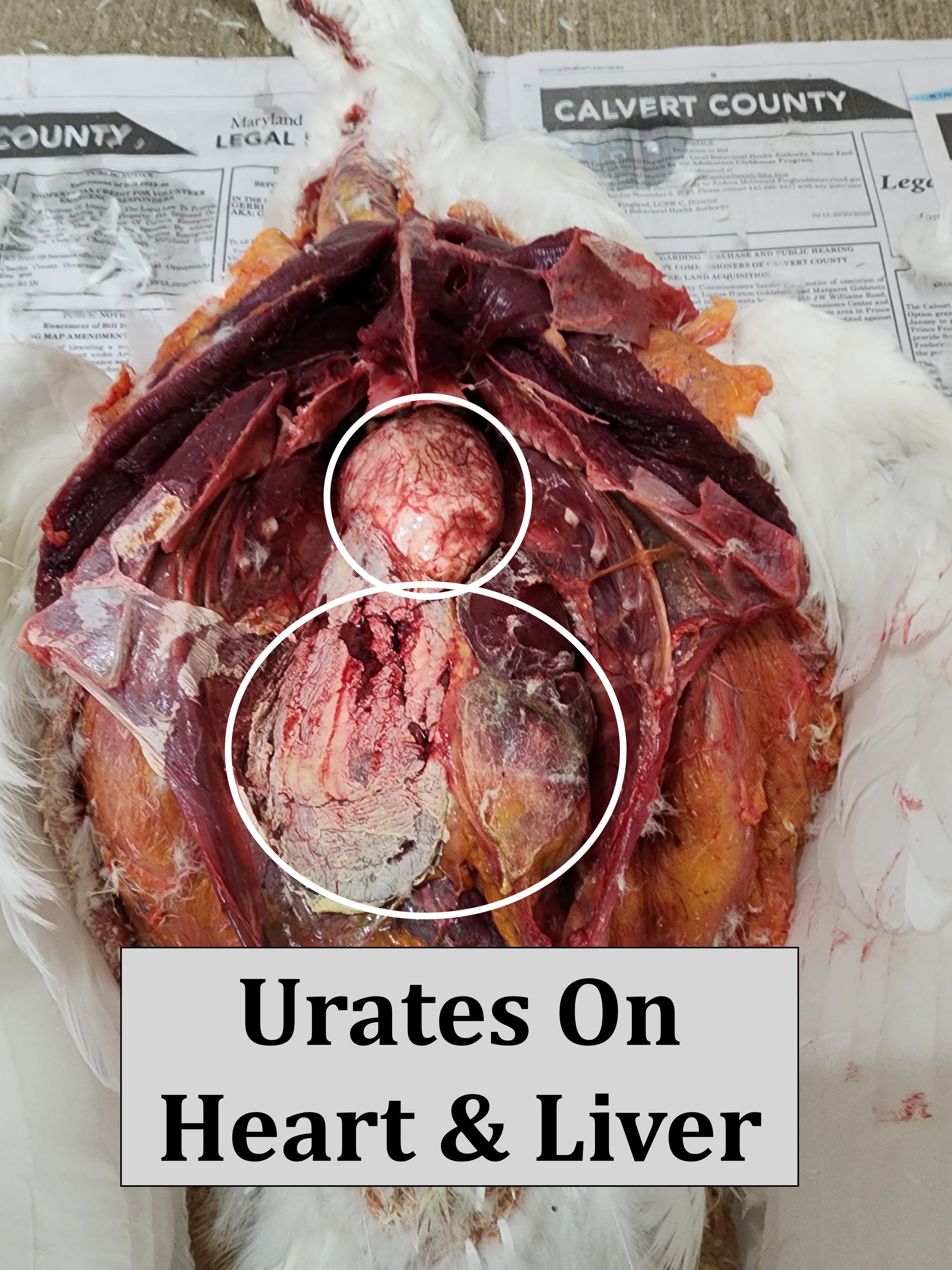
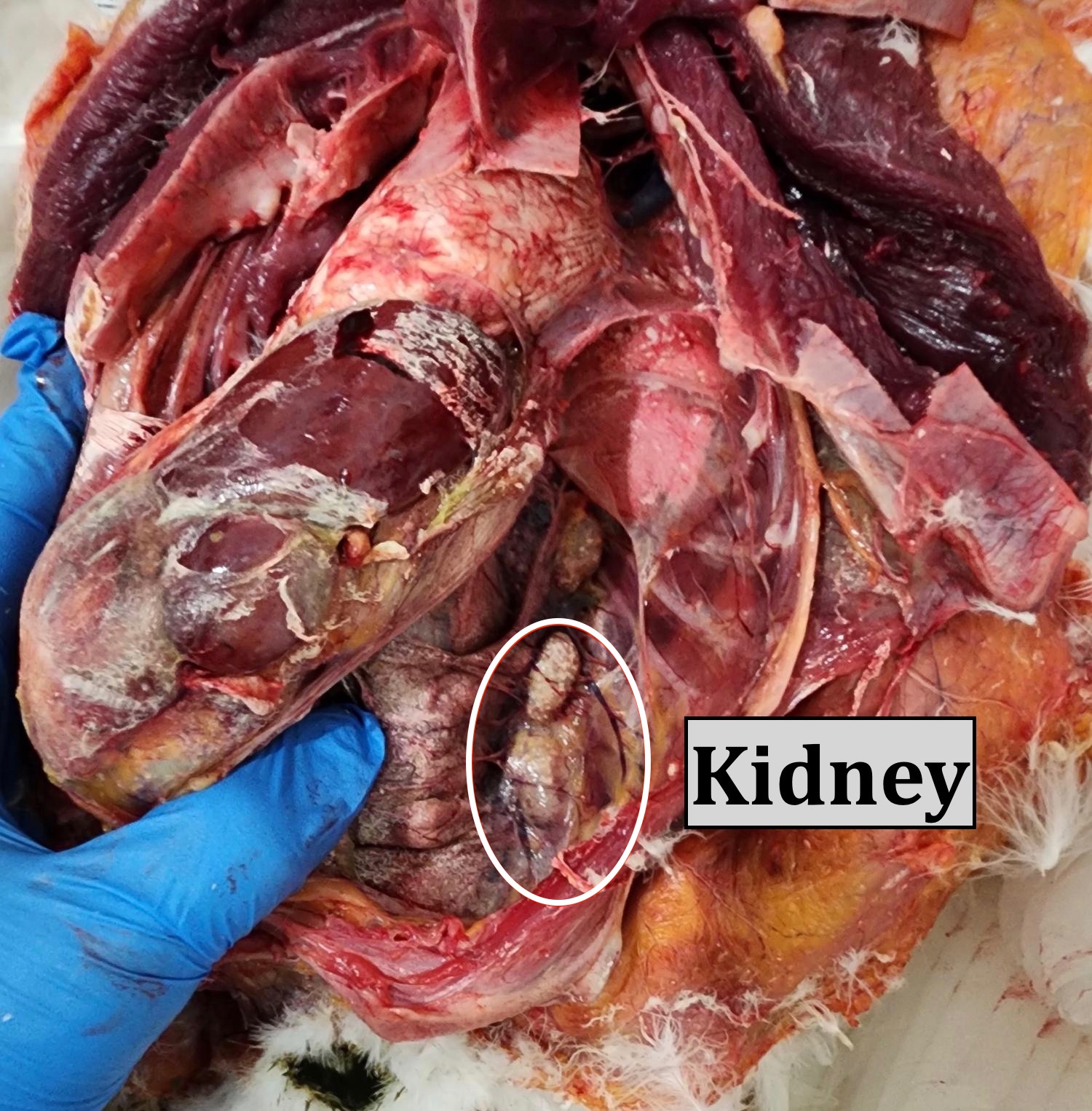
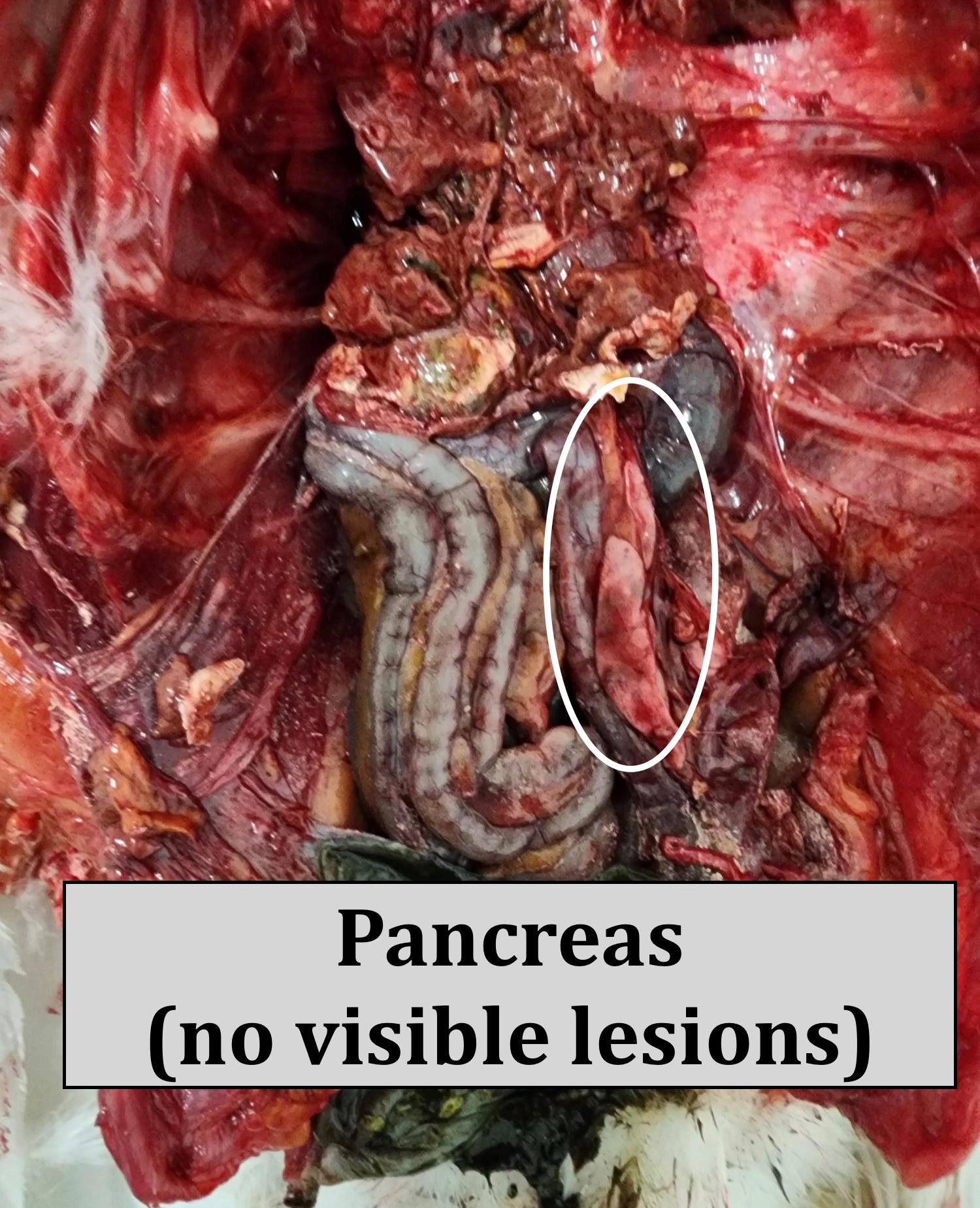
Dr Bowes: There are urates (wrinkly, chalky white substance) on the heart, kidneys and both lobes of the liver. There were also urates on the intestines, which were balled together due to scar tissue. The lungs and pancreas appeared to be normal. This is a chronic case of visceral gout, which could be caused by high rates of calcium in the diet (especially if the bird isn’t laying), but more likely by dehydration or ingestion of nephrotoxic agents like glycol phosphate (weedkiller). I am curious if her footpads were normal. If her joints were swollen it would indicate the articular form of gout. Bumblefoot can cause mobility difficulties accessing water. The inside of her skin is dark. Did it feel tacky as well? If so, that’s another sign of dehydration.
Deb Watt: The only time she didn’t have access to water would be overnight while in the coop. Duckwheat was never bullied. She was top dog among the chickens. She had a makeshift pool for daily swims with frequent water changes; at least every three days. Her feet and legs looked fine at necropsy. How long ago did this start? I don’t have a lot of experience doing necropsies on ducks, but her skin did feel stickier than the chickens I have worked on.
Dr Bowes: In young birds, dehydration can lead to gout in as little as 3-4 days. Ingestion of glycol phosphate can cause kidney damage in that time as well. This bird appears to have developed these symptoms over a longer period of time (i.e. a number of weeks).
What is Avian Gout?
Kidneys are vital organs with diverse metabolic and excretory functions: maintaining the chemical composition of body fluids; removal of waste and toxic products; regulation of blood pressure and conservation of fluids and electrolytes.
Uric acid, a waste product from protein breakdown, is produced in the liver and is the final product excreted from the kidneys into urine. Birds don’t urinate separately like mammals, but pass uric acid in a semi-solid form appearing as the white cap on poop.
Gout is the result of either the production of too much uric acid or, more commonly, decreased kidney function enabling excess uric acid to cause damage to various internal systems. Birds with impaired kidneys may not be able to get rid of uric acid as efficiently, leading to a buildup in their blood and uric acid deposits within the joints and in visceral organs or other tissues. Over time, these deposits will grow to form masses of uric acid crystals. The acid itself isn’t toxic but the resulting crystals cause damage – sometimes severe – to kidneys, heart, lungs, air sacs, intestines and joints.
Visceral Gout: uric acid crystals collect along the surface of internal organs and other sites within the body. A necropsy would reveal white chalky deposits around the heart, kidneys, gizzard, intestines, air sacs and liver, which damage the kidneys and impair their functioning. This is the most common form of avian gout and can affect chickens of all ages, including very young chicks.
Articular Gout: accumulation of urates in joints, ligaments and tendons, including the toes of the feet. Usually not found on it’s own, but in birds who also have visceral gout.
Many thanks to Debra Watt for sharing her story and necropsy photos and to Dr Bowes for interpreting the photos and confirming the diagnosis of visceral gout.
 Bitchin' Chickens
Thank you, Claire. And thank you to Dr. Bowes for educating us along the way of trying to better ourselves in caring for our flock members.
LikeLiked by 1 person