
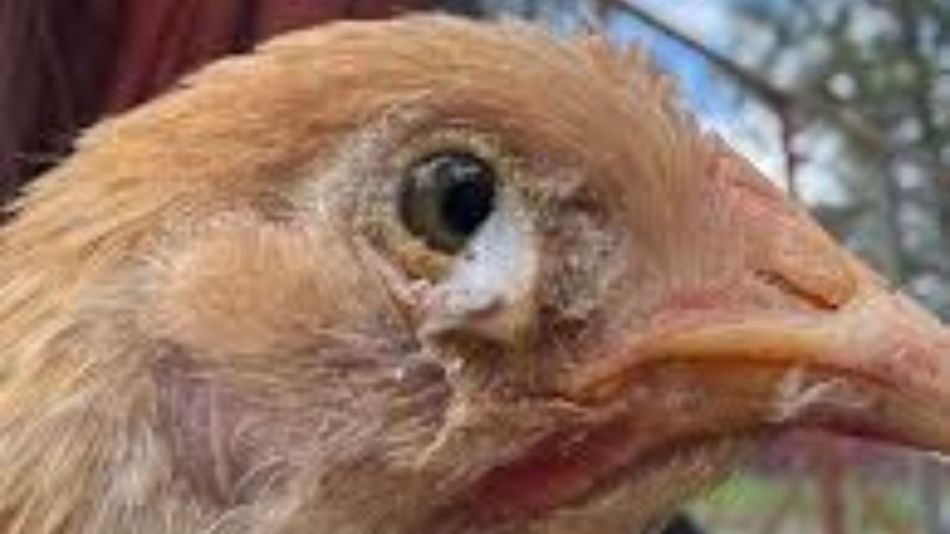
There are a number of respiratory issues that affect chickens, some bacterial that can be treated with antibiotics, others viral that can lead to chronic symptoms or death. Knock on wood, I’ve yet to really deal with these pathogens in my flock. There are a variety of opinions about how to treat issues that might take hold in a flock. Does one keep a closed flock, manage symptoms, and cross your fingers that you’ll experience minimal losses? Or cull your entire flock and start from scratch?
What is Mycoplasma?
Mycoplasma are a genus of tiny bacteria that cause compromised immune systems and respiratory disease in their affected hosts. They’re unique in the world of bacteria because they lack a cell wall, which makes them resistant to many common antibiotics that work by targeting cell wall synthesis.
The Mycoplasma family includes more than 100 species, each infecting a specific animal species. Seventeen are found in poultry; two of which cause disease in chickens.
Mycoplasma gallisepticum is primarily a respiratory infection and is becoming more common with the increased popularity of backyard flocks: more people are keeping chickens and mixing birds from different sources.
It often occurs in chickens that are co-infected with other pathogens (i.e. E. coli or Infectious Bronchitis); are stressed (e.g. changes in the pecking order, integrating into a new flock); nutritionally deficient; or live in coops with high levels of ammonia or dust. Chickens can become infected several days after exposure, but remain asymptomatic for months.
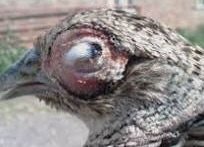
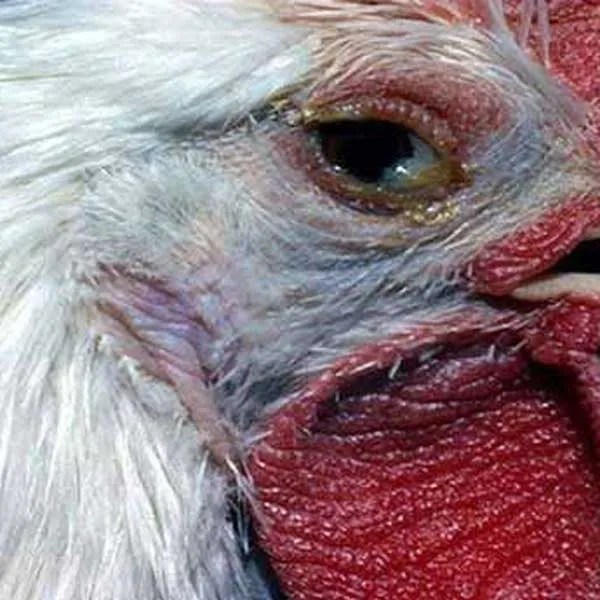
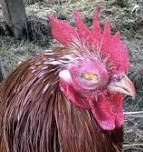
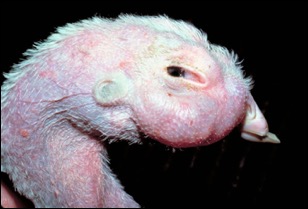
Photo credits: Unknown, British Hen Welfare Trust, Dr John Barnes
Anonymous Post In An Online Chicken Group
I have questions about Mycoplasma infection in poultry. We are working with a vet who diagnosed our birds with Mycoplasma gallisepticum. It was recommended to cull all birds and start over with a disease-free flock or keep them and treat the symptoms.
Can you breed for immunity? Some say most flocks carry it and I’m finding most breeders don’t test for it. What are other people doing in this case?
To me it sounds like a lot of breeders feel that what they don’t know won’t hurt them. I’m at a loss as to how to move forward. It seems like I have a lot that appear immune, some that have become ill that I have treated and seem to be okay, while others have passed on.
Response from Rachel Wroe, Moderator of the Facebook group Poultry Medical Information and Advice
I’ve thought a lot about this issue over the years. I’ve faced the problem more than once and my views on the subject have changed a lot since the time when I first started keeping chickens.
I’m really sorry if you’re faced with this dilemma. Been there, done that, depopulated twice.
Since my first experience with respiratory disease, I’ve made a rather comprehensive review of existing scientific literature and know much more now. I think that understanding what you’re dealing with is crucial to making a decision on how to respond to that runny nose or swollen eye or chest wheeze.
The plain and simple truth of the matter is that, unless you get birds from an Mycoplasma-free certified farm (of which there aren’t many in the US), test your own flock regularly, follow strict biosecurity measures, close your flock to new birds, and isolate them from coming into contact with wildlife vectors, the chances are high that sometime over the course of your time owning poultry, you’ll have respiratory disease in your flock. I’ve seen numbers ranging from 50 – 90% of backyard flocks in the US being affected.
It’s true that there is no cure for the vast majority of respiratory diseases in poultry. Their immune systems don’t work quite the same way mammals’ do, and their physiology is different. Disease can sometimes be suppressed or even kept at bay entirely, but most microbial pathogens remain in their systems for life. Mycoplasma and Newcastle Disease can even be spread through the egg to the developing chick.
There are vaccines available, but vaccines can’t stop a bird from contracting their target diseases. What they can do is expose the birds to the pathogen in hopes of prepping their immune systems. This can be both a good and bad thing. A vaccinated bird is much less likely to die, will usually have less severe symptoms, and shed less of the pathogen. However, sometimes the disease is suppressed completely, so an owner might not know their birds are infected. This makes it more likely that the disease will spread, as they could successfully pass a quarantine and be added to a new flock. And, of course, if their owners don’t practice good biosecurity (like having a dedicated pair of “chicken shoes” that never leave the property), there’s no real limit to how far and wide disease can be spread.
Is there any way of getting rid of Mycoplasma or another respiratory disease? Theoretically, yes. If all chicken owners agree to depopulate their flocks if even one bird tests positive, we might be able to contain or even eliminate it. In fact, we did just that when farmers were losing millions of birds to pullorum in the 1930s and ‘40s through the foundation of the NPIP program.
But let’s be realistic. Many people in the backyard chicken community see their birds as pets or even family members. There will be those who would break a local quarantine or try to hide their birds to keep them from being depopulated. It happened just a few years ago in California with the “exotic” Newcastle Disease outbreak.
My point is that respiratory illnesses have become a fact of life for a chicken owner. It’s almost a question of ‘when’, not ‘if’. And there are a few ways one can go about dealing with it.
Depopulation is one option. That means all your birds are euthanized and safely disposed of. For diseases like Mycoplasma that don’t live long outside of a host, the time to wait to safely bring in a new flock is measured in weeks. But other diseases, like the tumour-causing Marek’s Disease, can hang around for years, depending on the environmental conditions. There’s also no guarantee your new birds won’t already have a disease or soon contract one.
If you decide to keep your flock, there are a few options to go forward.
Some will treat a bird with antibiotics, and if it improves, they keep it. This is a very popular option for those who see their birds as pets. They realize that they can expect future outbreaks and that they might be treating it for life, but that option is preferable to euthanasia. The very real consequences to that decision, however, is that many antibiotics lose effectiveness as bacteria develop resistance. And some of these antibiotics, like the now banned (for use in US poultry) Baytril, are important medications used to treat humans. Every day that an infected bird lives is a day it can 1) spread the disease and 2) be a host for multiplying bacteria that may mutate into a more pathogenic strain.
Some people choose to immediately euthanize visibly sick birds. While there’s a good chance more in the flock are infected, if not all, the idea is that as long as they aren’t showing any signs, their immune systems are able to keep the disease at bay. The obviously sick ones are quickly removed from the flock in an effort to contain the spread, including to wild birds.
Another option that some breeders take is to do nothing at all. The idea is that the birds with the best immune systems will live and the weaker ones will die off, as well as their inferior genes. This is sometimes called ‘breeding for resistance’. The biggest problem with that, other than potentially losing birds, is that the stronger birds can pass on disease to flocks whose owners might not be as comfortable with their birds becoming infected.
I personally don’t believe any of those choices are more right or wrong than another. Some people love their birds like family members and will to do anything to keep them alive and I understand that. Others who don’t want to take any chances will cull a bird at the first sign of illness. That’s fine, too. My feelings are that each poultry owner needs to decide what they’re comfortable with (within the boundaries of the law, of course).
Unfortunately, respiratory disease in one’s flock can be absolutely devastating. I feel for anyone dealing with it, and I hope what I’ve shared has helped a little in understanding the nature of the beast.
Thanks to guest contributor Rachel Wroe for her insights on this issue, used with permission.
“For keepers who know their hens and their histology.”
 Bitchin' Chickens
0 comments on “Is Depopulation The Solution To Dealing With Mycoplasma In Chickens?”