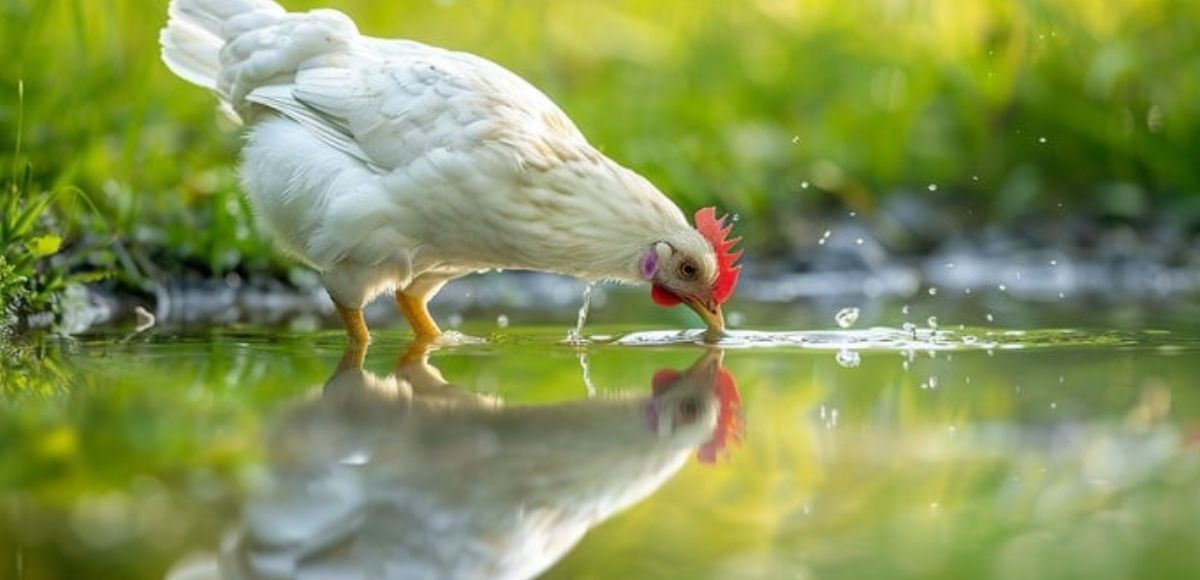

If there’s one thing backyard chicken keepers underestimate, it’s water. Chickens can go a while without treats, extra feed, or even human attention (though they’ll complain about it), but water? That’s non-negotiable. Dehydration can hit chickens hard and fast, affecting everything from egg production to immune function.
How Much Water Do Chickens Need?
A healthy adult hen drinks around 500 mL to 1 litre (quart) per day depending on weather, diet and level of activity. But that number can double in summer heat or when hens are laying heavily.
- A laying hen’s body is about 65–70% water, and eggs themselves are roughly 74% water so hydration directly affects egg size and shell quality.
- Growing chicks and fast-metabolism breeds (like Leghorns) need proportionally more water by weight than heavier, slower breeds.
- Feed type matters: birds on dry crumbles or pellets drink more than those on wet mash or fermented feed.
Rule of thumb: If you wouldn’t want to drink out of their waterer, your chickens probably shouldn’t either. Clean, cool and fresh water is essential every single day.

Dehydration Happens Faster Than You Think
Chickens don’t sweat. They rely on panting and spreading their wings to release heat, which increases their water loss. In hot weather, even a few hours without water can cause serious stress.
Signs your birds are getting dehydrated:
- Lethargy or unsteady walking
- Pale combs and wattles
- Sunken eyes or dry mouths
- Fewer or misshapen eggs
- Panting, wings held away from body
- Reduced appetite and water intake
Severe dehydration can lead to heat exhaustion, egg binding, or organ failure. Once a chicken stops drinking on its own, recovery becomes much harder so prevention is everything.
Keeping Water Levels Right In Every Season
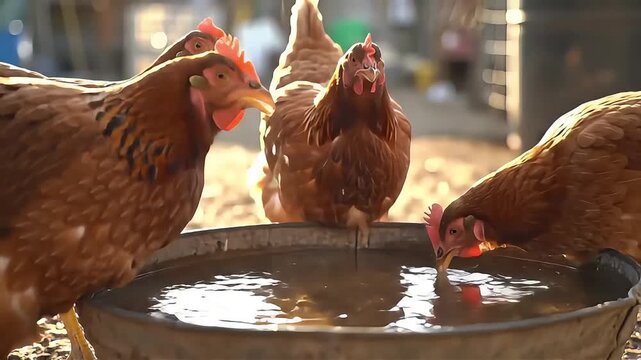
- Summer: Provide multiple shaded water stations and refresh them often. Add electrolytes (without sugar) during heat waves to replace salts lost through panting.
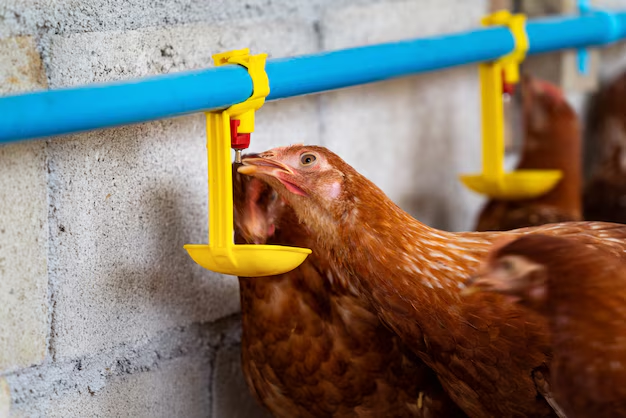
- Winter: Chickens can become dehydrated in cold weather too. Use a heated waterer or swap frozen water frequently.
- Brooders: Chicks are especially vulnerable. Keep waterers shallow to avoid drowning but refill often. Chicks drink every few minutes when active.
- Sick or moulting birds: Offer wet feed or diluted electrolytes to encourage intake. Dehydration worsens stress during moult or illness.
- Broody hens need to get off their nests daily to eat, drink, dust bathe and poop. If not, they can lose weight and become dehydrated.
- If you raise meat birds/broilers, which are fast growing, provide them with one litre/quart per day
The Hidden Health Impacts of Dehydration
Even mild dehydration affects more than thirst:
- Reduces feed conversion efficiency – birds eat less and gain less weight.
- Disrupts egg formation resulting in thin shells, smaller eggs, or fewer eggs altogether.
- Impairs kidney function, which can lead to urate buildup (the white part of droppings).
- Weakens immune response, making chickens more prone to bacterial and parasitic infections.
A well-hydrated chicken is a happy and productive one. Water isn’t just a drink, it’s the fuel for every biological system they’ve got.
You can have the fanciest feed and the cushiest nesting boxes, but if your hens are even a little thirsty, everything else goes downhill fast. Check your waterers every day, not just for quantity, but also for cleanliness.
- MacLeod, M. G., & Hocking, P. M. (1993). Thermoregulation and the Control of Water Intake in Domestic Fowl.British Poultry Science, 34(4), 851–858.
- May, J. D., & Lott, B. D. (2001). Relating Weight Gain and Feed:Water Ratio of Broiler Chickens to Drinking Water Temperature. Poultry Science, 80(5), 618–622.
- North, M. O., & Bell, D. D. (1990). Commercial Chicken Production Manual. Chapman & Hall, New York.
- Davis, R. E. (2008). Water Quality and Poultry Performance. University of Georgia Cooperative Extension Bulletin 1302.
Featured photo credit: Stockcake
“Smart hens, messy coops, and the truth about keeping chickens.”


0 comments on “How Much Water Do Chickens Really Need?”